
Dinking for Beginners: How to Control the Ball and Win More Points at the Kitchen
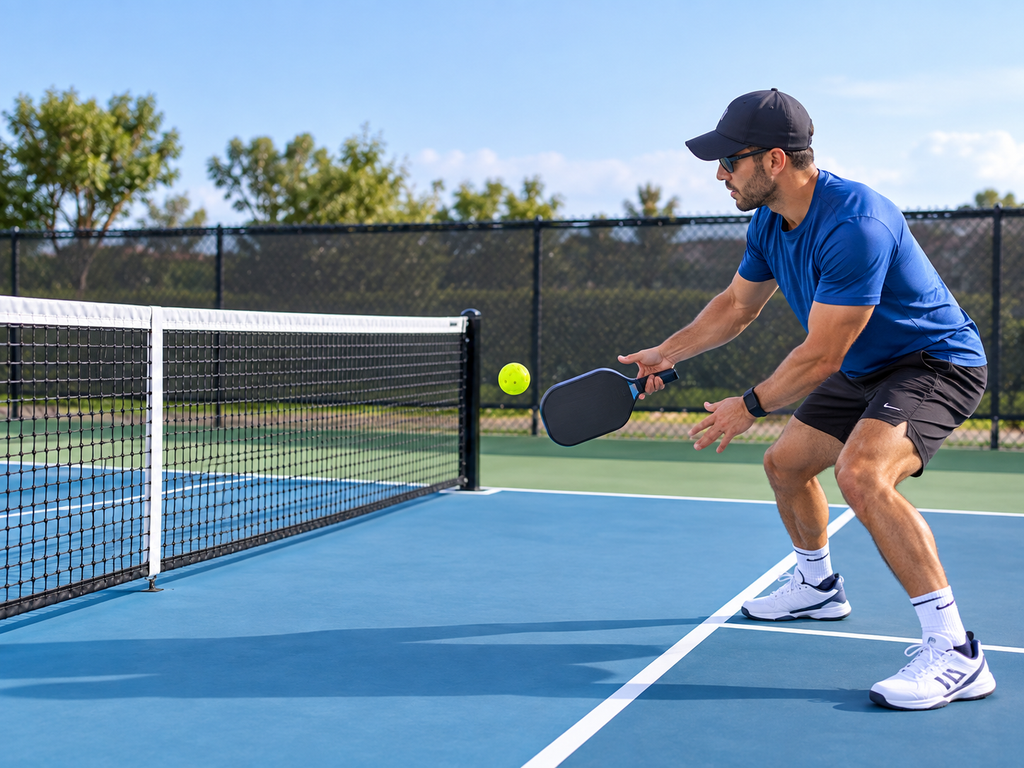
Dinking is one of the most important skills to learn in pickleball, especially once you begin spending more time near the kitchen line.
At first, dinking can seem simple. You are only trying to hit a soft shot over the net and into your opponent’s kitchen. But a good dink requires touch, control, patience and smart placement.
Unlike a hard drive or an aggressive volley, the goal of a dink is usually not to win the point immediately. Instead, it helps you keep the ball low, make attacking difficult for your opponents and wait for a better opportunity.
For beginners, learning how to dink properly can make a major difference in how comfortable you feel at the non-volley zone.
This guide explains what a dink is, when to use it, how to hit one and how to avoid the most common beginner mistakes.
What Is a Dink in Pickleball?
A dink is a soft shot that travels over the net and lands in or near your opponent’s non-volley zone, commonly called the kitchen.
Most dinks are played when you are standing close to your own kitchen line.
The shot is designed to stay low after crossing the net so your opponent cannot easily attack it with a powerful volley.
A successful dink usually:
- Clears the net by a safe margin
- Lands inside or close to the opponent’s kitchen
- Stays low enough to discourage an aggressive attack
- Gives you time to recover and prepare for the next shot
The dink is especially important during rallies when all four players in doubles have reached the kitchen line.
Why Dinking Matters
Beginners often want to hit every ball hard.
That can work against weaker opponents, but stronger players are usually comfortable blocking hard shots. If you constantly attack from a poor position, you may simply give your opponent an easier ball.
Dinking gives you another option.
Instead of trying to overpower your opponent, you can use a soft shot to keep the rally under control.
A good dink can help you:
- Prevent your opponent from attacking
- Move an opponent away from a comfortable position
- Create openings between players
- Force your opponent to hit upward
- Slow down a fast rally
- Give yourself time to recover
- Wait for a genuinely attackable ball
Good dinking is therefore less about hitting winners and more about creating better opportunities.
Where Do You Hit a Dink From?
Dinks are most commonly played from near the non-volley zone line.
When you reach the kitchen line, you are close enough to the net to hit the ball softly while still making it land short in your opponent’s court.
You may occasionally need to dink from slightly farther back if your opponent moves you away from the line, but your goal should usually be to recover toward the kitchen line afterward.
Standing close to the line gives you better control of the net and reduces the amount of court your opponents can target in front of you.
However, remember that you may not volley the ball while standing inside the kitchen or touching the kitchen line.
You may enter the kitchen to play a ball that has bounced.
The Basic Dink Technique
A reliable dink does not require a large swing.
The movement should be compact, controlled and easy to repeat.
1. Start in a Balanced Ready Position
Stand near the kitchen line with your knees slightly bent and your weight balanced.
Keep your paddle in front of your body.
Avoid standing completely upright because a lower athletic position makes it easier to move quickly and control low balls.
Your feet should remain active so you can adjust to the direction of the next shot.
2. Use a Relaxed Grip
Many beginners grip the paddle too tightly.
A tight grip can make the paddle face difficult to control and often causes the ball to travel farther than intended.
Use a relaxed grip that allows you to feel the ball on the paddle.
You still need enough control to keep the paddle stable, but you should not squeeze the handle unnecessarily.
Think of dinking as guiding the ball rather than hitting it.
3. Keep the Paddle in Front of You
Your paddle should remain in front of your body whenever possible.
This gives you more control and allows you to react quickly if your opponent suddenly speeds up the ball.
Avoid taking the paddle far behind your body.
A large backswing is usually unnecessary for a dink and makes controlling distance more difficult.
4. Bend Your Knees
When the ball arrives low, lower your body by bending your knees instead of dropping only your paddle.
Keeping your body balanced helps you maintain a stable paddle face.
If you reach downward with your upper body while keeping your legs straight, your balance and control can suffer.
5. Use a Small Lifting Motion
Most dinks require a gentle upward motion.
The paddle should move forward and slightly upward through the ball.
You do not need to swing aggressively.
A compact motion allows you to lift the ball over the net while keeping it short enough to land inside the kitchen.
Try to keep your wrist relatively stable rather than flicking aggressively at the ball.
6. Contact the Ball in Front of Your Body
Whenever possible, make contact slightly in front of your body.
This position gives you better control of the paddle face and direction.
Allowing the ball to travel too far behind you can make it harder to keep the shot soft and accurate.
7. Finish Small
Your follow-through should remain short and controlled.
You are not trying to generate maximum power.
A large follow-through often sends the ball too deep and gives your opponent an opportunity to attack.
After contact, quickly return your paddle to your ready position.
Forehand Dinks
A forehand dink is played on your paddle-hand side.
For a right-handed player, this usually means the ball is positioned toward the right side of your body.
Keep the paddle face slightly open and use a smooth lifting motion.
Avoid using a full forehand groundstroke.
The motion should stay compact because you are trying to create control rather than power.
Backhand Dinks
A backhand dink is often extremely important at the kitchen because many balls arrive near the center of your body.
Keep your paddle in front and guide the ball forward with a short motion.
Many players become comfortable using the backhand for a large percentage of their dinks because it allows them to cover balls around the middle efficiently.
You do not need a big swing.
Control of the paddle face is more important than generating speed.
Straight-Ahead Dinks
A straight-ahead dink travels toward the opponent directly across from you.
This is often one of the simplest options for beginners.
Because the distance is relatively short, you do not need much power.
The goal is simply to clear the net safely and keep the ball low.
Straight dinks can be especially useful when you want to maintain control without taking unnecessary risk.
Crosscourt Dinks
A crosscourt dink travels diagonally across the court.
Crosscourt dinking is extremely common because the diagonal path gives you more court to work with.
You can hit the ball slightly higher and still have enough distance for it to land inside the kitchen.
Crosscourt dinks can also pull an opponent toward the sideline, potentially creating space elsewhere.
However, beginners should focus on consistency before trying extremely sharp angles.
Where Should You Aim Your Dinks?
You do not need to hit the same location every time.
Once you can control the basic shot, placement becomes an important part of dinking.
Useful targets include:
Toward Your Opponent’s Feet
Low balls near the feet are difficult to attack.
Your opponent may need to lift the ball upward, giving you a more comfortable next shot.
Toward the Middle
In doubles, the middle can create hesitation between opponents.
It also gives you a larger target and reduces the chance of hitting the ball wide.
For beginners, this is often a smart and safe option.
Toward the Sideline
An angled dink can pull an opponent away from the center of the court.
This may create open space for a later shot.
However, aggressive angles also increase the chance of hitting the ball wide.
Toward an Opponent’s Backhand
Some players are less comfortable dinking with their backhand.
If you notice a clear weakness, you can direct more balls toward that side.
Do not assume every player has the same weakness. Pay attention during the rally.
What Makes a Dink Attackable?
Not every dink is equally effective.
If your shot sits too high above the net, your opponent may be able to attack it.
This is often called a pop-up.
A dink becomes dangerous when it gives your opponent a comfortable contact point above the net.
From there, they may be able to drive or volley the ball downward.
That is why the height of your dink matters.
You need enough height to clear the net, but not so much that you give your opponent an easy attack.
The Importance of the Net Height
Many beginners become so afraid of hitting the net that they send every dink too high.
You should certainly give yourself enough margin to clear the net, especially while learning.
But gradually work toward keeping the ball lower.
Your goal is not to skim the tape every time.
Instead, find a comfortable margin that allows you to clear the net consistently while still producing a ball your opponent must hit from below or near net height.
Consistency is more valuable than trying to hit a perfect dink on every shot.
Dinking Requires Patience
One of the biggest mental adjustments beginners need to make is learning that not every ball should be attacked.
A dink rally may last several shots.
Your opponent may be waiting for you to become impatient and hit a poor speed-up.
Instead of forcing the attack, continue hitting controlled balls until a better opportunity appears.
A common pattern is:
- Hit a controlled dink.
- Recover to your ready position.
- Watch your opponent’s contact.
- Move to the next ball.
- Continue until someone creates an attackable ball.
The player who stays patient often has the advantage.
When Should You Attack During a Dink Rally?
The purpose of dinking is not to dink forever.
Eventually, one team may receive a ball that can be attacked.
A possible attacking opportunity occurs when the ball sits high enough that you can make contact above or comfortably near net height without hitting upward.
If the ball is extremely low, attacking aggressively may be a mistake.
Trying to speed up a ball from below net height often sends it into the net or creates an easy counterattack.
Beginners should learn an important distinction:
Low ball: usually stay patient.
High ball: consider attacking.
You do not have to attack every high ball, but you should recognize the opportunity.
Move With the Ball
Dinking is not only about paddle technique.
Your footwork matters too.
If your opponent hits the ball to one side, move your feet so you can stay balanced during contact.
Avoid reaching unnecessarily.
A controlled shuffle step often allows you to maintain better positioning while staying close to the kitchen line.
After hitting the ball, recover toward a balanced position and prepare for the next shot.
Avoid Backing Away From the Kitchen Line
Beginners sometimes drift backward after every dink.
This creates additional space in front of them and gives their opponents more angles to use.
Unless the ball forces you backward, try to maintain your position near the kitchen line.
If you are pushed back, look for an opportunity to move forward again safely.
Holding your position near the line helps you control the front of the court.
Common Dinking Mistakes
Swinging Too Hard
A dink does not require a full swing.
Too much acceleration often sends the ball deep or high.
Fix: Shorten your backswing and focus on a gentle forward-and-upward motion.
Gripping the Paddle Too Tightly
Excess tension reduces touch.
Fix: Relax your hand while keeping the paddle stable.
Using Too Much Wrist
Aggressive wrist movement makes the paddle face inconsistent.
Fix: Keep the wrist relatively quiet and create most of the motion from your arm and shoulder.
Standing Too Upright
A high stance makes low balls more difficult to control.
Fix: Bend your knees and stay athletic.
Reaching Instead of Moving
Stretching for every ball reduces balance.
Fix: Move your feet whenever you have enough time.
Hitting Every Dink High
A high dink can become an easy attack.
Fix: Practice controlling your trajectory rather than simply trying to clear the net.
Attacking Balls That Are Too Low
Trying to hit hard from below net height often leads to errors.
Fix: Recognize when the ball should remain soft.
Trying for Perfect Angles Too Early
Beginners sometimes attempt extremely sharp crosscourt shots before developing basic control.
Fix: Start with larger targets and build accuracy gradually.
How to Practice Dinking
You do not need to play full games to improve your dink.
Focused practice can help you develop touch much faster.
Cooperative Dinking
Stand across the net from a partner at the kitchen line.
Hit soft dinks back and forth while trying to keep the rally going.
Do not try to win the point.
Your goal is consistency.
Try to reach:
- 10 consecutive dinks
- 20 consecutive dinks
- 30 consecutive dinks
Once you become more consistent, begin changing direction.
Crosscourt Dinking Practice
Stand diagonally across from your partner.
Dink crosscourt while keeping the ball inside the kitchen.
This drill helps you learn distance control and angles.
Practice from both sides of the court.
Forehand and Backhand Dinking
Ask your partner to alternate shots between your forehand and backhand.
Focus on moving your feet and keeping the paddle in front of your body.
Do not worry about speed.
Your priority is clean, balanced contact.
Target Dinking
Place cones or other safe markers inside the kitchen.
Try to land your dinks near specific targets.
Good target areas include:
- The middle
- Near the opponent’s left foot
- Near the opponent’s right foot
- Crosscourt near the sideline
You do not need to hit the target exactly. The drill is meant to improve your awareness of placement.
Dink and Attack Drill
Begin with cooperative dinking.
When one player accidentally sends the ball too high, the other player can attack it.
This teaches both players to recognize the difference between a safe dink and an attackable ball.
After the attack, restart the rally.
Dinking in Doubles
Dinking becomes especially important in doubles because both teams often establish themselves near the kitchen line.
When this happens, hitting hard is not always the safest option.
A strong doubles team can use dinks to move opponents around and wait for a mistake.
Partners should also move together.
If one player is pulled toward the sideline, the other player may need to shift slightly to help cover the middle.
Good positioning reduces gaps your opponents can exploit.
Communication is also important when balls travel toward the center.
Dinking in Singles
Dinking is used less frequently in singles than in doubles because singles players must cover much more court.
However, it can still be useful.
A short, well-placed dink may pull your opponent forward or force them into an uncomfortable position.
The basic technique remains the same: keep the shot controlled and make sure you are prepared for the next ball.
How High Should a Dink Travel?
There is no single perfect height for every dink.
The correct trajectory depends on your position, your opponent’s position and the angle of the shot.
Crosscourt dinks can often travel slightly higher because they have a longer distance to land.
Straight dinks usually require more careful height control because the distance is shorter.
The main question is not whether the ball reaches a specific height.
Ask instead:
Can my opponent attack this ball comfortably?
If the answer is no, you probably produced a useful dink.
Soft Hands Matter
You may hear experienced players talk about having “soft hands.”
This does not mean your hand literally becomes loose during contact.
It refers to the ability to absorb and control the ball instead of always adding speed.
Soft hands are developed through repetition.
As you practice, you begin to understand how small changes in paddle angle, grip pressure and swing speed affect the ball.
This is one reason dinking improves gradually rather than instantly.
Watch Your Opponent’s Paddle
Do not stare only at the ball.
As your opponent prepares to hit, pay attention to their paddle position and body movement.
This can help you anticipate whether they are preparing to:
- Dink crosscourt
- Dink toward the middle
- Speed up the ball
- Hit behind you
- Change direction
Better anticipation gives you more time to prepare.
Keep Your Paddle Ready
After hitting a dink, immediately return your paddle to a neutral ready position in front of your body.
Do not leave it hanging beside your leg.
Your opponent may suddenly accelerate the next ball.
A good ready position allows you to defend quickly if the rally changes from soft dinking to fast volleys.
Do Not Try to Win Every Dink
One of the biggest lessons in pickleball is that a successful shot does not always need to end the rally.
Sometimes the best dink simply prevents your opponent from attacking.
If you can hit five, six or ten controlled dinks while waiting for your opponent to make a mistake, you are playing the point effectively.
Trying to create a winner from a difficult ball often turns a good position into an unnecessary error.
A Simple Beginner Dinking Strategy
When you are still developing confidence, keep your strategy simple.
Focus on three priorities:
- Clear the net.
- Keep the ball inside the kitchen.
- Stay ready for the next shot.
Once you can do those consistently, begin working on lower trajectories and better placement.
Then add crosscourt angles, movement and selective attacks.
Building your dink step by step is much more effective than trying to master every variation immediately.
Final Thoughts
Dinking is one of the skills that makes pickleball different from many other racket sports.
The shot may look slow, but good dinking requires control, discipline and smart decision-making.
For beginners, the goal should not be to hit perfect dinks immediately.
Start by developing a compact motion, relaxed grip and consistent contact. Learn to keep the ball low, stay balanced at the kitchen line and resist the urge to attack every shot.
As your control improves, begin experimenting with placement and angles.
Most importantly, learn to be patient.
A good dink keeps your opponent from attacking. A great dink may eventually create the ball that allows you to attack instead.