
Common Pickleball Mistakes for Beginners and How to Fix Them
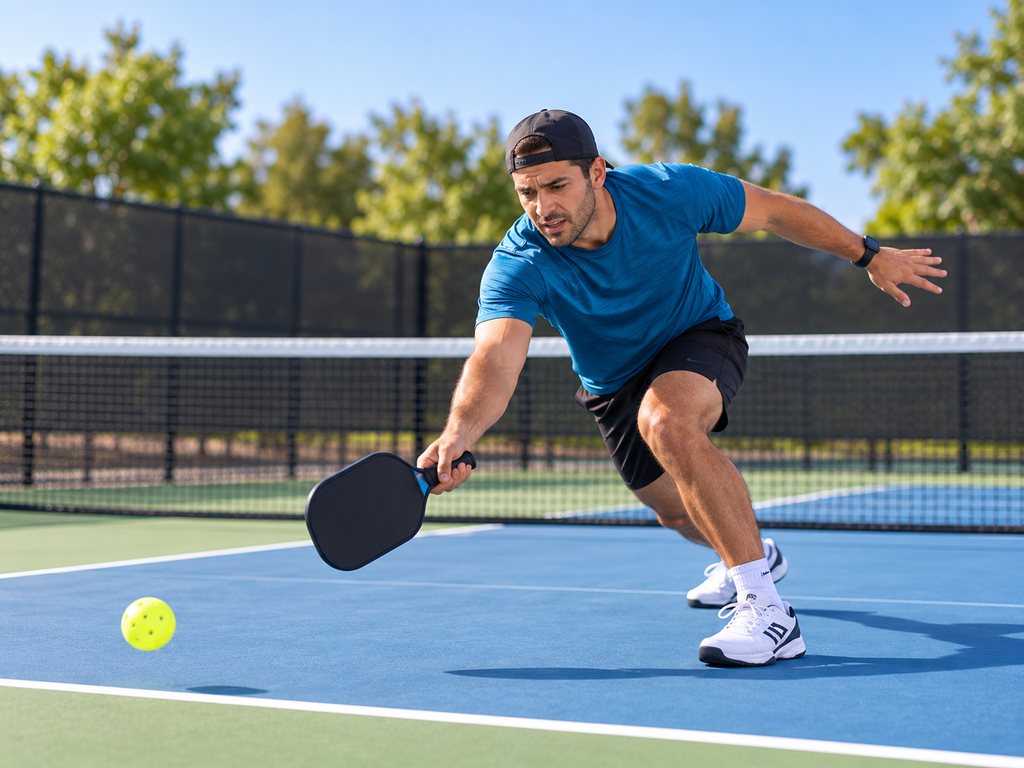
Pickleball is easy to start playing, but playing it well takes more than simply getting the ball over the net.
Many beginners struggle with the same problems: hitting too hard, standing in the wrong place, rushing toward the kitchen, forgetting the two-bounce rule or trying to win every rally with one spectacular shot.
The good news is that most beginner mistakes are relatively easy to correct once you understand why they happen.
Instead of trying to master every technique immediately, focus on building a few reliable habits. Better positioning, controlled shots, patience and consistent decision-making will usually help you improve faster than simply trying to hit the ball harder.
Here are some of the most common pickleball mistakes beginners make and what you can do about them.
1. Trying to Hit Every Shot as Hard as Possible
One of the first habits many beginners develop is trying to overpower their opponents.
A hard shot can certainly be useful, but power alone is not enough to play effective pickleball. Hitting harder also reduces your margin for error. Balls may sail beyond the baseline, go into the net or become easy attacks for opponents if they are hit without control.
Pickleball rewards placement and consistency just as much as speed.
How to Fix It
Focus first on keeping the ball in play.
Try to hit at roughly 60 to 70 percent of your maximum power during normal rallies. Once you can consistently control direction and depth, you can gradually add more speed.
Think:
Control first. Placement second. Power third.
A controlled ball that lands where you intended is usually more useful than a powerful ball that misses the court.
2. Staying at the Baseline Too Long
Beginners often feel comfortable near the baseline because it gives them more time to react.
The problem is that remaining deep in the court can give your opponents more opportunities to control the rally.
USA Pickleball’s instructional guidance emphasizes the importance of working toward the Non-Volley Zone line because this position allows players to take time away from opponents and control more of the court.
How to Fix It
After serving, remember that you must allow the return of serve to bounce because of the two-bounce rule.
Once that requirement has been satisfied, look for opportunities to move forward.
Do not sprint blindly toward the kitchen. Advance when your shot gives you enough time to move.
Your goal is usually to work your way toward the Non-Volley Zone line while remaining balanced and ready for the next ball.
3. Rushing to the Kitchen After a Poor Shot
Moving forward is important, but moving forward at the wrong time can create problems.
Suppose you hit a short, high ball that your opponent can easily attack. If you immediately rush toward the kitchen, you may be moving forward while your opponent is preparing to drive the ball at you.
That leaves you vulnerable.
How to Fix It
Move based on the quality of your shot.
A deep return or controlled drop may give you time to advance.
A weak or high ball may require you to stay back temporarily and prepare defensively.
Do not think:
“I must get to the kitchen immediately.”
Think:
“I want to reach the kitchen when the rally gives me the opportunity.”
4. Forgetting the Two-Bounce Rule
The two-bounce rule is one of the most important rules for new players to learn.
After the serve, the receiving team must allow the ball to bounce before returning it. The serving team must then allow that return to bounce before hitting it.
Only after those two required bounces may either team volley the ball.
Beginners sometimes forget and try to volley the return of serve.
How to Fix It
Use a simple mental reminder:
Serve — bounce — return — bounce — play.
When you are on the serving team, stay behind the baseline long enough to allow the return to bounce.
Do not automatically run forward immediately after serving.
5. Misunderstanding the Kitchen Rule
The Non-Volley Zone, commonly called the kitchen, extends seven feet from the net on each side. Players cannot volley the ball while standing in the kitchen or touching its boundary line.
A common beginner misunderstanding is believing that players are never allowed to enter the kitchen.
That is incorrect.
You may enter the kitchen to play a ball that has bounced.
The restriction applies specifically to volleying.
How to Fix It
Remember:
Bounce in the kitchen = you may enter and hit it.
Volley = your feet must remain outside the kitchen and outside the kitchen line.
Momentum also matters. If you volley while legally positioned outside the kitchen but your momentum carries you into it afterward, that is still a fault.
6. Standing Directly on the Kitchen Line
Beginners often try to get as close to the net as possible and end up standing directly on the Non-Volley Zone line.
That creates unnecessary risk.
The kitchen line itself is part of the Non-Volley Zone. Touching it while volleying creates a fault.
How to Fix It
Stand slightly behind the line rather than on top of it.
Give yourself enough room to move without accidentally stepping into the kitchen during a volley.
You still want to stay close enough to the line to avoid creating a large gap in front of you.
7. Keeping the Paddle Too Low
Another common mistake is allowing the paddle to hang near the waist or thigh between shots.
That means the paddle has farther to travel when the opponent hits the next ball.
At the kitchen, rallies can happen very quickly.
USA Pickleball recommends maintaining a ready position with the paddle in front of the chest and the elbows slightly forward.
How to Fix It
After every shot, return your paddle to a neutral ready position.
Keep it:
- in front of your body,
- around chest height,
- relatively centered,
- and ready to move toward either side.
Think of the ready position as your paddle’s “home.”
Hit the ball, then return home.
8. Using a Huge Backswing
Players coming from tennis or other racket sports sometimes use an unnecessarily large backswing in pickleball.
Because the court is smaller and many exchanges happen at short distances, large swings can make timing more difficult.
They can also reduce control.
How to Fix It
Use shorter, simpler swings.
Let your body and paddle work together rather than trying to generate all your power through your arm.
Compact strokes are especially important during volleys, dinks and quick exchanges near the kitchen.
9. Trying to Hit Winners Too Early
Beginners often become impatient when a rally lasts several shots.
They see an ordinary ball and try to turn it into a winner.
The result is often an unnecessary mistake.
Not every ball should be attacked.
How to Fix It
Learn to distinguish between three basic situations:
Defensive ball: Stay in the rally.
Neutral ball: Improve your position.
Attackable ball: Apply pressure.
If the ball is low, do not force an aggressive attack.
Wait for a higher ball that gives you a better opportunity.
Patience is one of the most useful skills in pickleball.
10. Hitting Every Ball Upward
Beginners sometimes accidentally create easy attacking opportunities by sending balls high over the net.
This is particularly dangerous near the kitchen because opponents can volley high balls downward.
How to Fix It
Try to keep your shots low whenever possible.
You still need enough height to clear the net safely, but avoid unnecessarily floating the ball.
For dinks and drops, think about creating a ball that descends toward your opponent rather than sitting comfortably above net height.
11. Trying to Attack Low Balls
A low ball below net height is difficult to attack safely.
Because you must hit upward to clear the net, hitting aggressively increases the chance of sending the ball long or giving your opponent an easy counterattack.
How to Fix It
Respect low balls.
Instead of trying to crush them, consider:
- a controlled dink,
- a reset,
- a soft drop,
- or another neutral shot.
Attack when the ball is high enough that you can hit forward or downward.
12. Watching Where Your Shot Lands Instead of Getting Ready
Many new players hit the ball and then admire their shot.
Meanwhile, the opponent is already returning it.
How to Fix It
Once you hit the ball, immediately recover.
Bring the paddle back to ready position.
Watch your opponent instead of staring at your own shot.
Their body, paddle and positioning can give you clues about where the next ball may go.
13. Standing Flat-Footed
Players who stand upright with straight legs often struggle to react quickly.
Pickleball requires frequent side-to-side movement and rapid changes in direction.
How to Fix It
Use an athletic ready position.
Keep:
- knees slightly bent,
- weight balanced,
- feet active,
- chest upright,
- and paddle in front.
You do not need to bounce constantly.
You simply want to stay balanced enough to move in any direction.
14. Moving While the Opponent Is Hitting
Getting into position matters, but continuing to run while your opponent strikes the ball makes reacting much more difficult.
You may be moving one direction while the ball travels another.
How to Fix It
Try to become balanced just before your opponent makes contact.
Players often use a small split step or brief athletic pause.
The pattern becomes:
Move → balance → react → hit → recover.
This is especially important when transitioning from the baseline toward the kitchen.
15. Backpedaling Instead of Turning and Moving
When a ball goes over their head, beginners sometimes try to run backward while facing the net.
This can reduce balance and increase the risk of falling.
How to Fix It
When you need to retreat significantly, turn your body and move safely rather than rapidly backpedaling.
Keep track of the ball while maintaining control of your movement.
Safety is more important than attempting a difficult shot.
16. Standing Too Close to the Baseline When Returning Serve
A deep serve can push a receiver backward.
Beginners who stand directly on the baseline sometimes find themselves leaning or stepping backward while trying to return.
How to Fix It
Give yourself some space behind the baseline.
USA Pickleball guidance suggests that returners may begin roughly two to three feet behind the baseline.
This allows you to move forward into shorter serves while still having room to handle deeper ones.
Your exact position can change depending on the server.
17. Hitting the Return of Serve Too Short
A short return gives the serving team an easier opportunity to move forward.
Remember that the serving team must allow the return to bounce because of the two-bounce rule.
A deeper return can keep them farther from the kitchen.
How to Fix It
Prioritize depth rather than power.
Try to send the return toward the back portion of the court.
A high, deep return can be especially useful for beginners because it gives you more time to move toward the kitchen.
18. Serving for Too Much Power
The serve begins the rally. It does not need to win the point immediately.
Beginners sometimes swing aggressively and repeatedly miss serves.
Every missed serve gives away an opportunity to compete for the rally.
How to Fix It
Develop a reliable serve before trying to develop a powerful one.
Aim comfortably inside the correct service court instead of constantly targeting the lines.
Your first goal should be:
Put the serve in play consistently.
Once you can do that, begin experimenting with depth, placement and pace.
19. Aiming Too Close to the Lines
Beginners often believe accurate pickleball means hitting the sidelines and baseline.
In reality, aiming too close to the boundaries creates unnecessary errors.
How to Fix It
Give yourself margin.
Aim several feet inside the court when you are learning.
As your control improves, you can gradually use smaller targets.
Consistency usually wins more beginner rallies than precision aimed at the last few inches of court.
20. Always Hitting Crosscourt or Always Hitting Straight Ahead
Predictability makes you easier to play against.
Some beginners repeatedly use whichever direction feels most natural.
How to Fix It
Learn to direct the ball intentionally.
Practice:
- crosscourt shots,
- straight-ahead shots,
- shots through the middle,
- and shots toward open space.
You do not need complicated tactics.
Simply learning to change direction safely will make your game less predictable.
21. Ignoring the Middle of the Court
Beginners often try to create dramatic angles.
However, the middle can be one of the safest and most effective targets in doubles.
A ball between two opponents may create hesitation about who should take it.
How to Fix It
Use the middle regularly.
It gives you a larger margin for error than aiming near the sidelines and can reduce the angles opponents have available for their next shot.
22. Both Partners Chasing the Same Ball
In doubles, new partners frequently collide or leave large areas of the court uncovered because both players chase one ball.
How to Fix It
Communicate.
Use simple calls such as:
“Mine.”
“Yours.”
“Out.”
Also learn to recognize which player has the better angle for a ball.
Doubles becomes much easier when partners operate as a team rather than two separate singles players sharing a court.
23. Leaving Large Gaps Between Partners
Another common doubles mistake occurs when one partner moves and the other stays behind.
This can create a large opening between them.
How to Fix It
Think of you and your partner as connected.
When one player moves sideways, the other generally adjusts sideways as well.
When one moves forward, the other should usually look for an opportunity to move forward too.
You do not need to stand shoulder-to-shoulder, but avoid creating obvious gaps.
24. Moving Too Close to Your Partner
Moving together does not mean standing directly beside each other.
If you become too close, you may interfere with each other’s swings or leave the outside of the court exposed.
How to Fix It
Maintain enough space to cover your area comfortably while remaining close enough to protect the middle.
Good doubles positioning is a balance between coverage and teamwork.
25. Swinging at Balls That Are Going Out
A ball traveling quickly toward your body can feel threatening, so beginners often instinctively hit it.
But some of those balls would have landed beyond the baseline.
By touching them, you keep the rally alive for your opponent.
How to Fix It
Start learning to judge trajectory.
Ask yourself:
- How high is the ball?
- How fast is it traveling?
- Is it still rising?
- Where would it land if I moved out of the way?
You will make mistakes while learning.
That is normal.
Ball judgment improves through experience.
26. Trying to Learn Too Many Advanced Shots Too Soon
New players often see advanced pickleball techniques online and immediately want to learn topspin rolls, ATPs, Ernes, deceptive speedups and complicated spin serves.
These techniques can be useful later.
They are not the foundation of a beginner’s game.
How to Fix It
Build reliable fundamentals first.
Focus on:
- Serve
- Return
- Forehand
- Backhand
- Volley
- Dink
- Basic drop shot
- Court positioning
A player who consistently performs these basic skills will usually progress faster than someone with several advanced shots but unreliable fundamentals.
27. Changing Technique After Every Bad Shot
One missed shot does not necessarily mean your technique is wrong.
Beginners sometimes make constant adjustments after every mistake.
That makes it difficult to develop consistency.
How to Fix It
Look for patterns instead of individual errors.
If one ball goes into the net, keep playing.
If ten similar shots repeatedly go into the net, then identify what may need adjustment.
Judge technique over several repetitions rather than one outcome.
28. Practicing Only by Playing Games
Playing games is enjoyable and important, but games do not always provide enough repetition to improve specific skills.
You might hit only a few backhands or dinks during an entire game.
How to Fix It
Combine games with structured practice.
Even 10 to 15 minutes of drilling can help.
Practice repeated:
- serves,
- returns,
- dinks,
- volleys,
- third-shot drops,
- and controlled groundstrokes.
Repetition helps your technique become more automatic.
29. Focusing Only on Winning
Winning can make pickleball more exciting, but beginners who judge every session only by the score may become frustrated.
You can play better than yesterday and still lose.
How to Fix It
Give yourself performance goals.
For example:
Today I will get eight out of ten serves in.
I will keep my paddle up at the kitchen.
I will avoid attacking balls below the net.
I will work toward the kitchen instead of staying at the baseline.
These goals give you something useful to measure regardless of the final score.
30. Expecting Immediate Consistency
Pickleball looks simple when experienced players play it.
That can make beginners underestimate how much timing, positioning and touch are involved.
Some days your forehand may feel excellent while your dink disappears.
That is part of learning.
How to Fix It
Measure progress over weeks, not individual rallies.
The goal is not to eliminate every mistake.
The goal is to make fewer unforced errors, recognize situations earlier and make better decisions more often.
The Biggest Beginner Mistake: Playing Without a Plan
Many beginners simply react to every ball.
They do not yet know what they are trying to accomplish during a rally.
You do not need an advanced strategy.
A simple beginner plan is enough.
When Serving
Serve consistently.
Stay behind the baseline.
Let the return bounce.
Then look for an opportunity to work toward the kitchen.
When Returning
Return the ball deep.
Move toward the kitchen.
Get balanced before your opponent hits.
Prepare for the next shot.
At the Kitchen
Keep your paddle up.
Stay balanced.
Keep low balls low.
Be patient.
Attack higher balls when the opportunity appears.
That simple structure already gives you a basic strategy for most beginner rallies.
A Simple Practice Routine for Fixing Beginner Mistakes
You do not need hours of training.
Try this short routine with a partner.
Five Minutes: Serves
Hit controlled serves into the correct service box.
Focus on consistency rather than speed.
Five Minutes: Returns
Practice hitting deep returns.
After each return, move toward the kitchen.
Five Minutes: Dinking
Stand near the kitchen and exchange soft shots.
Try to keep the ball low.
Five Minutes: Volleys
Practice compact volleys while maintaining your ready position.
Five Minutes: Transition Practice
Start near the baseline.
Hit a shot.
Move forward.
Become balanced before your partner hits again.
Continue until you reach the kitchen.
This teaches you how to move forward without rushing.
What Beginners Should Focus on First
There are many things you can improve in pickleball, but you do not need to fix everything at once.
If you are just beginning, prioritize these five habits:
1. Keep the Ball in Play
Consistency gives you more opportunities to learn.
2. Understand the Two-Bounce and Kitchen Rules
These are fundamental parts of how pickleball is played.
3. Move Toward the Kitchen When the Opportunity Is Right
Do not remain at the baseline unnecessarily.
4. Keep Your Paddle Ready
A good ready position helps you react faster.
5. Be Patient
Do not try to turn every ball into a winner.
Final Thoughts
Every pickleball player makes mistakes.
The difference between a beginner who improves steadily and one who remains inconsistent often comes down to recognizing those mistakes and correcting them one at a time.
Start with the fundamentals.
Keep your serve reliable. Let the required balls bounce. Learn the kitchen rules. Move forward intelligently. Keep your paddle ready. Reduce unnecessary power and give yourself larger targets.
Most importantly, learn to stay in rallies.
You do not have to hit spectacular shots to become a good pickleball player.
If you can consistently put the ball in play, move to the right position and make sensible shot choices, you are already building the foundation for a much stronger game.