
Stop Trying to Win Every Shot: A Smarter Way to Play Pickleball
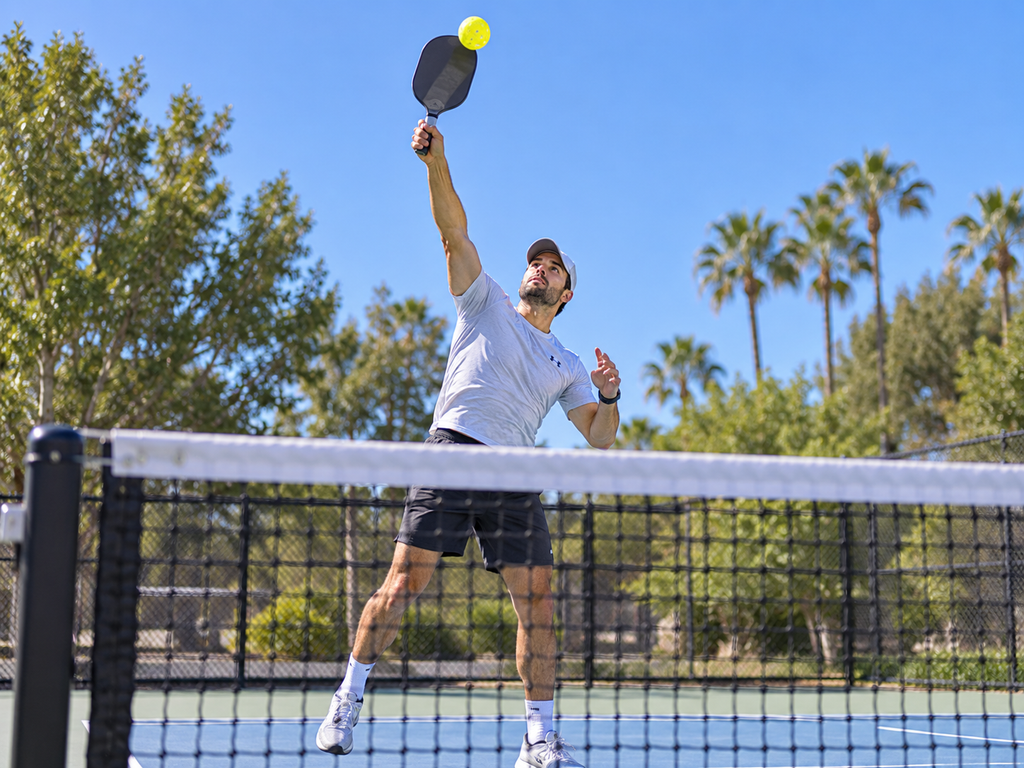
One of the biggest mistakes new pickleball players make is treating every ball like an opportunity to hit a winner.
A hard drive down the line. A sharp angle. A powerful overhead. A passing shot squeezed into a tiny opening.
Sometimes those shots work. But when you try to force them too often, they usually create more errors than points.
Pickleball is not only about hitting impressive shots. It is about making good decisions, staying in the rally and putting yourself in a better position for the next ball.
For beginners especially, learning when not to attack can improve your game faster than learning another flashy shot.
Why Beginners Try to Win Points Too Quickly
When you first start playing pickleball, the most obvious way to score seems simple: hit the ball somewhere your opponent cannot reach it.
That idea is not wrong. The problem is trying to do it on every shot.
Beginners often attack too early because they:
- want to finish the rally quickly
- feel uncomfortable during longer exchanges
- assume harder shots are automatically better shots
- see an open area and immediately try to hit it
- copy aggressive shots they see from experienced players
- underestimate how difficult low-percentage shots are
The result is often an unnecessary error.
Instead of making your opponent earn the point, you give it away.
Pickleball Is Often a Game of Patience
At beginner and recreational levels, many rallies are decided by mistakes rather than spectacular winners.
That means one of the simplest ways to improve is to keep the ball in play longer.
You do not always need to hit the perfect shot.
Sometimes the right shot is simply one that:
- clears the net
- lands safely inside the court
- keeps your opponent from attacking
- gives you time to recover
- helps you move into a better position
Think of each shot as part of a sequence rather than an isolated attempt to score.
Your goal is often to create a better opportunity later.
What Is a High-Percentage Shot?
A high-percentage shot is one that gives you a good chance of keeping the rally under control while limiting unnecessary risk.
That does not mean hitting weak or defensive shots all the time.
It means choosing a shot that makes sense for the situation.
For example, a crosscourt dink with plenty of margin over the net is usually safer than trying to hit a sharp winner near the sideline.
A deep return toward the middle of the court may be more effective than aiming for the final few inches of the baseline.
A controlled third-shot drop may be smarter than trying to blast the ball past two opponents already positioned near the kitchen.
High-percentage pickleball is about choosing the shot you can execute consistently.
Stop Confusing Power With Advantage
Hitting the ball harder does not automatically put you in control.
Sometimes extra pace actually helps your opponent.
A hard ball can:
- come back faster
- reduce your recovery time
- travel long
- hit the net
- sit at an ideal height for a counterattack
Power is useful when the ball gives you permission to use it.
If your opponent sends you a high, attackable ball, an aggressive shot may be appropriate.
But trying to generate maximum power from a low or difficult ball usually increases your chances of making an error.
Control first. Power when the opportunity is right.
Learn the Difference Between an Attackable Ball and a Neutral Ball
A major step in pickleball development is recognizing what kind of ball you have received.
Attackable Ball
An attackable ball is one you can hit aggressively without taking excessive risk.
Examples include:
- a high dink
- a weak return sitting in the middle of the court
- a floating volley
- a short ball that stays above net height
These shots may allow you to speed up the ball, hit into open space or put pressure on your opponent.
Neutral Ball
A neutral ball does not give either side an obvious advantage.
Examples include:
- a low dink
- a solid deep return
- a controlled drop near the kitchen
- a ball below net level
Your job here is usually not to force a winner.
Your job is to remain patient and avoid turning a neutral situation into an error.
Defensive Ball
A defensive ball puts you under pressure.
You may be:
- stretched wide
- moving backward
- reaching below knee level
- reacting to a fast shot
- hitting while off balance
Trying to hit a winner from this position is rarely a good choice.
Your priority should be resetting the rally and recovering your position.
Give Yourself Margin for Error
Beginners often aim too close to the lines.
Yes, hitting the sideline or baseline can make a shot difficult to return. But missing by a few inches gives the point away immediately.
Instead, aim several feet inside the court until your consistency improves.
You can still move opponents around without painting the lines.
A shot that lands comfortably inside the court and forces your opponent to hit another ball is often more valuable than a risky attempt at perfection.
Use the Middle of the Court
The middle is one of the safest and most useful targets in pickleball, especially in doubles.
A ball through the middle can create uncertainty between partners.
It can also:
- give you a larger target
- reduce your chance of hitting wide
- make sharp angles harder for opponents
- simplify your decision-making
You do not need a dramatic angle on every shot.
Sometimes boring pickleball wins rallies.
Build the Point Instead of Forcing It
Strong players often create winners instead of trying to hit winners immediately.
Consider a simple sequence:
You hit a deep return.
Your opponent hits a difficult third shot.
You reach the kitchen line.
You exchange a few controlled dinks.
Your opponent eventually leaves one too high.
Now you attack.
The final aggressive shot may win the rally, but it was the earlier controlled shots that created the opportunity.
This is what it means to build a point.
Use Dinks to Create Opportunities
The dink is a perfect example of why patience matters.
A dink is usually not intended to end the rally immediately.
Instead, it keeps the ball low and forces your opponent to hit upward.
As the exchange continues, someone may eventually:
- hit the ball too high
- move out of position
- lose patience
- attempt an unnecessary speed-up
That creates the opportunity to attack.
The dink teaches one of pickleball’s most important lessons:
You do not always have to win the point with your current shot.
Sometimes you are trying to create a better next shot.
Reset When You Are Under Pressure
When opponents attack, beginners often try to attack back immediately.
That can turn the rally into a fast exchange you are not prepared to control.
Instead, learn to reset the ball.
A reset is a softer shot designed to reduce the pace and return the rally to a more manageable situation.
Good resets often land in or near the kitchen.
They can give you time to:
- regain balance
- recover your court position
- slow down the rally
- move forward toward the kitchen line
Resetting is not passive play.
It is a tactical decision that keeps you in the point.
Do Not Attack Low Balls
One simple rule can eliminate many beginner mistakes:
Be careful attacking balls below net height.
When the contact point is low, you usually need to hit upward to clear the net.
If you swing aggressively, that upward trajectory can send the ball long.
Low balls are often better handled with:
- dinks
- drops
- controlled resets
- soft volleys
Wait for the ball to rise before becoming aggressive.
Choose Safer Targets When You Are Moving
Accuracy usually decreases when you are:
- running
- reaching
- backing up
- changing direction
- hitting off balance
This is the wrong time to aim for a tiny target.
When moving, give yourself more margin.
Aim deeper into the court or toward the middle.
Once you regain balance, you can become more precise again.
Let Your Opponent Make the Mistake
There is nothing wrong with winning a point because your opponent missed.
You do not receive extra points for hitting a spectacular winner.
At beginner level, simply making one more ball can be enough.
Imagine a rally where your opponent hits:
- a good serve
- a strong third shot
- a solid volley
- another aggressive ball
If you continue returning the ball safely, they may eventually miss.
Patience forces your opponent to prove they can execute repeatedly.
That pressure alone can create mistakes.
Avoid the Hero Shot
A hero shot is a low-percentage attempt made from a difficult position.
You might try to:
- pass an opponent from the sideline
- hit a winner while falling backward
- smash a ball from below the net
- thread a shot through a tiny gap
- hit directly onto the baseline from across the court
Occasionally these shots work.
But consistency matters more than occasional brilliance.
Before attempting a difficult shot, ask yourself:
Do I really need to win the rally right now?
Often the answer is no.
Know When to Attack
Playing patiently does not mean becoming passive.
When you receive the right ball, attack it.
Good attacking opportunities may include:
- a high dink
- a weak pop-up
- a ball above net height
- an opponent badly out of position
- open space you can reach comfortably
- a slow ball that gives you time to prepare
The key is selectivity.
Attack good opportunities instead of trying to manufacture them from bad ones.
Think in Terms of Pressure, Not Winners
A useful mental shift is to stop asking:
How can I win this point right now?
Instead ask:
How can I make the next shot difficult for my opponent?
You might create pressure by:
- keeping the ball deep
- targeting the middle
- keeping dinks low
- moving opponents side to side
- forcing them to hit while moving
- keeping them away from the kitchen
- making them hit another ball
Pressure builds over time.
Eventually, a better attacking opportunity appears.
Slow Down Your Decision-Making
Beginners sometimes decide what shot they are going to hit before they know what ball they will receive.
That leads to forced attacks.
Instead, react to the ball you actually get.
Pay attention to:
- height
- depth
- speed
- your balance
- your court position
- your opponent’s position
Then choose your response.
A low ball may call for patience.
A high ball may call for aggression.
The ball should help determine the shot.
A Simple Beginner Decision Rule
When deciding whether to attack, use this simple sequence:
1. Am I Balanced?
If not, play safer.
2. Is the Ball Above Net Height?
If not, avoid forcing the attack.
3. Do I Have a Comfortable Target?
If not, keep the rally going.
4. Can I Recover After the Shot?
If not, use more control.
5. Is This Really a Good Opportunity?
If yes, attack.
If no, be patient.
This will not cover every pickleball situation, but it can dramatically reduce unnecessary mistakes.
Practice Playing Five-Ball Rallies
One useful drill is to deliberately avoid trying to win the point immediately.
With a partner, rally while requiring yourself to hit at least five controlled shots before trying an aggressive winner.
This teaches you to:
- stay patient
- recognize attackable balls
- build points
- improve consistency
- become comfortable during longer rallies
Once that becomes easy, increase the goal to eight or ten shots.
Keep Track of Unforced Errors
During a game, pay attention to how many points you lose because you tried to do too much.
Afterward, ask yourself:
- How many balls did I hit into the net?
- How many shots landed long?
- How many wide balls came from difficult angles?
- How many attacks came from below the net?
- How many points could I have extended with a safer shot?
This kind of reflection can reveal that many lost points were avoidable.
What Better Pickleball Actually Looks Like
Improvement does not always look more exciting.
Sometimes improvement looks like:
- fewer missed serves
- deeper returns
- safer third shots
- patient dinking
- smarter resets
- better positioning
- fewer unforced errors
- attacking only when the ball is right
You may hit fewer spectacular winners while actually becoming a much stronger player.
Final Thoughts
You do not need to win every shot.
You only need to make good enough decisions to keep giving yourself chances.
Pickleball rewards patience, control and consistency. Instead of trying to finish every rally immediately, focus on building the point, staying balanced and waiting for a ball you can attack confidently.
Make your opponent hit one more shot.
Then another.
When the right opportunity appears, take it.
That is often a much better path to winning than trying to force the perfect shot every time.