
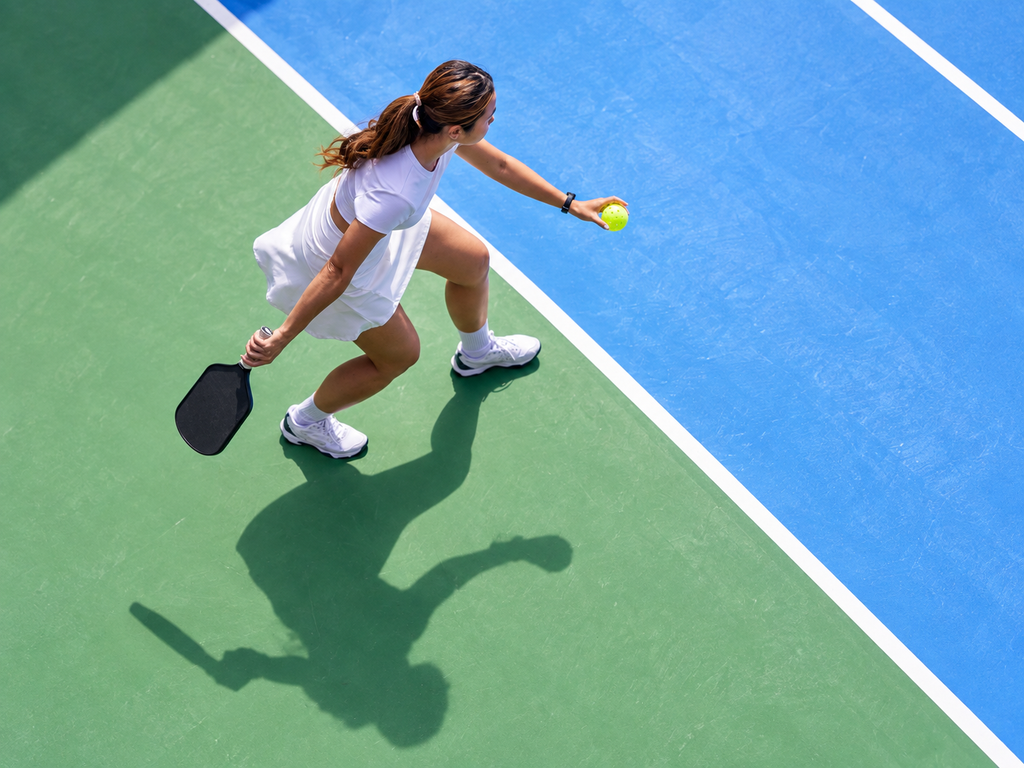
Understanding singles vs doubles pickleball is one of the first steps in recognizing how the sport is played. Pickleball can be played in two standard formats: singles, with one player on each side of the net, and doubles, with two players on each side.
Pickleball can be played in more than one format. The two standard forms are singles, with one player on each side of the net, and doubles, with two players on each side. Doubles is the more common form of pickleball, especially in recreational settings. Both formats use the same basic court size, equipment and overall objective, but they create noticeably different playing experiences.
It is also useful to understand what players mean by recreational play. Recreational pickleball is not a third version of the game alongside singles and doubles. It describes the setting and purpose of the session. A recreational game may be singles or doubles, and it may be casual or competitive, but the main purpose is ordinary participation rather than formal tournament competition.
Recognizing these distinctions helps you understand what kind of game you are watching, what kind of session you are joining and what other players mean when they talk about singles, doubles, open play or recreational games. The focus is recognition and familiarity rather than detailed technique, scoring or positioning, which fits the orientation role of the SPS Bonus Module.
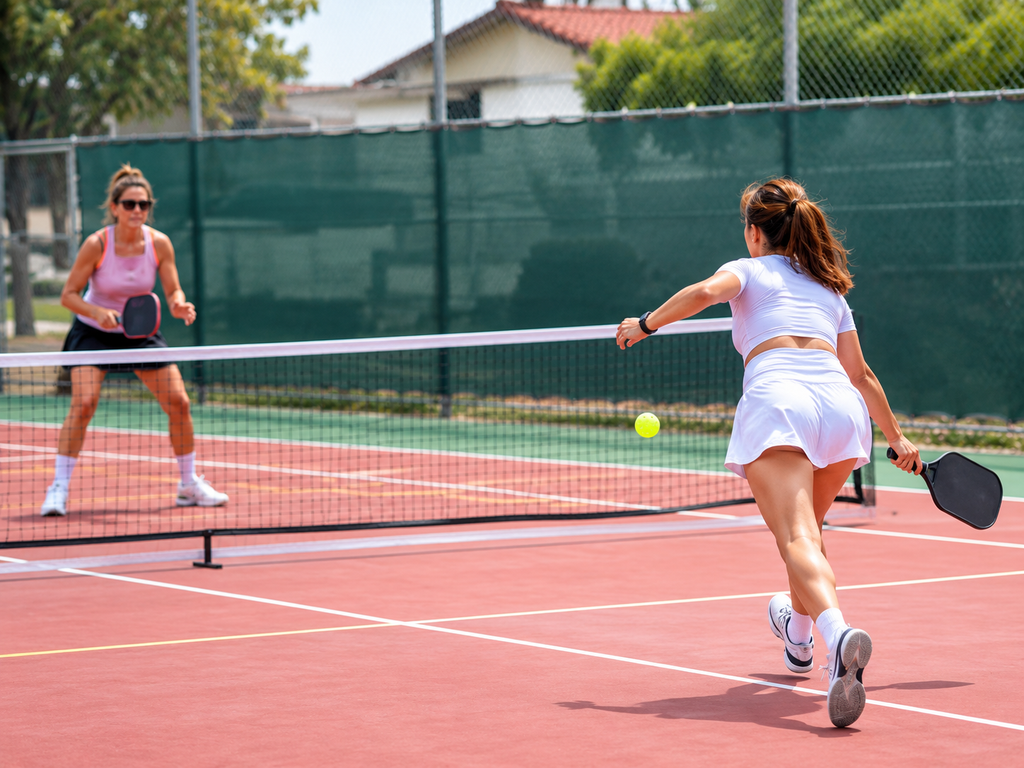
Singles: One Player on Each Side
In singles pickleball, there are two players total. One player occupies each side of the net.
If you walk past a court and see only two people actively playing against each other, you are probably watching singles.
The entire court is still used. A regulation pickleball court measures 20 feet wide by 44 feet long whether the game is singles or doubles. The court does not become narrower simply because only one person is playing on each side.
That makes singles visually easy to recognize: each player is responsible for their own side of the court.
Suppose Alex is playing against Maria. Alex has no teammate beside him, and Maria has no teammate beside her. Every playable ball sent toward Alex’s side is Alex’s responsibility. Every playable ball sent toward Maria’s side is Maria’s responsibility.
This creates a different appearance from doubles. You may notice singles players moving across larger portions of the court because there is no partner sharing the available space.
The important introductory idea is simple:
Singles = one player versus one player.
Singles should not be confused with practicing one-on-one. Two people may also be hitting balls together as a drill without actually playing a singles game. The number of people alone can suggest singles, but the activity must also be an actual game or rally intended as singles play.
Doubles: Two Players on Each Side
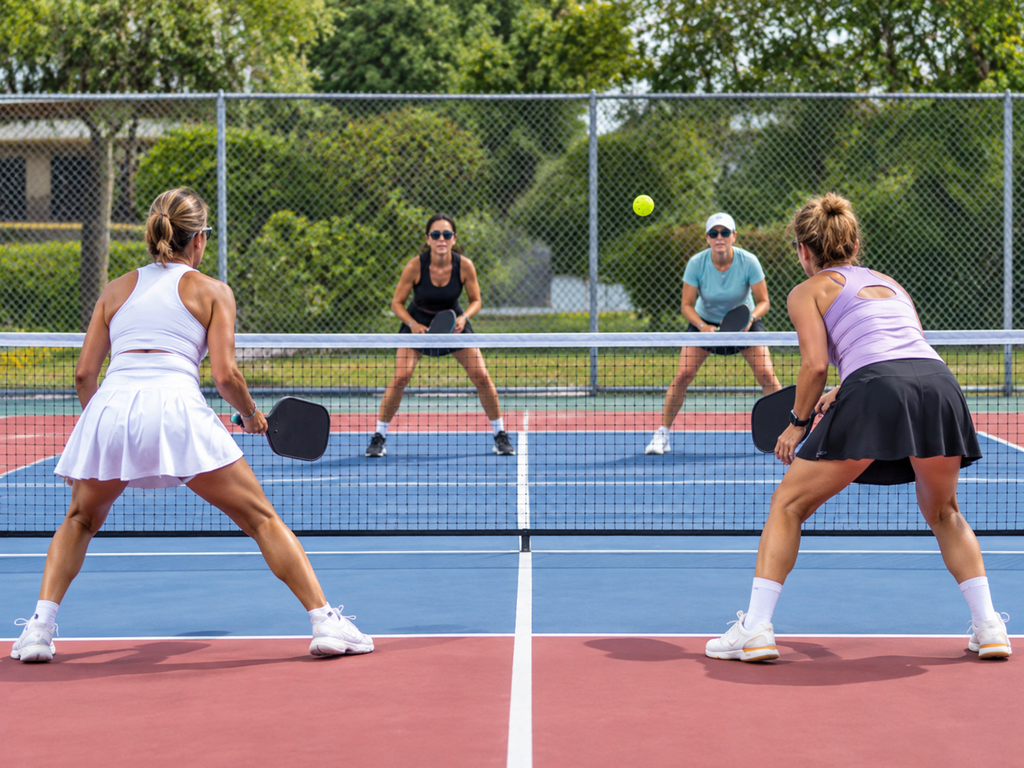
In doubles pickleball, there are four players total.
Two players form one team on one side of the net, while two players form the opposing team on the other side.
USA Pickleball identifies doubles as the more common form of the sport.
A typical doubles court might look like this:
- Alex and Maria are partners.
- James and Leah are partners.
- Alex and Maria share one side of the court.
- James and Leah share the opposite side.
- The two teams send the ball across the net during the rally.
Unlike singles, players in doubles do not operate completely independently. Each person has a partner occupying the same side of the court.
That immediately creates situations you will recognize during recreational play. Partners may move together, communicate about balls between them and adjust as the rally develops. Those behaviors are part of the visual character of doubles.
For recognition purposes, remember:
Doubles = two players versus two players.
You do not need a different-sized pickleball court for doubles. Singles and doubles use the same standard court dimensions. What changes most obviously is the number of players sharing the available space.
The Main Visual Difference Between Singles vs Doubles Pickleball
The easiest way to distinguish the formats is simply to count the active players.
| Format | Players per side | Total players |
|---|---|---|
| Singles | 1 | 2 |
| Doubles | 2 | 4 |
Imagine looking at two neighboring pickleball courts.
On Court A, one person stands on each side of the net. They exchange shots and play against each other without partners.
That is singles.
On Court B, two people occupy each side. Each pair works as a team against the pair across the net.
That is doubles.
The court markings may look identical. The paddles and balls may look identical. Many of the basic rules governing rallies are shared. The clearest immediate distinction is the number of players.
What Singles and Doubles Have in Common
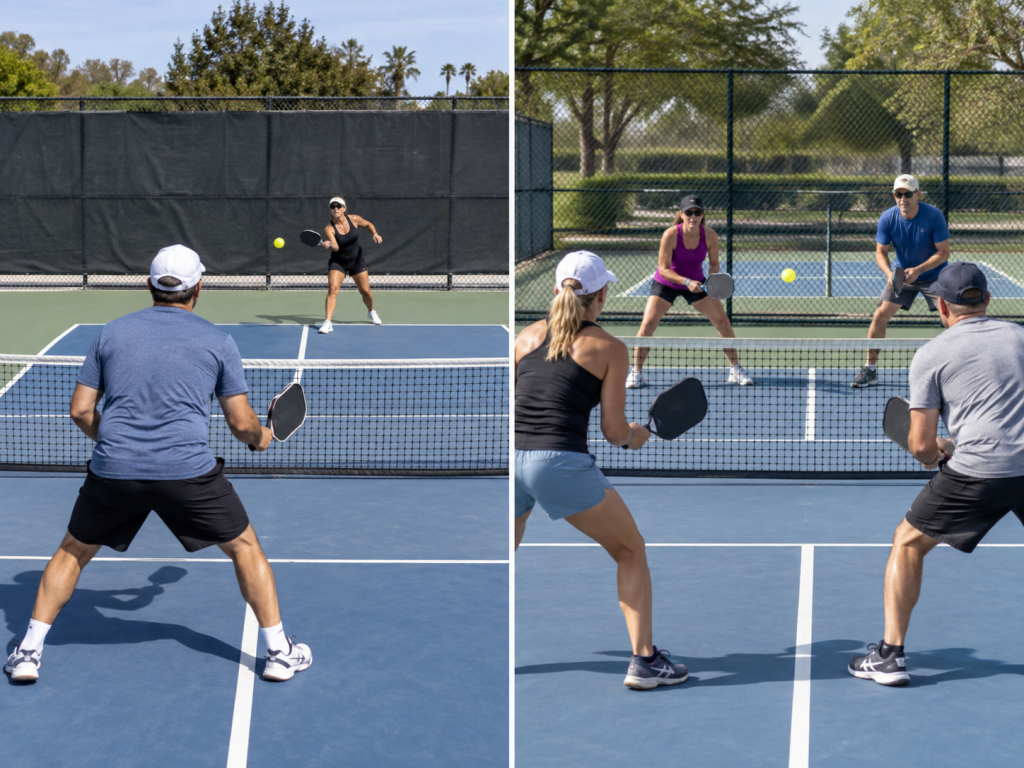
Although singles and doubles look different, they are both pickleball.
They share the fundamental structure of the sport.
Players use paddles to send a perforated plastic ball over a net. Rallies begin with a serve and continue until the rally ends. Both formats use the same standard 20-by-44-foot court.
Both also use familiar pickleball features such as service courts, baselines, sidelines and the non-volley zone commonly called the kitchen.
This is useful when you begin watching different games. You are not looking at two completely separate sports. Singles and doubles are two formats of the same sport.
The distinction is similar to saying:
Same game, different number of players.
There are procedural differences between singles and doubles, particularly involving serving and scoring. At an orientation level, it is enough to recognize that those differences exist without using them to define the formats themselves.
If there is one player on each side, it is singles.
If there are two players on each side, it is doubles.
How Singles Often Feels Different
Because a singles player has no partner sharing the court, the game commonly involves more individual court coverage.
Watch a singles rally and you may see a player move from one side of the court toward the other more frequently. If the opponent sends the ball toward open space, there is no teammate available to cover that area.
Remember:
This can make singles appear more physically demanding. USA Pickleball describes singles as requiring the player to cover the entire court rather than sharing that responsibility with a partner.
That does not mean every singles rally is fast or exhausting. The pace depends on the players, their abilities and how they choose to play.
The important recognition point is that the player is individually responsible for the playing space on their side.
When observing singles, you are likely to notice:
- one player per side;
- greater individual court coverage;
- no partner communication during rallies;
- each player handling every playable ball on their side.
These are characteristics you can observe without needing to understand singles strategy.
How Doubles Often Feels Different
Doubles changes the appearance of the game because two teammates share one side of the court.
Instead of one player trying to cover all available space, two players operate as a team.
During a recreational doubles game, you may hear partners communicate about which person will play a ball. You may also see both players shifting as the ball moves from one part of the court to another.
Remember:
Doubles often has a particularly social feel because four people are involved in each game. Players are interacting not only with opponents but also with a partner.
For a beginner attending a local pickleball session, doubles is especially important to recognize because it is the most commonly played format.
When observing doubles, look for:
- two players on each side;
- two-player teams;
- shared court coverage;
- communication between partners;
- four people participating in the game.
These characteristics make doubles easy to distinguish once you know what to look for.
What Recreational Pickleball Means
The word recreational describes the context in which people are playing rather than the number of players.
A recreational pickleball session generally involves people playing for ordinary participation, exercise, social interaction, practice or friendly competition rather than participating in a formal tournament.
A recreational game can still be competitive. Players may care about the score and try hard to win. Calling a game recreational does not mean that nobody is trying.
The important distinction is the setting.
For example, four friends meeting at a public court for several games are participating in recreational pickleball.
A group attending a community pickleball session at a recreation center is participating recreationally.
Two players arranging a casual singles game can also be playing recreational pickleball.
Therefore:
Singles and doubles describe the format.
Recreational describes the playing context.
A person could accurately say:
“We played recreational doubles this morning.”
That statement tells you two different things. Doubles tells you there were two players on each side. Recreational tells you the game was part of ordinary non-tournament participation.
Someone could just as accurately say:
“We played recreational singles.”
The setting is still recreational even though the player format has changed.
Recreational Play Can Be Organized in Different Ways
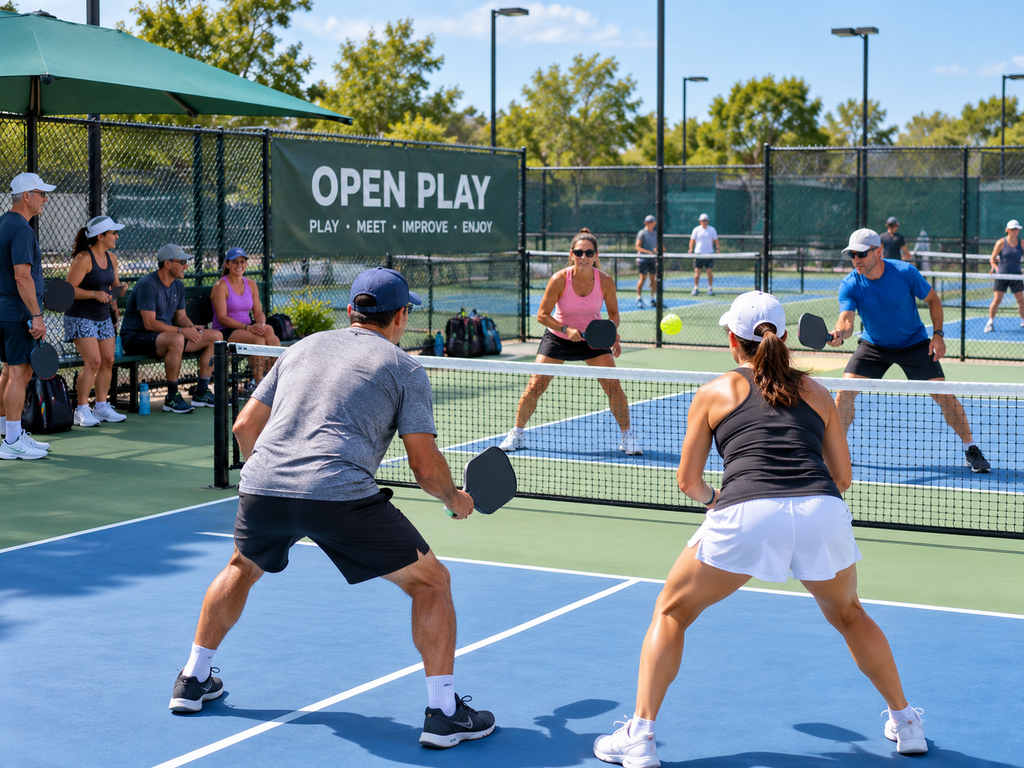
Not every recreational pickleball session operates exactly the same way.
Four people may reserve a court and play together for an hour.
A larger group may share several courts and rotate players between games.
A recreation center may schedule a session specifically for beginners.
A club may organize players according to experience level.
Friends may simply arrange their own game.
You may also encounter open play, a common type of recreational setting in which multiple players attend during an established playing period and games are formed as courts become available.
The exact organization can differ from one facility or group to another. A venue may have its own method for determining who plays next, how long games continue or how players rotate.
This is why recreational play should not be treated as a single fixed competition format.
The underlying sport remains pickleball, but the way people organize a session can vary.
Recreational Does Not Mean “No Rules”
One common misunderstanding is that recreational pickleball means players can simply ignore the rules.
That is not what the term means.
Recreational players normally still play recognizable pickleball. They serve, rally, use the marked court and follow the basic structure of the game.
What may differ is how formally the session is organized.
A tournament may have scheduled matches, defined competition procedures and officials or tournament staff. A neighborhood recreational game is more likely to be managed by the players themselves.
Local groups may also agree on particular arrangements before starting. For example, a facility may use a specific playing format or rotation system.
The SPS course uses USA Pickleball rules as its primary baseline while recognizing that recreational players should confirm the arrangements being used at the place where they are playing.
For a beginner, this means you can recognize recreational pickleball without assuming that every recreational venue operates identically.
Practice, Warm-Up and a Game Are Not the Same Thing
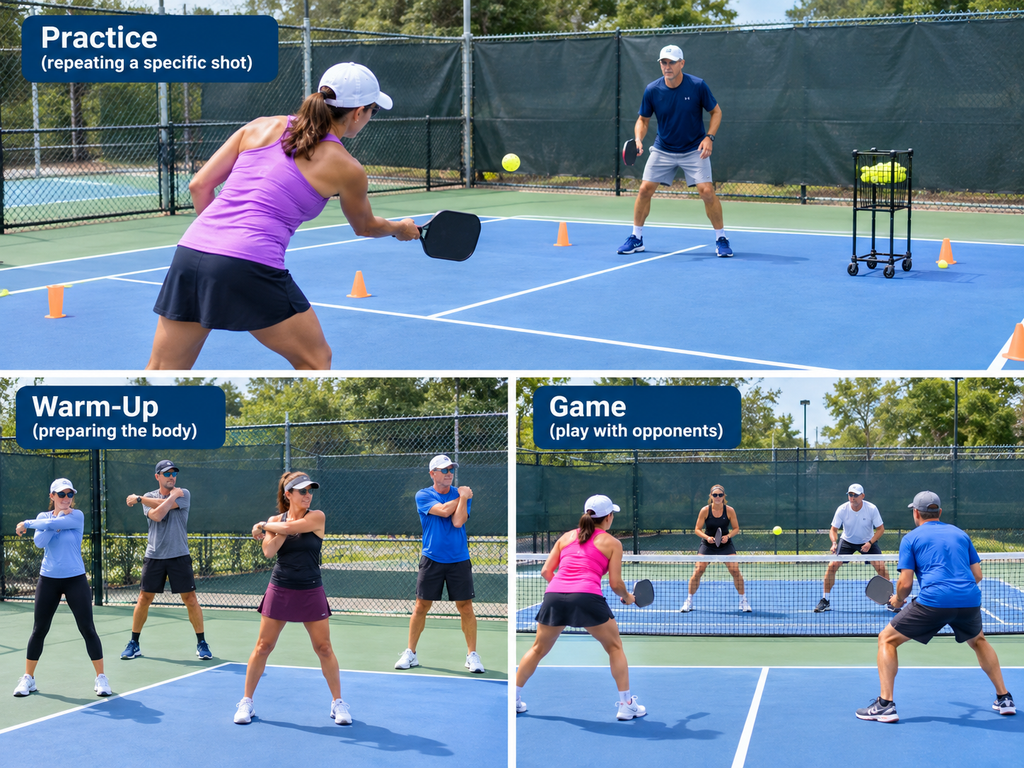
You may see players on a pickleball court without seeing an actual game.
Two players might be hitting the ball back and forth as practice.
Four players might be warming up before beginning.
One person might be practicing with a ball machine or receiving feeds from another person.
These activities involve pickleball but are not automatically singles or doubles games.
To recognize actual play, look at what the participants are doing.
Are two opponents playing rallies as a game? That may be singles.
Are two teams of two playing against each other? That is doubles.
Are players repeatedly practicing one particular action without running a normal game? You are probably watching a drill or practice activity.
Recognizing this difference prevents another common beginner confusion: assuming that the number of people on a court always tells you exactly what type of game is taking place.
Tournament Play and Recreational Play
You may hear players distinguish between recreational play and tournament play.
Tournament play takes place within an organized competition. Matches are scheduled or placed within a competition structure, and players participate under the procedures established for that event.
Recreational play is generally less formal in organization.
However, the distinction does not mean tournament players use one type of pickleball while recreational players use another. Both may play singles or doubles.
For example:
A sanctioned event may include a doubles competition.
Four friends may also play doubles at a community court.
The first is tournament doubles.
The second is recreational doubles.
The basic format – two players against two players – is still recognizable in both cases.
Recognizing Common Playing Situations
Consider several examples.
Situation 1:
Two players are on the court. One occupies each side of the net, and they are playing against each other.
Recognition: Singles.
Situation 2:
Four players are on the court. Two are teammates on one side, and two are teammates on the other.
Recognition: Doubles.
Situation 3:
Four friends meet at their neighborhood court and play several two-versus-two games.
Recognition: Recreational doubles.
Situation 4:
Two friends arrange a one-on-one game at a public court.
Recognition: Recreational singles.
Situation 5:
Eight people arrive for a community open-play session. Four play while the others wait to rotate into later games.
Recognition: A recreational session containing doubles games.
Situation 6:
Two people stand on opposite sides repeatedly hitting the same type of shot without keeping a game going.
Recognition: Practice rather than necessarily a singles game.
Recognition Activity
Watch a pickleball game in person or in a short video and identify three things.
First, count the players.
Is there one player or two players on each side?
Second, identify the format.
One player per side indicates singles. Two players per side indicates doubles.
Third, consider the setting.
Does it appear to be an organized tournament match, a recreational game, open play or a practice session?
You do not need to analyze the players’ technique. Simply practice recognizing what type of activity is taking place.
You can also test yourself with the following examples:
- One player faces one opponent during a casual park game.
Recreational singles. - Two teammates face another two-player team at a local club session.
Recreational doubles. - Four players repeatedly practice short exchanges without keeping a normal game going.
Doubles-style practice, not necessarily a doubles game. - One player competes against another in an organized singles event.
Tournament singles. - Four players compete as two teams in an organized event.
Tournament doubles.
The objective is not to identify every procedural detail. It is to recognize the basic structure of the activity you are seeing.
Does Better Pickleball Equipment Make a Difference?

Gear for Improvement
As your skills develop, it is natural to wonder whether better equipment could help you improve faster. New gear can sometimes make a meaningful difference, but improvement does not automatically…
Summary
Pickleball is played primarily as singles or doubles. Singles has one player on each side of the net, while doubles has two players on each side. Both formats use the same standard court, but singles places court coverage on one player while doubles divides the playing space between teammates. Doubles is the more common format in pickleball.
Recreational play describes the setting rather than a separate game format. Recreational pickleball may be singles or doubles and may take place among friends, at clubs, community facilities or open-play sessions. Practice sessions should also be distinguished from actual games.
Recognizing the number of players, the team arrangement and the setting gives you a clear picture of the type of pickleball activity taking place.
Previous: What Pickleball Is and What Players Try to Do
Next: Understand Recreational Etiquette and Beginner Expectations