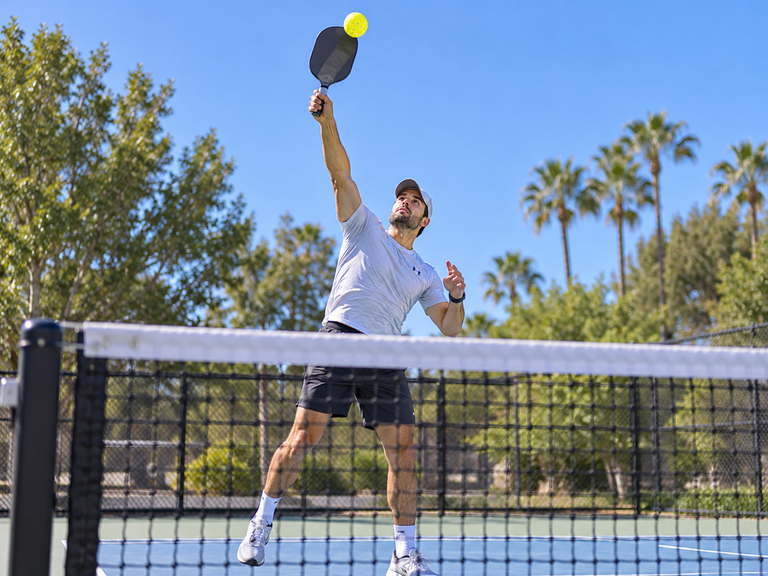
A Use a Balanced Pickleball Ready Position approach gives you a simple, repeatable starting posture from which you can respond to a ball arriving on either side of your body. Instead of standing stiffly or allowing the paddle to hang at your side, you begin with a stable base, comfortable knee flexion, balanced body weight and the paddle held in front.
You do not need an exact stance width, knee angle or highly specialized posture. A beginner pickleball stance should feel stable, relaxed and practical. Your goal is to create a neutral starting position that allows you to move left, right or forward without first having to correct your balance.
The ready position is also something you return to. After a simple movement or paddle action, re-establishing your balance and bringing the paddle back in front prepares you for whatever happens next.
How to Use a Balanced Pickleball Ready Position
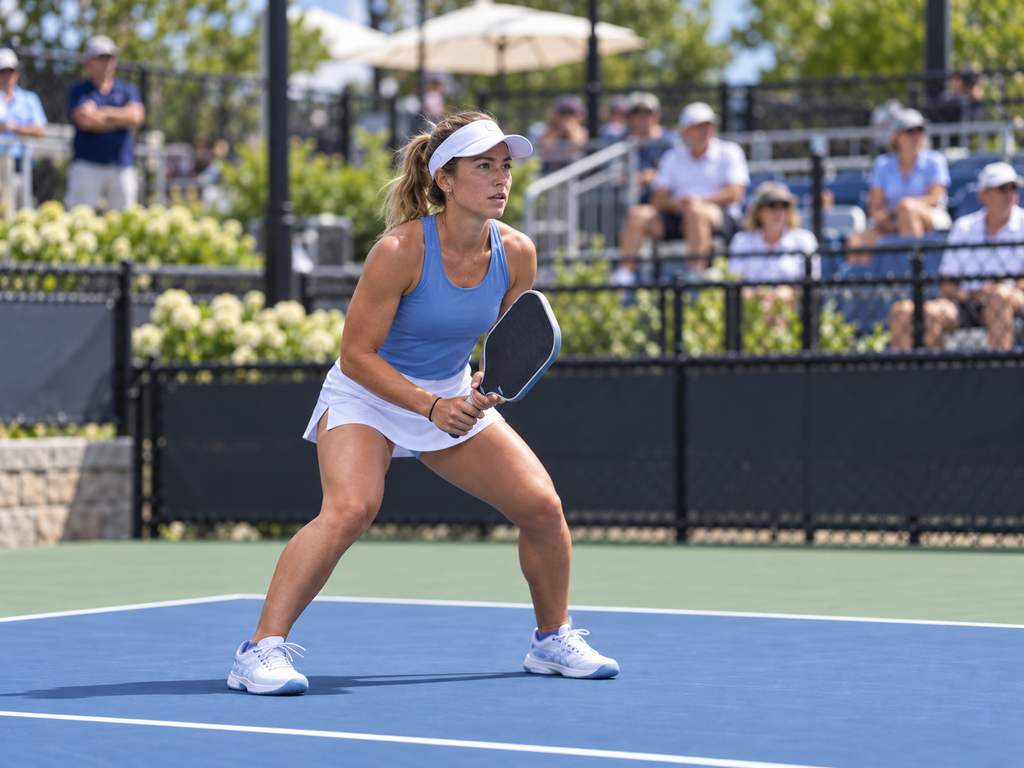
Begin by standing with your feet comfortably separated. Your base should feel stable without being excessively wide.
Bend your knees slightly so they are not locked, but do not drop into a deep crouch. Keep your weight balanced rather than sitting heavily on your heels or leaning far onto your toes.
Hold your paddle in front of your body using the comfortable grip you have already learned. Keep the paddle in a neutral position that does not strongly favor only your forehand or only your backhand. Your shoulders and arms should remain reasonably relaxed.
Face the likely direction of play and make sure you feel capable of moving in either direction.
A useful sequence is:
Set your feet → bend comfortably → balance your weight → place the paddle in front → relax → be ready to move.
This pickleball ready position is coaching guidance, not an official pickleball rule. Players naturally vary in height, mobility and preferred stance. The important qualities are balance, comfort, paddle readiness and freedom of movement.
Build a Stable Base
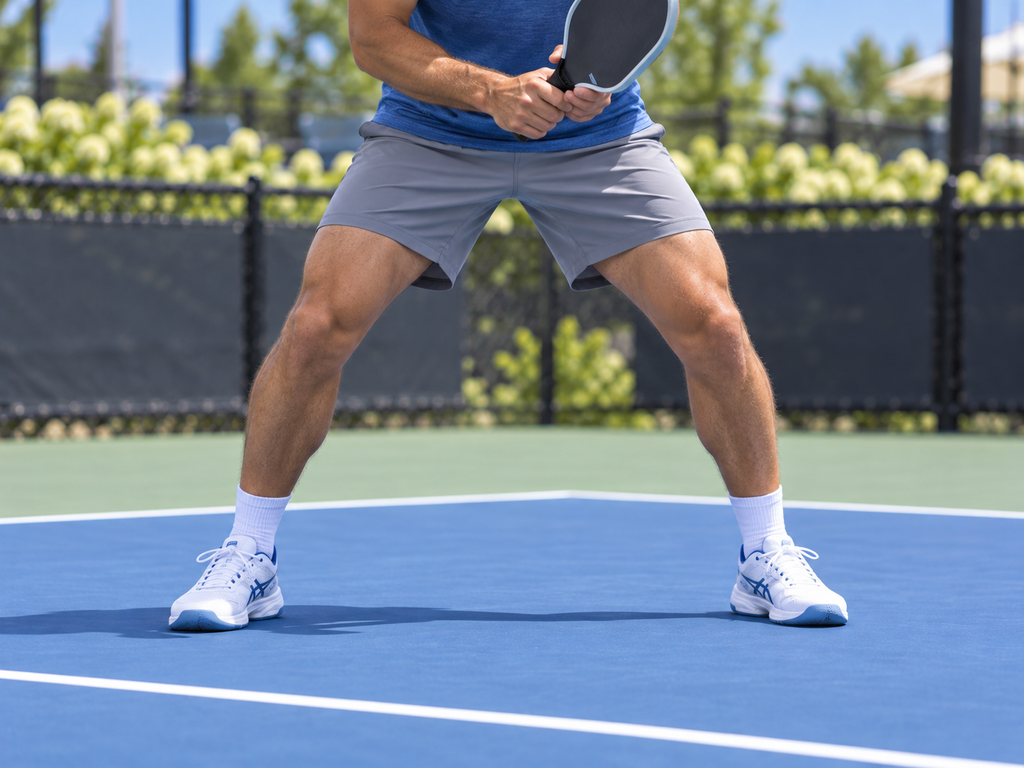
Your feet provide the foundation for the rest of your ready position.
Stand with them separated enough that you feel stable. If your feet are nearly together, small movements may cause you to lose balance or require an extra step before you can react. If your stance is unnecessarily wide, movement can also become awkward because you must first bring your feet back underneath you.
Look for a comfortable middle position.
Keep both feet in secure contact with the court. You should feel able to shift or step in either direction without needing to reorganize your entire stance first.
Test your base by gently moving your body a little left and right. If you immediately feel unstable, change your foot position slightly and try again.
The objective is not to find one perfect measurement. It is to find a balanced pickleball stance you can reproduce easily.
Bend the Knees Comfortably
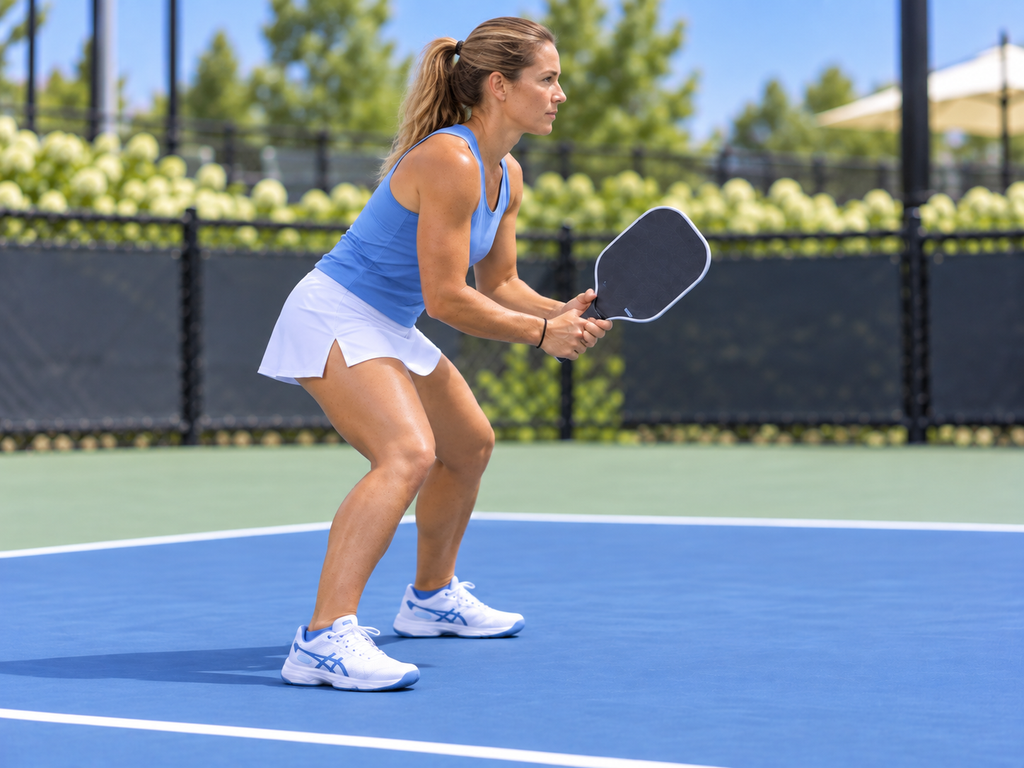
A useful ready position includes some knee flexion.
Completely locked knees can make your posture rigid. Instead, allow the knees to bend slightly so your lower body remains comfortable and prepared for movement.
⚠ CAUTION:
Avoid turning this into an exaggerated squat. A very deep crouch can create unnecessary effort and may make it harder to move naturally.
Think about being ready rather than being low.
Your posture should allow you to stand comfortably, make a small movement and return to the same position repeatedly. If holding the stance quickly becomes tiring, check whether you are crouching more deeply than necessary or carrying unnecessary tension.
The amount of knee flexion can vary naturally from one player to another. The beginner goal is simply a comfortable position that supports balance and movement.
Balance Your Body Weight
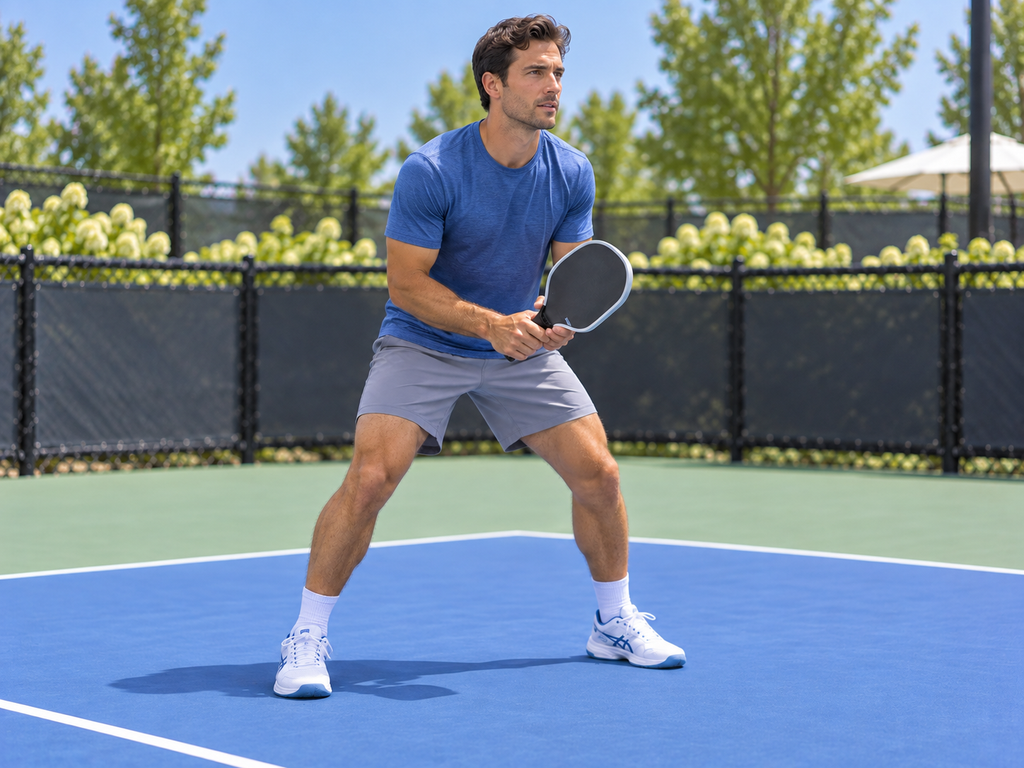
Where you place your body weight strongly affects how stable the ready position feels.
⚠ CAUTION:
Avoid sitting heavily on your heels. This can leave you leaning backward and may make the first movement feel slow or awkward.
At the opposite extreme, do not lean so far forward that you feel as though you are about to fall toward the front of your feet. Being ready does not require constantly tipping your body forward.
Instead, keep your weight centered enough that you can move in more than one direction.
A simple self-check can help. Once you establish your stance, ask:
- • Could I take a small step left without first correcting my balance?
- • Could I move right just as easily?
- • Could I make a small forward movement under control?
- • Do I feel stable if I remain still?
If one direction feels much harder than another before you have even moved, adjust your weight until the position feels more neutral.
Balanced does not mean completely motionless or rigid. It means your posture is controlled enough that you are not already falling, leaning or committing your body unnecessarily in one direction.
Keep the Paddle in Front
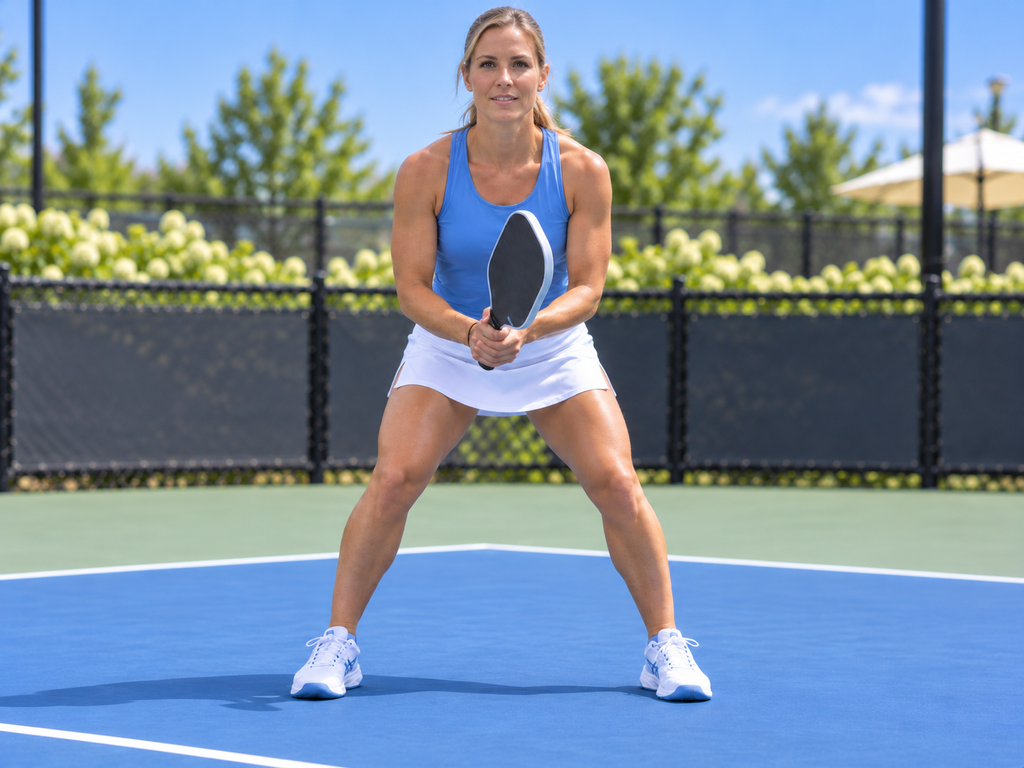
Your paddle is part of the ready position.
Hold it where you can see and control it in front of your body. Avoid letting it hang loosely beside your leg or drift behind you while you wait.
Keeping the paddle in front reduces the amount of movement needed simply to bring it back into a useful position.
Try to keep the paddle neutral enough that you have access to both sides of your body. You are not preparing a complete forehand or backhand stroke yet. You are simply creating a practical starting position from which either side can become available.
The paddle also does not need to be held with excessive tension. Continue using a comfortable, secure grip.
If you notice that the paddle repeatedly drops toward your side after an action, make the reset deliberate: finish the action, regain balance and bring the paddle back in front.
That small habit is one of the main purposes of learning a repeatable ready position for pickleball.
Keep the Upper Body Relaxed
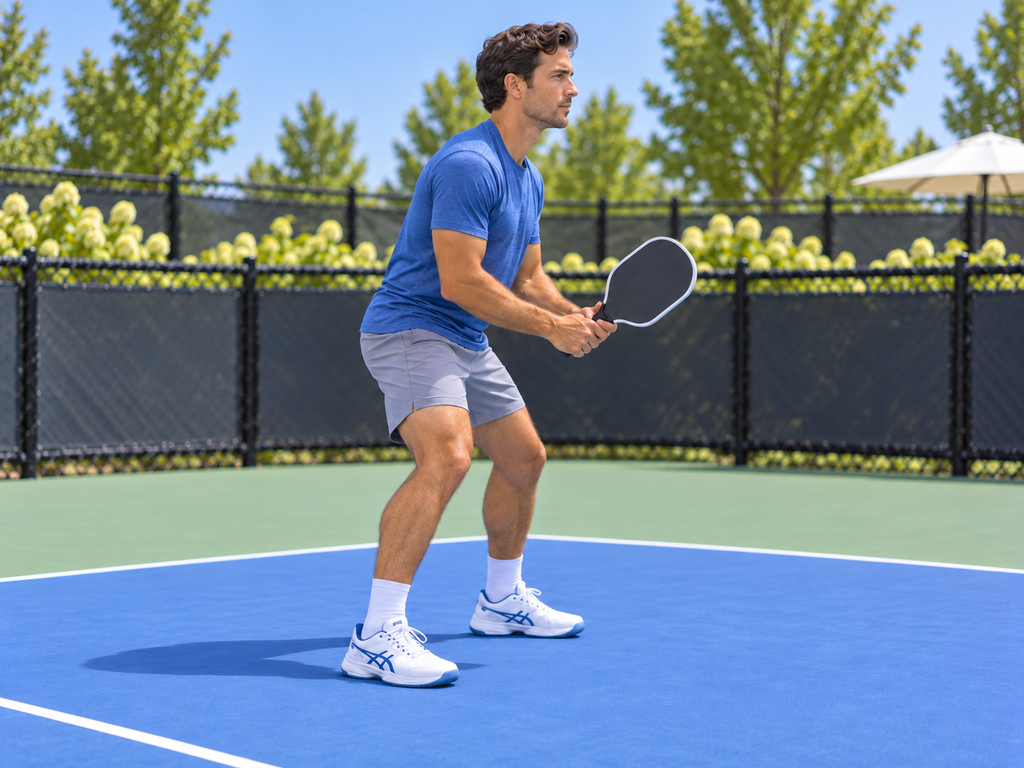
A ready position should look prepared without looking rigid.
Keep your shoulders reasonably relaxed. Avoid lifting them toward your ears or tightening your arms unnecessarily.
Continue using enough grip pressure to keep the paddle secure without squeezing it continuously at maximum effort.
Your torso can remain upright while still having an athletic posture. You do not need to bend dramatically at the waist or force yourself into an uncomfortable pose.
Check yourself periodically. If your shoulders, forearms or hands have become much tighter even though nothing is happening, release some unnecessary tension while maintaining control of the paddle.
The goal is readiness with freedom to move, not stiffness.
Reset After Every Simple Action
The ready position is most useful when you can return to it consistently.
Suppose you take one small step to the left. After the movement, stop under control, regain a stable base and bring the paddle back in front.
Then do the same after moving right.
The basic pattern is:
Move → stop → balance → paddle in front → ready again.
Use the same sequence after a gentle paddle movement. Once the action finishes, avoid leaving the paddle away from your body or remaining stretched in the direction you just moved.
Resetting creates a neutral starting point for the next action.
At first, make the reset very deliberate. You may even pause briefly and check your feet, knees, balance and paddle. As the position becomes familiar, those individual checks should begin to blend into one simple habit.
Your ready position does not need to look identical after every repetition. Natural variation is normal. What matters is that you repeatedly return to a position that is stable, comfortable and useful.
Common Beginner Ready-Position Mistakes
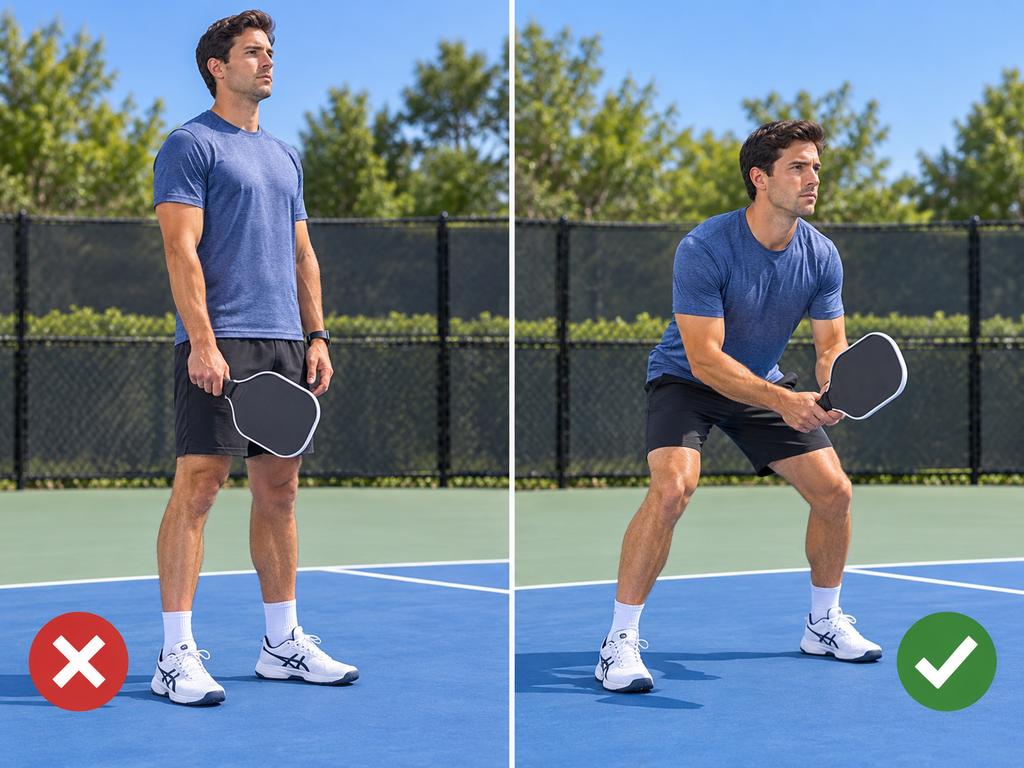
Standing completely upright and rigid
What it looks like: The legs are straight, the knees are locked and the entire body appears stiff.
Why it causes difficulty: The player may need an additional adjustment before moving naturally.
Correction: Soften the knees slightly and allow the body to feel prepared rather than rigid.
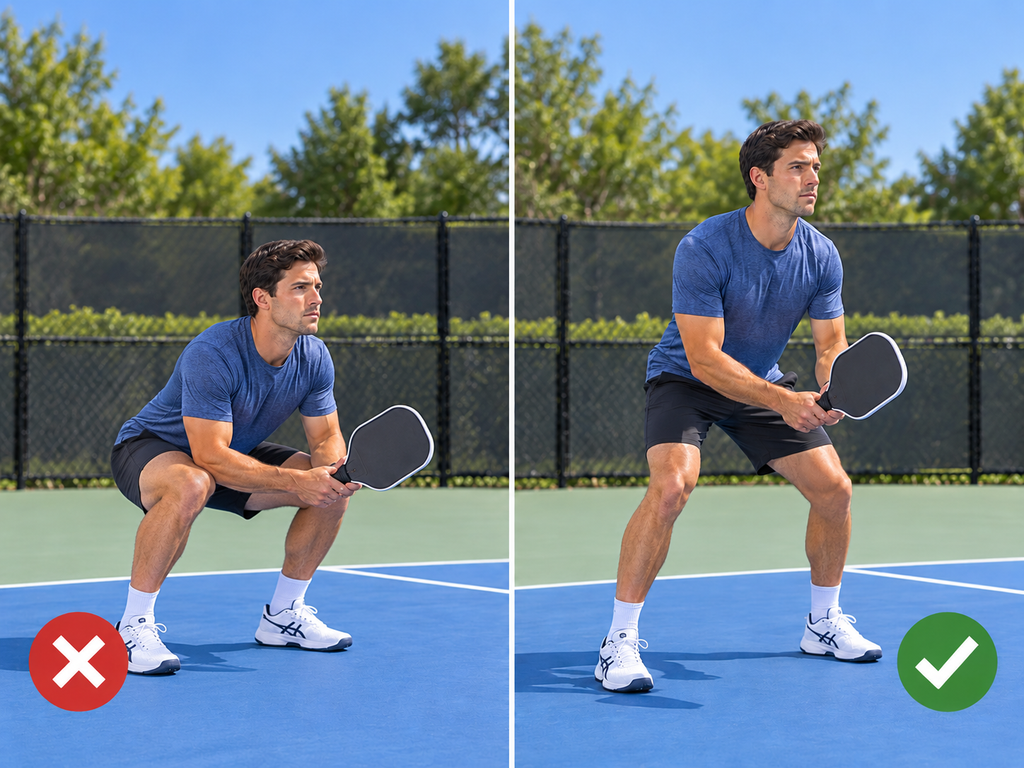
Crouching too deeply
What it looks like: The player drops into a deep squat and stays there while waiting.
Why it causes difficulty: The posture requires unnecessary effort and can make ordinary movement uncomfortable.
Correction: Rise until the knee bend feels moderate and sustainable.
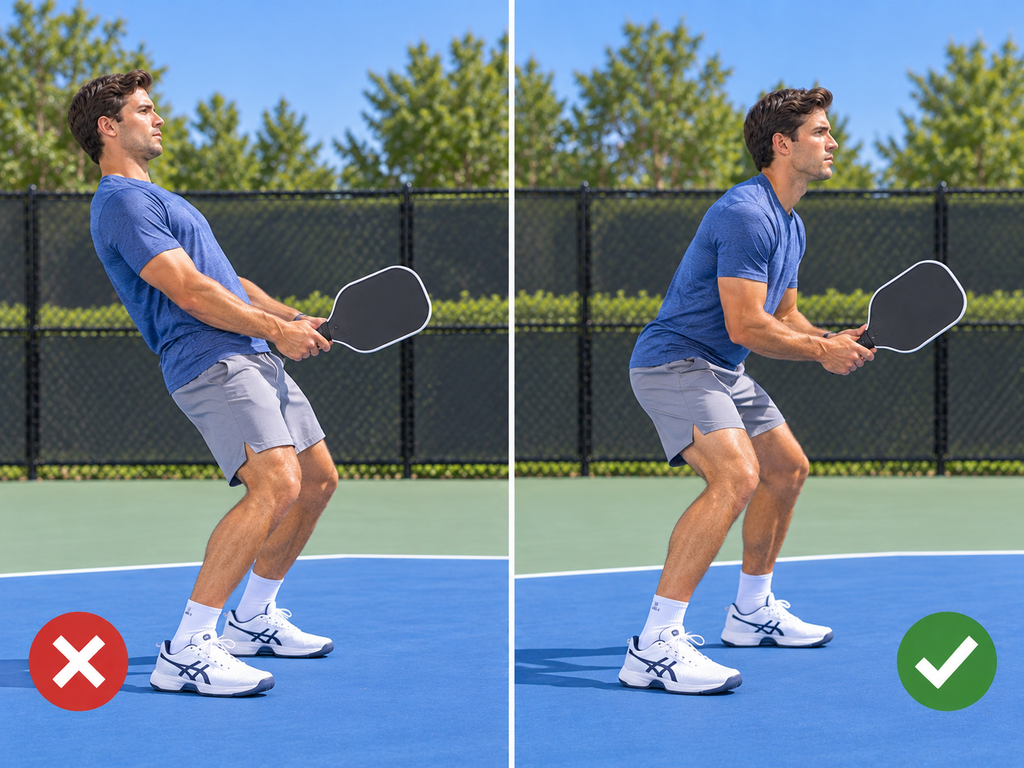
Putting too much weight on the heels
What it looks like: The player appears to be sitting backward, sometimes with the upper body leaning away from the direction of play.
Why it causes difficulty: Starting movement can require first shifting the body forward.
Correction: Bring the weight back toward a more centered position.
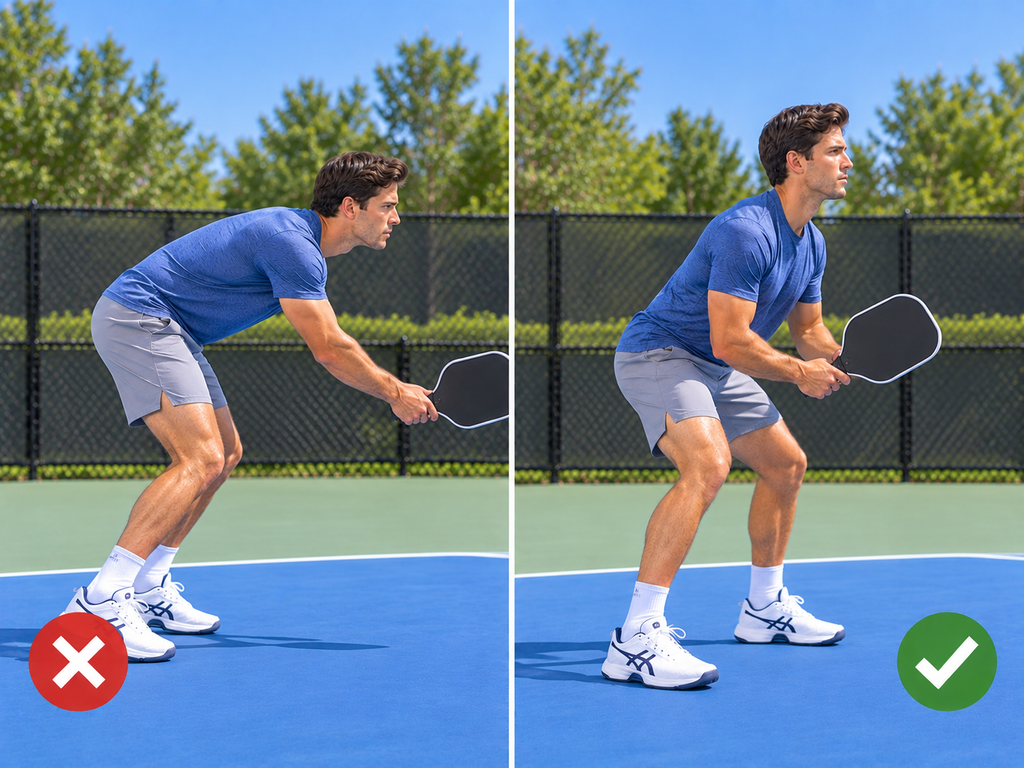
Leaning too far forward
What it looks like: The player tips toward the front and feels unstable.
Why it causes difficulty: Moving backward or changing direction may become harder because the body is already committed forward.
Correction: Return to a controlled, centered posture from which several directions remain available.
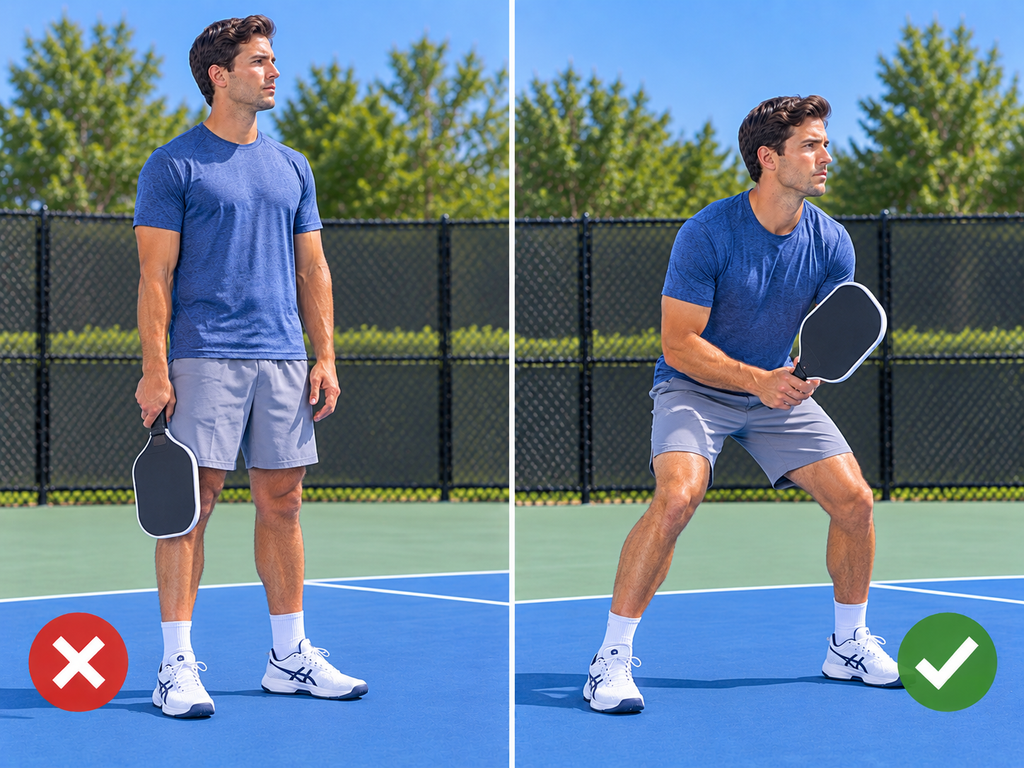
Letting the paddle hang at the side
What it looks like: The paddle drops beside the hip or leg between actions.
Why it causes difficulty: The paddle must travel farther simply to become useful again.
Correction: Bring the paddle back in front as part of every reset.
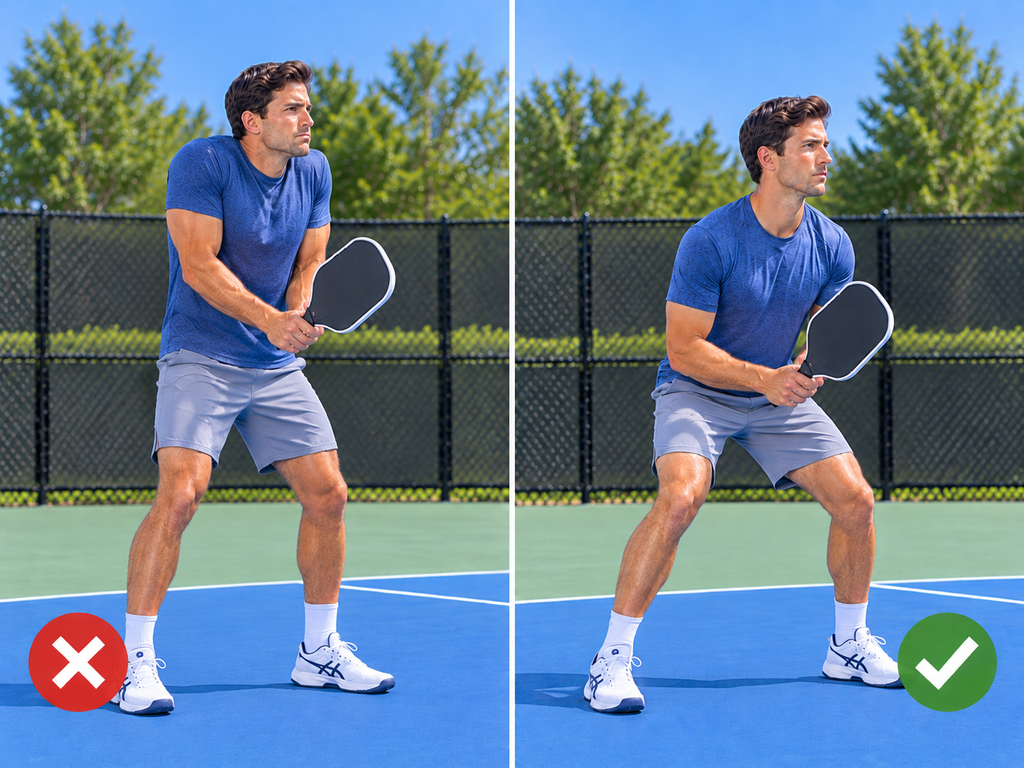
Holding the upper body too tightly
What it looks like: Raised shoulders, tense arms and excessive grip pressure.
Why it causes difficulty: The player is prepared with tension rather than relaxed control.
Correction: Keep the paddle secure while relaxing unnecessary tension in the shoulders, hand and forearm.
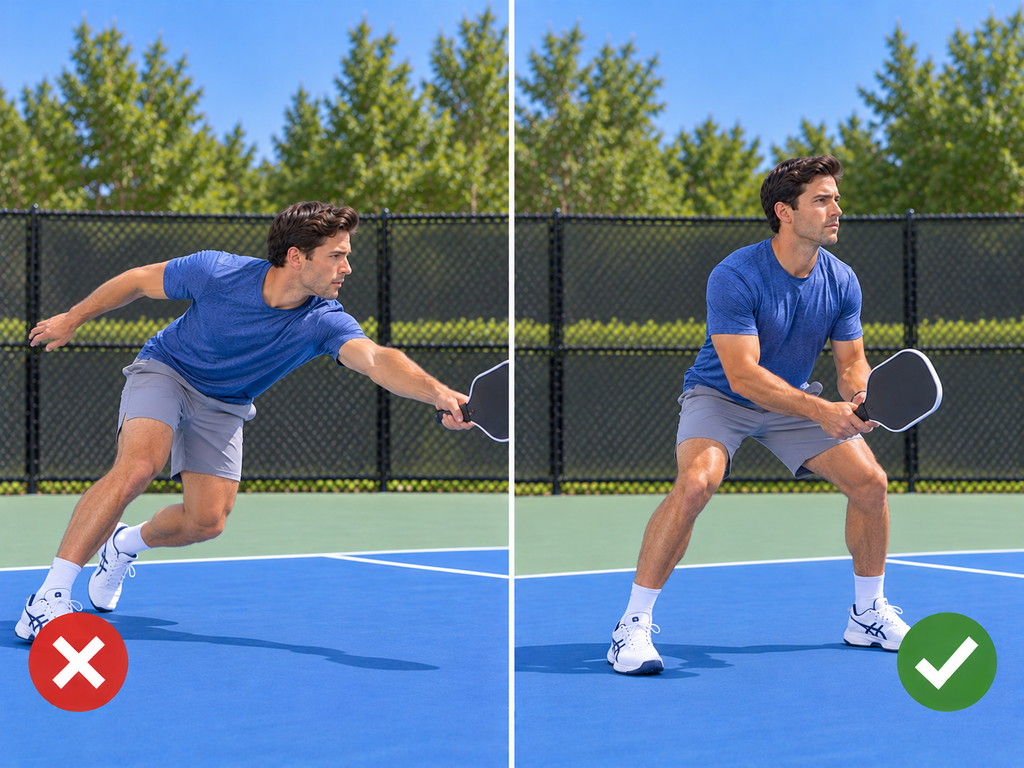
Failing to reset after movement
What it looks like: The player steps to one side and remains leaning or stretched in that direction.
Why it causes difficulty: The next action begins from an unstable position rather than a neutral one.
Correction: After every simple movement, regain balance, establish the feet and return the paddle to the front.
Practice: Ready-Position Reset Drill
This drill develops the habit of repeatedly returning to a stable beginner pickleball stance after movement.
Setup
Use a clear court area or another suitable practice space with secure footing.
You need:
- • one pickleball paddle;
- • enough clear space for several small steps;
- • a partner only if you want to use the optional progression.
Maintain enough distance from other players that small paddle movements and steps can be completed safely.
Establish Your Ready Position
Begin with your normal comfortable grip.
- Separate your feet into a stable stance.
- Bend your knees slightly.
- Balance your weight.
- Hold the paddle in front of your body.
- Relax your shoulders.
- Face the likely direction of play.
Hold the position briefly and notice how it feels.
You should feel stable without being frozen.
Move Left and Reset
Take one small, controlled step to your left.
Stop.
Re-establish your stable base and balanced body position. Bring the paddle back in front if it moved away from the ready position.
Pause long enough to confirm that you are balanced again.
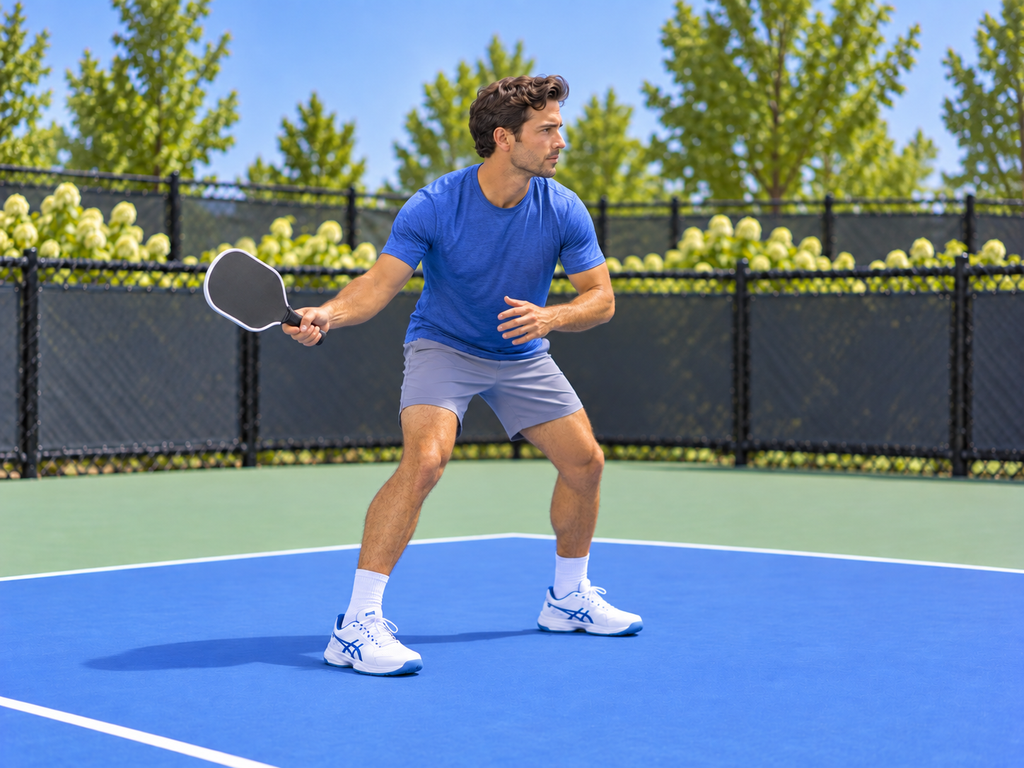
Move Right and Reset
Return to your starting area, then make one small movement to your right.
Again:
move → stop → balance → paddle in front → ready.
Do not rush between repetitions.
Move Slightly Forward and Reset
From the ready position, take a small controlled step forward.
Stop before the movement becomes a lunge. Regain balance and return to your neutral paddle position.
Move back to your original starting area under control.
Repeat the Sequence
Continue rotating among:
- • one small step left;
- • reset;
- • one small step right;
- • reset;
- • a slight forward movement;
- • reset.
Perform several repetitions in each direction.
The purpose is not speed. Concentrate on returning to the same general ready posture after every movement.
If you begin losing balance, reduce the size or speed of your steps.
Add a Gentle Paddle Action
Once the movement resets feel comfortable, add a small, controlled paddle action.
Start in ready position, move the paddle gently to one side as though preparing to meet an easy ball, then return it to the front.
Repeat on the other side.
Avoid full swings. This exercise is about returning to ready position, not learning a complete stroke.
Progression: Gentle Predictable Feeds
A partner may provide slow, predictable feeds if you can maintain safe spacing and control.
Begin in your balanced ready position.
Follow the incoming ball, make only a gentle controlled paddle contact, then immediately focus on resetting:
- regain stable footing;
- balance your body;
- return the paddle to the front;
- prepare for the next feed.
The feeds should remain slow enough that you can practice the reset successfully. Do not turn the drill into fast rally practice.
If a feed would require uncontrolled movement, exaggerated reaching or movement into another person’s space, stop the repetition rather than chasing the ball.
Success Standard
You are successful when you can repeatedly establish a stable and comfortable ready position, make a small movement or gentle paddle action and return to that position without losing balance.
Your feet should provide a reliable base, your knees should remain comfortably flexed, your body weight should feel balanced and your paddle should return to the front after each action.
Summary
A balanced pickleball ready position gives you a neutral starting posture for responding to the next ball.
Use a stable stance with your feet comfortably separated. Bend your knees without locking them or crouching excessively. Keep your body weight balanced so you can move in either direction.
Hold the paddle in front rather than letting it hang at your side, and keep your shoulders and upper body reasonably relaxed.
After every simple movement or paddle action, regain your balance and return to the ready position. The exact stance can vary naturally between players; the important qualities are stability, comfort, paddle readiness and controlled movement.
Previous: Hold a Pickleball Paddle with a Comfortable Grip
Next: Control the Pickleball Paddle Face
Recommended Read