
In This Guide
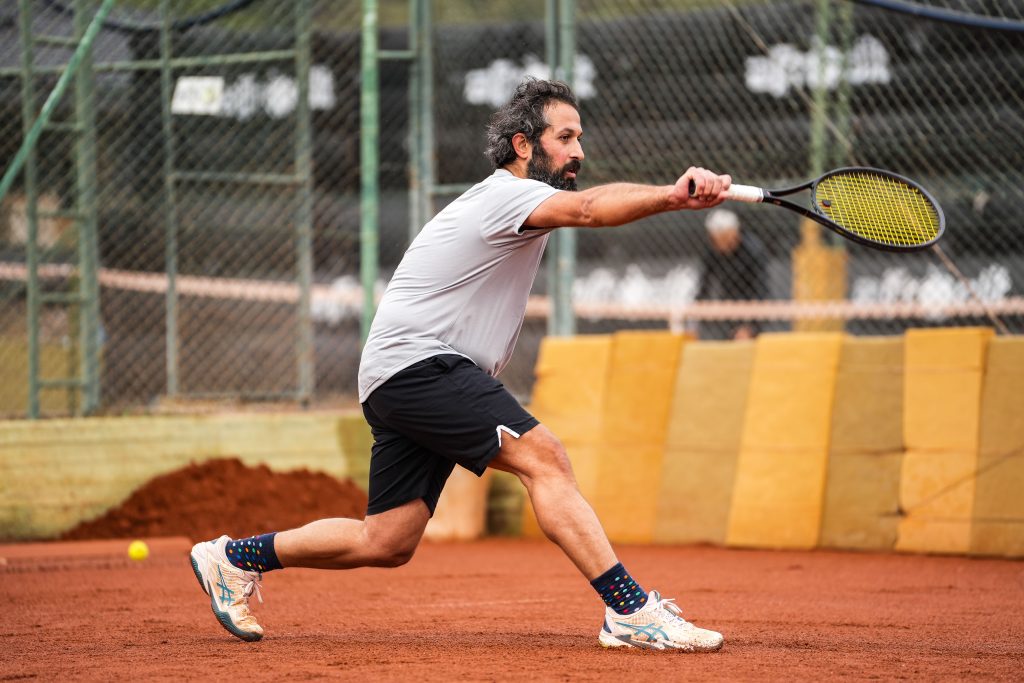
Tennis can look difficult when you watch experienced players.
They serve fast, move quickly around the court and seem to hit the ball exactly where they want it to go. If you’ve never picked up a racquet before, it’s easy to wonder whether tennis is simply too difficult to learn.
The good news is that you don’t need to play like an experienced player to start enjoying tennis.
There is a learning curve, but beginners can start with simple skills, short rallies and basic rules before gradually learning more advanced techniques.
Quick Answer
Tennis can be challenging to learn at first because you need to coordinate your movement, racquet and a moving ball at the same time. Serving, controlling the ball and maintaining rallies usually take practice.
However, beginners don’t need to master everything before they can start playing.
Learning the basic strokes, understanding the court and practicing consistently can help you become more comfortable over time. The goal at the beginning isn’t perfection. It’s learning enough to keep the ball in play and enjoy being on the court.
Why Does Tennis Feel Difficult at First?
Many sports involve skills that don’t feel natural the first time you try them, and tennis is no different.
A beginner has to learn several things at once.
You need to:
- Hold the racquet correctly
- Track a moving ball
- Judge where the ball will bounce
- Move into position
- Time your swing
- Make contact with the ball
- Control where the ball goes
- Recover for the next shot
That’s a lot to process when you’re just starting.
The good news is that you don’t have to consciously think about all of these things forever.
With practice, many of these movements can start to feel more familiar.
What Is the Hardest Part of Learning Tennis?
Different players struggle with different skills, but there are several common challenges beginners tend to experience.
Making Consistent Contact
One of the first challenges is simply hitting the ball cleanly.
The ball is moving, you’re moving and your racquet is moving.
Your timing won’t always match up.
Beginners often swing too early, too late or too hard. Sometimes the ball hits the frame of the racquet. Sometimes it misses completely.
That’s normal.
Instead of worrying about power, focus first on making comfortable, controlled contact.
Controlling the Ball
Getting the racquet onto the ball is only the beginning.
Eventually, you need to control where the ball goes.
Beginners commonly hit balls:
- Into the net
- Beyond the baseline
- Outside the sidelines
- Too high
- Too short
Control develops through repetition and better technique.
You don’t need to hit harder. In many cases, learning to hit more consistently is far more useful.
Learning the Serve
The serve is often one of the more challenging strokes for beginners because several movements have to work together.
You need to position your body, toss the ball, swing the racquet and make contact above your head.
Trying to do everything at once can feel awkward.
Breaking the serve into smaller parts makes it much easier to learn.
Moving to the Ball
Beginners often focus so much on swinging the racquet that they forget about their feet.
But good shots usually begin with good positioning.
Learning how to move toward the ball, create enough space to swing and recover afterward can make every other tennis skill easier.
Do You Need to Be Athletic to Play Tennis?
You don’t need to be a highly trained athlete to begin playing recreational tennis.
Tennis can be adapted to your current ability.
A beginner practice session might involve controlled rallies, simple drills and shorter periods of play rather than intense competitive matches.
As you become more comfortable, you can gradually increase how much you move and how intensely you play.
Your fitness can develop alongside your tennis skills.
Do You Need Good Hand-Eye Coordination?
Hand-eye coordination certainly helps in tennis, but you don’t need excellent coordination before you start.
Coordination itself is something you practice.
Every time you track the ball, move into position and attempt a shot, you’re practicing the connection between what you see and how your body responds.
At first, judging the ball’s speed and bounce may feel difficult.
With repetition, those situations can become more familiar.
Is Tennis Scoring Difficult to Understand?
Tennis scoring can seem strange to beginners because it doesn’t simply count points as 1, 2, 3 and 4.
Instead, you’ll hear:
- Love — zero points
- 15 — one point
- 30 — two points
- 40 — three points
- Game — normally won by taking the next point, provided you have at least a two-point advantage
If both players reach 40, the score is called deuce. From there, a player must win two consecutive points to win the game. The first gives them advantage, and the second wins the game.
Then games are used to win a set, and sets determine the match winner.
How Long Does It Take to Learn Tennis?
There isn’t one answer.
How quickly you improve depends on factors such as:
- How often you practice
- Whether you receive instruction
- Your previous sports experience
- Your coordination
- Your fitness
- The skills you practice
- What you consider “learning tennis”
There’s also an important distinction between learning tennis and mastering tennis.
You may learn enough to rally and enjoy recreational play relatively early.
Developing reliable serves, consistent strokes, better footwork and match strategy can take much longer.
That’s part of what makes tennis rewarding.
There’s always another skill to improve.
How Often Should Beginners Practice?
Consistency matters more than trying to do everything in one long session.
Regular practice gives you repeated opportunities to work on timing, movement and technique.
Even simple practice can be useful.
You might spend one session working primarily on forehands.
Another could focus on serving.
Another might simply involve rallying with a partner.
You don’t have to improve every part of your game simultaneously.
Focus on one or two skills and gradually build from there.
Can You Learn Tennis as an Adult?
Yes.
You don’t have to start playing tennis as a child.
Adults can begin recreational tennis at many different ages.
Your goals may simply be different from someone training for competitive tennis.
You might want to:
- Learn a new hobby
- Become more active
- Play with friends
- Join a local tennis group
- Learn a new skill
- Enjoy recreational matches
You don’t need professional ambitions to have a reason to learn.
Can You Teach Yourself Tennis?
You can learn many tennis fundamentals through guides, videos and independent practice.
For example, you can study:
- Basic rules
- Tennis scoring
- Court layout
- Grips
- Forehand technique
- Backhand technique
- Serving fundamentals
- Footwork
You can also practice certain skills against a wall or with a practice partner.
However, coaching can be useful because an instructor can see technical problems that you may not notice yourself.
You don’t necessarily have to choose between self-learning and coaching.
Many recreational players use a combination of lessons, independent practice and playing with others.
Should Beginners Start With Matches?
Not necessarily.
Trying to play a complete competitive match immediately can make tennis feel more difficult than it needs to be.
You can start much simpler.
Try:
- Hitting the ball back and forth
- Practicing short rallies
- Learning one stroke at a time
- Serving into the service box
- Practicing basic movement
- Playing simple points
Once you can rally and understand the basic rules, playing games becomes much more enjoyable.
How Can You Make Tennis Easier to Learn?
The biggest mistake is trying to learn everything at once.
Instead, build your game gradually.
Start With the Basics
Learn how the court works, understand the basic rules and become familiar with scoring.
Focus on Control Before Power
You don’t need to hit the ball hard.
Learn to make consistent contact and keep the ball inside the court first.
Learn One Skill at a Time
Work on your forehand.
Then your backhand.
Then your serve.
Gradually connect the skills together.
Practice Regularly
Tennis movements become more familiar through repetition.
Accept Mistakes
You will hit balls into the net.
You will hit balls out.
You will miss serves.
You may even completely miss the ball.
That doesn’t mean you’re bad at tennis.
It means you’re learning tennis.
Is Tennis Worth Learning?
If you enjoy sports that combine physical activity, technique, competition and strategy, tennis can be extremely rewarding.
It’s challenging enough that there is always something to improve, but you don’t need advanced skills before you can begin enjoying the game.
You can play casually with friends, compete against other players, join doubles games or simply practice for exercise.
The important thing is to set realistic expectations.
Your first goal doesn’t need to be winning matches.
It might simply be making clean contact.
Then maintaining a short rally.
Then getting your serve in.
Small improvements eventually become a game.