Once the court, equipment and playing area are ready, the next step is to Prepare Your Body for Pickleball. A beginner warm-up does not need to be complicated or exhausting. Its purpose is to move gradually from rest into the kinds of comfortable movements you will use during recreational pickleball.
A practical pickleball warm-up begins with easy general movement, continues with controlled lower-body and upper-body preparation, adds simple court movement and then transitions into gentle paddle and ball activity. You should not begin by sprinting, making hard swings or forcing large ranges of motion.
A warm-up is preparation for pickleball. It is not a separate conditioning workout, and completing one does not guarantee that an injury will not occur.
How to Prepare Your Body for Pickleball
A simple way to Prepare Your Body for Pickleball is to work through five stages: easy general movement, lower-body preparation, upper-body preparation, simple court movement and low-intensity pickleball activity.
Start at a pace that feels easy. As movement becomes comfortable and controlled, gradually add a little more activity. You should still be able to maintain your balance, coordinate your movements and stay aware of the space around you.
The progression matters more than performing a large collection of exercises. A beginner who calmly moves from easy walking into controlled pickleball-related movements is better prepared for practice than someone who performs a long warm-up at unnecessarily high effort.
Before beginning, make sure you are using the clear playing area you inspected during your pre-play court check. Keep water available but outside the area where players will move.
A Simple Beginner Warm-Up Timeline
Beginners do not need to follow an exact warm-up duration. The following 8- to 10-minute timeline is a practical example that can help you move progressively from easy activity into pickleball practice.
| Approximate Time | Warm-Up Stage | What to Do |
|---|---|---|
| 0–2 minutes | Easy general movement | Walk at a comfortable pace, then gradually walk a little more actively. |
| 2–4 minutes | Lower-body preparation | Use gentle ankle, knee and hip movement. Add small forward and side steps. |
| 4–6 minutes | Upper-body preparation | Move the shoulders and arms comfortably. Add relaxed, short paddle movements. |
| 6–8 minutes | Simple court movement | Take controlled forward and lateral steps, stopping under control between movements. |
| 8–10 minutes | Gentle pickleball activity | Begin low-force paddle movements or easy ball contacts and gradually increase activity if movement remains comfortable. |
Treat this timeline as a guide rather than a requirement. Some players may prefer a little more time before active practice, while others may comfortably move through the sequence more quickly. What matters is that you progress gradually instead of jumping immediately into demanding movement.
If balance, coordination or comfort begins to deteriorate at any stage, reduce the pace or stop rather than advancing simply because the suggested time has passed.
Start with Easy General Movement
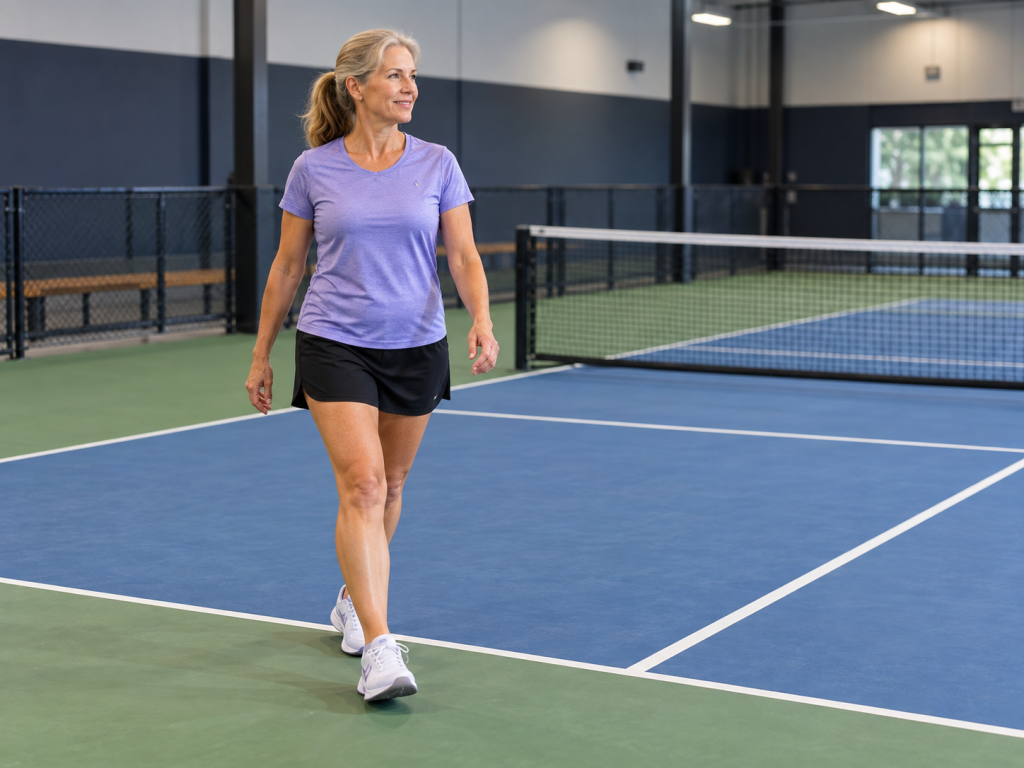
Begin with ordinary walking in a clear area. You can walk around the outside of the court or in another appropriate open space. At first, use an easy pace that allows you to move comfortably and look around without feeling rushed.
After moving easily for a short period, gradually increase your walking pace if that remains comfortable. The objective is simply to make the transition from being relatively still to being physically active.
Keep your posture relaxed. Let your arms move naturally and concentrate on smooth, controlled steps. There is no need to begin with running, rapid changes of direction or demanding court drills.
If your warm-up already feels like a difficult workout during these opening movements, the effort is probably higher than necessary for this purpose.
Prepare Your Lower Body for Court Movement
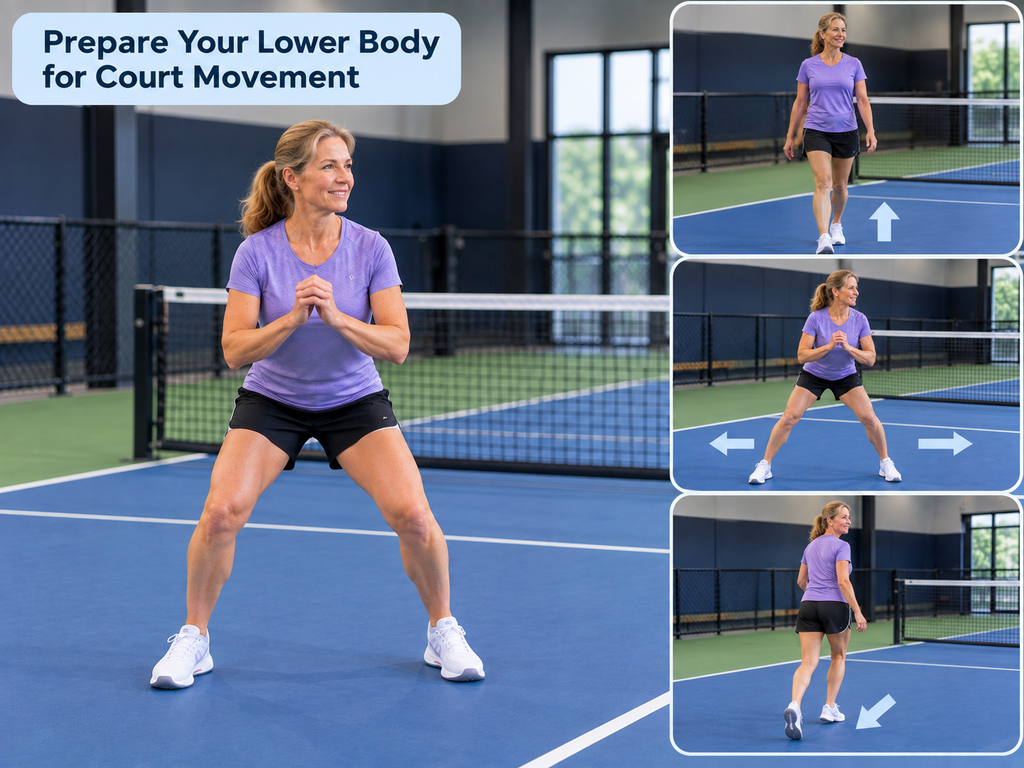
Pickleball involves frequent small movements forward, backward and from side to side. Your warm-up should therefore include comfortable movement through the ankles, knees, hips and legs before you begin more active court practice.
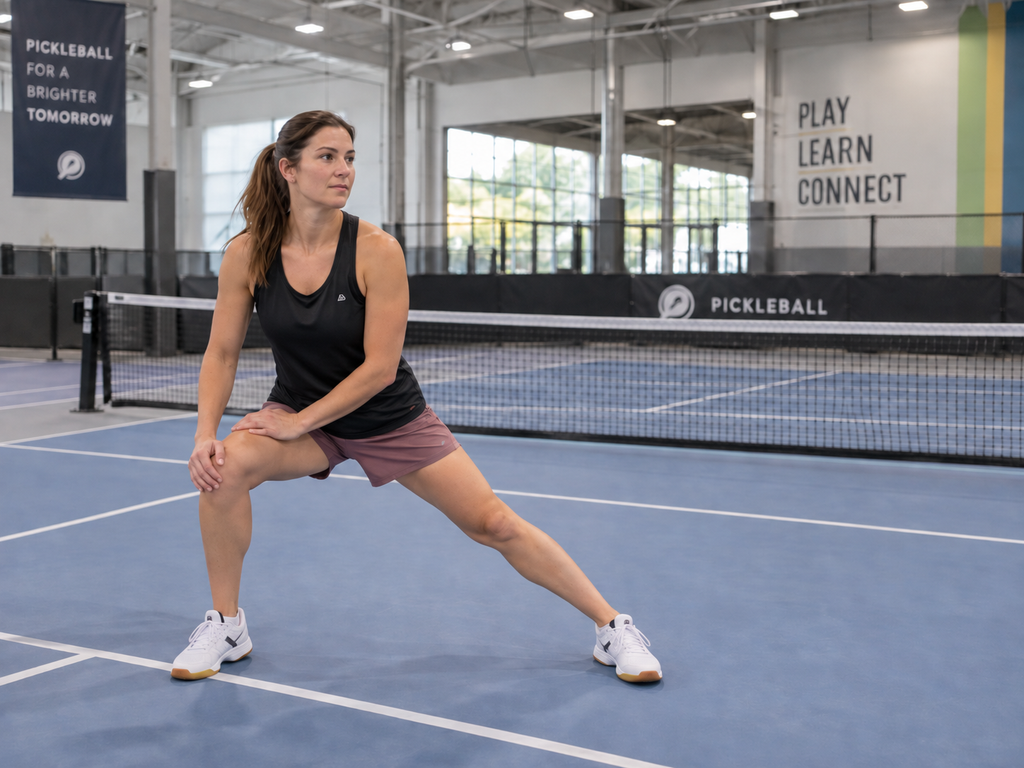
After walking, perform some gentle bending and straightening through the knees and hips while remaining balanced. The movement can be small. You do not need to squat deeply or force yourself into a position that feels uncomfortable.
You can also shift your weight gently from one foot to the other. Follow this with several small steps forward, then return to your starting position. Add a few short side steps in each direction.
Backward movement should be introduced carefully. Take only a few easy, controlled backward steps in a clear area. This is preparation for movement, not a speed exercise.
Throughout these movements, keep your feet under control. Avoid large lunges, deep crouches, forceful bouncing or exaggerated ranges of motion. A smaller movement performed with good balance is more useful for this warm-up than a larger movement that makes you unstable.
The goal is to make ordinary lower-body movement feel comfortable before you start reacting to a moving pickleball.
Prepare Your Shoulders and Upper Body
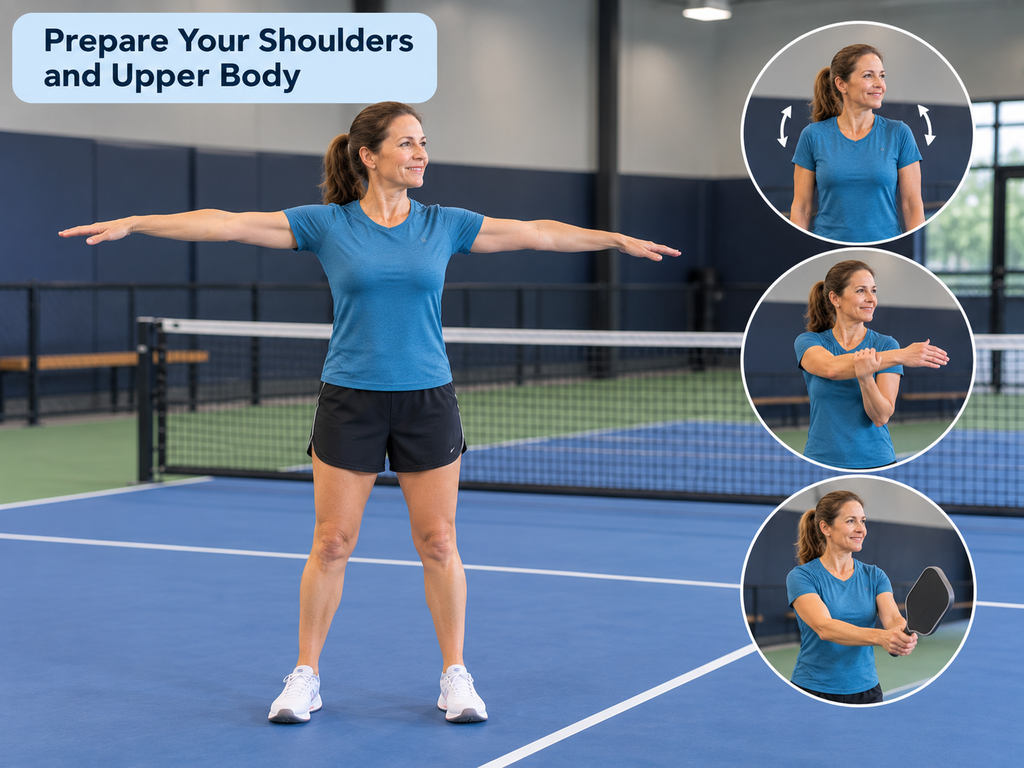
Your shoulders, arms and upper body will also become more active once you begin using the paddle.
Start with relaxed shoulder movement. Move your shoulders comfortably and allow your arms to travel through an easy range. You might raise and lower the arms, move them gently forward and back, or make other simple motions that feel natural without forcing the joints.
Keep these movements controlled rather than fast. You are preparing to hold and move a paddle, not trying to generate maximum swing speed.
If your paddle is available, you can gradually include it. Hold it securely and make several short, relaxed paddle movements in front of your body. Keep plenty of space around you and avoid full-force swings.
Notice whether you are unnecessarily tightening your shoulders, hands or arms. Relax excessive tension while still keeping the paddle under control.
Do not force a stretch or position because you think a warm-up needs to look dramatic. Comfortable, controlled movement is enough for this beginner routine.
Add Simple Pickleball Movement Patterns
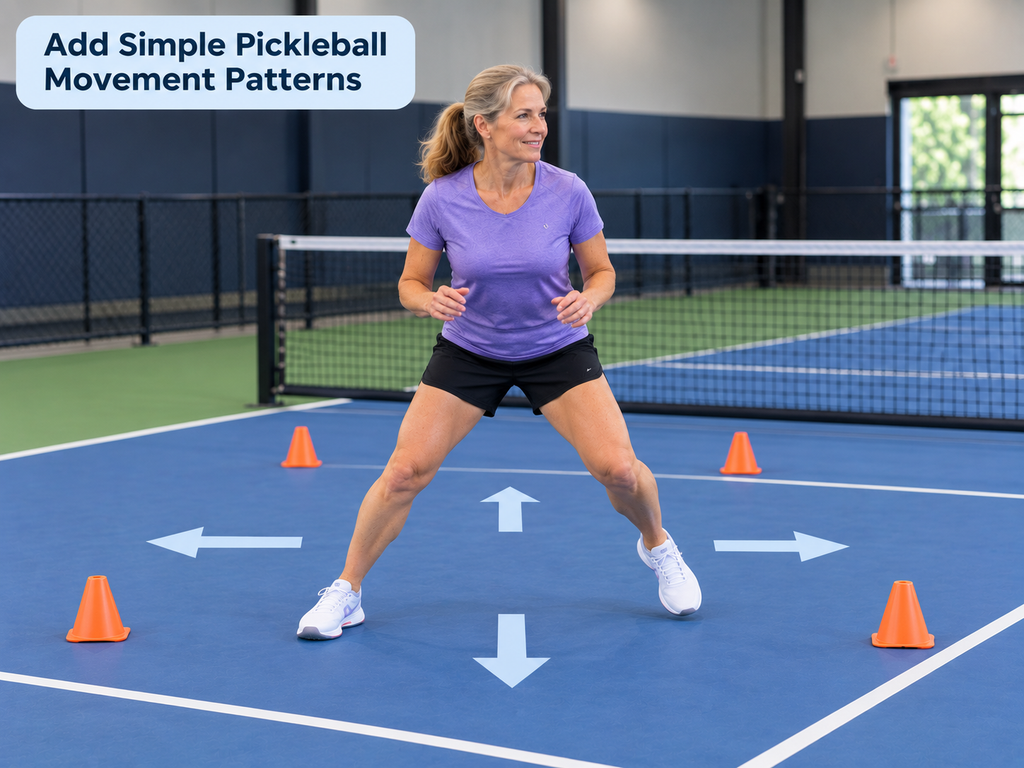
Once general movement and basic body preparation feel comfortable, begin moving in ways that more closely resemble ordinary court activity.
Start in a clear area with your body balanced. Take several controlled steps forward and then stop. The stop is important: you should be able to bring your body under control rather than continuing to drift or stumble.
Return to your starting area and repeat.
Next, take two or three short steps to one side. Stop under control. Return and repeat in the other direction. Keep the steps manageable rather than trying to cover as much ground as possible.
You can then combine simple directions. For example, move forward a few steps, stop, move sideways and stop again. Change direction deliberately rather than rushing.
You are not learning technical pickleball footwork here. The purpose is simply to make forward and lateral movement familiar before a ball demands your attention.
Pay attention to the space around you while moving. A warm-up is not a reason to stop observing the court. Loose balls, other players or objects entering the area should still cause you to slow or stop as needed.
Transition Gradually into Paddle and Ball Activity
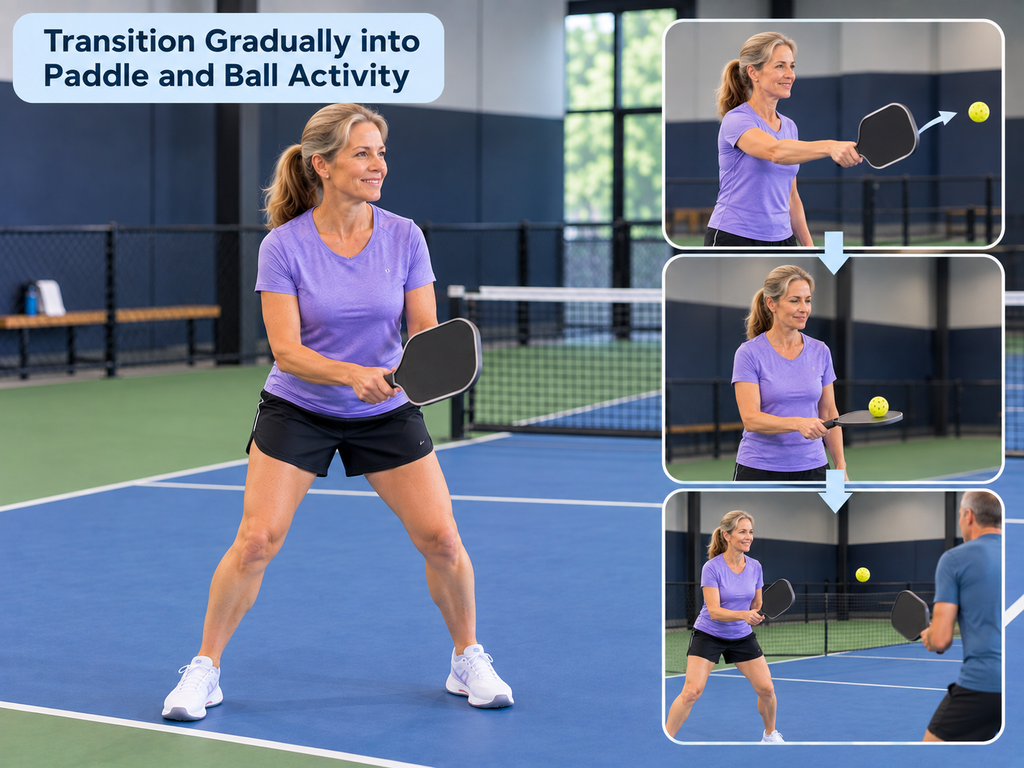
After your general movement feels comfortable and balanced, begin introducing the paddle and ball.
Start with relaxed paddle movements rather than hard swings. Move the paddle through a short, manageable path while maintaining control.
If you have a ball and an appropriate practice setup, add gentle ball contact. Early contacts should be easy enough that you can concentrate on balance, paddle control and comfortable movement rather than speed.
A partner, if present, should use gentle and predictable feeds. Another option is a simple stationary ball-control activity that does not require fast movement.
There is no advantage in making the first few contacts as hard as possible. Avoid hard swings, fast feeds and demanding rallies during this transition.
As several easy repetitions begin to feel comfortable, you can gradually increase the pace of your activity. Continue only while your movement remains controlled.
Manage Your Effort During the Session
Finishing your initial warm-up does not mean every later repetition should be performed at maximum effort.
Begin your practice session at a manageable pace. Give yourself time to adjust to tracking the ball, moving around the court and coordinating the paddle with your body.
Remember:
Pay attention to movement quality. If you were balanced during your first few repetitions but later begin stumbling, rushing or losing coordination, maintaining the same pace simply to finish a planned drill is not useful.
Reduce the pace before your movement becomes uncontrolled. Take a break when you need one. The number of repetitions written into a practice plan is less important than performing them with reasonable balance and control.
This applies especially to a new player who is still learning how much movement ordinary pickleball requires. You do not need to match the pace of a more experienced player.
A warm-up should help you enter the activity progressively. It should not leave you unnecessarily tired before skill practice has even begun.
Prepare for Hydration and Rest
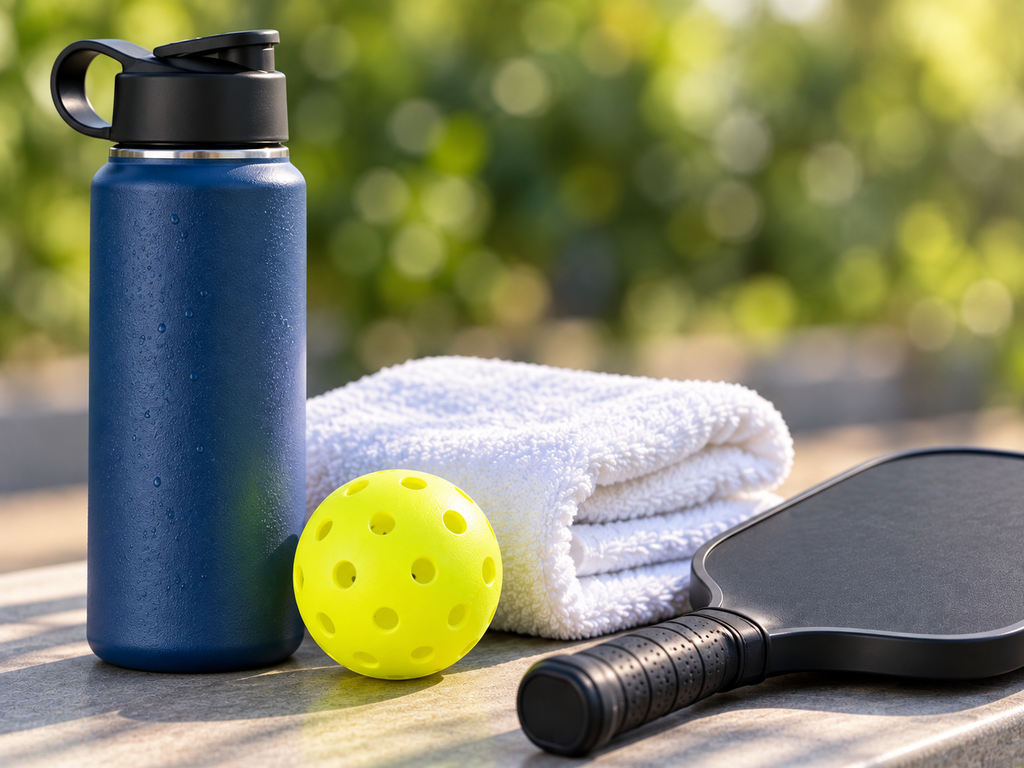
Have drinking water available before you start. Place your bottle outside the active playing area so it does not become something that a player could step on or trip over.
Take reasonable opportunities to drink during the session rather than waiting until practice is completely finished.
There is no single fluid quantity in this lesson that every beginner needs to follow. Personal needs and playing conditions vary, so the useful beginner habit is simpler: bring water, keep it accessible and use appropriate breaks.
Rest matters as well. If continued effort is making normal movement increasingly difficult, reduce the pace or pause.
Conditions around you can also affect how demanding a session feels. If the environment or your level of exertion makes continued activity uncomfortable, adjust what you are doing rather than automatically continuing at the same intensity.
Keep the water bottle, towel and other personal items outside normal court movement paths whenever you return to play.
Know When to Reduce or Stop Activity
Your ability to move normally and safely is more important than completing a drill.
Reduce your effort when fatigue begins to interfere noticeably with coordination or balance. For example, you may find that movements that were controlled earlier are becoming rushed, unstable or poorly coordinated.
Remember:
Stop the activity when you cannot continue comfortably or safely.
Discomfort that prevents ordinary movement is also a reason not to force another repetition. The purpose of the warm-up and practice session is not to test how much discomfort you can tolerate.
Do not try to diagnose the reason for a symptom during this lesson. Pickleball instruction cannot determine whether discomfort represents a minor temporary issue or something requiring professional attention. If you have a health condition, injury or concern requiring individualized guidance, an appropriate healthcare professional is the proper source for that advice.
Stopping or reducing activity is always more important than finishing a planned number of repetitions.
Common Beginner Warm-Up Mistakes
Skipping the warm-up because pickleball looks easy. A beginner may see the small court and assume no preparation is necessary. The result is an abrupt change from standing or sitting to hitting and moving. The practical correction is to use a short, repeatable progression beginning with easy movement.
Starting with hard swings. A player may pick up the paddle and immediately begin striking the ball forcefully. This skips the gradual transition into paddle activity. Begin with relaxed movements and low-force contacts instead.
Moving quickly before balance is established. Rapid side-to-side or backward movement can become awkward when a player has not yet settled into controlled court movement. Start slowly, stop under control and increase pace only when your movement remains stable.
Turning the warm-up into a workout. More effort does not automatically make a warm-up better. Excessive repetitions, demanding conditioning or maximum-effort movements can leave the learner tired before skill practice. Keep the routine focused on preparation.
Forcing stretches or large ranges of motion. A beginner may assume every movement must feel intense. Instead, use comfortable ranges and avoid forcing positions or aggressive stretching.
Ignoring fatigue. Continuing at the same pace after balance and coordination begin to deteriorate defeats the purpose of controlled preparation. Reduce the pace or take a break.
Beginning without water available. Waiting until you need a break to locate drinking water interrupts the session and may encourage unnecessary delay. Prepare it beforehand and keep it safely outside the playing area.
Finishing the planned number at all costs. Ten repetitions are not better than eight if the last two require uncontrolled movement. Movement quality and safety take priority over the planned count.
Practice: Complete a Beginner Pickleball Warm-Up
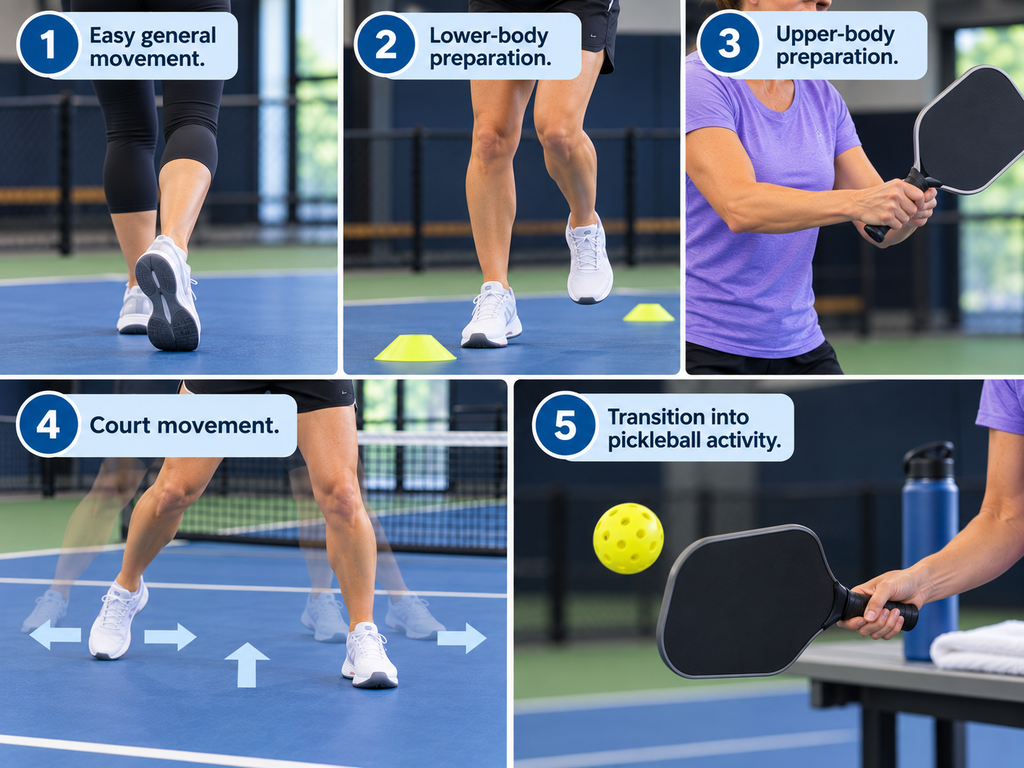
Use a clear playing area that has already been inspected. Wear the footwear and clothing you intend to use during your session. Have your paddle available and place drinking water outside the active movement area. A partner is not required.
Phase 1 — Easy general movement. Begin with comfortable walking. Continue long enough to establish relaxed, controlled movement, then gradually increase the walking pace. Do not rush directly into fast court movement.
Phase 2 — Lower-body preparation. Use gentle, controlled movements involving the ankles, knees and hips. Add small forward steps and short lateral steps. Include only movements you can perform comfortably while maintaining balance.
Phase 3 — Upper-body preparation. Move the shoulders and arms through comfortable ranges. Pick up the paddle and gradually add short, relaxed paddle movements. Maintain adequate space around you and avoid forceful swings.
Phase 4 — Court movement. Move forward several steps and stop under control. Reset, then move laterally and stop. Repeat in both directions. Add a few easy changes of direction while remaining aware of the available court space.
Phase 5 — Transition into pickleball activity. Begin with low-force paddle movements or gentle ball contact. Perform several controlled repetitions. Increase the pace only when balance, coordination and movement remain comfortable.
As this routine becomes familiar, work through the same sequence without needing to think about every individual action:
general movement → lower body → upper body → court movement → gentle pickleball activity
Consistency is the objective. You do not need to keep adding exercises to make the routine useful.
You have met the practice standard when you can independently complete this progressive pre-play routine, begin pickleball activity at a manageable pace and recognize when effort should be reduced before your movement becomes uncontrolled or unsafe.
Summary
To Prepare Your Body for Pickleball, begin with easy general movement and increase activity gradually. Use controlled movements to prepare the lower body, shoulders and arms, then add simple forward and side-to-side court movement.
A simple 8- to 10-minute progression can provide an easy structure: begin with general movement, prepare the lower and upper body, add controlled court movement and finish with gentle pickleball activity. The timing is flexible; movement quality and comfort are more important than following the clock exactly.
Transition into paddle and ball activity at low intensity instead of beginning with hard swings or fast feeds. Keep water available, use rest breaks when needed and reduce your effort when fatigue begins to affect balance, coordination or movement quality.
A beginner warm-up should remain comfortable, controlled and practical. It prepares you for pickleball; it is not a demanding conditioning workout and does not guarantee prevention of injury.
Previous: Check the Court and Net Before Playing
Next: Move Safely Around the Pickleball Court