
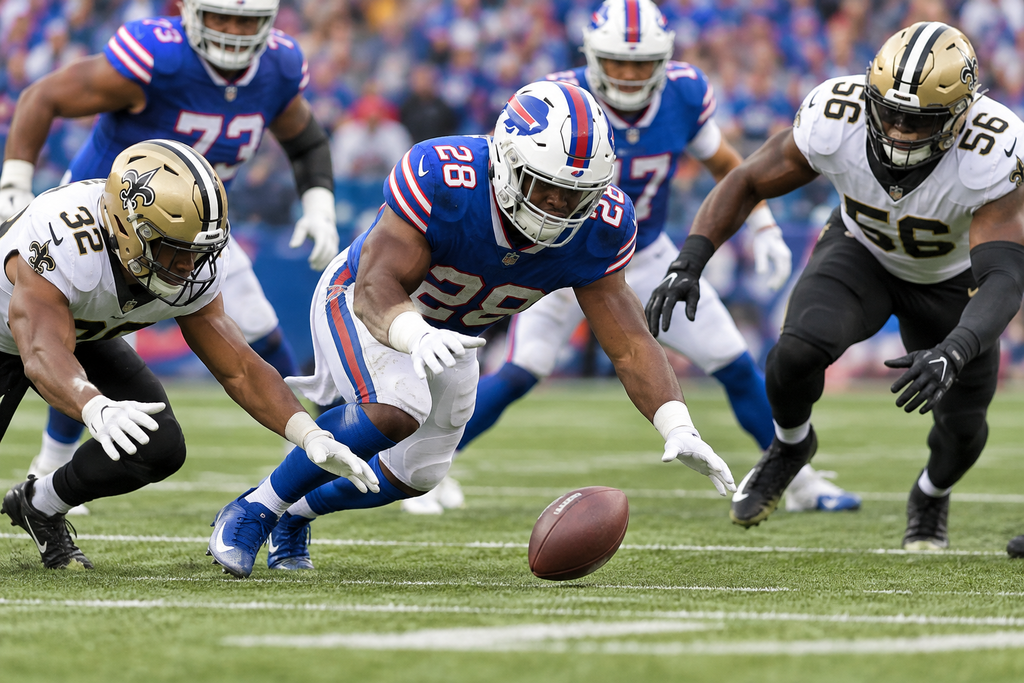
A fumble happens when a player who has possession of the football loses control of it before the play is over. The ball becomes loose, and either team may have an opportunity to recover it.
For beginners, the most important thing to understand is that a fumble does not automatically mean possession changes. The offense can recover its own fumble and keep the ball. If the defense recovers it, however, the defense gains possession and the fumble results in a turnover.
Understanding what is a fumble in football makes it much easier to follow sudden changes of possession and some of the most unpredictable moments in a game.
What Is a Fumble in Football?
A fumble occurs when a player who already has possession and control of the football loses that control while the ball is still live.
This usually happens to a ball carrier, such as a running back, quarterback, wide receiver, or returner. A defender might knock the football out during a tackle, or the player carrying the ball might simply lose control without being hit.
Once the football is loose, players from both teams may try to recover it.
For example, imagine a running back receives a handoff and runs five yards. A defender tackles him and knocks the football out before the play ends. The ball lands on the ground.
That is a fumble.
Who gets possession next depends largely on which team legally recovers the loose ball and on the rules governing that particular play.
When Can a Fumble Happen?
A fumble can happen whenever a player possesses a live football and then loses control of it before the ball becomes dead.
Common situations include:
- A running back losing the ball during a tackle
- A quarterback having the ball knocked from his hand
- A receiver losing the ball after completing a catch
- A kick or punt returner losing control while running
- A ball carrier dropping the football without being contacted
Fumbles can happen anywhere on the field.
They can occur near a team’s own goal line, around midfield, or just before a player reaches the opponent’s end zone. The location can make the consequences especially important because the recovering team may gain excellent field position.
A fumble can also happen very quickly. Sometimes the ball comes loose during a crowded tackle, and officials must determine whether the runner lost possession before or after the play had already ended.
When Is the Ball Considered Loose?
The football is considered loose when the player no longer has possession and control of it while the ball remains live.
The ball does not have to land on the ground for a fumble to exist. If a defender knocks the football out and another player catches it before it touches the field, the ball has still come loose.
The important issue is loss of possession.
Consider a quarterback holding the football while preparing to pass. A defender reaches him and knocks the ball out of his hand before he completes the passing motion. Depending on exactly what happened and the rules involved, officials may rule the play a fumble.
If the quarterback had already thrown a legal forward pass and that pass simply hit the ground, the result would normally be an incomplete pass instead.
That distinction is important because a fumbled ball can remain live and be recovered, while an incomplete forward pass normally ends the play when it hits the ground.
What Does “Live Ball” Mean?
A live ball is a football that remains in play.
When a player fumbles and the ball remains live, players may continue trying to gain possession of it. You will often see several players dive toward a loose football because recovering it can determine which team gets the next possession.
The play does not automatically stop just because the football touches the ground.
That is different from an incomplete forward pass. A legal forward pass that is not caught and touches the ground becomes incomplete, causing the play to end.
A fumbled football, by contrast, may stay live after hitting the ground.
Officials use the rules of the particular situation to determine when a loose ball becomes dead and who receives possession afterward. Specific restrictions can vary by league and by the circumstances of the play.
What Is a Fumble Recovery?
A fumble recovery occurs when a player legally gains possession of a fumbled football.
Either team may recover a fumble.
If the offense recovers the ball, it may retain possession. If the defense recovers it, possession normally changes to the defensive team.
Recoveries sometimes happen immediately. A player may lose the ball and then grab it again himself.
Other times, several players dive into a pile trying to secure the football. Officials must determine which player gained possession.
The recovery can become one of the most important parts of the play because a fumble by itself does not tell you which team will have the football next.
What Happens If the Offense Recovers Its Own Fumble?
If an offensive player fumbles and the offense legally recovers the football, the offense generally keeps possession.
For example, suppose a running back fumbles after gaining four yards. An offensive lineman falls on the ball before a defender can recover it.
The offense has recovered its own fumble.
Assuming there is no other reason for possession to change, the offense keeps the ball and continues with the next down from the appropriate spot determined by the rules.
This is why hearing an announcer say, “He fumbled,” does not necessarily mean there has been a turnover.
You also need to know who recovered the ball.
What Happens If the Defense Recovers a Fumble?
When the defense legally recovers an opponent’s fumble, possession changes.
This is a turnover.
For example, imagine a running back carries the football on second down. A linebacker knocks the ball loose, and a defensive player recovers it.
The defensive team has taken possession.
Once the play ends, that team will normally send its offense onto the field because it now controls the football.
A defensive fumble recovery can create a major swing in field position. If the defense recovers near the opponent’s end zone, its offense may begin with only a short distance to travel before having a chance to score.
In some situations, the defender who recovers the fumble can continue advancing the football while the play remains live. Exact rules concerning who may advance certain fumbles can depend on the league, down, timing, and circumstances of the play.
What Is a Forced Fumble?
A forced fumble happens when a defensive player’s action causes the ball carrier to lose possession.
A defender may force a fumble by knocking the football out, striking the ball while making a tackle, or hitting the quarterback in a way that causes him to lose control.
For example, a quarterback drops back to pass. A defensive player reaches him from behind and knocks the football from his hand.
If the play is ruled a fumble, the defender may be credited with forcing it.
Another defender—or sometimes the same defender—may then recover the ball.
The forced fumble and the fumble recovery are therefore two different events. One player can cause the ball to come loose while another player secures it.
A fumble can also happen without a defender forcing it. A runner might simply mishandle the football and drop it.
Does Every Fumble Cause a Turnover?
No.
This is one of the most important points for beginners.
A fumble becomes a turnover when the opposing team gains possession as a result of it.
If the offense loses control of the ball but then recovers it, there has been a fumble but usually no turnover.
For example:
A running back carries the ball, gets hit, and fumbles. His teammate immediately falls on the loose football.
That is a fumble, but the offense recovered it.
Now imagine the same play, except a defensive player falls on the football first.
That fumble has resulted in a turnover because possession has changed teams.
Fumble vs. Incomplete Pass
A fumble and an incomplete pass can sometimes look similar, especially when a quarterback loses the ball while attempting to throw.
The basic difference is possession and the type of play involving the ball.
A fumble occurs when a player who possesses the football loses control of it while it is live.
An incomplete pass happens when a legal forward pass is thrown but is not caught before it touches the ground or otherwise becomes incomplete under the applicable rules.
The difference matters because an incomplete forward pass normally causes the play to end.
A fumble may remain live and available for either team to recover.
Quarterback plays can make this distinction difficult in real time. Officials may need to determine whether the quarterback lost control before completing the action required for a forward pass.
Officials can also review certain plays under league replay procedures when applicable.
For a beginner watching football, the easiest clue is what happens after the ball hits the ground. If officials immediately rule the pass incomplete, the play is over. If they rule the ball a fumble, players may continue trying to recover it until the play is declared dead.
Fumble vs. Interception
Fumbles and interceptions can both lead to turnovers, but they happen in different ways.
A fumble involves a player who already possesses the football and then loses control.
An interception happens when a defensive player catches an opponent’s forward pass.
For example, suppose a quarterback throws toward a wide receiver, but a cornerback catches the pass instead.
That is an interception.
Now suppose the quarterback keeps the football, gets hit by a defender, and loses it. The defender then recovers the loose ball.
That is a fumble and defensive recovery.
Both plays can give the defense possession, but they involve different ways of losing the football.
What Happens After a Fumble Recovery?
What happens next depends on which team recovers the ball and when the play ends.
If the offense recovers its own fumble and retains possession, play continues with the next down after officials determine the correct ball position.
If the defense recovers and the play ends with the defender in possession, the teams switch offensive and defensive roles. The team that made the recovery gets possession for the next series.
If a player legally recovers a live fumble and is allowed to advance it, that player may run with the ball until the play ends. A defensive player could therefore recover a fumble and gain additional yards before being tackled.
In some cases, a recovered fumble can even be taken into the opponent’s end zone for a touchdown.
Football leagues have detailed rules about loose balls, recoveries, advancement, boundaries, and special situations. Those rules can differ, particularly between the NFL, college football, and other levels. The basic idea, however, remains the same: possession depends on what happened to the loose football and who legally gained control of it.
Simple Fumble Example
Imagine the offense has the football at its own 40-yard line.
The quarterback hands the ball to a running back.
The running back gains six yards before a defender tackles him. During the tackle, the defender knocks the football out of the runner’s arms before the play is over.
The ball rolls along the ground.
A defensive player dives on it and establishes possession.
The result is a fumble recovered by the defense.
The original offense loses possession, so the play produces a turnover. The team that had been playing defense now gets the football and sends its offensive unit onto the field.
Now change just one part of the example.
Suppose an offensive lineman recovers the loose ball instead of the defender.
The running back still fumbled, but the offense recovered its own fumble. There is no defensive takeaway, and the offense normally keeps possession.
That difference—who recovers the loose football—is the key to understanding many fumble situations.
Why Fumbles Matter
Fumbles matter because they can change possession unexpectedly.
An offense might be moving steadily toward the end zone when one loose ball suddenly gives possession to the other team. A defense that was struggling to stop a drive can immediately end that drive by recovering a fumble.
Fumbles can also dramatically change field position.
If an offense fumbles deep in its own territory and the defense recovers, the new offense may begin very close to the end zone.
If the offense manages to recover its own fumble, the damage may be much smaller. It might lose yards on the play, but it has avoided giving the opponent possession.
This uncertainty is part of what makes a loose football such an important moment during a game.
Frequently Asked Questions
Is a Fumble Always a Turnover?
No. A fumble is only a turnover when the opposing team gains possession. If the offense recovers its own fumble and retains possession, the fumble does not result in a defensive takeaway.
Can a Player Recover His Own Fumble?
Yes. A player who loses the football may recover it himself if he legally regains possession while the ball is available for recovery.
Can Another Offensive Player Recover a Fumble?
Yes. In many normal situations, an offensive teammate can recover a fumble. Special rules may restrict advancement of certain fumbles in particular situations, depending on the league and circumstances.
Can the Defense Run After Recovering a Fumble?
Often, yes. If the ball remains live and the rules allow advancement, a defender who recovers a fumble can run with it until the play ends.
Can a Fumble Be Returned for a Touchdown?
Yes. A defensive player who legally recovers a live fumble may be able to advance it into the opponent’s end zone for a touchdown, depending on the situation and applicable rules.
Does the Football Have to Hit the Ground to Be a Fumble?
No. A fumble involves losing possession and control. Another player can recover a loose football before it ever touches the ground.
What Is the Difference Between a Forced Fumble and a Recovery?
A forced fumble describes the defensive action that causes a player to lose possession. A recovery happens when a player gains possession of the loose football. Different defenders can be responsible for forcing and recovering the same fumble.
Key Takeaways
A fumble happens when a player with possession loses control of the football while the ball is still live.
The loose football may be recovered by either team. If the offense recovers it, the offense can often keep possession. If the defense recovers it, possession changes and the play usually results in a turnover.
A forced fumble occurs when a defender causes the ball carrier to lose control. A fumble is different from an incomplete pass because a fumbled ball can remain live after hitting the ground. It is also different from an interception, which occurs when a defender catches an opponent’s pass.
When learning what is a fumble in football, remember the simplest rule: losing the ball creates the fumble, but who recovers it determines whether possession changes.