
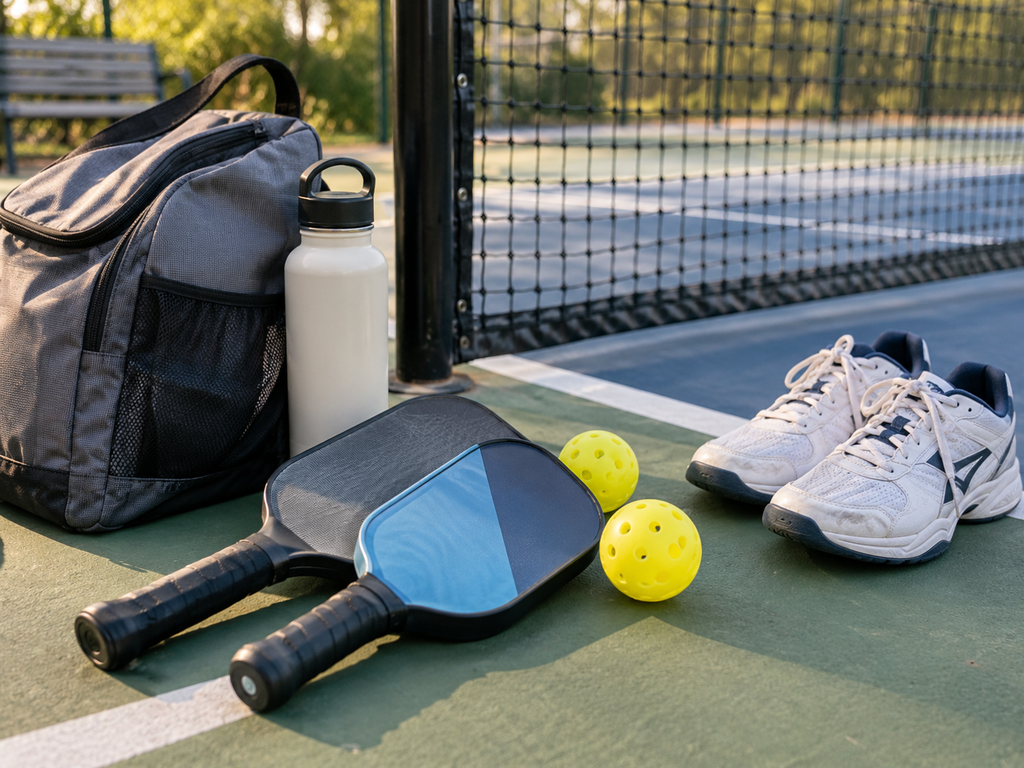
One of the best things about pickleball is that you do not need a long list of expensive equipment to start playing.
For a beginner, the essentials are simple: a paddle, pickleballs, appropriate shoes, comfortable clothing and a few practical accessories. You can get on the court with very little gear and upgrade later as you learn what feels best for you.
This guide explains the basic pickleball equipment beginners need, what each item is for and what to look for when choosing your first setup.
What Equipment Do You Need to Play Pickleball?
At a basic level, you need:
- A pickleball paddle
- Pickleballs
- Court shoes
- Comfortable athletic clothing
- Access to a pickleball court and net
You may also want a paddle bag, water bottle, towel, hat or other small accessories depending on where and how often you play.
You do not need premium equipment when you are just starting. Beginner-friendly gear that feels comfortable and performs consistently is usually enough.
1. Pickleball Paddle
The paddle is the most important piece of personal equipment you will use.
Pickleball paddles are larger than table tennis paddles but smaller than tennis racquets. They are solid rather than strung and are made from materials such as fiberglass, carbon fiber, graphite or composite materials.
Beginners do not need to worry about finding the most advanced paddle available. A comfortable, reasonably lightweight paddle with a good grip is usually the best place to start.
Paddle Weight
Pickleball paddles come in different weights, and the weight affects how the paddle feels in your hand.
Lighter paddles are generally easier to maneuver and may feel more comfortable for new players. Heavier paddles can provide more stability and power but may require more effort to swing.
Many beginners prefer something in the middle because it offers a useful balance of control, maneuverability and power.
The most important thing is that the paddle does not feel unnecessarily heavy or difficult to control.
Grip Size
The grip is the part of the paddle handle you hold.
A grip that is too large may feel awkward and make it harder to comfortably control the paddle. A grip that is too small may feel less secure.
When possible, hold several paddles before buying one and choose a handle that feels natural in your hand.
Grip tape or overgrips can also be added later if you want to slightly change the feel or thickness of the handle.
Paddle Shape
Pickleball paddles are available in several shapes, including traditional, elongated and wide-body designs.
Beginners usually do well with a standard or wider paddle because the larger hitting area can feel more forgiving.
There is no need to choose a specialized shape when you are learning. Comfort and consistency are more important than having a paddle designed for a specific playing style.
Paddle Surface and Construction
Different paddle materials can affect feel, durability, control and power.
You may see paddles described as fiberglass, graphite, carbon fiber or composite. These materials can influence performance, but beginners do not need to become experts in paddle technology before playing.
Look for a well-made beginner paddle that feels comfortable and falls within your budget.
You can explore more specialized paddle construction later after you have played enough to understand what characteristics you prefer.
2. Pickleballs
Pickleballs are lightweight plastic balls with holes around the surface.
Although they may look similar, not all pickleballs are exactly the same.
There are two main categories:
- Indoor pickleballs
- Outdoor pickleballs
Indoor Pickleballs
Indoor pickleballs are designed for indoor court conditions.
They often have fewer, larger holes and are generally slightly softer than outdoor balls.
Because indoor environments are protected from wind, indoor balls do not need the same level of resistance to outdoor conditions.
Outdoor Pickleballs
Outdoor pickleballs are designed to handle wind, harder court surfaces and changing weather conditions.
They usually have more, smaller holes and are commonly made from slightly harder plastic.
Outdoor balls often feel firmer and may wear differently because they are played on rougher surfaces.
Which Pickleballs Should Beginners Buy?
Choose the ball that matches the type of court where you expect to play most often.
If you play outdoors, use outdoor pickleballs.
If you play indoors, use indoor pickleballs.
Having several balls is useful because balls can crack, soften, become damaged or roll away during practice.
A small pack is enough when you are starting.
3. Pickleball Shoes
Shoes are one piece of equipment beginners should take seriously.
Pickleball involves frequent stops, starts and side-to-side movement, so footwear should provide support for lateral movement.
Court shoes are generally a better choice than ordinary running shoes.
Why Running Shoes Are Not Ideal
Running shoes are primarily designed for forward movement.
Pickleball requires movement in several directions, including sideways movement. Court shoes are designed to provide better stability during these changes of direction.
Using appropriate shoes can also make movement feel more comfortable and controlled.
What to Look for in Pickleball Shoes
Beginner-friendly court shoes should provide:
- Good side-to-side stability
- Comfortable cushioning
- Reliable traction
- A secure fit
- Support around the heel and foot
You do not necessarily need shoes specifically labeled as “pickleball shoes.”
Tennis or other suitable court shoes can also work well.
The most important thing is that the shoe is designed for court movement rather than only straight-line running.
4. Comfortable Athletic Clothing
There is no complicated dress code for recreational pickleball.
Wear clothing that allows you to move comfortably.
Common choices include:
- Athletic shorts
- T-shirts
- Sports tops
- Lightweight pants
- Skirts or skorts
- Moisture-wicking clothing
Your clothing should allow comfortable movement without feeling restrictive.
For outdoor play, lightweight and breathable materials can be especially helpful in warm conditions.
5. Socks
Socks may seem like a minor piece of equipment, but they can make a noticeable difference in comfort.
Athletic socks can provide additional cushioning and help reduce friction inside your shoes.
If you expect to play for longer periods, moisture-wicking socks may help keep your feet more comfortable.
The goal is simple: choose socks that work well with your court shoes and stay comfortable while you move.
6. Pickleball Bag or Backpack
A dedicated pickleball bag is optional, especially when you are just starting.
However, having one place to keep your equipment can make trips to the court easier.
A small sports bag or backpack is usually enough for beginners.
You may want space for:
- Your paddle
- Several pickleballs
- Water
- A towel
- Extra clothing
- Personal items
You do not need a large tournament-style bag unless you eventually start carrying multiple paddles, shoes and other equipment.
7. Water Bottle
Pickleball can involve more movement than beginners initially expect.
Bring water whenever you play, especially when playing outdoors or in warm weather.
A reusable water bottle is one of the simplest and most useful additions to your equipment bag.
You may not consider it traditional pickleball equipment, but hydration should be part of your basic court setup.
8. Towel
A small towel can be useful during longer sessions or warm-weather play.
Sweaty hands can make the paddle grip feel slippery, so keeping your hands dry may help you maintain a comfortable grip.
A towel is inexpensive, easy to carry and worth including in your bag.
9. Hat, Visor or Sunglasses
Outdoor players may want basic sun protection.
A hat or visor can help reduce glare, while sports sunglasses can make it easier to see comfortably in bright conditions.
These are optional accessories rather than essential pickleball equipment, but they can make outdoor play more comfortable.
Choose eyewear that fits securely and does not move around excessively while you play.
10. Paddle Overgrip
An overgrip is a thin layer that wraps around the paddle handle.
You do not need one immediately, but it can be useful if the original grip becomes worn, slippery or uncomfortable.
Overgrips can also make the handle slightly thicker and may improve comfort for players who prefer a different grip feel.
They are inexpensive and easy to replace.
11. Protective Eyewear
Protective eyewear is becoming an increasingly common piece of pickleball equipment.
Because the game is played relatively close to other players and the ball can travel quickly, some players choose sports glasses or protective eyewear for additional eye protection.
It is not required for casual play in many settings, but beginners may still want to consider it, particularly if they expect to play regularly.
Look for eyewear designed for sports that fits securely and allows clear vision.
12. Access to a Pickleball Net
A regulation pickleball court requires a net, but beginners usually do not need to purchase one.
Most dedicated pickleball courts already have permanent nets.
Some shared courts use portable pickleball nets that can be set up when needed.
If you are playing at a park, gym or community facility, check whether a net is already available before buying anything.
Portable nets are more useful for players who want to create temporary courts in driveways, gyms or other suitable spaces.
Do You Need Expensive Pickleball Equipment?
No.
A common beginner mistake is assuming that better equipment will immediately make playing easier.
High-end paddles and specialized gear can offer performance differences, but beginners usually benefit more from equipment that is comfortable, reliable and appropriate for the court.
You can start with basic equipment and upgrade gradually.
As you play more often, you will naturally learn whether you prefer:
- A lighter or heavier paddle
- A different grip size
- A different paddle shape
- Firmer or softer footwear
- Additional accessories
Those preferences are much easier to understand after you have spent time on the court.
Beginner Pickleball Equipment Checklist
For your first few sessions, you really only need a simple setup.
Essential
- One pickleball paddle
- A few indoor or outdoor pickleballs
- Supportive court shoes
- Comfortable athletic clothing
- Water
Useful Extras
- Athletic socks
- Small sports bag
- Towel
- Hat or visor
- Sunglasses
- Paddle overgrip
- Protective eyewear
That is enough for most beginners.
Should You Buy a Pickleball Starter Set?
Starter sets can be convenient for beginners, especially if several people want to start playing together.
These sets often include:
- Two or more paddles
- Several pickleballs
- A carrying bag
Some larger kits may also include a portable net.
Starter sets can offer good value for casual players, families or groups who want a simple way to begin.
However, quality varies between sets, so check that the paddles feel comfortable and that the included balls are suitable for where you plan to play.
What Should You Buy First?
If you are building your equipment setup gradually, start with the items you will use every time you play.
Your first priorities should be:
A comfortable paddle, the correct type of pickleball and appropriate court shoes.
Everything else can be added as needed.
You do not need to arrive at your first session with a professional-looking equipment bag.
You simply need gear that allows you to move comfortably, hit the ball confidently and enjoy being on the court.
Pickleball Equipment for Beginners
Pickleball does not require complicated equipment.
A paddle, several pickleballs, supportive court shoes and comfortable athletic clothing are enough to get started.
As a beginner, focus on comfort, fit and practicality rather than expensive technology or advanced equipment features.
Start simple.
After you spend more time playing, you will have a much better idea of which equipment upgrades actually matter to you.
The goal of your first setup is not to build the perfect pickleball collection. It is to have everything you need to step onto the court and start playing with confidence from day one.