
Essential Game Terms
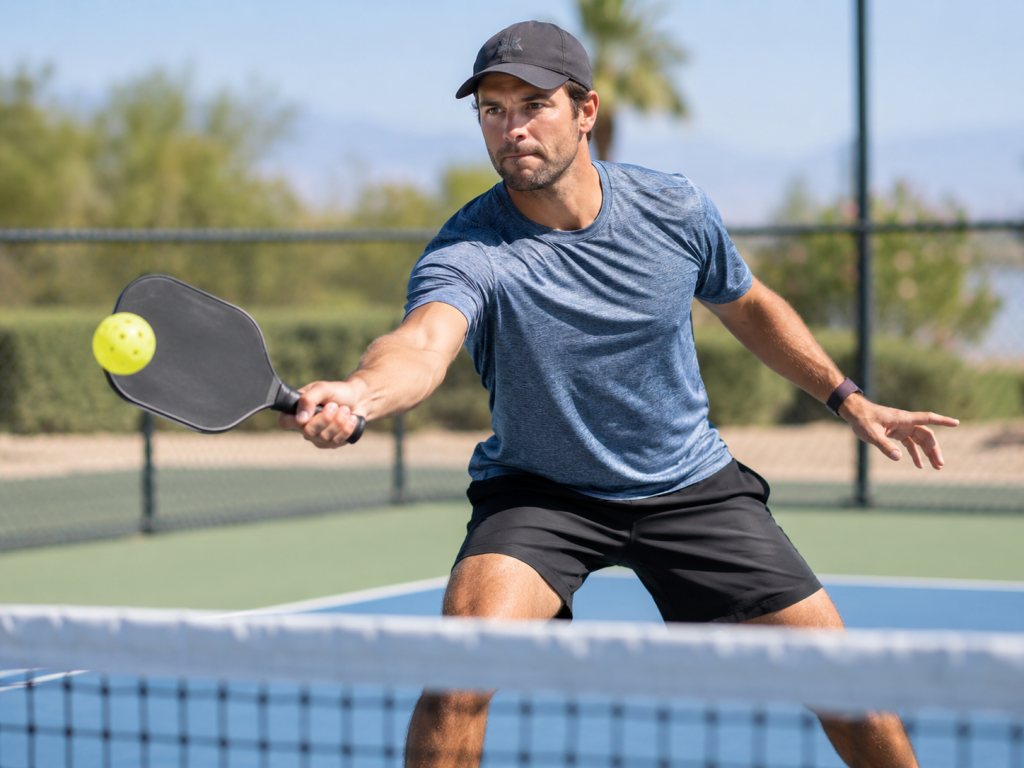
Pickleball has its own vocabulary. During a recreational game, players may talk about a rally, a side-out, the kitchen, a dink, a volley, a return, or a ball going crosscourt. These words are easier to understand when you know what they refer to before you begin learning the details of how to play.
The goal here is familiarity. You should be able to hear common pickleball terms and have a useful picture of what another player or instructor means. Some terms describe parts of the court, some describe actions during play, and others identify common types of shots or game situations.
Players and Basic Game Formats
A player is one person participating in the game. An opponent is a player on the other side of the net.
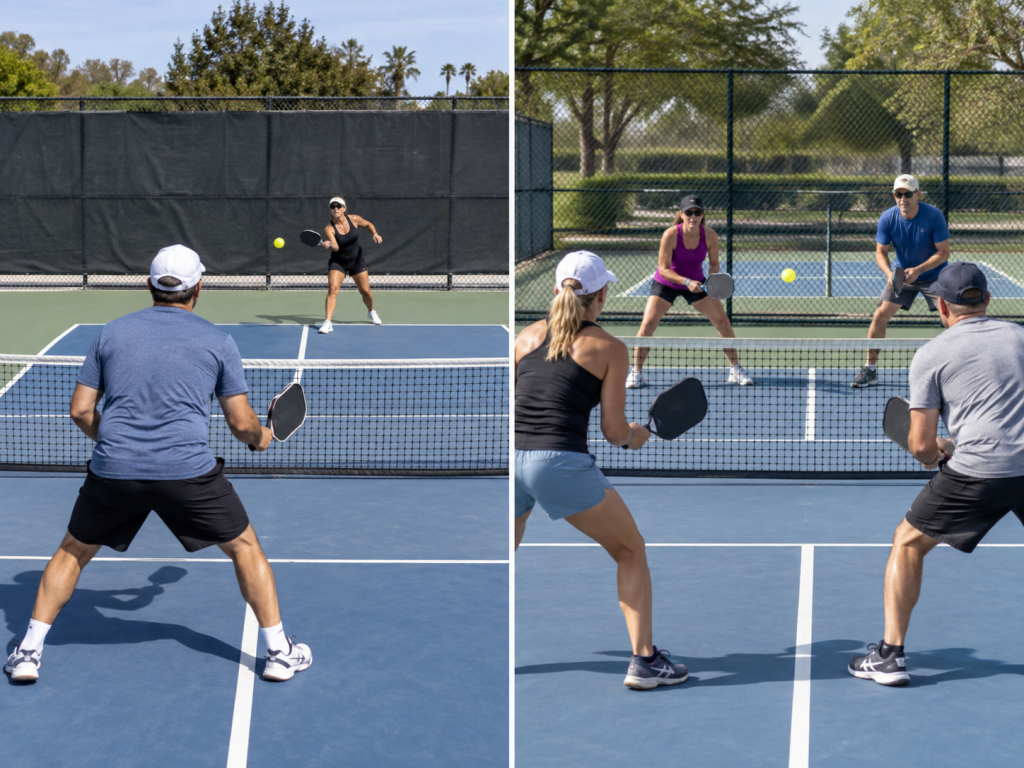
A team refers to the players competing together on one side of the court. In doubles, each team has two players. In singles, each side has one player.
Singles means one player competes against one opponent. There are two players on the court in total.
Doubles means two players compete against two other players. There are four players on the court in total. Doubles is the format you will commonly see in recreational pickleball. USA Pickleball uses the same basic singles-versus-doubles distinction: singles has one player on each side, while doubles has two.
You may also hear partner or teammate. In doubles, these terms refer to the other player on your side of the net. These words are useful because players often describe a situation by role. Someone may say, “Your partner has the ball,” “The opponents are near the net,” or “We are playing doubles.”
Court Terms You Will Hear Repeatedly
| Term | Definition |
|---|---|
| Court | The marked playing area where pickleball is played. A net divides the court into two sides. |
| Net | The barrier that separates the two sides of the court. Players send the ball over the net during play. |
| Baseline | The line across the back of each end of the court. |
| Sidelines | The long outer boundary lines that mark the left and right sides of the court. |
| Centerline | The line that divides the area behind the non-volley zone into the right and left service courts. |
| Service Court | One of the court areas into which a serve is directed. Each side has a right service court and a left service court. |
| Non-Volley Zone (NVZ) | The marked area immediately next to the net on each side of the court. It extends seven feet from the net. |
| Kitchen | The common informal name for the non-volley zone. |
| Kitchen Line / Non-Volley-Zone Line | The line that marks the outer edge of the non-volley zone and separates it from the rest of the court. |
Serve, Return and Rally
| Term | Definition |
|---|---|
| Serve | The shot used to start a rally. |
| Server | The player who makes the serve. |
| Receiver | The player positioned to receive the serve. |
| Return of Serve / Return | The receiving side’s first shot after the serve. |
| Rally | The period of live play that begins with the serve and continues until play stops. |
| Game | A complete contest made up of multiple rallies. |
| Shot | A general term for a ball hit with the paddle. Serves, returns, forehands, backhands, volleys and dinks are all types of shots. |
| Bounce | The action of the ball touching the playing surface and rising again. |
| Two-Bounce Rule | The commonly used name for pickleball’s opening-bounce requirement at the beginning of a rally. |
Volley and Groundstroke
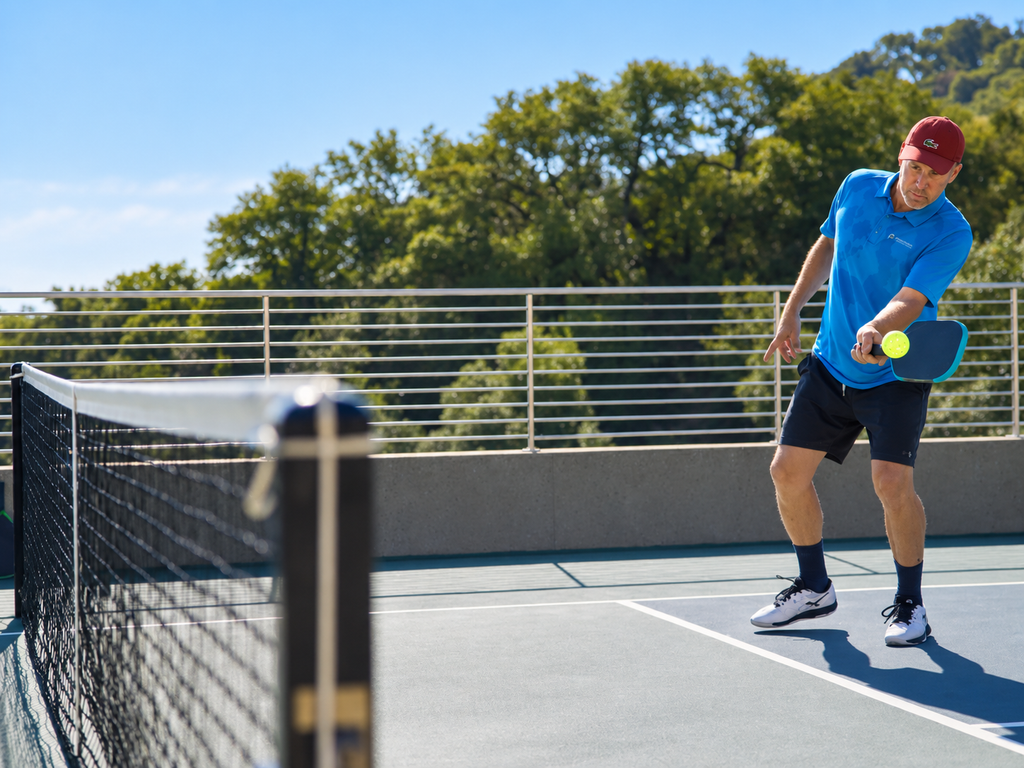
Two terms help describe whether the ball has bounced before contact: volley and groundstroke.
A volley is a ball struck out of the air before it bounces on the court. USA Pickleball defines a volley in the same basic way: the ball is contacted before it bounces.
A groundstroke is a shot played after the ball has bounced. You may hear someone describe a forehand groundstroke or backhand groundstroke depending on the side of the body from which the player makes the shot.
A ball contacted before it bounces is a volley. A ball played after its bounce can be a groundstroke or another type of bounced shot.
This distinction appears frequently in pickleball conversations because players often describe a rally by saying whether someone volleyed the ball or allowed it to bounce.
Forehand and Backhand
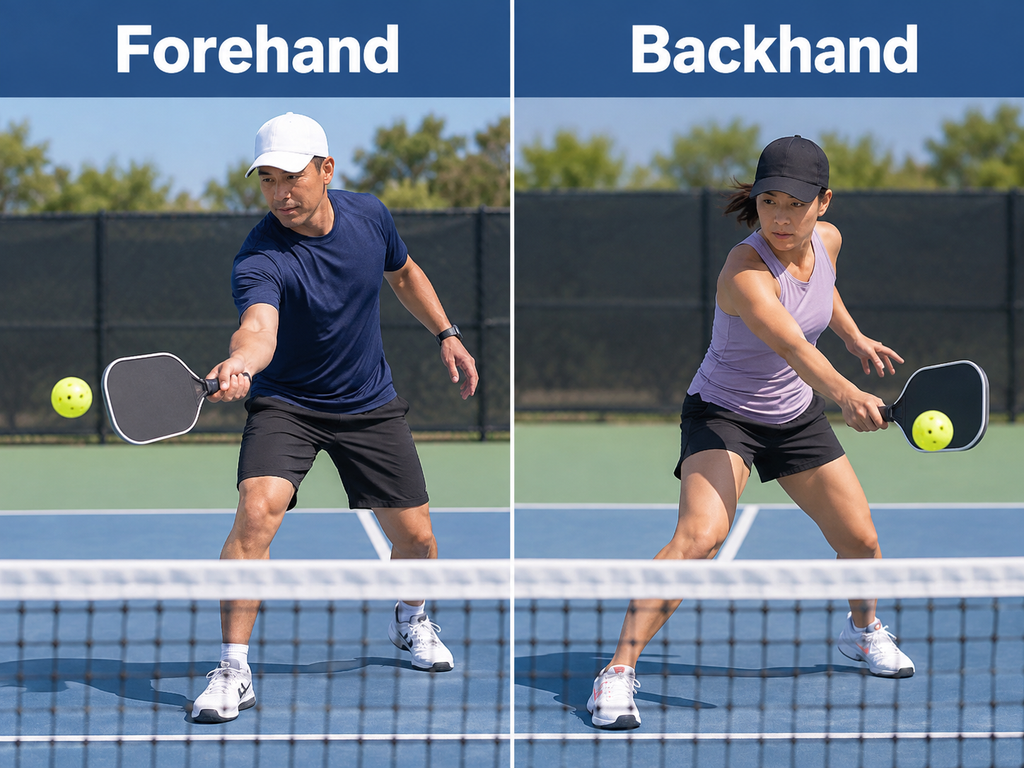
Forehand and backhand describe the general side from which a player hits the ball.
A forehand is a shot played from the paddle-hand side of the body in the usual forehand orientation.
A backhand is a shot played from the opposite orientation, with the back of the paddle hand generally facing more toward the direction of the shot.
You may hear these terms combined with other shot names. Players might refer to a forehand groundstroke, backhand groundstroke, forehand volley, backhand volley, forehand dink or backhand dink.
The words identify the side or orientation of the shot. They do not automatically describe whether the shot is hard, soft, high or low.
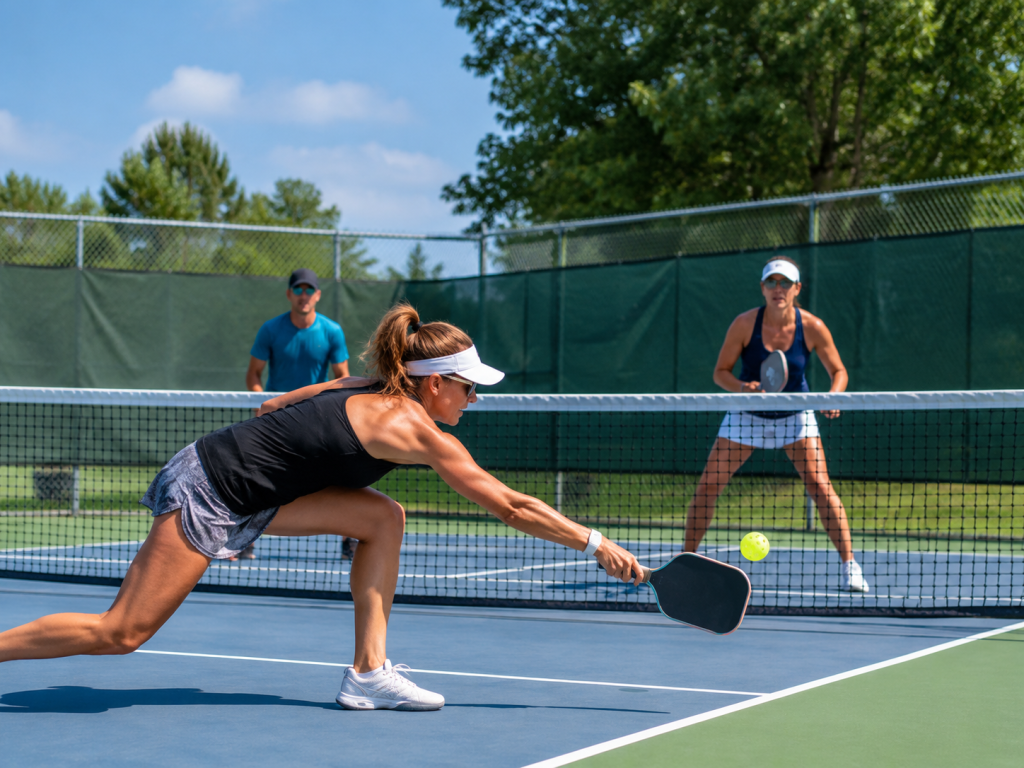
Dink, Drop and Drive
Several pickleball terms describe the general type of ball being played.
A dink is a soft shot played after a bounce and intended to travel over the net and land in the opponent’s non-volley zone. USA Pickleball describes a dink as a soft bounced shot directed into the opposing NVZ.
Dinks are usually associated with players who are relatively close to the kitchen area. When you hear players talking about dinking, they are referring to these short, soft exchanges.
A drop, or drop shot, is also a softer shot intended to fall into or near the opponent’s kitchen. The term is commonly used when the ball is being sent softly from farther back on the court rather than during an already-established close-range dink exchange.
The words dink and drop can sound similar because both describe softer shots directed toward the front part of the opponent’s court. They are not normally used interchangeably.
A drive generally describes a firmer, more forceful shot traveling through the court. In everyday pickleball conversation, someone may contrast a drive with a softer drop or dink.
Recognizing these three words gives you a useful picture of pace and trajectory without requiring you to know how to perform the shots.

Lob and Overhead
A lob is a high shot intended to travel over another player’s reach. Instead of moving relatively low across the net, the ball travels on a noticeably higher path.
USA Pickleball describes a lob as a lofted shot sent high and deep.
An overhead is a shot made when the ball is high enough to be contacted above or near head level. You may also hear overhead smash, although recreational players often shorten the term simply to “overhead.”
A lob and an overhead are often mentioned together because a high lob may create an opportunity for an opponent to attempt an overhead. The terms themselves describe different things: the lob describes the high incoming shot, while the overhead describes a high-ball response.
Crosscourt, Straight Ahead and the Middle
Pickleball players also use directional words to describe where the ball travels.
Crosscourt means the ball travels diagonally across the court. For example, a player positioned on the right side may send the ball toward the opponent’s left side.
Straight ahead means the ball travels more directly toward the opposite side rather than diagonally across the court.
You may also hear players refer to the middle. In doubles, this generally means the space between the two opposing players or the central part of the court.
A deep ball travels toward the back portion of the opponent’s court, closer to the baseline.
A short ball lands closer to the net than a deeper shot.
These are descriptive terms. A player saying “That ball was deep” is describing where it traveled or landed, not naming a separate stroke.
In, Out and the End of a Rally
In means the ball has landed within the applicable playing boundary. When a ball lands in, play is judged according to that valid landing. During a game, players may simply say “in” when identifying where the ball landed.
Out means the ball has landed beyond the applicable playing boundary. A player may call “out” when this happens. You may also hear “long” for a ball beyond the back boundary or “wide” for a ball beyond a sideline.
A fault is a rules violation or playing error recognized under the rules. A ball going into the net, landing out or another fault can bring the current rally to an end. During recreational play, players may simply say, “That was a fault.”
Point, Score and Side-Out
A point is a unit recorded in the score of a game.
The score is the running numerical record of the game. When players ask, “What’s the score?” they are asking for the current game total or score call.
The team or player currently serving is the serving side. The opposing team or player is the receiving side.
A service turn is the period during which a player or team has the opportunity to serve under the scoring format being used.
A side-out means service has transferred from one side to the other. This is one of the most common expressions you will hear during doubles games using traditional side-out scoring.
At the terminology level, it helps to separate side-out from point. They are not two words for the same event. One refers to service changing sides; the other refers to the numerical score.
Common Terms That Sound Similar
| Terms | Difference |
|---|---|
| Rally vs. Point | A rally is the live exchange of the ball. A point is part of the game’s score. |
| Serve vs. Return | The serve begins the rally. The return is the receiving side’s response to that serve. |
| Kitchen vs. Non-Volley Zone | These refer to the same court area. Non-volley zone is the formal term, while kitchen is the widely used nickname. |
| Volley vs. Groundstroke | A volley is contacted before the ball bounces. A groundstroke is played after the ball bounces. |
| Dink vs. Drop | Both are softer shots directed toward the front of the opponent’s court, but they are normally used in different situations and from different distances. |
| Lob vs. Overhead | A lob is a high-arcing ball. An overhead is a type of response to a reachable high ball. |
| Baseline vs. Kitchen Line | The baseline is at the back of the court. The kitchen line is near the net and marks the outer edge of the non-volley zone. |
What This Vocabulary Sounds Like During Play
On a recreational court, several terms may appear in only a few seconds of conversation. You might hear someone say, “You’re receiving,” followed later by “Nice return.” During the rally, another player might call a ball “out,” mention that a shot went crosscourt, or describe a soft exchange as dinking.
After the rally stops, someone might ask for the score or say “side-out.”
None of these expressions requires a long explanation during the game because regular players already share the vocabulary. Once the words become familiar, court conversations become much easier to understand.
Recognition Activity
Read each situation and identify the term that best matches it.
- Two players are competing against two other players. The format is doubles.
- A player begins the rally by putting the ball into play. That action is the serve.
- The ball is struck before it touches the court. That shot is a volley.
- A player hits the ball after it has bounced. A common name for that type of shot is a groundstroke.
- A soft bounced shot travels into the area beside the opponent’s net. That shot may be called a dink.
- A ball travels high over an opponent’s reach. That type of shot is a lob.
- The marked area immediately beside the net is the non-volley zone, commonly called the kitchen.
- The ball travels diagonally from one side of the court toward the opposite side. It is traveling crosscourt.
- Service transfers from one team to the other. Players commonly call this a side-out.
- The live exchange beginning with the serve and continuing until play stops is the rally.
If those descriptions now sound recognizable rather than unfamiliar, you have the vocabulary needed to follow ordinary beginner pickleball explanations.
Summary
Common pickleball terms describes the people, court areas, actions and common shots you will repeatedly encounter. Singles and doubles describe the basic player formats. Baseline, sideline, centerline, service court and kitchen identify important court locations. Serve, return and rally describe parts of live play. Volley and groundstroke distinguish balls contacted before and after a bounce. Forehand, backhand, dink, drop, drive, lob and overhead are common shot terms. Words such as crosscourt, deep, short, in, out, fault, point, score and side-out help players describe what is happening during a game.
The goal is recognition: when these words are used during instruction or recreational play, you should have a clear basic idea of what they mean.