
Recreational pickleball is not only a game played with paddles, a ball and a net. It is also a shared activity in which players depend on one another to keep the session organized, enjoyable and reasonably fair.
A beginner entering an open-play session or joining a casual game may encounter players with different experience levels, playing styles and expectations. Knowing how recreational players normally interact can make that environment much easier to understand.
Recreational pickleball is not only a game played with paddles, a ball and a net. It is also a shared activity in which players depend on one another to keep the session organized, enjoyable and reasonably fair.
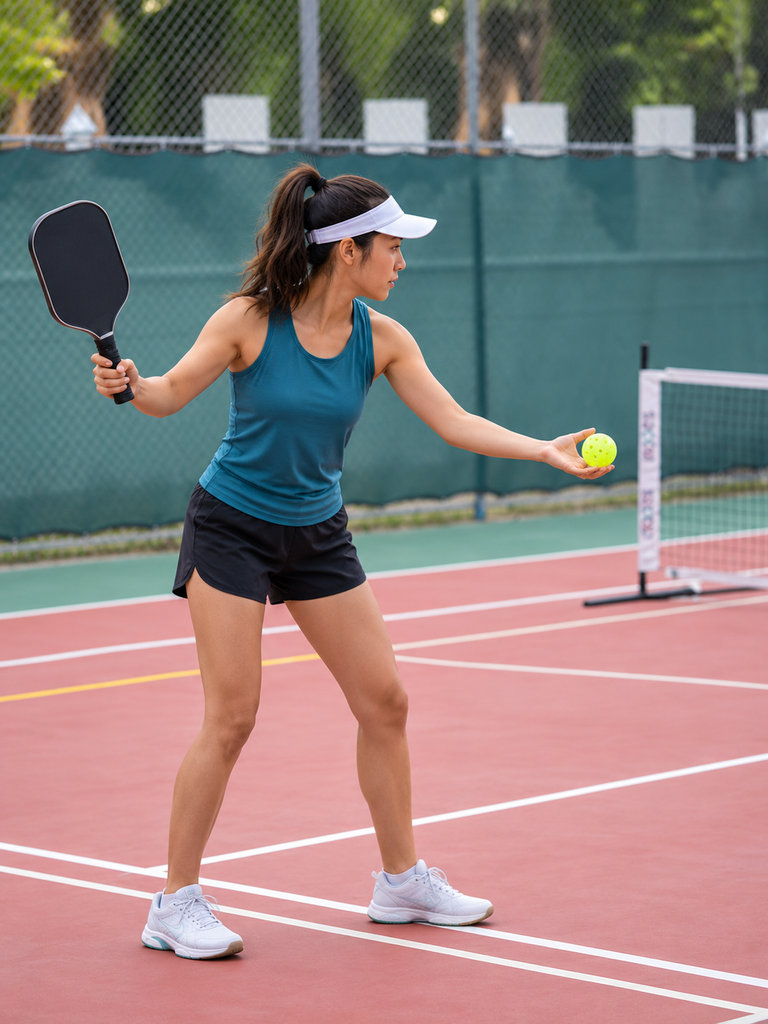
This lesson focuses on the social side of recreational pickleball: how players share courts, communicate, treat partners and opponents, manage differences in ability and participate appropriately as a beginner. The SPS curriculum places this subject in the orientation module so learners understand the atmosphere of recreational play before practical instruction begins.
USA Pickleball describes good sportsmanship in terms of respect, fair play and gracious behavior and specifically distinguishes those expectations from the official rules of the game. That distinction is useful for beginners: some behaviors are required by rules, while others are simply part of being a considerate recreational player.
Recreational Pickleball Is a Shared Experience
Many people first encounter pickleball through recreational rather than tournament play. They may join friends, attend a community session, visit public courts or participate in organized open play.
The exact arrangement varies from place to place. Some groups reserve courts. Others rotate players after each game. Some use paddle racks or other systems to determine who plays next. A private group may stay together for several games, while a busy public session may expect players to leave the court after one game so waiting players can rotate in.
The important beginner habit is to recognize that the local playing arrangement matters.
Before joining, observe how people are entering and leaving the courts. If the system is not obvious, ask someone:
“Hi, I’m new here. How does the rotation work?”
That simple question is usually more useful than assuming that every recreational group follows the same system.
Local customs may also influence how long people warm up, how players form teams, whether games are primarily social or competitive and how players of different skill levels mix.
Understanding the atmosphere first helps you participate without unintentionally disrupting the group.
Etiquette and Rules Are Not the Same Thing
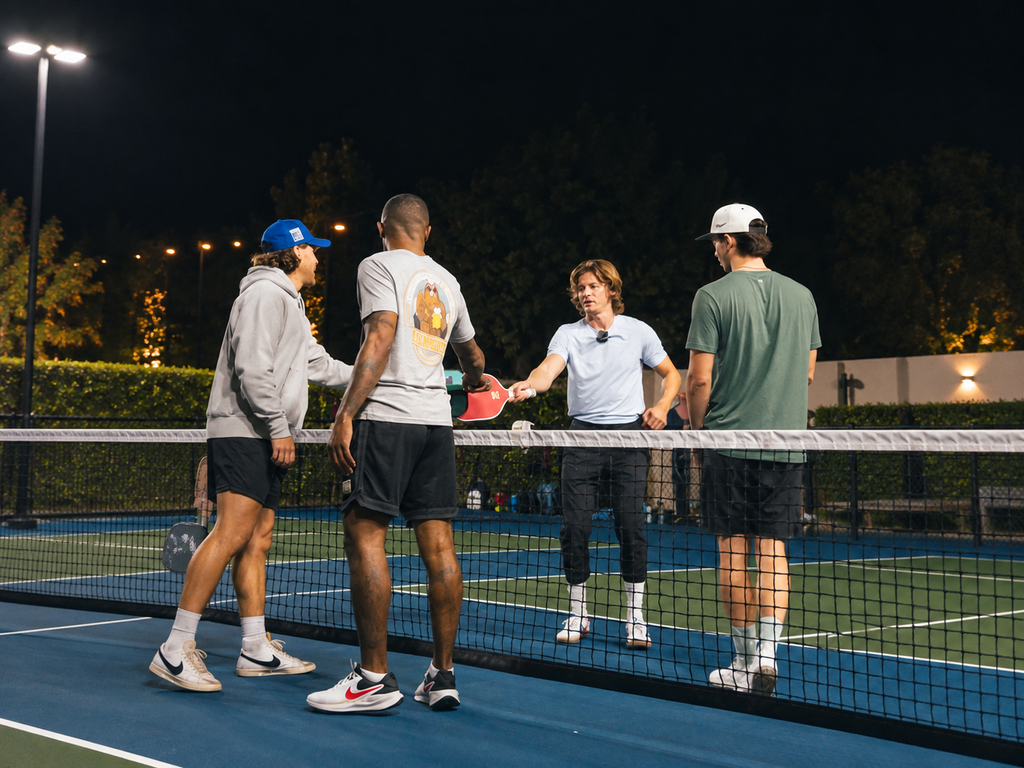
Pickleball has official rules governing how the game is played. Recreational groups also develop customs governing how players behave around one another.
These two things should not be confused.
A formal rule determines whether something is legal within the game. Etiquette concerns conduct such as:
- • waiting your turn;
- • treating other players respectfully;
- • avoiding unnecessary arguments;
- • being ready when your group is called;
- • acknowledging other players after a game;
- • avoiding unwanted coaching;
- • sharing public courts fairly.
Some facilities may also have their own posted policies. These can include court reservations, maximum playing times, rotation procedures or designated skill-level sessions.
A local custom cannot simply replace an official playing rule when players have agreed to follow a particular ruleset. At the same time, the official rulebook does not determine every social decision made during a community session.
USA Pickleball’s sportsmanship guidance makes the same distinction: sportsmanship recommendations guide player behavior, while the official rules take precedence when a rules question arises.
For a beginner, the practical approach is straightforward: learn the game accurately while also paying attention to how the local group organizes recreational play.
Introduce Yourself When Joining New Players
| Situation | What to Say or Do | Why It Helps |
|---|---|---|
| Joining players you do not know | “Hi, I’m John. I’m fairly new to pickleball.” | Gives the group useful context and sets realistic expectations. |
| You are unsure how the local session works | Ask, “How does the rotation work here?” | Prevents confusion and shows respect for local procedures. |
| You do not understand what happened during play | Wait until the rally has ended, then ask a short question. | Keeps the game moving and makes communication easier. |
| You make a beginner mistake | Reset and continue rather than repeatedly apologizing. | Keeps the atmosphere relaxed and avoids unnecessary delays. |
| You need clarification from an experienced player | Ask clearly and briefly when play is stopped. | Helps you learn without interrupting active play. |
| You are joining a more experienced group | Mention that you are still learning. | Helps other players adjust their expectations without a long explanation. |
Respect the Court Rotation
Busy recreational facilities often require players to share limited court space.
A rotation system gives waiting players a fair opportunity to participate. The specific system may vary considerably, so learn the system being used at that location rather than assuming one method applies everywhere.
You might encounter:
- • players rotating after each completed game;
- • paddle racks showing the order of waiting players;
- • groups of four entering together;
- • winners staying for another game under a local system;
- • courts separated by ability level;
- • scheduled open-play periods;
- • reserved courts operating differently from public open play.
Whatever system is being used, do not deliberately move yourself ahead of players who have been waiting longer.
Be ready when your turn arrives. If four players are waiting for you while you search for equipment, finish a conversation or remain away from the playing area, the entire rotation can slow down.
USA Pickleball’s sportsmanship guidance specifically encourages fair court rotation in social play, discourages moving ahead of waiting players and recommends being prepared when your turn arrives.
If you are unsure where your paddle belongs or when your group should play, ask someone familiar with the session.
Be a Useful Partner
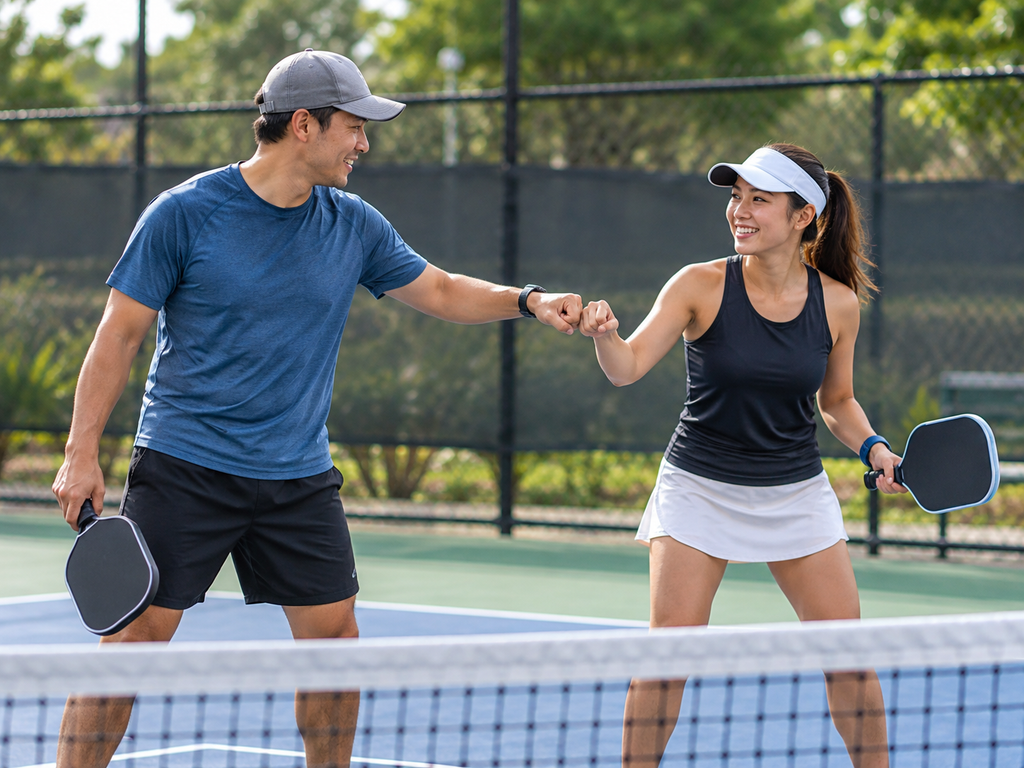
Doubles pickleball means sharing one side of the court with another person.
Even before developing your playing skills, you can be a good recreational partner through your behavior.
Treat your partner respectfully regardless of the outcome of a rally. Avoid visible frustration directed at them. Eye-rolling, blaming, criticizing and repeatedly pointing out errors can make a recreational game uncomfortable very quickly.
The same principle applies when you are the beginner.
If you miss a ball, you generally do not need to provide a long explanation. Reset for the next rally and continue playing.
Communication should be useful rather than constant.
Another common issue is unsolicited coaching.
Some experienced players genuinely want to help beginners. Their intention may be positive, but receiving technical advice after every rally can become overwhelming. Likewise, a beginner who has recently learned something should not immediately begin instructing everyone else.
USA Pickleball’s sportsmanship guidance recommends giving coaching and advice only when it is requested.
If you want help, you can ask a specific question. If your partner offers advice and you are comfortable receiving it, listen and continue playing. Recreational games are usually easier when instruction does not dominate every rally.
Treat Opponents with the Same Respect
Your opponents are not obstacles preventing you from enjoying the game. They are the other half of the game.
Competitive effort and respectful behavior can exist together.
You can try to win a rally without:
- • celebrating an opponent’s mistake excessively;
- • mocking poor shots;
- • arguing unnecessarily;
- • criticizing another player’s ability;
- • deliberately embarrassing a weaker player;
- • treating every recreational disagreement like a major competition dispute.
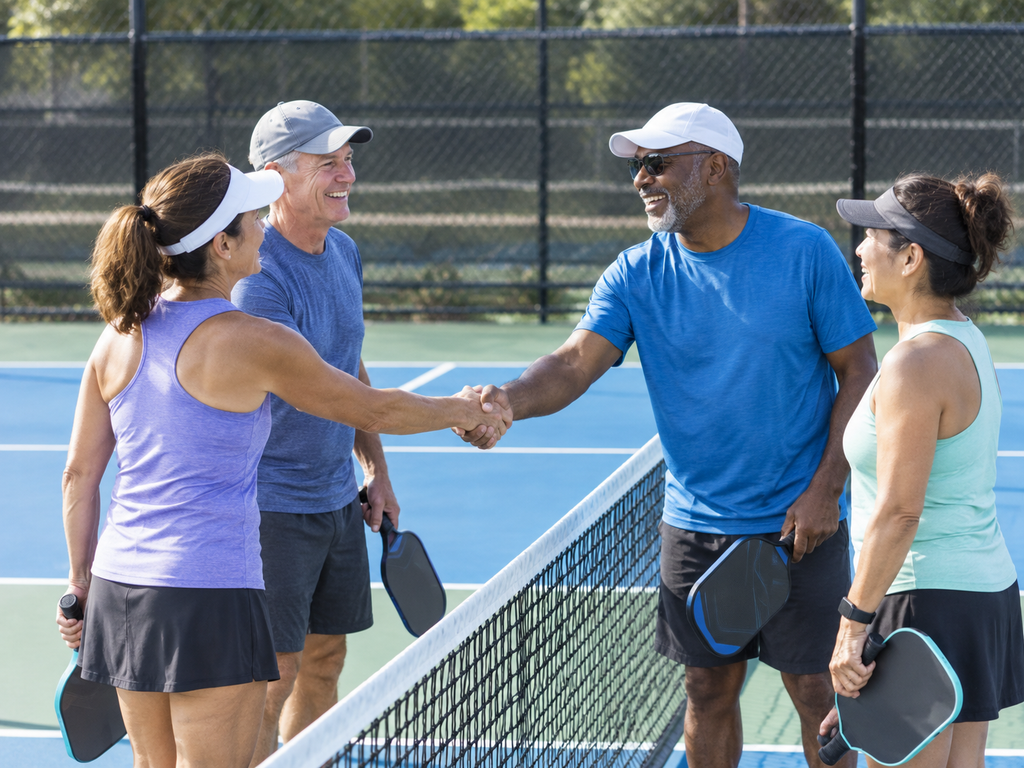
At the end of a game, players commonly acknowledge one another near the net with a brief friendly exchange.
USA Pickleball’s sportsmanship guidance encourages players to treat others with courtesy and to positively acknowledge the other players when a game finishes.
The exact gesture may differ between groups, but the principle is consistent: finish the game respectfully.
Understand the Spirit of Fair Calls
Recreational pickleball often depends on the players themselves to make judgments during play.
For a beginner, the important orientation principle is not to turn uncertain situations into confrontations.
Players will occasionally see the same event differently. A ball may land very close to a line. Someone may be uncertain about what happened during a rally. People viewing the ball from different angles may genuinely perceive the situation differently.
Good recreational behavior requires honesty and restraint.
USA Pickleball’s sportsmanship guidance emphasizes respectful line-call behavior, avoiding arguments and resolving uncertainty with fairness toward opponents.
As a new player, notice how experienced recreational players communicate these situations calmly. Their tone is often as important as the words they use.
A close decision does not need to become a debate lasting several minutes.
Match the Intensity of the Game
Not every recreational game has the same purpose.
Some games are highly competitive. Others are primarily social. Some groups include players of similar ability, while others deliberately mix beginners and experienced players.
Pay attention to the group you are joining.
Remember:
A player who treats a relaxed beginner session as though it were a championship match may make the experience unpleasant. At the opposite extreme, someone who does not pay attention at all can frustrate players who came to participate seriously.
A reasonable recreational player adjusts to the situation.
USA Pickleball’s sportsmanship guidance specifically asks stronger players in social games to treat other players considerately rather than repeatedly exploiting or overpowering weaker participants.
This does not mean everyone must intentionally play badly.
It means recreational players can recognize the context of the game.
For a beginner, the same principle applies in reverse. Do not demand that advanced players always include you in every competitive game. Different sessions may be organized for different ability levels.
If the facility separates courts or sessions according to level, use those arrangements to find an appropriate starting environment.
Keep the Session Moving
Four people may be playing while several others wait.
Small delays can therefore affect more than the players currently on the court.
Useful recreational habits include arriving with your equipment ready, paying attention when your group is called and avoiding unnecessary delays between games.
Conversation is part of the social nature of pickleball, but long discussions should not unnecessarily occupy a court when other players are waiting.
Similarly, when a game finishes under a rotation system, follow the local procedure rather than immediately beginning another game without checking whether other players are waiting.
Being considerate about time is especially important on busy public courts.
The general principle is simple:
Use your playing opportunity fully without preventing other players from receiving theirs.
What Beginners Can Expect
A first recreational session may feel much less orderly than watching experienced pickleball.
Beginning players often miss balls completely, hit balls into the net, send balls beyond the court or have rallies that end after only a few contacts.
That is normal beginner play.
You will also have several things competing for your attention at once. You may be thinking about where the ball is going, what your partner is doing, what happened in the previous rally and what is supposed to happen next.
Because of that mental load, beginners sometimes become so focused on avoiding mistakes that they stop paying attention to the social environment around them.
Remember:
A more useful expectation is that your first games are opportunities to participate in the normal rhythm of recreational pickleball.
That includes waiting, joining a group, introducing yourself, playing the game, interacting with a partner, acknowledging opponents and rotating off the court when appropriate.
Your technical performance does not have to resemble that of experienced players for you to participate appropriately in that environment.
What Other Players Can Reasonably Expect from a Beginner
Being new does not require pretending to be experienced.
However, other players can reasonably expect some basic recreational behavior from anyone joining the court.
They can expect you to:
- • listen when the group explains its local procedure;
- • communicate respectfully;
- • make a reasonable effort to follow the game;
- • avoid blaming other players for your mistakes;
- • respect the waiting order;
- • pay attention while you are participating;
- • respond appropriately when safety becomes a concern;
- • treat partners and opponents courteously.
Skill and etiquette are separate.
You may still be developing your ability to contact the ball consistently while already being a considerate person to play with.
That distinction matters. Players are usually much more comfortable helping a new player who is attentive and respectful than dealing with an experienced player who ignores everyone around them.
Common Beginner Confusion
“I have to prove that I belong on the court.”
Recreational pickleball sessions often include a range of abilities. Your job is not to impress strangers immediately. Identify yourself accurately, join an appropriate game and participate according to the group’s procedures.
“Every court uses the same rotation.”
They do not. Court-management systems vary by location. Observe first and ask when necessary.
“Experienced players always want advice from each other.”
Unsolicited coaching can be distracting regardless of skill level. Offer technical advice when it is wanted rather than automatically correcting another player.
“Competitive play requires aggressive behavior.”
Trying to win and treating people respectfully are compatible. Competitive effort does not require arguments, criticism or hostility.
“Every disagreement needs to be settled completely.”
Recreational play depends heavily on cooperation. Minor uncertainty should not automatically become a prolonged confrontation.
“Because I am a beginner, my behavior does not matter yet.”
Etiquette does not depend on stroke quality. Courtesy, attention and fairness can be practiced from your first session.
Observation and Recognition Activity
Before playing in an unfamiliar recreational session, spend several minutes observing the group.
Try to identify the following:
- How players enter the rotation.
Look for a paddle rack, waiting area, sign-up list or another system. - What happens when a game ends.
Notice whether all four players leave, some players remain or the system varies by court. - How new groups form.
Watch whether players organize themselves or whether someone manages the rotation. - How players communicate.
Listen to the tone used between partners and opponents. - How players finish a game.
Notice how they acknowledge one another before leaving or rotating. - Whether courts are separated by level or purpose.
Look for posted signs or ask whether particular courts are intended for beginners, intermediate players or advanced players.
Then imagine that you are joining the session for the first time.
You should be able to identify whom you could ask about the rotation, how you would briefly introduce yourself and what behavior would allow you to join without disrupting the group.
This is an orientation activity rather than a playing drill. Its purpose is to help you recognize the recreational environment before becoming part of it, which matches the SPS requirement that orientation lessons develop familiarity and recognition rather than becoming disguised technique or strategy lessons.
Summary
Recreational pickleball depends on cooperation as well as playing ability. Learn the local court system, wait your turn, arrive ready to play and communicate clearly when joining unfamiliar players. Treat partners and opponents respectfully, avoid unwanted coaching and recognize that different recreational games may have different levels of intensity.
As a beginner, you can contribute positively to a game before your physical skills are fully developed. Pay attention to the group, follow local procedures and approach other players with the same fairness and courtesy you expect from them.
Previous: Recognize Singles, Doubles and Recreational Play
Next: How Pickleball Began