
How Pickleball Began and Developed
How pickleball began is a story of informal recreational play that gradually developed into an organized modern sport. Pickleball began much more simply than the organized sport seen on dedicated courts today. There were no professional tours, national championships or specialized paddles when the first version of the game was created. It started as an improvised family activity during the summer of 1965 on Bainbridge Island, Washington, near Seattle.
Understanding that beginning provides useful context for the sport. Pickleball did not appear as a finished game with every modern detail already established. Its founders experimented with equipment, court setup and basic rules until they had a game that people of different ages could play together. Over time, that informal activity developed into an organized sport with standardized equipment, official rules, tournaments and governing organizations.
The Summer of 1965
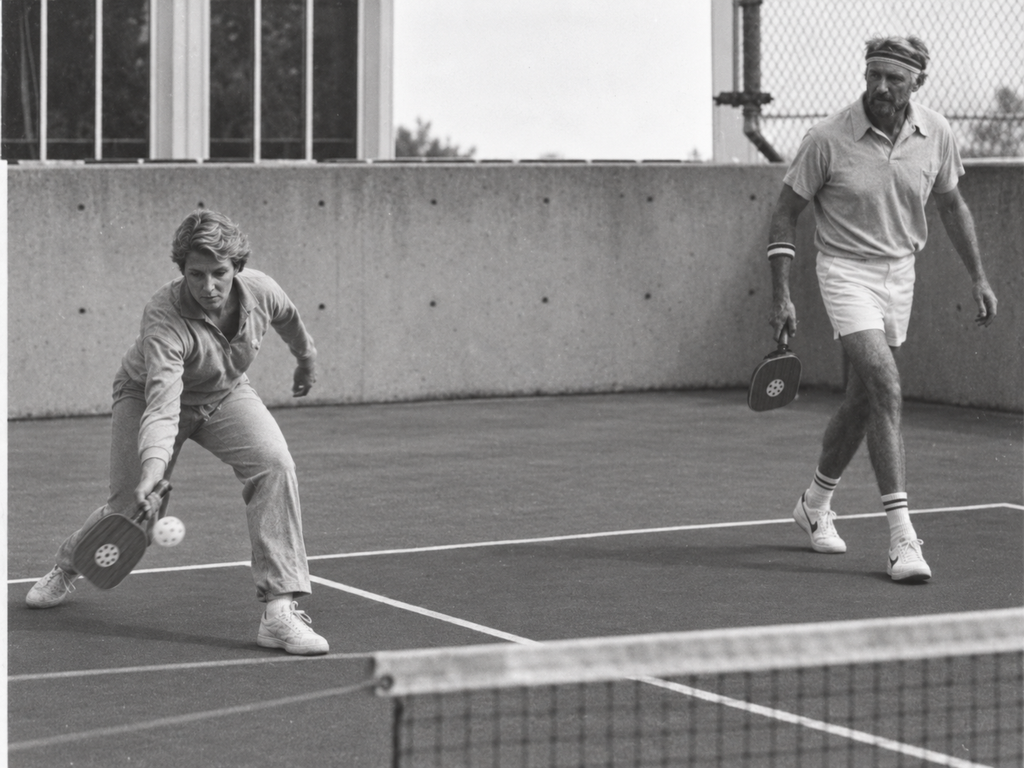
The commonly recognized starting point for pickleball is the summer of 1965.
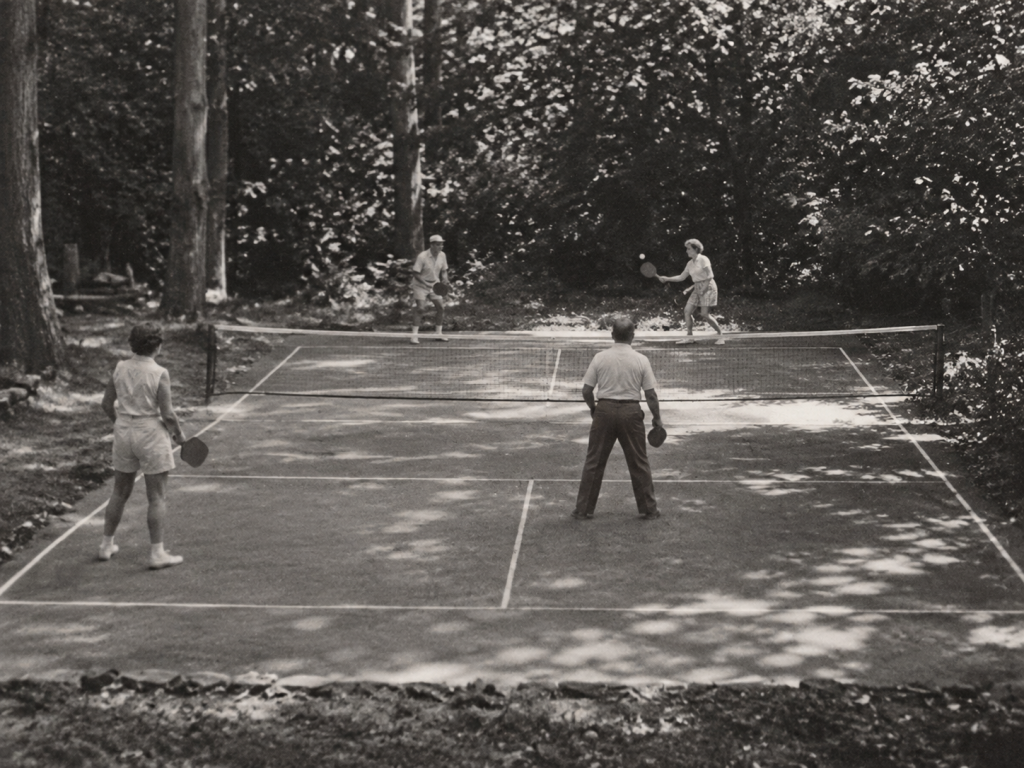
Joel Pritchard, who was then a Washington State congressman, and businessman Bill Bell returned to Pritchard’s home on Bainbridge Island after playing golf. Their families were looking for something to do. An old badminton court was available on the property, so Pritchard and Bell considered using it.
They could not find a complete set of badminton rackets. Instead of abandoning the idea, they improvised.
They used ping-pong paddles and a perforated plastic ball on the existing badminton court. The badminton net initially remained at its normal height of about 60 inches. The players began hitting the ball back and forth and experimenting with the new activity.
That first session was not yet pickleball in the fully developed sense. It was an experiment using equipment that happened to be available.
An important discovery soon affected the game. The plastic ball bounced reasonably well on the court’s asphalt surface. That meant the activity did not have to consist entirely of hitting the ball through the air. The players could allow it to bounce and continue the exchange.
As they experimented, they lowered the net from badminton height to approximately 36 inches.
Those changes began turning an improvised backyard activity into something recognizably different from badminton.
The Three Founders
Three people are generally recognized as the founders of pickleball:
- Joel Pritchard
- Bill Bell
- Barney McCallum
Pritchard and Bell were involved in the first experiments. Barney McCallum joined them the following weekend.
Once McCallum became involved, the group began developing rules for the game rather than simply improvising from one exchange to another. Badminton was an important influence on those early rules. The founders were also trying to preserve the original purpose of the activity: creating a game that members of the family could play together.
This point is important when looking at pickleball’s history. The sport did not begin because its founders were trying to create a professional competition or a replacement for an existing sport. They were trying to make an enjoyable, workable game from the space and equipment they had available.
The competitive and organized sides of pickleball developed later.
A Game Built Through Experimentation
Several characteristics of early pickleball came from practical experimentation.
Remember:
The founders had an existing badminton court, so that space influenced the game. They lacked the necessary badminton equipment, so they substituted paddles and a plastic ball. They discovered that the ball bounced effectively on the hard surface, which changed how exchanges could develop. They adjusted the net when the original badminton height did not fit the game they were creating.
They also borrowed ideas rather than attempting to invent every feature from nothing.
Modern descriptions often say that pickleball contains recognizable elements of badminton, tennis and table tennis. That does not mean the founders simply combined complete rules from those three sports. Instead, the early game developed from familiar sporting ideas, available equipment and repeated experimentation.
The modern game is considerably more standardized than that first backyard version. The equipment, terminology and rules now belong to an established sport rather than an informal experiment.
The First Permanent Pickleball Court
The game continued after that first summer.
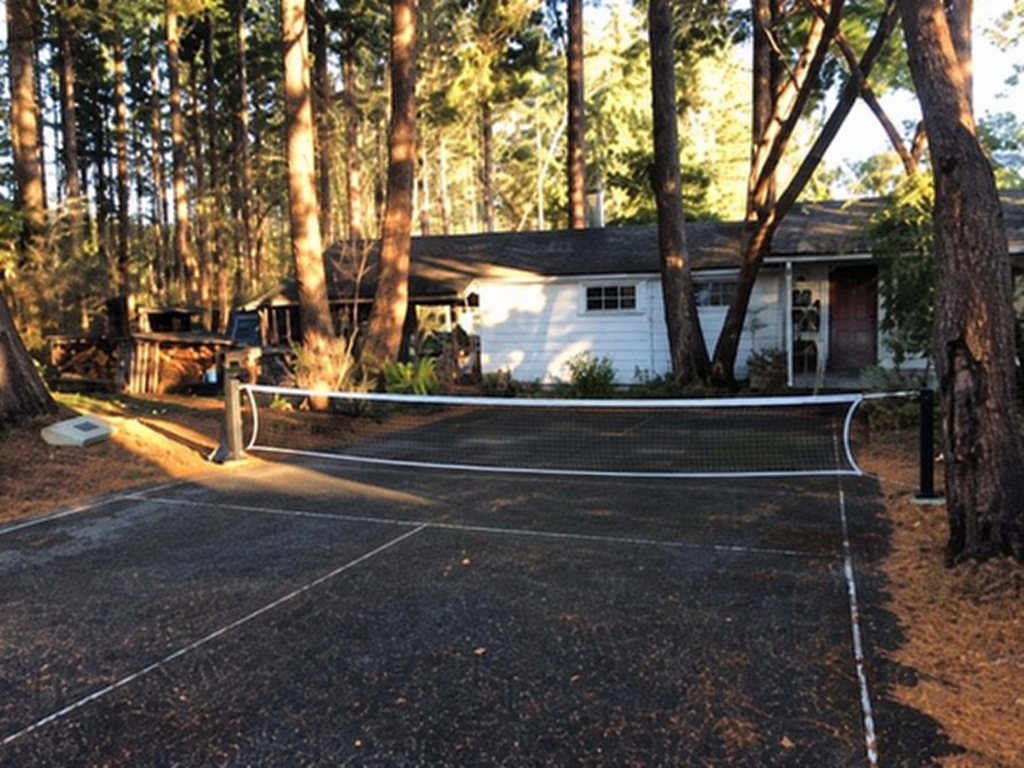
One important early milestone came in 1967, only two years after the original experiments. According to USA Pickleball’s historical timeline, the first permanent court built specifically for pickleball was constructed at Joel and Joan Pritchard’s home in Magnolia Bluff in Seattle.
That was a meaningful change.
The first games had taken place by adapting an existing badminton court. A permanent pickleball court indicated that the activity had developed enough identity to justify a playing space of its own.
The game was beginning to move from improvised recreation toward an established sport.
Pickle-Ball, Inc. and Early Organization
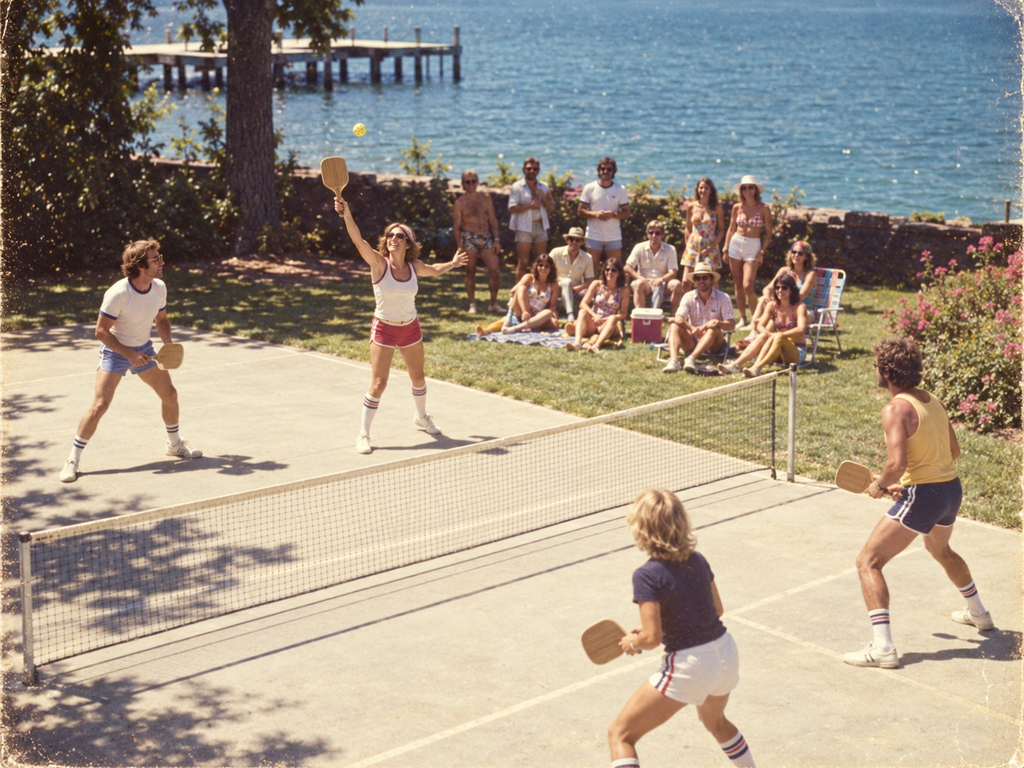
Another step occurred in 1972, when Pickle-Ball, Inc. was formed to protect and support the creation of the new sport.
Equipment also gradually became more purpose-built.
The founders had originally used available ping-pong paddles. As pickleball developed, paddles and balls could increasingly be produced specifically for the game rather than borrowed or adapted from another activity.
This gradual development is worth distinguishing from the origin itself. Pickleball was created in 1965, but many of the structures now associated with an established sport appeared during the following years and decades.
The First Wider Public Attention
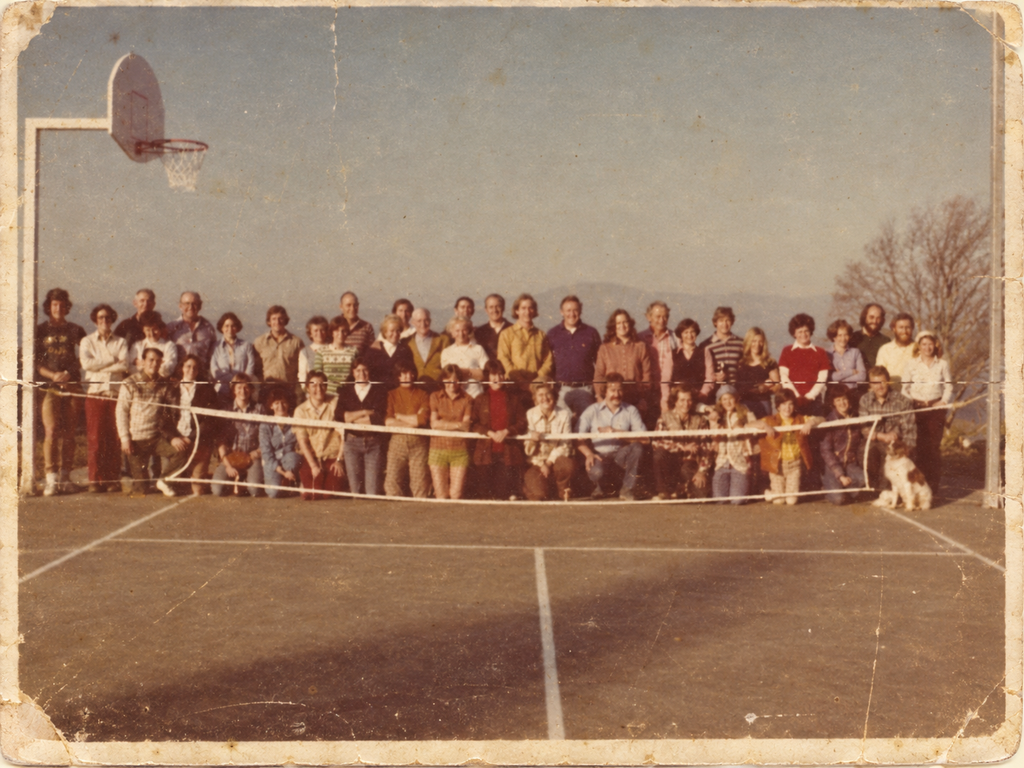
For several years, pickleball remained relatively small and regional.
During the 1970s, however, more people began hearing about it.
In 1975, The National Observer published an article about pickleball. The following year, Tennis Magazine also featured the new game. These articles helped introduce pickleball to people who had never encountered it personally.
That same period produced another important milestone.
In the spring of 1976, the first known pickleball tournament was held at the South Center Athletic Club in Tukwila, Washington. Many of the competitors were college tennis players who were still relatively unfamiliar with pickleball.
The tournament showed that the game could exist in a more formal competitive setting as well as in family and recreational play.
From Local Game to Organized Sport
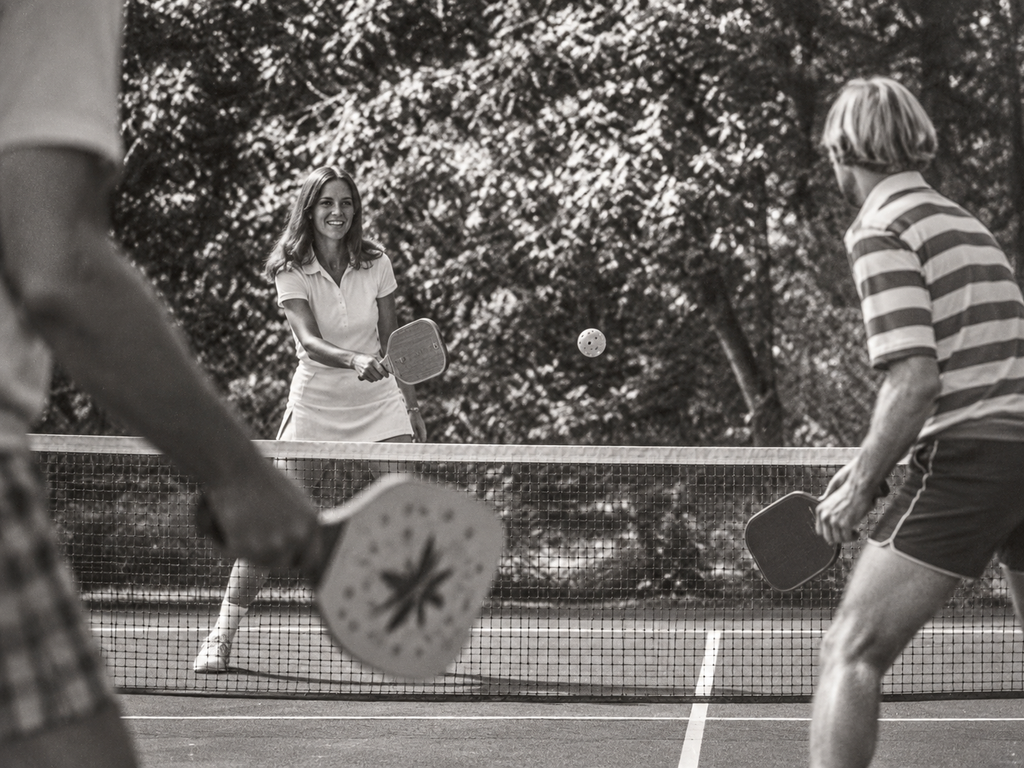
Pickleball continued developing through the following decade.
In 1984, the United States Amateur Pickleball Association was organized to help promote and develop the sport nationally. The organization also published an early official rulebook that year.
By 1990, USA Pickleball’s historical timeline records that pickleball was being played in all 50 U.S. states.
This expansion represents a major change from the game’s beginnings.
Twenty-five years earlier, the entire activity had consisted of families experimenting on an old badminton court in Washington. It had now spread across the United States.
Growth continued through community recreation programs, senior sports programs, clubs, tournaments and players introducing the game to new locations.
A Modern National Organization
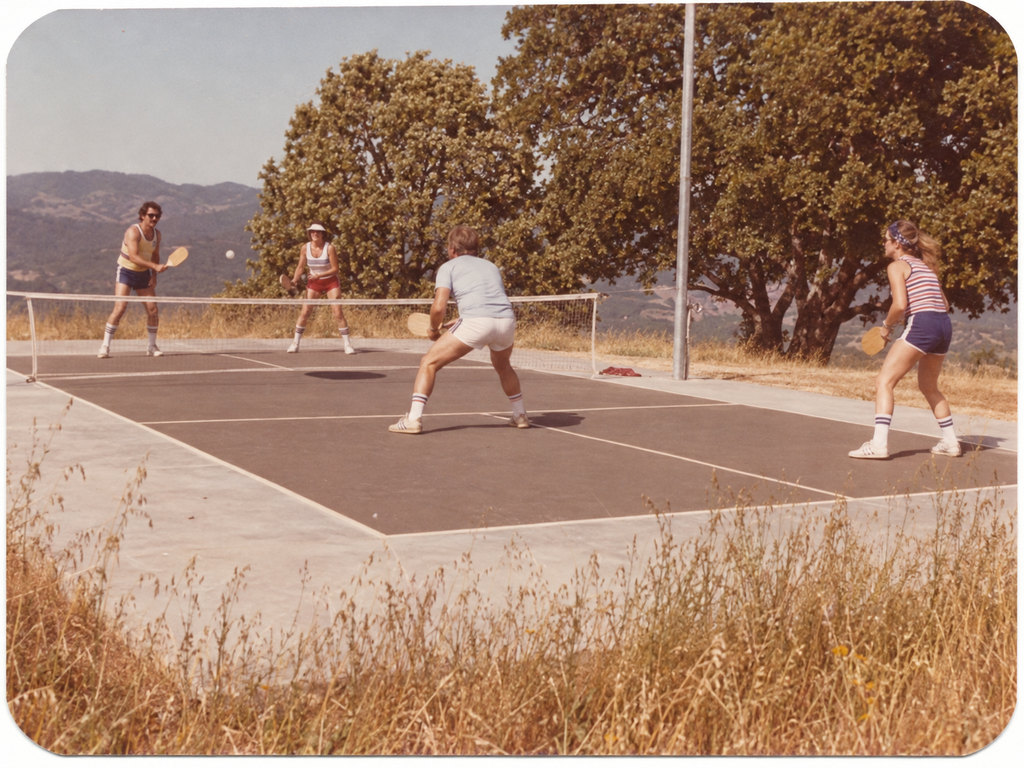
Pickleball’s organizational structure continued evolving as participation increased.
In 2005, a new USA Pickleball Association organization was established to promote the sport. In 2009, the first USAPA National Tournament for players of all ages was held in Buckeye, Arizona, attracting almost 400 competitors from 26 states and several Canadian provinces.
The organization later became known simply as USA Pickleball following a rebrand in 2020. Today it serves as the National Governing Body for pickleball in the United States and maintains the official rulebook, sanctions events and supports the development of the sport.
The difference between 1965 and modern pickleball is therefore substantial. What started with improvised paddles and an available plastic ball developed into a sport supported by dedicated facilities, equipment manufacturers, organized competitions and national governing structures.
Where Did the Name “Pickleball” Come From?
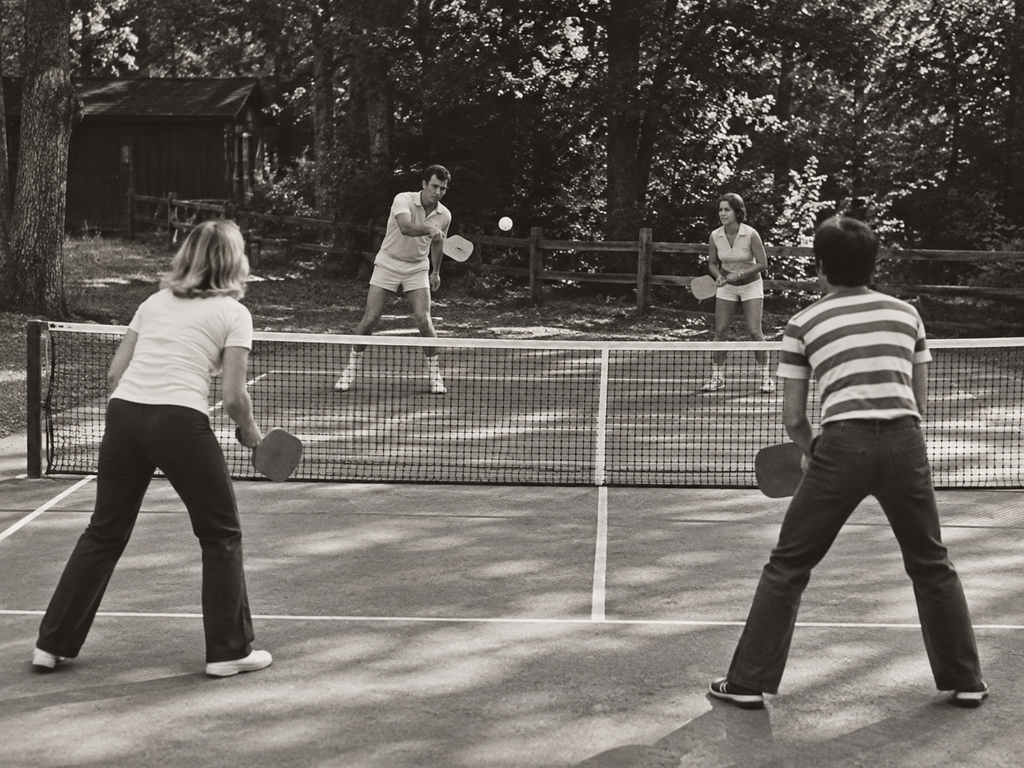
The unusual name has produced one of the most repeated stories in the sport’s history.
There are different accounts of exactly how the word pickleball was chosen.
One account comes from Joan Pritchard, Joel Pritchard’s wife. She associated the developing game with a pickle boat in rowing. A pickle boat could contain rowers assembled from the remaining members of other crews. The comparison was that pickleball itself had been assembled from elements associated with several existing sports.
Another popular explanation credits the Pritchard family’s dog, Pickles, which was said to chase the ball.
USA Pickleball has acknowledged that both stories have circulated. Its historical material notes that the accounts differ, so the dog story should not simply be presented as an uncontested fact. An important detail is that some historical accounts place the arrival of the dog after the game had already been created.
For a beginner, the useful point is straightforward: the sport’s unusual name has a debated origin, and there is more than one traditional explanation.
There are no actual pickles involved in the game.
How Pickleball Changed as It Grew
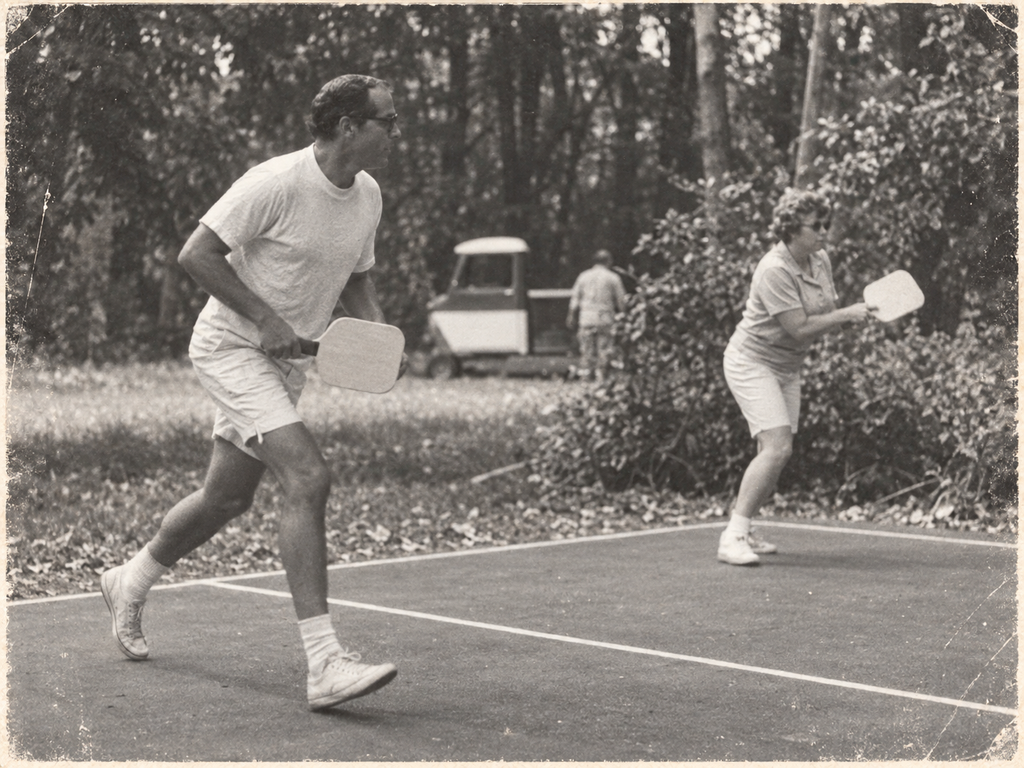
The pickleball played today should not be imagined as an exact copy of the activity played during the first weekend in 1965.
Sports develop.
Equipment improves. Rules become standardized. Organizations establish consistent terminology. Courts are constructed specifically for the game. Competitive events create a need for clearer procedures. New players and communities introduce the sport to new environments.
Pickleball followed that pattern.
The earliest participants worked with whatever equipment was available. Later players used equipment designed specifically for pickleball. The founders established initial rules, while later organizations documented and refined formal rules for increasingly organized play.
The underlying game survived those changes because players could continue recognizing it as the same sport even as its structure became more consistent.
A Short Pickleball History Timeline
These milestones provide a useful way to remember the development of the sport:
1965 — Pickleball begins.
Joel Pritchard and Bill Bell experiment with paddles, a plastic ball and an existing badminton court on Bainbridge Island. Barney McCallum soon joins them, and the three founders begin developing rules.
1967 — First permanent pickleball court.
A court specifically intended for pickleball is constructed at the Pritchard home in Seattle.
1972 — Pickle-Ball, Inc. is formed.
The sport begins developing a more formal identity.
1975–1976 — Wider public exposure begins.
National publications introduce readers to the game.
1976 — First known pickleball tournament.
Players compete at the South Center Athletic Club in Tukwila, Washington.
1984 — National organization and rulebook.
The United States Amateur Pickleball Association is organized, and an official rulebook is published.
1990 — Nationwide presence.
Pickleball is reported as being played in all 50 U.S. states.
2009 — First USAPA National Tournament.
Hundreds of players participate in a national event in Arizona.
2020 — USA Pickleball name adopted.
The national organization rebrands as USA Pickleball.
Common Beginner Confusion About Pickleball’s History
“Pickleball was invented as a combination of three complete sports.”
That description is too simple.
The game shows influences from established paddle and racket sports, especially badminton, but its founders developed pickleball through experimentation rather than by formally taking a fixed set of rules from tennis, badminton and table tennis.
“The modern rules were created on the first day.”
They were not.
The first players experimented with the playing environment and gradually created rules. Formal organization and published rulebooks came much later.
“Pickleball was named after a dog.”
That is one well-known story, but it is not the only historical account. The pickle-boat explanation associated with Joan Pritchard is also part of the documented history, and USA Pickleball acknowledges disagreement over the exact origin of the name.
“Pickleball has always been a major competitive sport.”
The competitive structure developed gradually. Pickleball began as family recreation, then expanded through local play, organized tournaments and eventually national competition.
Recognition Activity: Put the Story in Order
Without looking back at the timeline, place these events in chronological order:
- The first known pickleball tournament is held.
- Pickleball begins on Bainbridge Island.
- Pickleball is reported as being played in all 50 states.
- The first permanent pickleball court is built.
- A national pickleball organization publishes an official rulebook.
The correct order is:
1965 — Pickleball begins
1967 — First permanent court
1976 — First known tournament
1984 — National organization and rulebook
1990 — Play reported in all 50 states
Then try to recall the three founders without checking:
Joel Pritchard, Bill Bell and Barney McCallum.
This activity is about recognizing the broad development of the sport rather than memorizing every date.
Does Better Pickleball Equipment Make a Difference?

Beginner Gear Guide
Choosing sports equipment as a beginner can be more complicated than it first appears. Stores and online marketplaces are filled with products promising more speed, power, control, comfort, or performance,…
Summary
Pickleball began in 1965 on Bainbridge Island, Washington, when Joel Pritchard and Bill Bell improvised a game using an existing badminton court, ping-pong paddles and a perforated plastic ball. Barney McCallum soon joined them, and the three men developed the early rules with the goal of creating a game their families could play together.
The first permanent pickleball court followed in 1967. During the 1970s, the sport gained wider attention and held its first known tournament. National organization and formal rule development followed, helping pickleball spread throughout the United States and eventually far beyond its original backyard setting.
The exact origin of the name remains disputed, with both the pickle-boat explanation and the Pickles-the-dog story appearing in accounts of the sport’s early history.
Previous: Understand Recreational Etiquette and Beginner Expectations
Next: Read the Court and Its Boundaries