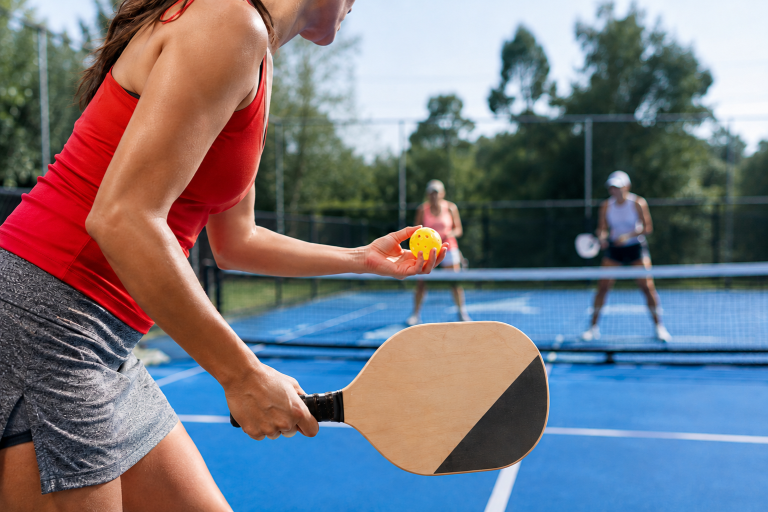
Pickleball often places several people, paddles and loose balls in a relatively small area. To Move Safely Around the Pickleball Court, you need to notice more than the ball you are playing. You also need to recognize when a court is active, give other players room, keep movement paths clear and know when to stop rather than continue into an avoidable hazard.
Safe movement does not mean moving nervously or hesitating every time someone is nearby. It means developing a simple habit: observe what is happening, move under control and avoid entering another person’s space when doing so could create a collision or tripping risk. These habits matter on your own court and anywhere several courts share the same facility.
How to Move Safely Around the Pickleball Court
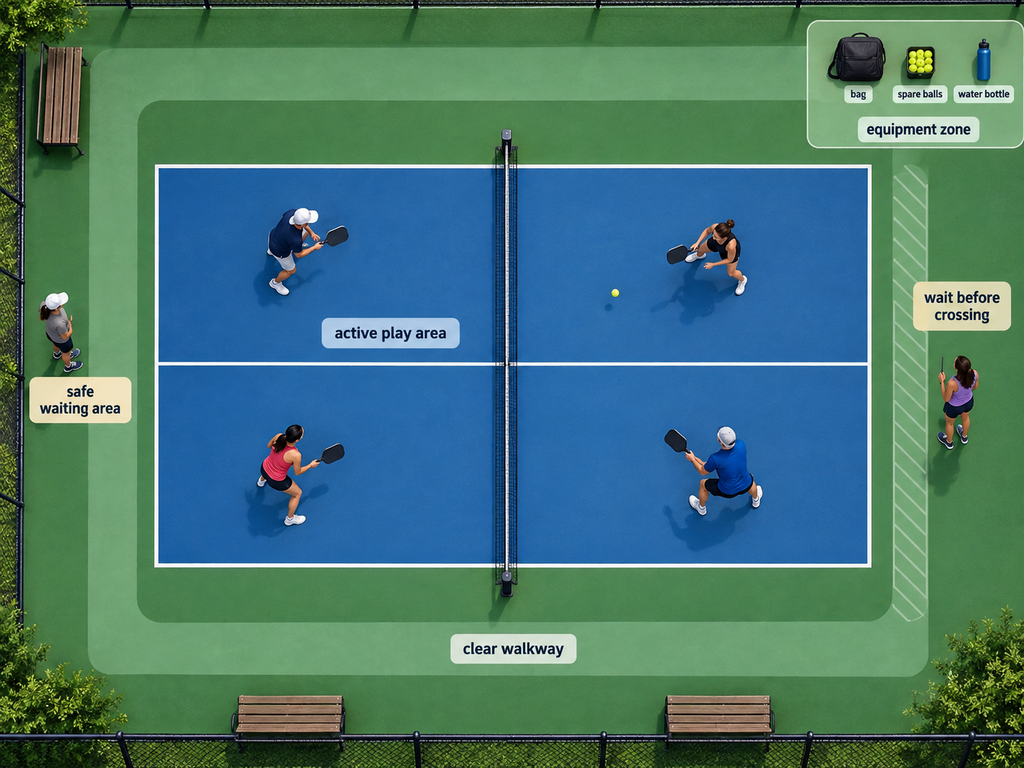
Start by observing before you move. Before entering a court, crossing behind players or retrieving a ball, look at the activity around you. Determine whether a rally or drill is underway, where the players are moving and whether your intended path is clear.
If play is active, avoid unnecessary court crossings. Wait for a natural pause when you need to enter, cross or retrieve something. Keep spare balls and personal belongings away from common movement areas, especially near baselines and sidelines.
During play, stay aware of nearby players as well as the ball. If an unexpected ball, object or person enters a movement path, slow down or stop when continuing would create unnecessary risk. Resume only after the area is reasonably clear.
USA Pickleball’s Sportsmanship Guide gives similar practical guidance for shared courts: wait until play has stopped before crossing an active court, and warn players when a stray ball creates a safety concern. These are useful recreational safety habits rather than a substitute for formal officiating procedures.
Recognize When a Court Is Active
An active court is not limited to a formal game. Two players exchanging controlled shots, a coach feeding balls or a group completing a drill can all create active movement.
Before stepping onto a court, look for signs that play is underway. Are players tracking a ball? Are they moving into position? Is someone preparing for the next feed? If so, treat the space as active even if nobody is keeping score.
⚠ CAUTION:
Do not walk through simply because your destination is close or because you think you can cross quickly. A player focused on the ball may not notice you until late. Wait until the exchange has stopped and the players have clearly paused.
Apply the same awareness to neighboring courts. A ball, player or paddle movement can extend close to the space between courts, so do not assume that an area is clear just because it is outside the painted lines of your own court.
Watch More Than the Ball
The ball naturally attracts your attention, especially when you are new to pickleball. However, safe pickleball movement also requires awareness of the people around you.
As you move, notice whether a partner or opponent is approaching the same area. Be particularly careful when looking upward, reaching to the side or turning your body, because those actions can narrow your awareness of what is nearby.
You do not need to look away from the ball constantly. Instead, maintain enough general awareness to recognize when another person is entering your path. If two players are moving toward the same space, avoiding contact is more important than reaching the ball.
This is one reason controlled movement matters. A player who is rushing has less time to adjust when another person changes direction unexpectedly.
Give Other Players Room to Move
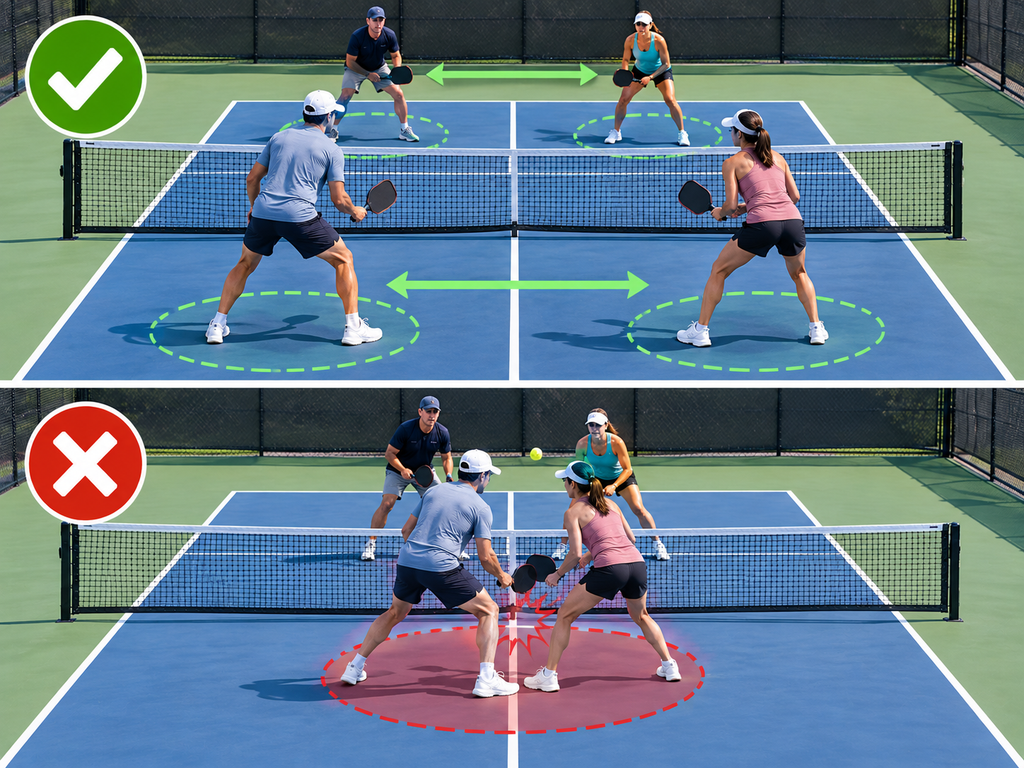
Every player needs space for ordinary court movement and paddle use. Avoid standing or moving unnecessarily close to someone who is preparing to swing.
Do not cut directly behind or beside a player who is focused on an incoming ball. Even a compact paddle motion needs clearance, and the player may step or turn without realizing that you have moved close.
Near the net, several players can occupy a smaller area at the same time. Stay aware of where others are standing and where they may move next. If reaching a ball would require forcing your way into another player’s immediate space, stop or give up the attempt rather than create a collision.
The same principle applies during casual drills. A successful repetition is not worth contact between players or paddles.
Retrieve Loose Balls Safely
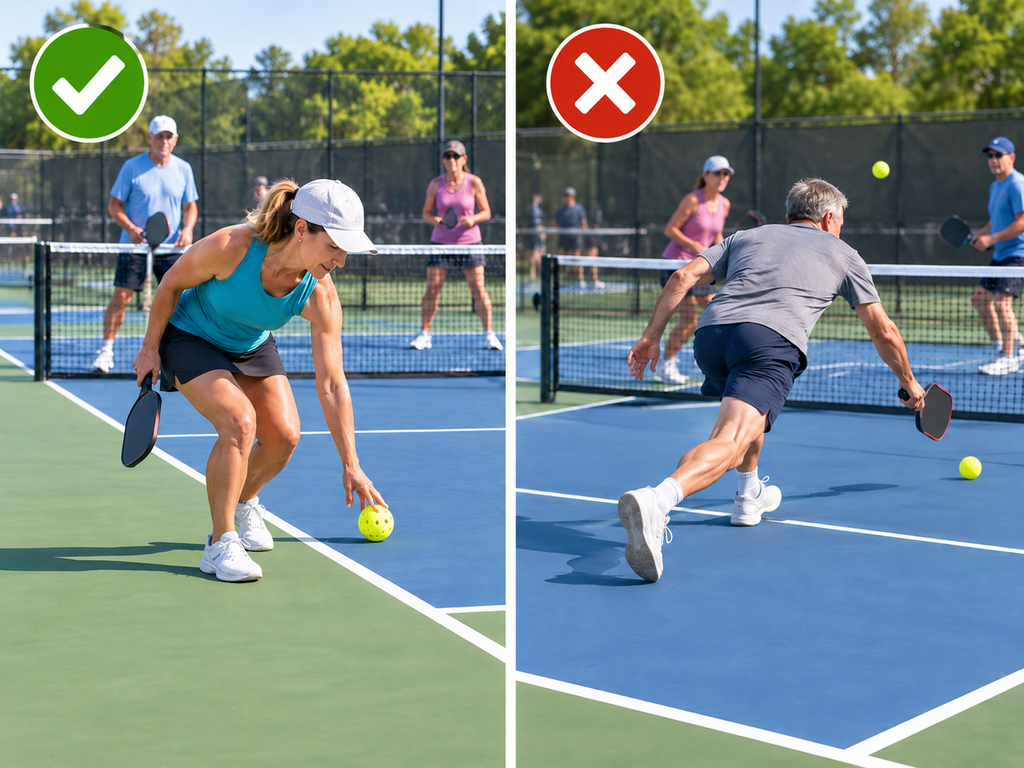
A loose pickleball can become a tripping hazard when players are watching another ball. When you need to retrieve one, first locate it and then check the surrounding activity.
Ask yourself whether you can reach the ball without walking into an active movement path. If the answer is no, wait. Immediate retrieval is not always necessary.
When the area is clear, walk to the ball under control, pick it up and move back out of the active area. Avoid sprinting after a rolling ball unless there is a genuine need to warn others of an immediate hazard.
This observe-before-retrieving habit is especially important when several groups are practicing at the same facility.
Avoid Chasing Balls onto Active Courts
When your ball rolls toward or onto a neighboring court, do not automatically follow it. First look at what the other players are doing.
If their court is active, entering it can create a greater hazard than the missing ball itself. Wait for the players to become aware of the situation or for their play to stop. If the ball creates an immediate danger, clearly warn the players so they can respond.
If the ball is not in anyone’s movement path, retrieval can usually wait for a safe pause. The priority is collision prevention, not getting the ball back as quickly as possible.
Never assume that another court is safe to enter just because the ball is close to the sideline. Players can move quickly beyond where they were standing a moment earlier.
Respond When a Stray Ball Enters Your Court
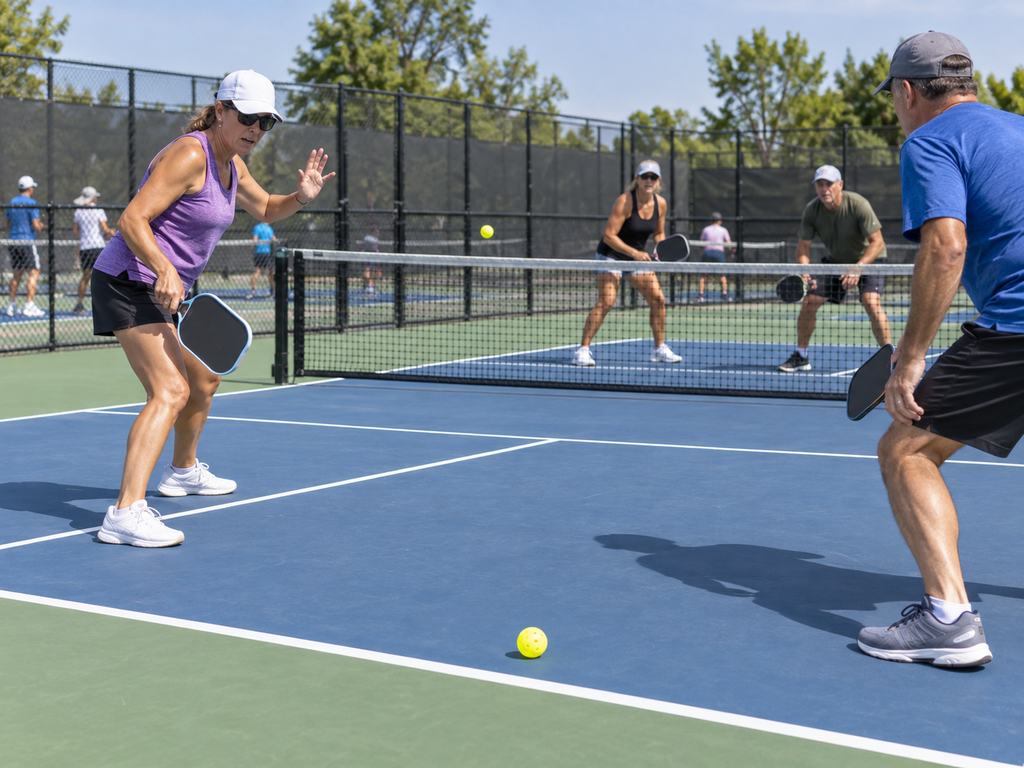
A ball from another court can suddenly appear in your playing area. Treat it as a possible tripping hazard rather than something to ignore automatically.
If the ball is close to where players are moving, communicate clearly so others know it is there. Stop or reduce activity when continuing the rally or drill would require people to move around the unexpected ball.
Once activity has paused, clear the ball from the movement area. Make sure everyone is ready and the space is clear before starting again.
The goal here is immediate safety, not learning formal replay or interruption procedures. In ordinary recreational practice, the beginner priority is simple: recognize the hazard, communicate when necessary, stop safely, clear the area and then resume.
Keep Spare Balls and Equipment Out of Movement Areas
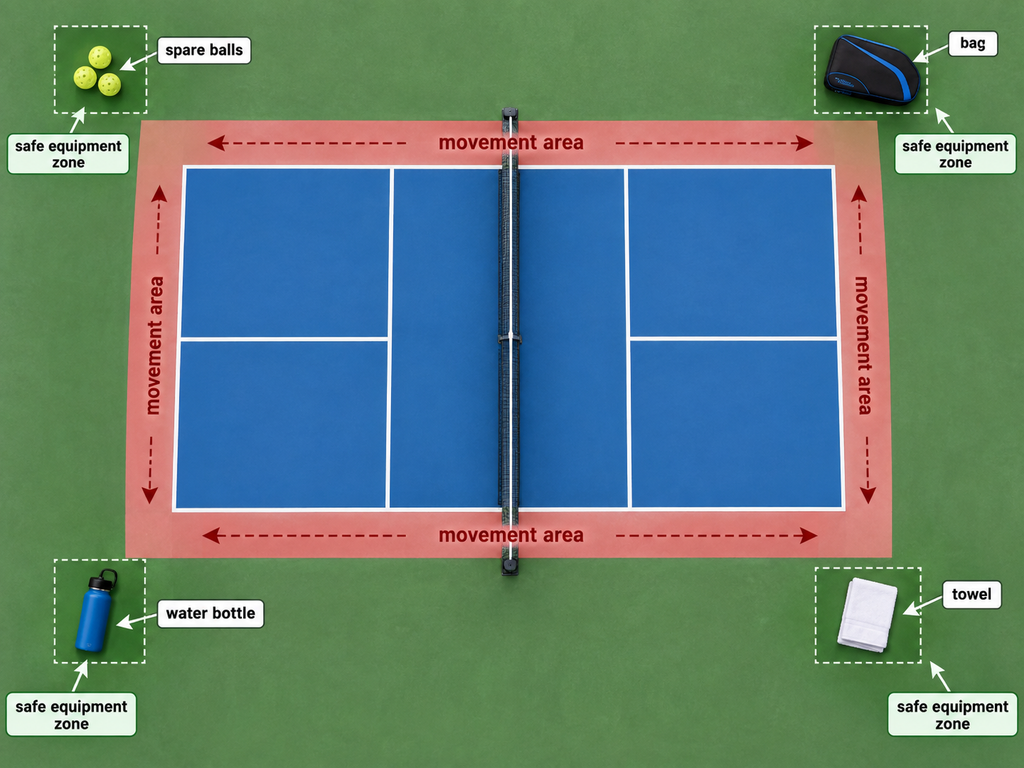
Safety begins before the first ball is hit. Spare pickleballs, bags, water bottles, towels and unused training equipment should not be left where players are likely to step.
Keep spare balls together rather than scattered around the court. Place bags and bottles outside ordinary movement paths, especially away from baselines and sidelines where players may move beyond the painted court.
If practice equipment is no longer being used, move it to an appropriate storage area rather than leaving it beside active players.
A small object may look harmless while everyone is standing still. During play, however, attention is often on the ball, and even a single loose pickleball can create a significant tripping concern.
Move Carefully Between Courts
Shared pickleball facilities often have narrow spaces between courts. Before walking through these areas, observe both courts and any players nearby.
Use designated walkways where they are available. If your route passes close to active play, wait until there is a clear pause instead of squeezing between moving players.
Remain alert for balls travelling from one court to another. Also notice whether a player might step outside a sideline or baseline during normal movement. The space between courts is not automatically a safe walkway just because it is outside the marked boundaries.
When several people are moving through a shared area, patience is safer than trying to find the fastest path.
Know When Safety Should Stop the Activity
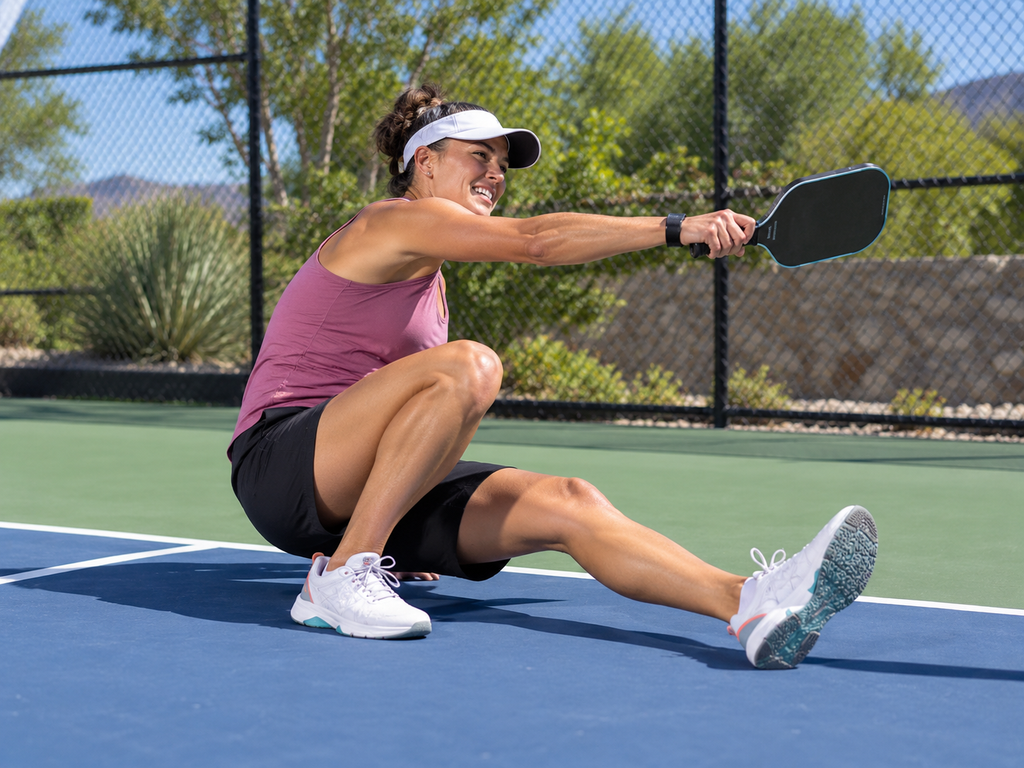
There are situations in which the correct choice is simply to stop.
Examples include a loose ball appearing in a player’s immediate path, another person unexpectedly entering the court, equipment falling into the playing area or two players moving toward an obvious collision. Activity from a neighboring court may also create a conflict if players or balls enter the same movement space.
Do not prioritize finishing a rally, reaching one more ball or completing a drill repetition when continuing would create an avoidable risk. Stop, allow the situation to clear and reset before continuing.
This principle is simple: collision and tripping prevention take priority over completing the current play.
Common Beginner Safety Mistakes
One common mistake is chasing every loose ball immediately. The player sees the ball rolling away and follows it without checking nearby courts. The correction is to observe first and wait when the retrieval path is not clear.
Another mistake is crossing an active court because the destination appears close. Even a quick crossing can surprise players who are concentrating on the ball. Wait for a clear pause.
Beginners also sometimes leave spare balls near the baseline or sideline. These balls can become obstacles when a player moves backward or sideways. Store them together outside normal movement areas.
A fourth mistake is watching only the ball. Strong visual attention to the ball is natural, but moving without awareness of people and objects nearby can lead to contact. Keep enough surrounding awareness to recognize another person entering your path.
Another problem is continuing despite an obvious hazard. If a loose ball, person or object enters the court, trying to finish the point can make the situation worse. Stop when continuing would create unnecessary risk.
Finally, beginners may crowd another player’s space because both people are trying to reach the same ball. When movement paths overlap, spacing takes priority. Do not force the play when collision becomes likely.
Practice: Shared-Court Safety Scenarios
Use a clear court that has already been inspected. Two or more people may participate, but fast hitting is not required. Do not create real hazards. Each scenario should be explained before it begins, and all objects used should be placed in safe, visible positions.
Scenario 1: Loose Ball on Your Court. Place a stationary pickleball in a visible location before the exercise starts. The learner notices the ball, decides whether it lies in a likely movement path, pauses the activity, retrieves it safely and confirms that the area is clear before continuing.
Scenario 2: Ball Travels Toward Another Court. Simulate a ball rolling toward the edge of a neighboring playing area. The learner follows its direction visually, observes whether the other court is active and avoids immediately running after it. Retrieval occurs only when there is a safe opportunity.
Scenario 3: Stray Ball Enters Your Court. During a slow simulated activity, a partner rolls a ball into an agreed safe location. The learner recognizes the hazard, alerts the other participant if needed, stops the activity, clears the ball and resets before continuing.
Scenario 4: Crossing an Active Area. The learner needs to reach the opposite side while another pair performs a slow simulated rally. The correct response is to wait for a clear pause rather than walking through the active area.
Scenario 5: Shared Player Space. Two players begin where their movement paths could overlap. The learner practices observing the other player, maintaining reasonable space and stopping rather than forcing unsafe movement. Both players reset before the next repetition.
Scenario 6: Equipment Near the Court. Place harmless items in predetermined visible positions outside active play. The learner identifies which items could interfere with ordinary movement and relocates them before practice begins.
After completing the individual scenarios, combine several examples into a short awareness walkthrough. The learner should identify each situation before being told what to do.
Use the same sequence each time:
observe → identify the hazard → wait or stop → clear the situation → resume safely
⚠ REMEMBER:
The objective is not speed. Success means recognizing common shared-court hazards, avoiding unnecessary court crossings, responding appropriately to loose balls and consistently choosing collision prevention without needing step-by-step assistance.
Summary
To Move Safely Around the Pickleball Court, observe active play before entering or crossing a court, remain aware of nearby players as well as the ball, and give others enough space for movement and paddle use. Retrieve loose balls only when the situation is reasonably safe, and do not chase balls onto neighboring active courts.
Keep spare balls, bags, bottles and other equipment outside normal movement paths. If a stray ball, person or object creates a collision or tripping risk, stop the activity, clear the hazard and reset before continuing. Safe movement takes priority over finishing a drill, repetition or rally.
Previous: Prepare Your Body for Pickleball
Next: Hold a Pickleball Paddle with a Comfortable Grip
Recommended Read