
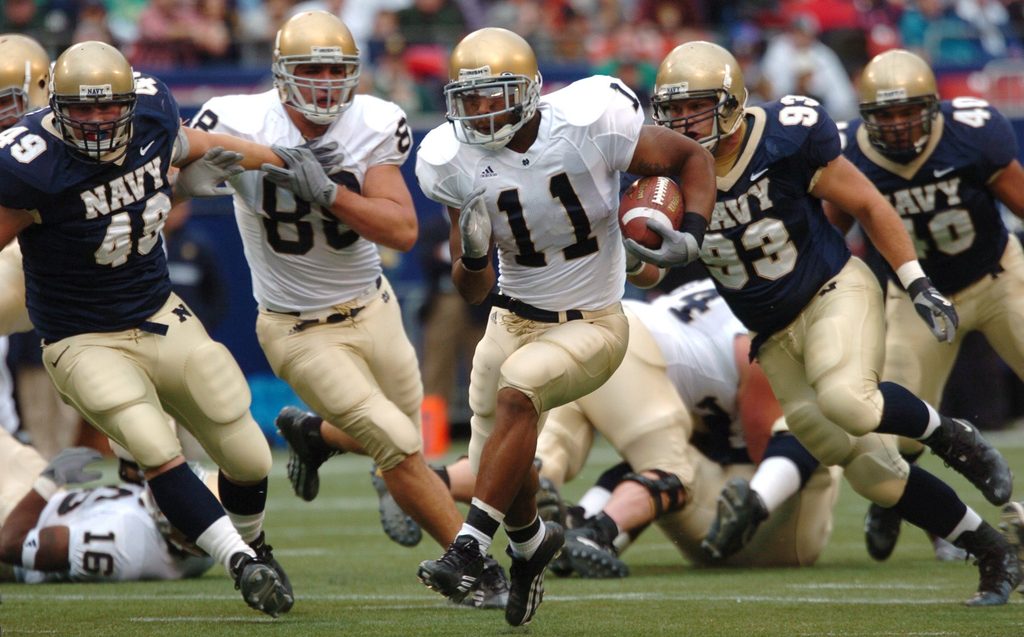
A turnover happens when one team loses possession of the football and the other team gains it. Turnovers are important because they can suddenly end an offensive drive and give the opposing team an unexpected chance to score.
If you are learning the game, understanding what is a turnover in football makes it much easier to follow changes of possession. The two main turnovers are interceptions and lost fumbles. You may also hear the phrase turnover on downs, which causes possession to change but is treated differently in official turnover statistics.
Turnovers can completely change the direction of a game. An offense might be moving toward the end zone one moment, only for the defense to take the ball away on the next play.
This beginner guide explains turnovers, interceptions, fumbles, turnover on downs, takeaways, giveaways, and what happens after possession changes.
What Is a Turnover in Football?
A turnover in football is a play in which the team possessing the ball loses it to the opposing team.
The team with possession is normally the offense. Its job is to move the ball down the field and eventually score. The defense tries to stop that progress.
When the defense takes possession before the offense intended to give up the ball, a turnover has occurred.
The most common examples are:
- A defender intercepting a pass.
- A player fumbling the ball and the opposing team recovering it.
Turnovers are especially damaging because the offense loses its opportunity to continue the drive. At the same time, the opponent gains possession and gets its own chance to attack.
Why Possession Matters
Possession simply means having control of the football.
Only the team with possession can normally run offensive plays and attempt to move toward its opponent’s end zone. Losing possession therefore means losing the chance to continue that offensive series.
Imagine that Team A has driven from its own 25-yard line to Team B’s 30-yard line. Team A appears to be getting close to scoring.
The quarterback then throws an interception.
Instead of Team A continuing its drive, Team B receives possession. Team A’s scoring opportunity has disappeared, and Team B’s offense can now take the field.
That sudden change is what makes turnovers so significant.
Interceptions
An interception occurs when an offensive player throws a forward pass and a defender catches it before it touches the ground.
The defender’s team immediately gains possession.
For example, suppose a quarterback attempts to throw the ball to a wide receiver. A defensive back reads the play, steps in front of the receiver, and catches the pass.
That is an interception.
The defender can usually continue running with the ball after making the catch. This is called an interception return.
The play ends when the defender is tackled, goes out of bounds, scores, or the play otherwise becomes dead.
Afterward, the defender’s team sends its offense onto the field unless the interception itself resulted in a touchdown or another special situation ends the period or game.
An interception returned all the way into the opponent’s end zone for a touchdown is commonly called a pick-six because the touchdown is worth six points.
An incomplete pass is different. If the quarterback throws the ball and nobody catches it before it hits the ground, possession normally stays with the offense. An incomplete pass by itself is not a turnover.
Fumbles
A fumble happens when a player who possesses the football loses control of it before the play is over.
For example, a running back might carry the ball and have it knocked loose during a tackle.
Once the football is loose and remains live, eligible players from either team may have an opportunity to recover it.
A fumble does not automatically mean there has been a turnover.
The important question is which team recovers the football.
If the offense recovers its own fumble, it generally keeps possession. The play may still result in lost yardage, but there has not been a turnover.
If the defense recovers the fumble, possession changes. That is a turnover.
What Is a Fumble Recovery?
A fumble recovery occurs when a player gains control of a loose ball after it has been fumbled.
Both offensive and defensive players can recover fumbles.
Suppose a running back carries the ball at the 40-yard line. A defender knocks it out, and the ball lands on the field.
If one of the running back’s teammates falls on the ball and secures it, the offense has recovered its own fumble and normally keeps possession.
If a defender secures it instead, the defense has made a fumble recovery and gained possession.
You may also hear the term forced fumble. This means a defender caused the ball carrier to lose the ball, often by striking or pulling at it during a tackle.
Again, forcing a fumble does not guarantee a turnover. The defense must also recover the ball for possession to change because of that fumble.
What Happens Immediately After a Turnover?
What happens next depends on the type of turnover and how the play ends.
After an interception or defensive fumble recovery, the player who gains possession may often try to advance the ball.
Consider an interception at the defense’s 30-yard line. The defender catches the pass and returns it 20 yards before being tackled at midfield.
The interception created the turnover, and the return improved the new offense’s starting field position.
Once the play ends, the teams switch roles. The team that had been on defense becomes the offensive team, while the team that lost the ball sends its defense onto the field.
The new offense begins its possession from the appropriate spot based on where the previous play ended and any applicable penalties or rules.
Field Position After a Turnover
Turnovers can be especially valuable when they give the new offense good field position.
Field position describes where a team has the ball on the field.
Suppose Team A begins a play near its own end zone and fumbles at its own 15-yard line. Team B recovers.
Team B now has the ball only a short distance from Team A’s end zone. It may have an excellent opportunity to score.
Compare that with an interception caught deep near the defender’s own end zone. The turnover is still valuable because possession changed, but the new offense may have much farther to travel.
This is one reason commentators often discuss not only the number of turnovers but also where those turnovers occurred and what the team did with the resulting possession.
What Is a Turnover on Downs?
A turnover on downs happens when an offense uses its available downs without gaining the required yardage for a new first down.
In normal football situations, an offense has four downs to gain at least 10 yards. Reaching the required distance earns another first down and a new set of downs.
Suppose the offense reaches fourth down and still needs three yards.
It decides to run an offensive play rather than punt or attempt a field goal.
The ball carrier gains only two yards.
The offense failed to reach the line needed for a first down, so possession changes to the opposing team. This is called a turnover on downs.
The other team’s offense normally receives the ball at the appropriate spot after the failed fourth-down play.
Is a Turnover on Downs Counted as a Turnover?
This is an important distinction for beginners.
A turnover on downs causes possession to change, and its name includes the word “turnover.” However, it is generally not counted the same way as an interception or lost fumble in standard turnover statistics.
When you see a statistic showing that a team had two turnovers, it usually refers to giveaways such as interceptions thrown and fumbles lost.
A failed fourth-down attempt is normally tracked separately.
So in everyday football language, a turnover on downs certainly represents a change of possession. Statistically, however, it is usually placed in a different category.
Defensive Takeaways and Offensive Giveaways
Two terms commonly used when discussing turnovers are takeaway and giveaway.
They describe the same change of possession from opposite perspectives.
A takeaway is a turnover created or recovered by the defense.
If a defensive back intercepts a quarterback’s pass, the defense has recorded a takeaway.
A giveaway is a turnover committed by the team that loses possession.
From the quarterback’s team’s perspective, that same interception is a giveaway.
For example, imagine Team A throws two interceptions and loses one fumble. Team A has committed three giveaways, while Team B has gained three takeaways.
These terms help describe which team protected the football better and which defense successfully gained possession.
Simple Interception Example
Suppose Team A has the ball on Team B’s 35-yard line.
The quarterback drops back and throws toward a receiver near the sideline.
A defender jumps in front of the receiver and catches the pass at the 25-yard line. He returns it to the 40 before being tackled.
Team A’s possession immediately ends because of the interception.
Team B now gets the ball and sends its offense onto the field.
This is a turnover because Team A unexpectedly lost possession to Team B.
Simple Fumble Example
Now imagine Team A’s running back carries the ball across midfield.
A defender tackles him and knocks the ball loose before the play is dead.
The football rolls onto the ground, and another defender recovers it.
Team A has lost a fumble.
Team B has recorded a takeaway and will receive possession.
If a Team A player had recovered the same loose ball instead, Team A would normally have kept possession, so there would have been no turnover from the fumble.
What Is the Difference Between a Turnover and a Punt?
A punt also causes possession to change, but a punt is not normally considered a turnover.
The key difference is that a punt is usually an intentional and strategic change of possession.
Teams commonly punt when they reach fourth down and believe trying to gain the remaining yardage is too risky. Instead of potentially giving the opponent the ball in poor field position, the offense kicks the ball farther downfield.
An interception or lost fumble is different because the offense did not intend to give the ball away on that play.
For example:
Team A reaches fourth-and-8 and punts the ball 45 yards. Team B receives possession. This is a normal change of possession, not a turnover.
On another drive, Team A’s quarterback throws a pass that a defender intercepts. This is a turnover.
Not every change of possession is therefore a turnover.
Kickoffs after scores and other normal possession changes should also not automatically be confused with turnovers.
Why Turnovers Can Have Such a Big Impact
A turnover can affect a game in two ways at once.
First, it ends one team’s opportunity to score on that possession.
Second, it creates a new possession for the opponent.
Turnovers near either end zone can be especially noticeable.
An offense that loses the ball just before scoring has wasted a valuable opportunity. A team that gives the ball away deep in its own territory may leave the opponent with only a short distance to travel for a score.
Defensive players therefore spend significant effort trying to create takeaways, while offensive players are taught to protect the football.
A turnover does not automatically result in points. The new offense still has to move the ball and score. However, the sudden swing in possession is one reason turnovers often become important moments in a football game.
Are Turnovers the Same at Every Level of Football?
The basic ideas behind interceptions, fumbles, and changes of possession exist across major forms of American football.
However, specific rules about whether a ball is live, when a player is considered down, how catches are completed, and where the ball is placed can vary between organizations such as the NFL, college football, and high school football.
For a beginner, the essential idea remains simple: an interception or a fumble recovered by the opposing team gives the opponent possession.
Exact rulings in unusual situations depend on the rules of the league being played. This follows the broader requirement to distinguish general football concepts from league-specific rules rather than treating one league’s procedures as universal.
Frequently Asked Questions
What Are the Two Main Types of Turnovers in Football?
The two main types are interceptions and lost fumbles.
An interception happens when a defender catches an opponent’s pass. A lost fumble happens when a player loses control of the ball and the opposing team recovers it.
Does Every Fumble Count as a Turnover?
No. A fumble becomes a turnover only when the opposing team gains possession.
If the fumbling player’s team recovers the ball, it generally keeps possession.
Is an Incomplete Pass a Turnover?
No. An incomplete forward pass normally ends the play without changing possession. The offense keeps the ball unless the play also causes a separate change of possession or the team’s series of downs has ended.
Is a Turnover on Downs a Real Turnover?
It causes possession to change, so it is called a turnover on downs. However, it is generally not included with interceptions and lost fumbles in standard turnover statistics.
Does a Punt Count as a Turnover?
No. A punt intentionally gives possession to the other team and is normally considered a strategic change of possession rather than a turnover.
Can a Defense Score After a Turnover?
Yes. A defender who intercepts a pass or recovers certain live fumbles may be able to return the ball for a touchdown.
If the return does not reach the end zone, the defense’s team usually begins an offensive possession after the play ends.
Key Takeaways
- A turnover happens when a team loses possession and the opposing team gains the football.
- The two main statistical turnovers are interceptions and lost fumbles.
- An interception occurs when a defender catches an opponent’s pass.
- A fumble only becomes a turnover when the opposing team recovers the loose ball.
- A turnover on downs happens when an offense fails to gain the required yardage after using its available downs.
- Turnover on downs is generally tracked separately from interceptions and lost fumbles in turnover statistics.
- A defensive turnover is often called a takeaway, while the offense records a giveaway.
- A punt changes possession but is not normally considered a turnover.
- Turnovers can be especially important when they give the new offense favorable field position.