
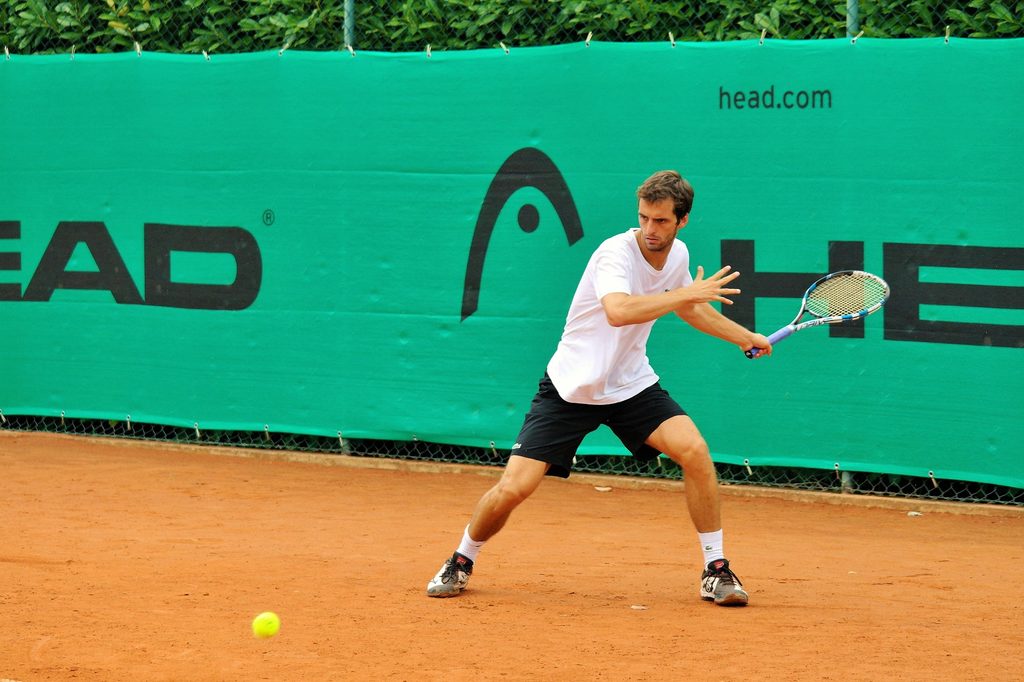
Returning serve becomes increasingly challenging as opponents develop greater speed, spin, accuracy, and variety. A return technique that works against a predictable flat serve may be less effective against a wide slice or a high-bouncing kick serve. Experienced players must recognize these differences quickly and adjust their positioning, preparation, and shot selection.
Developing effective advanced tennis return strategies involves more than getting the ball back into play. A strong returner understands how the serve influences the available response and chooses whether to neutralize the server’s advantage, apply pressure, or take control of the point. By learning to adapt to different serve types, you can make more purposeful decisions and become a more difficult opponent to serve against.
What Makes an Advanced Tennis Return Effective?
An effective return is not always a powerful shot or an outright winner.
Against a well-placed first serve, simply returning the ball deep and preventing an easy follow-up attack can be a strong result. Against a slower or predictable second serve, the receiver may have an opportunity to move forward and apply pressure immediately.
Advanced return play depends on recognizing which objective is realistic.
Three general return objectives are useful:
- Neutralize: Return a difficult serve with enough control to begin the rally on manageable terms.
- Pressure: Direct the return toward a location that limits the server’s attacking options.
- Attack: Take advantage of a weaker serve to create an immediate offensive opportunity.
The appropriate choice depends on serve quality, your position, and the time available for preparation.
Trying to attack every first serve can lead to unnecessary errors. Conversely, returning every second serve passively may allow the server to begin points comfortably.
Effective returners adapt their approach without sacrificing reliability.
Read the Serve Before It Reaches You
Serve recognition begins before the ball crosses the net.
The server’s toss, body orientation, racket movement, and previous serving patterns may provide useful information about the incoming ball.
However, these cues are not guarantees. Skilled servers can produce different deliveries from similar preparations.
Observe the Ball Toss
Some players use noticeably different toss locations for different serve types.
A toss farther toward the hitting side may suggest a flatter delivery, while another toss position may support a kick serve.
These relationships vary significantly between servers.
Look for recurring tendencies rather than assuming one toss position always produces one serve.
Watch the Racket and Ball Flight
As the server strikes the ball, begin identifying its initial direction and trajectory.
A flatter serve may travel with greater pace and a relatively direct flight.
A slice serve may demonstrate lateral curvature, while a kick serve may have a more arcing trajectory.
Early recognition gives you additional time to prepare, but the ball’s actual movement should guide your final adjustment.
Study Serving Patterns
Pay attention to the opponent’s preferred targets on the deuce and ad sides.
Some servers favor wide serves under pressure, while others rely on body serves or high-percentage deliveries toward the T.
Notice whether particular placements occur more frequently on first or second serves.
Use these patterns to inform your starting position, but remain prepared for variation.
How to Return a Fast Flat Serve
A fast flat serve reduces the time available to react and prepare.
Against high pace, attempting a full groundstroke swing may be impractical.
The priority is usually to establish a compact movement and make controlled contact.
Adjust Your Return Position
Your starting depth should reflect the server’s pace and your reaction ability.
Standing farther behind the baseline can provide additional time to recognize and intercept the ball.
However, retreating also changes your contact location and may give the server more time to prepare for the return.
Experiment with a position that allows reliable contact without unnecessarily surrendering court position.
Use Compact Racket Preparation
Against a fast serve, shorten the backswing and prepare the racket early.
You do not need to generate all the return’s pace through a large swing.
The incoming ball already carries substantial speed.
A compact, controlled stroke can redirect that pace toward a useful target.
Prioritize Clean Contact
Focus on meeting the ball with a stable racket orientation.
Avoid trying to produce maximum power when there is insufficient time to prepare.
Depending on the serve, a controlled block or abbreviated groundstroke may be appropriate.
Choose a Practical Return Target
Against a strong flat serve, a deep central target can be useful.
Returning through the middle may reduce the angles available to the server and avoid the additional precision required by a sharp crosscourt or down-the-line return.
When contact is comfortable, you can direct the ball toward another area.
Tactical objective: Neutralize the server’s pace and prevent an immediate attacking opportunity.
How to Return a Slice Serve
A slice serve produces lateral movement that can disrupt spacing and contact timing.
The receiver must account for the ball’s path through the air and its movement after bouncing.
Recognize the Curving Trajectory
Avoid moving solely toward the location where the ball first appears likely to bounce.
A slice serve may continue moving sideways, especially after contact with the court.
Track the ball’s actual trajectory and adjust your feet as it approaches.
Maintain Suitable Spacing
Slice serves often create problems when the receiver gets too close to the ball or allows it to move beyond a comfortable contact area.
Use small adjustment steps to establish sufficient room for the return.
The required movement depends on serve direction and the spin applied.
Handle Wide Slice Serves
A wide slice serve can pull you outside the singles sideline.
When stretched, attempting an aggressive return toward a narrow target may produce unnecessary errors.
A controlled crosscourt return can sometimes provide a practical option, particularly when the server remains near the baseline.
However, the best target depends on the server’s position and whether they are moving forward.
Respond to Body Slice Serves
A slice serve directed toward the body may make it difficult to choose between a forehand and backhand return.
Recognize the ball’s movement early and create enough room for a compact stroke.
Avoid reaching across your body with an exaggerated swing.
Tactical objective: Manage lateral spin, maintain balance, and avoid giving the server an easy follow-up ball.
How to Return a Kick Serve
Kick serves challenge returners through a combination of trajectory, spin, and bounce height.
A well-executed kick serve may rise toward or above the receiver’s preferred contact zone.
It can also move sideways after bouncing.
Recognize the Bounce Early
A kick serve may appear manageable before it lands but become more difficult as it rises.
Watch the ball’s trajectory and anticipate the likely height at contact.
Do not automatically prepare for the same contact point used against flatter serves.
Consider Taking the Ball Earlier
Moving forward and contacting a kick serve before it rises too high may prevent it from reaching an uncomfortable hitting zone.
This requires precise timing and good preparation.
If the ball arrives too quickly or unpredictably, taking it early may increase errors.
Practice this approach before attempting it frequently in competition.
Consider Returning From Farther Back
Another option is to stand deeper and allow the ball to descend toward a more manageable height.
This provides additional reaction time and may improve contact quality.
However, it can place you farther behind the baseline and increase the distance needed to recover.
Neither early contact nor deeper positioning is universally correct.
Choose according to your skill, the serve’s characteristics, and the server’s following position.
Use Controlled Racket Acceleration
Against a high-bouncing kick serve, maintain a stroke path appropriate to the contact height.
Avoid trying to force every return downward.
A controlled return with suitable depth may be more effective than attempting a difficult winner from shoulder height.
Tactical objective: Prevent the high bounce from forcing a weak or uncontrolled return.
Adjust Your Return Position for Serve Placement
Serve type is only one part of return strategy.
The server’s chosen target also affects your response.
Returning Wide Serves
Wide serves require additional lateral coverage.
You may need to begin slightly toward the anticipated target or use a more explosive first movement.
However, overcommitting to the wide serve can leave the T exposed.
Choose a starting position that reflects the opponent’s tendencies without making the opposite target unnecessarily vulnerable.
Returning Body Serves
Body serves often create problems through limited preparation space.
Use a compact movement and recognize early whether the forehand or backhand provides the more comfortable contact.
Avoid trying to take an excessively large swing when the ball travels directly toward you.
Returning T Serves
T serves direct the ball toward the center service line.
Depending on the receiver’s starting position, they may require quick movement inward.
Prepare to make controlled contact without assuming that every T serve must be redirected crosscourt.
Your target should reflect the server’s position and the quality of your contact.
First-Serve vs. Second-Serve Return Strategy
Advanced returners commonly adjust their approach depending on whether they face a first or second serve.
Against First Serves
First serves may involve greater pace or more aggressive placement.
Your priority is often to make a controlled return and enter the rally.
A deep return that prevents an easy attacking shot may be more valuable than an ambitious return winner attempt.
However, weaker first serves can still provide attacking opportunities.
Recognize the actual serve rather than making a decision based entirely on whether it is a first serve.
Against Second Serves
A second serve may provide more time to prepare or a more manageable trajectory.
When appropriate, move forward or select a target that places the server under pressure.
You may be able to contact the ball earlier and direct it toward a difficult area.
However, advanced second serves can contain substantial spin and may be difficult to attack.
Avoid assuming that every second serve is weak.
Avoid Predictable Return Behavior
If you always retreat against first serves and attack every second serve, skilled opponents may adjust their serving patterns.
Vary your starting position and return selection when doing so provides a practical advantage.
Consistency remains important, but predictable responses can make you easier to serve against.
How to Choose Better Return Targets
An advanced return should support the tactical situation you want to create.
Deep Through the Middle
A deep central return can restrict the server’s available angles and help neutralize an aggressive serve.
This is often a useful option when the return is difficult.
Deep Crosscourt
A crosscourt return may allow a relatively generous target area and can move the server away from their recovery position.
However, it can also create angles for the opponent.
Use it when your contact position and intended trajectory make the direction appropriate.
Toward the Server’s Weaker Side
If the server demonstrates difficulty controlling one groundstroke side, directing returns toward that area may create pressure.
You should still account for the server’s movement and contact position.
Toward an Open Area
A slower or poorly placed serve may allow you to direct a return toward uncovered court space.
Before attempting an aggressive target, consider whether you can make controlled contact.
A return that forces movement without risking the sideline can still be effective.
Five Advanced Tennis Return Drills
These exercises help develop return recognition, technique, and tactical decision-making.
Drill 1: Fast-Serve Block Return
Objective: Improve controlled contact against fast serves.
Setup: Have a partner serve at a challenging but manageable pace.
Instructions:
- Begin from a comfortable return position.
- Use early preparation and a compact backswing.
- Direct the return toward a generous deep target.
- Record successful returns out of ten attempts.
- Repeat from both the deuce and ad courts.
Practice focus: Clean contact and controlled redirection rather than maximum racket acceleration.
Drill 2: Slice Serve Movement Recognition
Objective: Improve adjustment to lateral spin.
Setup: A partner delivers slice serves toward varied legal targets.
Instructions:
- Observe the serve’s initial trajectory.
- Move toward the anticipated contact area.
- Use adjustment steps as the ball curves and bounces.
- Execute a controlled return.
- Recover toward a useful position.
- Repeat for ten to fifteen serves.
Practice focus: React to the ball’s actual movement rather than relying on a predetermined contact location.
Drill 3: Kick Serve Contact Height
Objective: Develop reliable return options against higher-bouncing serves.
Setup: Have a partner deliver controlled kick serves.
Instructions:
- Return five serves from a relatively deep position.
- Return five more from a position closer to the baseline.
- Compare contact quality and target accuracy.
- Identify which position offers better control.
- Repeat while gradually varying the kick serve’s placement.
Practice focus: Select an effective contact height rather than committing to one return position.
Drill 4: First- and Second-Serve Response
Objective: Practice adapting return decisions to serve quality.
Setup: Play simulated service points against a partner.
Instructions:
- Face a realistic first serve.
- Select a return appropriate to its pace and placement.
- If the serve is a fault, prepare for a second serve.
- Evaluate whether the second serve offers an attacking opportunity.
- Continue each point through the following rally.
- Complete twenty simulated service points.
Practice focus: Make return decisions based on the actual incoming ball rather than fixed assumptions.
Drill 5: Serve Variation Recognition Challenge
Objective: Improve tactical responses to unpredictable serve types.
Setup: A partner alternates among flat, slice, and kick serves.
Instructions:
- Begin in a neutral return position.
- Observe the server’s preparation.
- Recognize the incoming trajectory and spin.
- Adjust movement and racket preparation.
- Direct the return toward an appropriate target.
- Continue the point competitively.
- Record performance separately against each serve type.
Practice focus: Combine recognition, positioning, and shot selection under realistic conditions.
Common Advanced Return Mistakes
Attempting Full Swings Against Fast Serves
Large backswings can delay contact against powerful deliveries.
Correction: Use compact preparation and take advantage of the incoming ball’s pace.
Misjudging Spin After the Bounce
Slice and kick serves may change direction or height more than expected.
Correction: Track the ball through its bounce and continue adjusting your position.
Attacking Every Second Serve
A heavily spinning second serve can be difficult to control aggressively.
Correction: Evaluate the actual serve quality before selecting an attacking response.
Standing in One Position Against Every Server
Different opponents produce different combinations of speed, spin, and placement.
Correction: Adjust your return depth and lateral position according to observed tendencies.
Returning Without a Tactical Objective
A successful return that lands short in a comfortable attacking area may leave the server in control.
Correction: Choose a practical target that helps neutralize pressure or create an advantage.
Overcommitting to Anticipated Placement
Guessing too early can leave a large part of the service box unprotected.
Correction: Use observed serving patterns without abandoning the ability to react.
How to Measure Your Return Performance
Advanced return development benefits from tracking both shot reliability and tactical effectiveness.
Return-In Percentage
Record how many legal serves you successfully return into the opponent’s court.
Track first-serve and second-serve returns separately when possible.
Return Depth
Evaluate whether your returns consistently reach intended target areas.
Deep returns may prevent the server from attacking comfortably, but the ideal depth depends on the situation.
Performance Against Different Serve Types
Track return success against flat, slice, and kick serves independently.
This can reveal which variations require additional practice.
Points Won on Return
Record points won during return games or practice sets.
This provides useful match context but should not be treated as a direct measure of technical return quality.
Quality of the Server’s Next Shot
Observe whether your return allows the server to attack immediately or forces a more neutral or defensive response.
A return that consistently restricts the server’s first groundstroke can be tactically effective even without producing winners.
Develop a More Adaptable Return Game
Effective advanced tennis return strategies depend on recognizing serve variations and choosing a response that matches the situation.
Against fast flat serves, compact preparation and clean contact can help neutralize pace. Slice serves require attention to lateral movement and spacing, while kick serves demand adjustments to bounce height and timing.
Develop both defensive and attacking return options, and choose between them according to serve quality rather than following rigid rules.
Practice against different serving styles, review your results, and adjust your starting position and targets when patterns emerge.
The objective is not to attack every serve. It is to make the server work for each point while giving yourself the best possible opportunity to enter the rally on favorable terms.