
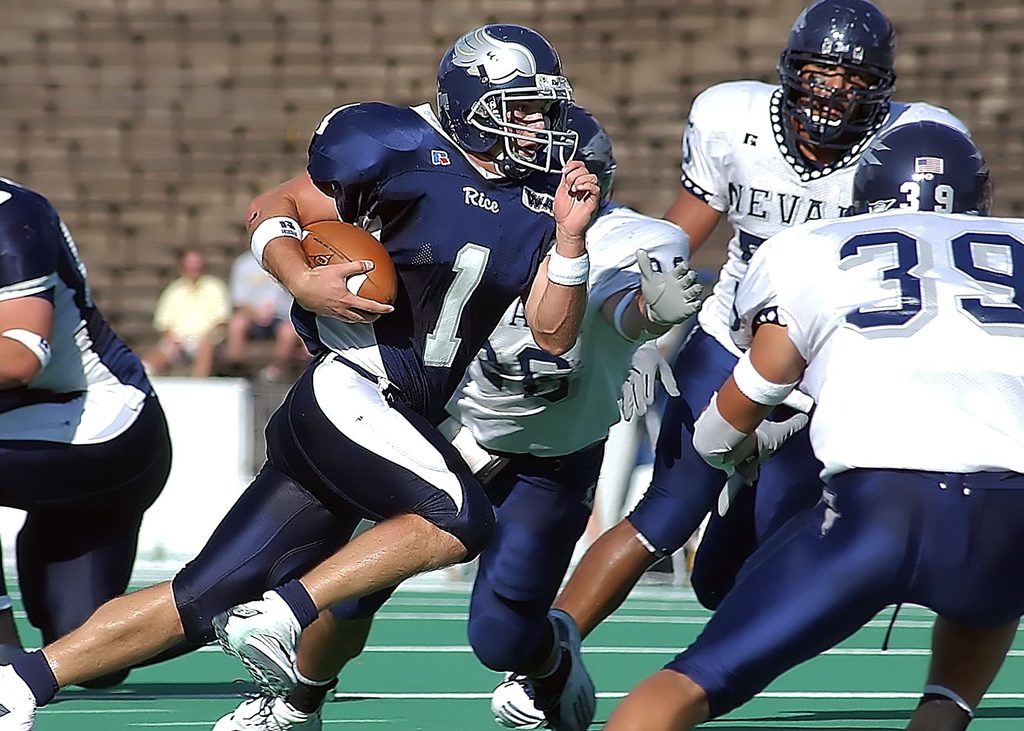
American football can look confusing at first because so many players seem to have different jobs. Unlike sports where the same players perform most roles, football relies heavily on specialization. Players are divided into offensive, defensive, and special teams units, with individual positions designed for specific responsibilities.
This American football positions explained guide introduces the main football player positions and what each one does. You do not need to memorize every position immediately. Once you understand the basic groups, however, it becomes much easier to follow what is happening before and during each play.
Why American Football Has Specialized Positions
Each team can have 11 players on the field at one time during a play. However, those 11 players change depending on whether the team is playing offense, defense, or special teams.
The offense has possession of the football and tries to move it down the field and score. The defense tries to stop the offense. Special teams normally enter for kicking plays such as punts, field goals, and kickoffs.
Players usually specialize because the skills needed for different jobs can be very different.
A quarterback needs to read the defense and throw accurately. An offensive lineman needs size, strength, and blocking ability. A wide receiver relies heavily on speed, route running, and catching. A cornerback needs to cover receivers and defend passes.
Because of these differences, teams maintain larger rosters and substitute groups of players as situations change.
Offensive Positions
The offense is the group that has possession of the football.
Its main objective is to advance the ball toward the opposing team’s end zone and score points. Offensive players can move the ball by running with it or completing forward passes.
The main offensive positions are quarterback, running back, wide receiver, tight end, and offensive lineman.
Quarterback
The quarterback, often shortened to QB, is usually the player who receives the ball at the beginning of an offensive play.
On many plays, the center snaps the football backward to the quarterback. The quarterback then decides what happens next based on the play that was called.
The quarterback may:
- Throw a forward pass.
- Hand the ball to a running back.
- Keep the ball and run.
- Make adjustments before the snap based on the defensive formation.
Because the quarterback handles the football on so many plays, the position is one of the most noticeable on the field.
For example, on a passing play, the quarterback might receive the snap, step backward, look for an open receiver, and throw the ball downfield.
Running Back
A running back is an offensive player whose traditional role is carrying the football on running plays.
The quarterback commonly hands the ball to a running back, who then tries to find space between or around blockers and advance down the field.
Running backs can also contribute to passing plays. They may run routes and catch passes, particularly short passes out of the backfield. They can also help block defenders who are trying to reach the quarterback.
Different offensive systems use running backs in different ways, but their combination of rushing, receiving, and blocking responsibilities makes them versatile players.
Wide Receiver
A wide receiver, or WR, is primarily responsible for getting open and catching passes.
Wide receivers commonly line up toward the outside of the offensive formation, although they can also line up closer to the middle of the field.
After the ball is snapped, a receiver usually runs a planned path called a route. The quarterback tries to throw the football to the receiver if the route creates enough separation from the defenders covering him.
Receivers can run short routes for a few yards or deeper routes farther down the field.
Once a receiver catches the ball, he can continue running until the play ends.
Tight End
The tight end, or TE, combines some of the responsibilities of a receiver and an offensive lineman.
A tight end typically lines up near the offensive line. Depending on the play, the tight end may block a defender or run a route and try to catch a pass.
This combination makes the position particularly flexible.
On one play, a tight end might stay near the line of scrimmage to help block for a running back. On the next, the same player might run downfield as a receiving target.
Offensive Line
The offensive line is the group of large offensive players positioned near the football before the snap.
Its primary responsibility is blocking.
On passing plays, offensive linemen try to protect the quarterback from defensive players attempting to reach him. On running plays, they try to create paths for the ball carrier.
The offensive line normally consists of five players:
- One center.
- Two guards.
- Two tackles.
The center lines up in the middle and usually starts the play by snapping the football.
A guard lines up on each side of the center.
A tackle lines up outside each guard.
Offensive linemen normally do not handle the football. Their work can be less obvious to beginners watching a game, but effective blocking is essential to both passing and running plays.
Defensive Positions
The defense takes the field when the opposing team has possession.
Its main goal is to prevent the offense from advancing and scoring. Defensive players may tackle ball carriers, pressure the quarterback, cover receivers, break up passes, or attempt to take possession of the football.
The main defensive groups are defensive linemen, linebackers, cornerbacks, and safeties.
Defensive Line
The defensive line normally lines up directly across from the offensive line.
Defensive linemen have different responsibilities depending on the defensive system and the particular play, but they generally work to disrupt the offense close to the line of scrimmage.
Against a running play, they may try to get past blockers and tackle the ball carrier.
Against a passing play, they may rush the quarterback and attempt to stop him before he can throw.
Defensive line positions commonly include defensive tackles and defensive ends.
These players often need a combination of strength, quickness, and the ability to fight through blocks.
Linebackers
Linebackers normally position themselves behind the defensive line.
They are versatile defenders who can have several different responsibilities.
A linebacker may:
- Tackle a running back.
- Rush the quarterback.
- Cover a receiver or tight end.
- Move to different areas based on the offensive formation.
Their location between the defensive line and deeper defensive backs allows linebackers to react to both running and passing plays.
Different defensive formations use different numbers and types of linebackers, so their exact responsibilities can change considerably from one play to another.
Cornerbacks
Cornerbacks, commonly shortened to CB, are defensive backs who frequently cover wide receivers.
Their job is to make passing difficult.
A cornerback may follow a receiver closely and try to prevent him from getting open. When the quarterback throws in the cornerback’s direction, the defender can attempt to knock the ball away or intercept it.
An interception happens when a defensive player catches a pass intended for an offensive player, giving possession to the defensive player’s team.
Cornerbacks often need speed because they may be responsible for staying with some of the fastest offensive players on the field.
Safeties
Safeties are defensive backs who often line up farther from the line of scrimmage than cornerbacks and linebackers.
Their deeper position can help them defend passes traveling downfield.
Safeties may also move forward to defend running plays, cover particular receivers, or pressure the quarterback.
Two common safety position names are free safety and strong safety, although their responsibilities vary according to the defensive system.
The defensive position called safety should not be confused with the scoring play also called a safety. They use the same word but refer to different things.
Special Teams Positions
Special teams appear during kicking situations.
Although some offensive and defensive players also participate on special teams, several football positions are particularly associated with these plays.
The most recognizable are the kicker, punter, long snapper, and return specialist.
Kicker
The kicker handles several types of kicking plays.
A kicker may attempt field goals, extra points, and kickoffs, although teams can sometimes use different players for different kicking responsibilities.
During a field goal attempt, the kicker approaches the ball after it has been snapped to a holder. The holder places the football on the ground, and the kicker attempts to kick it through the goalposts.
Field goals are worth three points.
After touchdowns, teams can also attempt a one-point kick in leagues that use the standard extra-point format.
Punter
The punter kicks the football on punts.
Teams commonly punt when they do not expect to gain the necessary yardage on fourth down and want to send the opposing team farther away before giving up possession.
The punter receives a long snap and drops the football before kicking it through the air.
A good punt can significantly change field position by forcing the opposing offense to begin its next possession farther from the end zone it is trying to reach.
Long Snapper
The long snapper is a specialist responsible for snapping the football over a longer distance during certain kicking plays.
On a punt, the long snapper sends the ball backward to the punter.
On a field goal or extra-point attempt, the long snapper sends it to the holder.
The snap needs to be fast and accurate because a poor snap can disrupt the timing of the entire play.
Although long snappers rarely receive as much attention as quarterbacks, receivers, or kickers, their precision is important to successful special teams plays.
Return Specialists
A return specialist receives certain kicks and tries to advance the football after catching them.
Returners can be used on kickoffs and punts.
After receiving the ball, the returner looks for open space while teammates attempt to block members of the kicking team.
Some teams use wide receivers, running backs, or defensive backs as returners rather than keeping a player whose only responsibility is returning kicks.
How 11 Players Create Different Formations
Knowing that each team uses 11 players at a time does not mean the same combination of positions must appear on every play.
Football teams regularly change their personnel, meaning the particular combination of players and positions on the field.
For example, an offense might use one running back, one tight end, and three wide receivers on one play. In another situation, it might use additional tight ends or running backs.
The defense can respond with its own substitutions. A defense expecting a pass may use more defensive backs. Against a formation that suggests a running play, it may prefer a different combination of defensive linemen and linebackers.
The total remains 11 players per team, but the types of players on the field can change.
How Positions Change With the Situation
One of the most important things to understand about American football positions explained for beginners is that football is highly situational.
Consider a simple sequence.
On first down, the offense sends out its regular offensive unit. The quarterback hands the ball to a running back, while the offensive linemen and other blockers try to create space.
On the next play, the quarterback throws toward a wide receiver. Cornerbacks and safeties attempt to defend the pass.
Later, the offense reaches fourth down and decides to punt. Many offensive and defensive players leave the field, and special teams players enter. The punter, long snapper, coverage players, and return specialist now have the important roles.
Once the punt ends, another offensive and defensive unit takes the field.
This constant substitution is a normal part of football.
Understanding Football Positions While Watching a Game
You do not need to identify every player’s exact position to follow a football game.
Start with the three main groups.
When a team has the ball, look for the quarterback, the offensive line in front of him, running backs nearby, and receivers spread around the formation.
On defense, look for defensive linemen closest to the offensive line, linebackers behind them, and defensive backs such as cornerbacks and safeties positioned to cover receivers and deeper parts of the field.
During kicking situations, watch for specialists such as the kicker, punter, long snapper, and returner.
Recognizing these groups provides a strong foundation for understanding what each side is trying to accomplish.
Frequently Asked Questions
How Many Players Are on the Field in American Football?
Each team has 11 players on the field during a play, meaning there are normally 22 players participating at one time. Teams can substitute players between plays according to the applicable rules.
What Is the Most Recognizable Offensive Position?
The quarterback is usually the easiest offensive position for beginners to recognize because the quarterback commonly receives the snap and handles the football at the start of the play.
Are Offensive And Defensive Players Different?
Usually, yes. Modern football relies heavily on specialization, so most players primarily play offense or defense rather than both. Special teams can include players whose main positions are on offense or defense as well as dedicated specialists.
Are There Always Five Offensive Linemen?
A standard offensive formation normally has five players in the core offensive line: one center, two guards, and two tackles. Offensive formations can also use tight ends or additional eligible players near the line to provide more blocking.
Why Do Players Keep Entering And Leaving the Game?
Teams substitute players because different situations require different skills. A passing situation may favor more receivers and defensive backs, while a kicking play requires specialists such as a punter, kicker, or long snapper.
Key Takeaways
American football uses specialized positions because different parts of the game require very different skills. The offense includes quarterbacks, running backs, wide receivers, tight ends, and offensive linemen. The defense includes defensive linemen, linebackers, cornerbacks, and safeties. Special teams include important specialists such as kickers, punters, long snappers, and returners.
Only 11 players from each team are on the field at one time, but teams regularly change personnel depending on the situation.
For complete beginners, the easiest way to understand American football positions explained is to first recognize the three major units—offense, defense, and special teams—and then learn the main jobs within each group. Once those roles become familiar, formations and substitutions become much easier to follow while watching a game.