
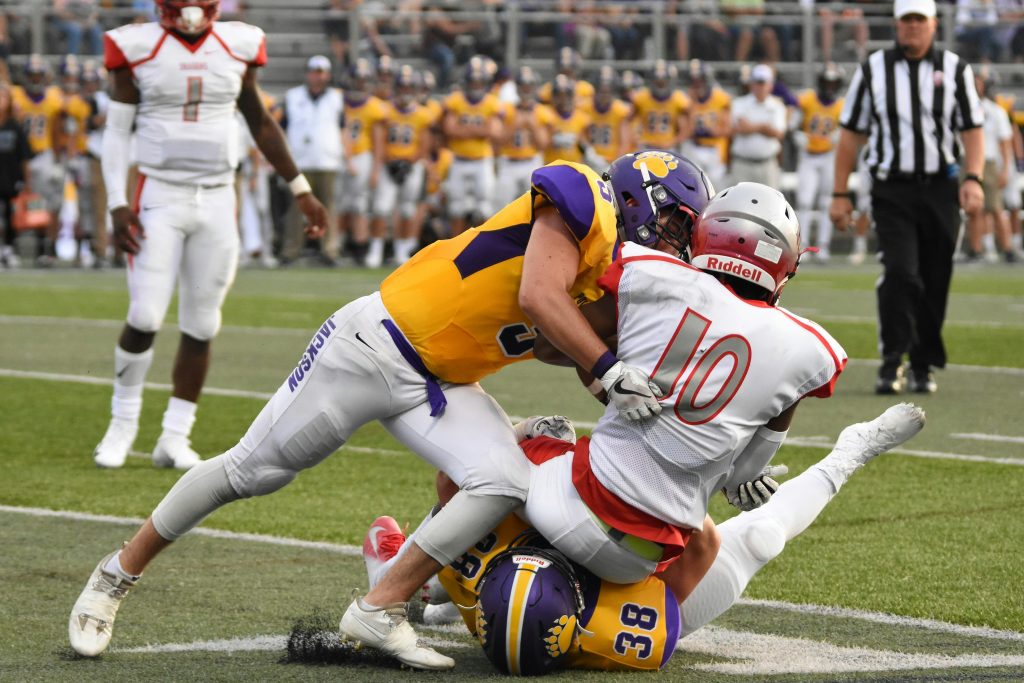
American football can be confusing when you first start watching because commentators, coaches, and experienced fans use a large amount of specialized vocabulary. Words such as down, blitz, pocket, and touchback may be mentioned without any explanation.
Learning the necessary football terms makes the game much easier to follow. You do not need to memorize an entire football dictionary. Start with the common terms that describe how plays begin, how teams move the ball, how possession changes, and how points are scored.
Basic Terms That Explain How A Play Works
Several football terms describe what is happening before and during almost every play.
Snap
The snap starts most plays from scrimmage. An offensive player called the center sends the ball backward, usually to the quarterback.
The quarterback may receive the snap directly behind the center or from several yards away in a shotgun formation.
Line Of Scrimmage
The line of scrimmage is the imaginary line across the field where the ball is placed before a play begins.
The offense lines up on one side and the defense lines up on the other. Except where the rules specifically allow otherwise, players cannot cross the line of scrimmage before the snap.
When commentators say a runner was “stopped at the line of scrimmage,” they mean the runner gained little or no ground beyond where the play started.
Down
A down is one offensive play.
The offense normally receives four downs to advance the ball at least 10 yards. The sequence is called first down, second down, third down, and fourth down.
You will often see the down and the remaining distance displayed together, such as 2nd and 6. That means it is second down and the offense needs six more yards to earn another first down.
First Down
A first down gives the offense a new set of downs.
Normally, the offense earns one by advancing at least 10 yards from the point where its previous set of downs began. Certain defensive penalties can also result in a first down.
If an offense begins with 1st and 10 and gains 12 yards, it has reached the required distance and receives another first down.
Drive
A drive is a series of offensive plays during one continuous period of possession.
A drive might last only one play if the offense immediately turns the ball over. Another drive could contain more than a dozen plays and finish with a touchdown.
You may hear commentators describe a “long scoring drive” or say that an offense needs to “keep the drive alive.”
Possession
Possession refers to which team currently controls the football.
The team with possession generally sends its offense onto the field, while the other team plays defense. Possession can change after a punt, kickoff, turnover, failed fourth-down attempt, or other situations defined by the rules.
Understanding possession is one of the easiest ways for a beginner to understand which team is trying to score on a particular play.
Important Field And Scoring Area Terms
Some common football vocabulary describes where a team is on the field.
End Zone
The end zone is the scoring area at each end of the field.
An offensive touchdown is scored when a player legally possesses the ball and satisfies the applicable requirements for getting the ball into the opponent’s end zone. The goal line forms the front boundary of the end zone.
Red Zone
The red zone is an informal football term for the area between an opponent’s 20-yard line and goal line.
It is not a separately marked official zone with its own special set of rules. The term simply describes an offense being close to the opponent’s end zone.
For example, if a team reaches the opponent’s 15-yard line, commentators will usually say the offense is “in the red zone.”
Quarterback And Offensive Terms
Many common football terms describe the quarterback’s position or what the offense is trying to do.
The pocket is the protected area that develops around the quarterback during a passing play.
Offensive linemen try to block defenders and give the quarterback enough time to look for an open receiver.
When someone says a quarterback “stepped up in the pocket,” the quarterback moved within this protected area while preparing to throw.
Huddle
A huddle is a gathering of players between plays.
The quarterback or another player may use the huddle to communicate the next play. Teams do not have to huddle before every snap. Some offenses operate quickly using a no-huddle approach.
Shotgun
The shotgun is an offensive alignment in which the quarterback stands several yards behind the center instead of directly behind the center.
The center snaps the ball through the air to the quarterback.
Shotgun formations are common on passing plays but can also be used for running plays.
Play Action
Play action is a passing play designed to look like a running play at first.
The quarterback typically fakes a handoff to a running back before preparing to pass. The offense hopes defenders react to the apparent run, potentially creating more space for receivers.
A play-action pass is still a passing play even though it begins with a fake handoff.
Audible
An audible is a change made to a play at or near the line of scrimmage before the snap.
A quarterback may see how the defense is lined up and decide that the original play is not ideal. The quarterback can then communicate a different play or adjustment to teammates.
Formation
A formation is the way players are positioned before the snap.
Offenses can use different numbers and arrangements of running backs, tight ends, and wide receivers. Defenses also change their formations and personnel depending on the situation.
A formation gives both teams a structure for the play, but it does not automatically reveal exactly what they are about to do.
Defensive Terms Beginners Hear Often
Defensive terminology often describes how defenders attack the quarterback, stop a ball carrier, or defend receivers.
Tackle
A tackle happens when a defender legally stops a ball carrier and causes the play to end under the applicable rules.
Tackling is one of the defense’s most basic responsibilities.
If a running back gains four yards before being brought down, the ball is normally placed around the spot where the play ended and the offense continues to its next down.
Blitz
A blitz is a defensive tactic in which additional defenders rush toward the quarterback rather than performing their usual coverage responsibilities.
The goal is often to pressure the quarterback quickly.
Blitzing can create pressure, but sending additional pass rushers can also leave fewer defenders available to cover receivers.
Sack
A sack occurs when the defense tackles the quarterback behind the line of scrimmage on a passing play before the quarterback throws the ball.
For example, if the offense starts at its own 30-yard line and the quarterback is sacked at the 24, the offense has lost six yards on the play.
Coverage
Coverage describes how the defense defends eligible receivers and passing areas.
In man coverage, defenders generally have specific offensive players to cover. In zone coverage, defenders are primarily responsible for areas of the field.
Defenses can also combine coverage concepts in more advanced schemes.
Turnover Terms
Few plays can change a game as quickly as a turnover. These american football terms every beginner should know explain the most common ways an offense unexpectedly loses possession.
Turnover
A turnover is a change of possession caused by events such as an interception or a lost fumble.
The offense loses the football and the opponent gains possession.
People may also use the phrase “turnover on downs” when an offense fails on fourth down, although turnover statistics generally distinguish interceptions and lost fumbles from a turnover on downs.
Interception
An interception happens when a defensive player catches a legal forward pass thrown by the offense.
Possession immediately changes to the intercepting team, and the defender can usually attempt to advance the ball until the play ends.
If the defender returns the interception for a touchdown, fans and commentators often call it a pick-six.
Fumble
A fumble occurs when a player who has possession loses control of the ball before the play is dead.
The loose ball can often be recovered by either team.
A fumble does not automatically mean possession changes. If the offense recovers its own fumble, it normally keeps the ball. If the defense recovers it, the result is generally a turnover.
Kicking And Special Teams Terms
Special teams plays introduce several terms that beginners will hear throughout a game.
Punt
A punt is a kick commonly used when an offense decides to give possession to the opponent while trying to improve field position.
Teams often punt on fourth down when they are too far away for a practical field goal attempt and do not want to risk failing on a normal offensive play.
The punter receives a long snap and drops the ball before kicking it downfield.
Kickoff
A kickoff is a kick used to start or restart play at designated points in a game, including the beginning of a half and normally after scoring plays.
One team kicks the ball downfield and the receiving team may attempt a return, depending on where and how the ball is received and the rules of that league.
Kickoff procedures can differ between levels of football, so NFL rules should not automatically be assumed to apply everywhere.
Touchback
A touchback is a ruling that places the ball at a designated yard line after certain plays end in a team’s own end zone.
Touchbacks commonly occur on kickoffs and punts, although the exact placement and procedures can vary by league and situation.
The important beginner concept is that the receiving team gets possession without returning the ball out of the end zone.
Fair Catch
A fair catch allows a receiving player to signal that they intend to catch a kicked ball without attempting a normal return.
After a valid fair-catch signal, the player receives protection from immediate contact but generally gives up the opportunity to advance the ball on that play.
Fair catches are commonly seen on punts.
Scoring Terms
Football has several ways to score, and each comes with its own vocabulary.
Field Goal
A field goal is a kick through the opponent’s goalposts during a scrimmage down. A successful field goal is worth three points.
Teams often attempt field goals when they are close enough for the kicker to have a reasonable chance of making the kick but have not scored a touchdown.
Extra Point
An extra point, also called a point-after-touchdown kick or PAT, is a scoring attempt made after a touchdown.
A successful extra-point kick is worth one point.
The exact location and procedures for the attempt can vary between leagues.
Two-Point Conversion
A two-point conversion is another scoring option after a touchdown.
Instead of attempting the one-point kick, the offense runs a play and tries to score from a league-defined distance. A successful attempt adds two points.
Teams may choose a two-point conversion when the game situation makes two points especially valuable.
Basic Penalty Terms
Officials use penalties to enforce the rules. When a foul occurs, you will often see an official throw a flag onto the field.
A penalty flag indicates that an official has identified a possible rules violation. The penalty may result in yardage being assessed, a down being replayed, an automatic first down, a loss of down, or another form of enforcement depending on the foul, league, and situation.
Several penalty names appear frequently:
- False start: Certain illegal movements by an offensive player before the snap.
- Offside: Generally occurs when a player is illegally across the line or in an improper position when the ball is snapped, with exact definitions depending on the rule involved.
- Holding: Illegal restriction of an opponent, commonly involving grabbing or restricting a player in a way the rules prohibit.
- Pass interference: Illegal contact that improperly interferes with an eligible player’s opportunity to catch a forward pass.
- Delay of game: A penalty often called when the offense does not snap the ball before the play clock expires.
- Personal foul: A category of serious fouls involving prohibited conduct such as certain dangerous or unnecessary contact.
Penalty enforcement is one area where NFL, college, high school, and other football rules can differ, so the same foul does not always produce exactly the same result at every level.
How These Terms Fit Together
Football vocabulary becomes much easier when you see the terms used in one sequence.
Imagine an offense begins a drive with possession at its own 25-yard line.
On 1st and 10, the quarterback receives the snap in the shotgun and completes a pass for six yards. It is now 2nd and 4.
On the next play, the running back gains five yards. The offense has crossed the line to gain, so it earns a first down.
Later in the drive, the defense sends a blitz. A defender reaches the quarterback in the pocket and records a sack.
The offense eventually reaches fourth down but is still far from the opponent’s end zone, so it chooses to punt. The returner signals for a fair catch, the play ends, and the other team takes possession.
Once you understand the vocabulary, a sequence that once looked complicated starts to make much more sense.
Frequently Asked Questions
What Football Terms Should A Beginner Learn First?
Start with terms that explain the basic flow of the game: snap, line of scrimmage, down, first down, possession, drive, touchdown, turnover, punt, and field goal.
Once those terms make sense, concepts such as blitzes, sacks, formations, coverage, and play action become easier to understand.
What Does 1st And 10 Mean?
1st and 10 means the offense is on first down and normally needs 10 yards to earn another first down.
If the offense gains four yards, the next situation would usually be 2nd and 6.
What Is The Difference Between A Sack And A Tackle?
A tackle is the general act of stopping a ball carrier. A sack is a specific type of defensive play in which the quarterback is tackled behind the line of scrimmage on a passing play before throwing the ball.
Every sack involves stopping the quarterback, but not every tackle is a sack.
Is A Fumble Always A Turnover?
No. A fumble only becomes a turnover when the opposing team gains possession of the loose ball.
If the fumbling player’s team recovers the ball, possession normally remains with that team.
Are Football Terms The Same In Every League?
Most basic terminology is shared across American football, but the exact rules connected to some terms can differ between the NFL, college football, high school football, and other competitions. Kickoffs, touchbacks, penalties, timing procedures, and conversion attempts are examples where league-specific details may matter.
Key Takeaways
Learning the american football terms every beginner should know gives you the vocabulary needed to understand what players, officials, announcers, and fans are talking about.
Terms such as snap, down, first down, drive, possession, line of scrimmage, tackle, blitz, sack, turnover, interception, fumble, punt, kickoff, and field goal describe the basic events you will see repeatedly during a game.
You do not need to memorize every technical expression immediately. Understanding these common football terms first provides a strong foundation for following the action and recognizing what is happening from one play to the next. The article brief specifically calls for short, beginner-friendly definitions organized by related concepts rather than an overwhelming dictionary.