
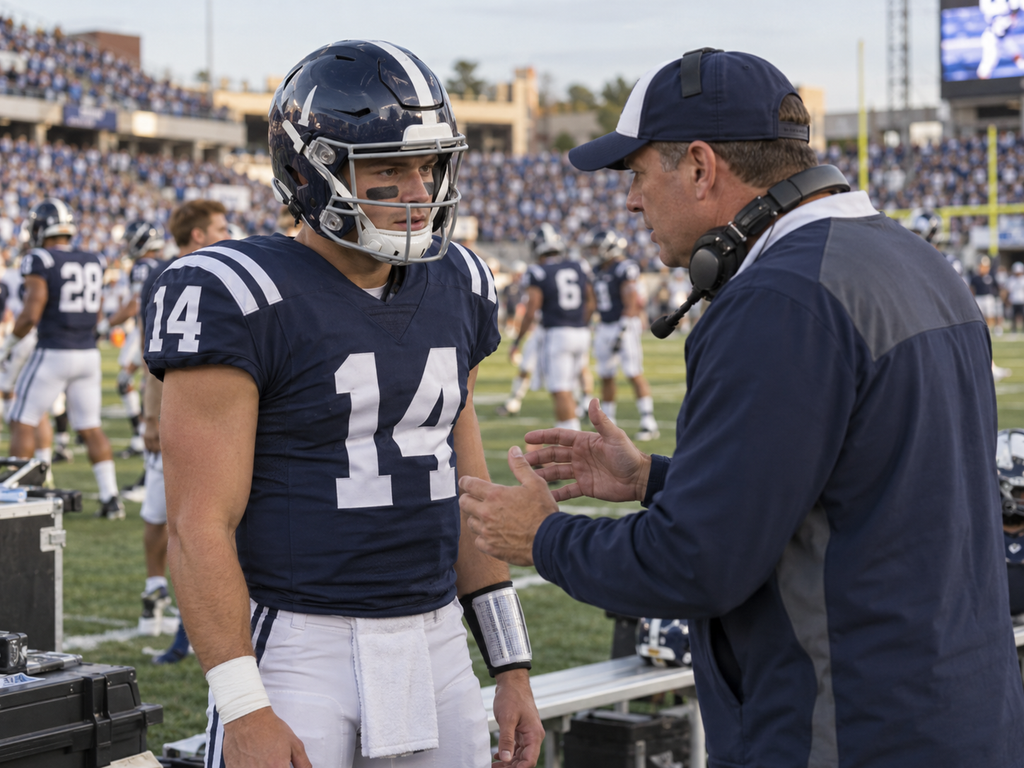
The referee blows the whistle, and both teams begin taking their positions.
A linebacker looks across the line of scrimmage, checking the offensive formation. A wide receiver listens for the quarterback’s call, while an offensive lineman confirms the blocking assignment.
For experienced players, these moments may feel familiar. For someone playing their first organized competitive game, everything can seem faster and more intense than practice.
There are officials, opposing players, substitutions, a game clock and teammates depending on everyone to perform their responsibilities.
Preparing for your first competitive football game means more than practicing individual skills. You need to understand your role, organize your equipment, follow the team’s procedures and respond calmly when the game does not unfold as expected.
A player may perform well in training but struggle during competition because the environment feels unfamiliar.
The goal of preparation is to reduce that uncertainty.
This guide explains how to approach the days before your first game, what to expect on game day and how to learn from the experience afterward.
It is intended for players who already understand basic American football rules and have participated in supervised practices but are preparing for their first formal competition.
Understand What Changes Between Practice and Competition
Practice provides opportunities to learn techniques, repeat assignments and correct mistakes.
Competition introduces additional pressures.
The opposing team is actively trying to disrupt your plans. Officials enforce the rules, the game clock limits opportunities and coaches may make substitutions or adjustments throughout the contest.
These differences affect how players perform.
The Pace May Feel Faster
During practice, a coach can stop a drill and explain a mistake.
During a game, play usually continues until the ball becomes dead or an official stops the action.
Players must recognize the situation and respond using what they have learned.
You will not always have time to think through every assignment from the beginning.
This is why understanding the team’s basic calls before game day is important.
Mistakes Have Immediate Consequences
A missed assignment may allow the opponent to gain yardage.
A false start can move the offense backward.
A poor substitution may create an avoidable penalty.
These consequences can make new players nervous.
However, even experienced athletes make mistakes during games.
The important skill is recognizing what happened, receiving feedback and preparing for the next opportunity.
Team Coordination Becomes More Important
A receiver running the correct route does not help if the quarterback expects a different assignment.
A defender moving into the correct area may still leave an opening if nearby teammates misunderstand the coverage.
Competitive football requires players to execute individual responsibilities within the team’s overall structure.
Confirm Your Position and Expected Responsibilities
Before your first game, understand what your coaches expect you to do.
Knowing your position name is not enough.
You should also understand the situations in which you may enter the field and the assignments you are expected to execute.
Understand Your Primary Position
A wide receiver should know the assigned alignment, route responsibilities and relevant blocking duties.
A linebacker should understand the team’s basic run and coverage assignments.
An offensive lineman should know the required blocking calls and communication procedures.
Your coach may provide different responsibilities depending on the formation or play.
Focus on the assignments included in the team’s current game plan.
Know Your Backup Responsibilities
You may be asked to play another position if a teammate needs rest or cannot continue.
For example, a receiver may need to line up on the opposite side of the formation.
A defensive player may participate in a different personnel grouping.
Ask which alternative responsibilities you should know before game day.
Do not assume every teammate’s assignment is interchangeable with yours.
Understand Your Special Teams Role
New players sometimes prepare only for offensive or defensive snaps.
However, they may also participate in kickoff coverage, kickoff returns, punts or other special teams situations.
These plays have specific rules and responsibilities.
If you are assigned to a special teams unit, confirm when you should enter the field and what your assignment involves.
Never treat special teams as an unimportant part of the game.
Review the Game Plan Without Overloading Yourself
Coaches may introduce a game plan based on the opponent’s tendencies and the team’s available personnel.
As a developing player, your priority is understanding the calls you are responsible for executing.
Focus on Your Most Important Assignments
Review the formations, responsibilities and communication signals likely to appear during the game.
For an offensive player, this may include the team’s core running and passing plays.
For a defender, it may include base alignments and common adjustments.
You do not need to memorize every possible strategy used in football.
You need to understand your team’s instructions.
Identify Common Situations
Ask your coach which situations you should recognize.
Examples include third down, goal-line plays, substitutions and changes in offensive or defensive personnel.
The objective is not to make independent strategic decisions outside your role.
It is to recognize when the team uses a particular call or grouping.
Ask Questions Before Game Day
If an assignment remains unclear, raise the question during a team meeting or practice.
For example:
“Where should I line up if the tight end moves to the opposite side?”
Or:
“Who gives me the substitution signal for this personnel package?”
Specific questions help coaches identify the missing information.
Waiting until the game begins makes clarification more difficult.
Prepare During the Week Before the Game
Game-week preparation should reinforce existing skills and assignments.
It should not become an attempt to learn an entirely new football system.
Early in the Week: Review Previous Practice
Begin by identifying the assignments and techniques that require the most attention.
If available, review practice footage or coaching notes.
Choose a small number of correctable issues.
For example, a player may need to improve communication before the snap or remember an assigned alignment.
Middle of the Week: Practice Game Situations
Use team practices to rehearse situations likely to occur.
This may include substitutions, pre-snap communication, special teams transitions and responses to common formations.
Work within the team’s established training plan.
Extra unsupervised contact drills are not a productive substitute for organized practice.
Final Practice: Emphasize Clarity
As game day approaches, focus on knowing responsibilities and feeling prepared.
This is not the ideal time to introduce unfamiliar high-intensity exercises or excessive additional training.
A player should enter the game reasonably recovered rather than exhausted from attempting to improve fitness at the last moment.
Check Your Equipment Before Game Day
Equipment preparation is one of the most practical ways to reduce avoidable problems.
American football uses protective equipment, but requirements differ by league, age group and level of competition.
Your team should confirm the equipment required for your specific game.
Helmet
The helmet must be appropriate for the player’s level of competition and fitted according to manufacturer guidance by a qualified equipment professional.
A helmet that shifts excessively or causes significant discomfort should be checked.
Do not modify the helmet or use damaged equipment.
Remember that no helmet can prevent every concussion or head injury.
Shoulder Pads
Shoulder pads should fit correctly and allow the intended movement.
Straps and fasteners need to be secure.
If the equipment feels unstable, ask the appropriate team staff member to inspect it.
Mouthguard
Use a mouthguard that meets the requirements of your league.
Confirm that it fits properly and is in usable condition.
Cleats and Uniform
Check whether your footwear is appropriate for the playing surface and permitted by the competition.
Make sure your uniform, pads and other required items are ready.
Prepare an Equipment Bag
A practical game-day bag may include:
- Required protective equipment and uniform.
- Football cleats and permitted accessories.
- Mouthguard and a suitable storage case.
- Water bottle.
- Appropriate snacks.
- Clean clothing for after the game.
- Personal items required by the team.
Check everything the night before rather than searching for missing equipment shortly before departure.
Take Recovery Seriously Before the Game
Physical readiness depends partly on how well you recover from training.
Extra practice is not always beneficial when competition is approaching.
Prioritize Sleep
Aim for adequate sleep in the days before competition.
A consistent sleep routine supports recovery, attention and general readiness.
Avoid deliberately staying awake late to study plays or equipment details that could have been reviewed earlier.
If pregame nerves interfere with sleep, keep the evening routine simple and familiar.
Eat Familiar Meals
Game day is not the ideal time to experiment with unfamiliar foods or extreme eating routines.
Choose meals you normally tolerate and that provide appropriate energy for activity.
Carbohydrate-containing foods can help support exercise, while regular meals should also provide adequate protein and other nutrients.
The amount and timing of food depend on the athlete’s needs and the game schedule.
Stay Hydrated
Begin the day normally hydrated and follow a hydration plan appropriate to the weather, activity and individual needs.
Do not rely on drinking a large amount of water immediately before kickoff.
During hot weather, follow the team’s heat-safety procedures and take symptoms of overheating seriously.
Hydration needs vary, so avoid treating one fixed amount as suitable for every player.
Manage Nervousness Before Your First Game
Feeling nervous before a competitive game is common.
The new environment may involve spectators, officials and unfamiliar opponents.
Trying to eliminate every nervous feeling may be unrealistic.
A better objective is learning how to perform your responsibilities despite some nervousness.
Focus on Controllable Actions
Instead of thinking only about whether your team will win, identify actions you can control.
You can listen to the correct call.
You can line up in the proper position.
You can communicate with teammates.
You can perform the technique you have practiced.
These actions provide a useful focus.
Use a Short Mental Routine
Before entering the field, take a moment to identify your assignment.
A simple routine might involve checking the call, confirming alignment and preparing for the snap.
Keep the routine short enough to use during actual competition.
Avoid Predicting Every Possible Mistake
Some players spend the hours before kickoff imagining missed tackles, dropped passes or penalties.
This does little to improve execution.
If a specific concern is legitimate, identify what preparation is still possible.
If no useful action remains, return attention to the team’s routine.
Know When to Arrive and What to Expect
Your coach or team manager should provide the game-day reporting time.
Follow that instruction rather than using the scheduled kickoff as your arrival target.
Arriving at the Venue
After arriving, players may need to check in, access the locker room, change into equipment and attend team meetings.
Some competitions also have roster verification or equipment inspection requirements.
Ask the team staff about these procedures in advance.
Team Meetings
Coaches may review the game plan, starting personnel, special teams responsibilities and last-minute instructions.
Listen carefully.
If something changes from the original plan, confirm the new responsibility.
Warm-Up
The team should follow a supervised warm-up suitable for the weather, level of competition and planned activity.
A typical warm-up may include gradually increasing movement, dynamic exercises, position-specific drills and controlled football repetitions.
The objective is to prepare for competition without unnecessary fatigue.
Avoid exhausting yourself through extra sprints or contact drills before kickoff.
Understand What Happens Before the Opening Snap
The moments before kickoff can feel unfamiliar during a first game.
Knowing the expected sequence helps reduce confusion.
Confirm Your Unit
Understand whether you begin with the offense, defense, special teams or on the sideline.
Not every player starts the game.
Being a substitute does not mean your responsibilities are less important.
Know the Communication System
Teams use verbal calls, hand signals or other approved communication methods.
Understand how your unit receives instructions.
A player who misses the call should use the team’s established procedure for clarification rather than guessing.
Check Your Alignment
Before the snap, confirm your assigned position.
Offensive players must pay attention to formation legality, motion and snap timing.
Defensive players should confirm alignments and responsibilities under the called defense.
A correct first step begins with being in the correct place.
How to Handle Your First Plays
The first few competitive snaps may feel different from practice.
Crowd noise, unfamiliar defenders and the significance of the game can increase pressure.
Execute the Assignment First
A receiver should not change the assigned route simply because another area appears open.
An offensive lineman should not abandon a blocking responsibility without following the team’s rules.
A defender should not chase the football at the expense of an assigned coverage or run fit.
Team execution requires discipline.
Don’t Try to Make Every Play Spectacular
New players sometimes feel pressure to prove themselves immediately.
They may attempt unnecessary moves or take risks beyond the assigned play.
Reliable execution is more valuable than forcing a highlight.
Focus on doing your job correctly.
Respond to the Actual Play
Football rarely unfolds exactly as imagined.
A defender may react differently from practice.
A running lane may close.
A quarterback may need additional protection.
Use the reads and adjustments taught by your coaches.
Do not assume that an unexpected situation gives permission to improvise outside the team’s structure.
Communicate Effectively During the Game
Communication helps players coordinate assignments and respond to changes.
Before the Snap
Players may need to confirm formations, protection calls, coverage responsibilities or motion adjustments.
Use the team’s approved terminology.
Avoid introducing unfamiliar signals during competition.
Between Plays
There may be only a short period before the next snap.
Important information should be communicated clearly and efficiently.
A teammate who missed an assignment may need one specific reminder rather than a lengthy explanation.
During Substitutions
Players must know when they are entering or leaving the field.
Leaving too many players on the field or substituting at the wrong moment can create penalties or confusion.
Pay attention to coaching signals and designated unit leaders.
Understand Sideline Responsibilities
A player who is not currently on the field still contributes to team performance.
Stay Available
Coaches may need a substitute unexpectedly.
Players should remain in the designated team area and be ready to enter when instructed.
Observe the Game
Watching the opposing team can help players recognize situations discussed during preparation.
However, avoid making unsupported assumptions about opponents’ strategies.
Pay attention to the information coaches emphasize.
Support Teammates Constructively
Encouragement can help maintain team focus.
Criticizing teammates after every mistake rarely improves immediate execution.
When correction is needed, use respectful and specific communication.
Respect Officials and Opponents
Disagreements over calls may occur.
Players should follow the competition’s conduct rules and allow designated coaches or captains to communicate appropriately with officials.
Avoid retaliation, unnecessary contact and unsportsmanlike behavior.
How to Respond After Making a Mistake
Every player eventually makes mistakes.
A first competitive game may include missed assignments, penalties or unsuccessful plays.
What matters is how the player responds.
Identify What Happened
If you know the mistake, acknowledge it.
For example, perhaps you aligned incorrectly or reacted to the wrong offensive movement.
Avoid making excuses, but do not assume responsibility for a problem you do not understand.
Receive the Correction
Listen to the coach’s instruction.
A brief correction may be all that is needed before returning to the field.
Prepare for the Next Snap
A previous mistake cannot be changed during the next play.
The most useful response is to execute the next assignment correctly.
Repeatedly thinking about the previous error can distract from the current situation.
Know When to Stop Playing
Pain, dizziness, confusion, visual changes or other concerning symptoms should not be ignored.
If a concussion is suspected, stop participation immediately and follow the team’s medical protocol. A player should not return that day unless cleared under applicable medical guidance and return-to-play requirements.
Do not conceal injuries to remain in the game.
Understand Basic Competitive Game Situations
Intermediate players should recognize common situations without needing to manage the team’s entire strategy.
Third Down
Third down may influence which personnel grouping and play call the team uses.
Know whether you are part of the assigned unit.
Fourth Down
The offense may attempt a conversion, punt or field goal.
Players should understand the substitution procedure and their assigned responsibilities.
Red-Zone Plays
As the offense approaches the opponent’s goal line, space becomes more limited.
The team may use different formations or personnel.
Follow the game plan for these situations.
Goal-Line Situations
Short-yardage plays near the goal line often require precise alignment and coordinated execution.
Do not assume the team will always run the football.
Turnovers
A fumble recovery or interception may cause an unexpected change of possession.
The next unit must be prepared to enter quickly.
These situations make sideline awareness important.
Five Common First-Game Mistakes
1. Forgetting an Assignment
The player becomes distracted by the environment and misses the call.
Improvement: Confirm the assignment using the team’s communication procedure.
2. Trying Too Hard to Impress
The player abandons a responsibility while attempting to make an individual play.
Improvement: Prioritize team execution over unnecessary risks.
3. Missing a Substitution Signal
The player is not paying attention when the coach calls for a personnel change.
Improvement: Remain available and monitor designated team signals.
4. Reacting Emotionally to a Mistake
The player becomes frustrated after an unsuccessful play and loses concentration.
Improvement: Identify the correction and refocus on the next snap.
5. Arriving Unprepared
The player forgets equipment, arrives late or does not understand the game-day schedule.
Improvement: Prepare equipment and logistics in advance.
A Practical First-Game Preparation Checklist
Use this checklist during the final days before competition.
| Preparation area | What to confirm |
|---|---|
| Position | Understand primary and backup assignments |
| Game plan | Know the calls relevant to your role |
| Special teams | Confirm assigned units and substitutions |
| Equipment | Check helmet, pads, mouthguard and footwear |
| Schedule | Know reporting time and venue procedures |
| Recovery | Follow appropriate sleep and training routines |
| Nutrition | Plan familiar meals and hydration |
| Communication | Understand calls and sideline signals |
| Safety | Know how to report symptoms and injuries |
| Personal goal | Choose one or two controllable performance objectives |
This list does not replace your team’s official instructions.
League requirements and coaching procedures may differ.
What to Do After Your First Competitive Game
The learning process continues after the final whistle.
A first game provides information that cannot always be reproduced in practice.
Recover Appropriately
Follow team guidance for cooling down, hydration, nutrition and recovery.
Report injuries or concerning symptoms rather than waiting for the next practice.
Reflect on Your Responsibilities
Ask yourself whether you understood the calls and executed the assignments.
Avoid judging your entire performance only by the score.
A player may perform assigned responsibilities correctly even during a team loss.
Identify One or Two Improvements
Choose specific areas to address before the next game.
For example, you might need to recognize substitution signals more quickly or improve communication before the snap.
Avoid creating a long list of vague weaknesses.
Request Coaching Feedback
A coach can help explain mistakes that were difficult to understand from the field.
Ask about your alignment, assignment execution and communication.
Listen for practical corrections you can apply.
Review Game Film When Available
Recorded footage can reveal positioning and timing that were difficult to notice during competition.
Review relevant plays with attention to your assigned responsibilities.
A single unsuccessful result does not always indicate that you made a mistake.
The objective is to understand what happened and how to improve.
How to Measure a Successful First Game
Winning is the team’s competitive objective, but an individual player’s first-game development should be evaluated more broadly.
A new player may have limited opportunities to participate.
Another may play several positions because of substitutions.
These situations make simple statistics incomplete.
| Development area | Useful evaluation question |
|---|---|
| Preparation | Did I arrive equipped and ready? |
| Assignment knowledge | Did I understand the calls relevant to my position? |
| Execution | Did I perform my responsibilities consistently? |
| Communication | Did I respond to teammates and coaches appropriately? |
| Discipline | Did I follow the rules and avoid unnecessary penalties? |
| Composure | Did I recover from mistakes and stay focused? |
| Safety | Did I follow team safety procedures and report concerns? |
| Improvement | Can I identify a specific goal for the next game? |
A successful first experience does not require perfect execution.
It should help the player become more familiar with competition and better prepared for the next opportunity.
Build Confidence for Your Next Game
Confidence develops through preparation and experience.
After the first game, many situations that once felt unfamiliar become easier to understand.
You have experienced the team’s arrival routine, warm-up, substitutions and competitive pace.
Use that knowledge to prepare more effectively.
If you struggled with a particular responsibility, practice it under supervision.
If communication felt difficult, review the team’s terminology.
If nervousness affected your concentration, develop a simple pregame focus routine.
Improvement should be based on specific observations rather than general pressure to perform better.
With repeated practice and competition, players can develop more reliable habits.
Final Thoughts: Preparation Makes Your First Game More Manageable
Your first competitive football game is an opportunity to apply what you have learned in a real team environment.
The experience may feel faster and more demanding than practice, but preparation can reduce many avoidable problems.
Know your assignments, check your equipment, understand the schedule and follow the team’s communication procedures.
During the game, focus on your responsibilities rather than attempting to make every play extraordinary.
Respond to mistakes with attention and discipline, respect teammates and opponents, and prioritize safety.
Afterward, review what happened and identify practical improvements.
Your first game does not need to be perfect to be valuable.
The goal is to gain experience, contribute to your team and become better prepared for future competition.
Continue developing your skills through our Intermediate American Football Guides, or explore the American Football Learning Path for structured courses that support your progress from basic understanding to more confident play.