
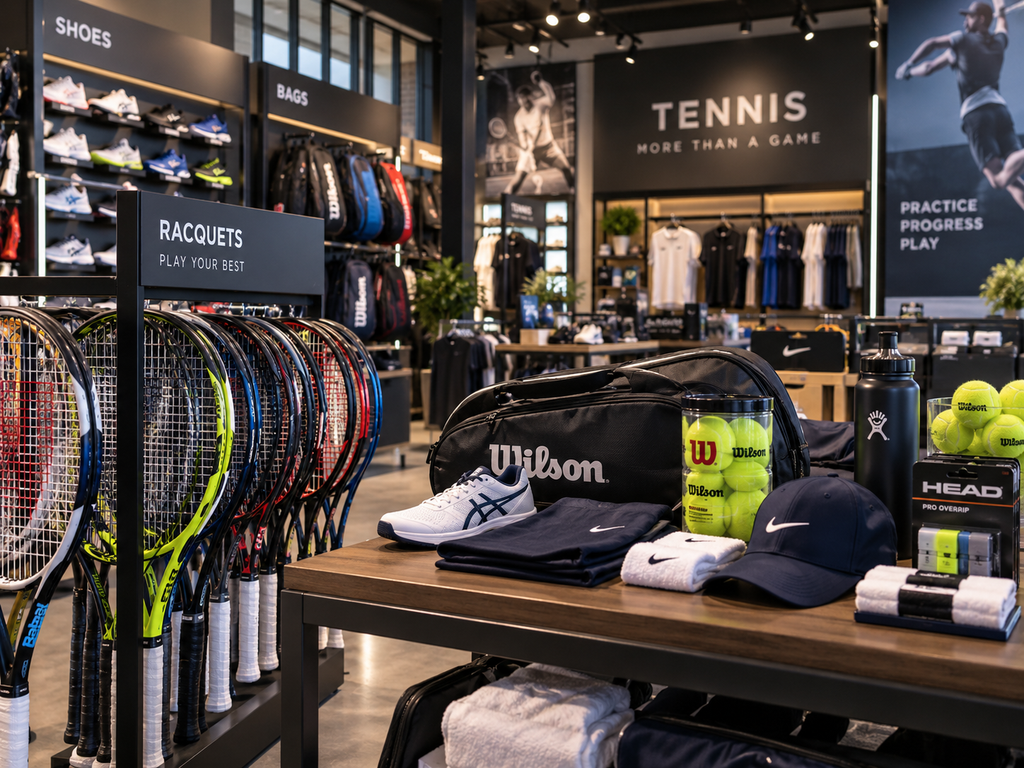
Starting tennis does not require a large collection of equipment. A beginner can get on court with only a few essentials, and most additional gear can be added gradually as you play more often and understand what works for you.
The goal when choosing beginner tennis equipment is not to find the most advanced racquet, the most expensive shoes or every accessory available. It is to choose equipment that is comfortable, practical and appropriate for learning.
This guide covers the main types of tennis gear beginners should consider and what to look for when making each choice.
Start With the Essential Tennis Gear
Most beginners only need a few items to start playing:
- A tennis racquet
- Tennis balls
- Tennis shoes
- Comfortable athletic clothing
- Water
A few accessories such as replacement grips, a tennis bag and sun protection can become useful as you begin practicing regularly.
Everything else can usually wait.
Keeping your equipment simple allows you to concentrate on getting comfortable on the court instead of worrying about unnecessary gear.
Beginner Tennis Racquet
Your racquet is the most important piece of tennis equipment you will purchase.
Beginners generally benefit from a racquet that feels comfortable to swing and provides a reasonably large hitting area. You do not need a racquet designed around the preferences of advanced competitive players.
The most useful characteristics to consider include racquet head size, overall weight, grip size and general maneuverability.
Racquet Head Size
The head size determines the size of the string bed.
A somewhat larger head provides a larger area for making contact with the ball, which can be helpful when your timing is still developing.
Beginners usually benefit more from forgiveness and comfortable contact than from choosing a smaller, more demanding racquet.
Racquet Weight
A racquet should feel substantial enough to remain stable while still being easy for you to move.
A racquet that feels excessively heavy can make preparation more difficult and may become uncomfortable during longer practice sessions.
At the same time, extremely light racquets can sometimes feel less stable when contacting the ball.
For beginners, the priority should be finding a weight that feels natural and manageable rather than chasing a particular performance specification.
Grip Size
The handle should feel secure without forcing you to squeeze tightly.
A grip that is noticeably too large or too small can make the racquet uncomfortable to hold.
Whenever possible, hold several racquets before buying one. You should be able to maintain a relaxed grip while still feeling that the racquet is secure in your hand.
Pre-Strung Racquets
Many beginner racquets are sold already strung.
This is usually the simplest option for someone buying a first racquet because you do not need to immediately make decisions about string type and tension.
As you gain experience, you can explore different strings and setups if necessary.
Tennis Shoes
Tennis shoes are more important than many beginners realize.
Running shoes are designed primarily for forward movement. Tennis involves frequent starts, stops, side-to-side movement and changes of direction.
Tennis-specific shoes are designed with these movements in mind.
When choosing tennis shoes, focus on:
- Comfortable fit
- Lateral support
- Court traction
- Cushioning
- Stability during direction changes
The shoe should feel secure around your foot without being painfully tight.
Your toes should have enough room to move naturally, while your heel should remain relatively stable when moving.
Match the Shoe to the Court
Different playing surfaces can place different demands on footwear.
Some tennis shoes are designed specifically for hard courts, clay courts or grass courts. Others are designed as all-court shoes.
For many beginners playing primarily on public hard courts, an appropriate hard-court or all-court tennis shoe is a practical starting point.
Tennis Balls
Not every tennis ball feels exactly the same.
Standard pressurized tennis balls are commonly used for recreational and competitive tennis, but beginners may also encounter slower balls designed for learning.
Standard Tennis Balls
Regular tennis balls travel and bounce at normal playing speed.
They are appropriate once you are comfortable controlling basic strokes and rallies.
Buying balls in cans of three or four is usually enough for casual practice.
Beginner and Low-Compression Balls
Slower tennis balls can make learning easier because they give players more time to prepare and make contact.
Depending on the type, these balls may travel more slowly or bounce lower than standard balls.
They can be especially useful for new players who are still developing timing and control.
They are not mandatory, but they can make early practice sessions more manageable.
Tennis Bag
You do not need a dedicated tennis bag for your first session.
A normal backpack can easily carry balls, water and other basic items.
Once you begin bringing more equipment to the court, however, a tennis bag becomes more convenient.
Tennis bags are available in several sizes.
Racquet Backpack
A tennis backpack usually carries one or two racquets along with a small amount of additional equipment.
This can be a good option for beginners who travel light.
Small Racquet Bag
A compact racquet bag provides additional space for balls, clothing, grips and personal items without becoming unnecessarily large.
Larger Tennis Bags
Large multi-racquet bags are designed for players carrying several racquets and a significant amount of equipment.
Most beginners do not need this much storage.
Choose a bag based on what you actually bring to the court rather than how much equipment the bag can potentially hold.
Overgrips and Replacement Grips
The grip is the material wrapped around the racquet handle.
Over time, it can become slippery, worn or uncomfortable.
An overgrip is a thin layer placed over the existing grip. It can improve comfort and help absorb moisture.
Overgrips are relatively inexpensive and easy to replace.
Beginners who play regularly may find it useful to keep one or two extras in their bag.
A replacement grip is different. It replaces the original grip material rather than wrapping over it.
You usually only need to replace the main grip when it becomes significantly worn or damaged.
Comfortable Tennis Clothing
You do not need specialized tennis clothing to begin playing.
Comfortable athletic clothing that allows unrestricted movement is usually enough.
Choose clothing that:
- Allows your arms and shoulders to move freely
- Does not restrict your legs when changing direction
- Handles sweat comfortably
- Is suitable for the temperature and weather
Shorts, athletic shirts, skirts, dresses and similar sports clothing can all work.
Pockets can also be useful because tennis players often carry an extra ball during play.
Socks
Socks are easy to overlook, but they can affect comfort during longer sessions.
Athletic socks that provide some cushioning and help manage moisture are generally better suited to tennis than very thin casual socks.
A comfortable pair of socks can also help reduce friction inside your shoes.
You do not need specialized professional tennis socks. Focus primarily on fit, cushioning and comfort.
Water Bottle
Tennis can involve continuous movement, particularly in warm weather.
Bring enough water for the expected length of your session.
An insulated bottle can be useful when playing outdoors because it helps keep water cooler, although any reliable reusable water bottle will work.
Hydration should be considered part of your basic court equipment rather than an optional extra.
Hat, Visor and Sunglasses
Outdoor tennis often means dealing with direct sunlight.
A lightweight hat or visor can help keep the sun out of your eyes.
Sports sunglasses can also be useful, especially when playing during bright parts of the day.
If you wear sunglasses while playing, choose a pair that remains secure when running and changing direction.
These accessories are optional but can make outdoor tennis significantly more comfortable.
Sunscreen
Players who regularly practice outdoors should consider sunscreen part of their tennis bag.
Apply it before playing and follow the product’s instructions regarding reapplication.
This is particularly important during long sessions or when playing under strong sunlight.
Sweatbands and Towels
Sweatbands are optional, but some players find them useful in hot conditions.
A wristband may help prevent sweat from reaching your hand and grip.
A small towel can also be useful during breaks.
Neither item is essential for beginners, but both are inexpensive additions if sweat becomes distracting during play.
Tennis Ball Hopper or Basket
A ball hopper becomes useful when you start practicing with a larger number of balls.
Instead of repeatedly collecting three or four balls, you can practice a series of shots before stopping.
This can make individual practice sessions much more efficient.
However, a beginner who mostly plays with another person does not need to purchase one immediately.
Consider a hopper only when you begin doing regular repetition-based practice.
Racquet Vibration Dampener
A vibration dampener is a small accessory placed between certain strings near the bottom of the racquet’s string bed.
It changes the sound and feel produced after contact with the ball.
Some players like the sensation while others prefer playing without one.
It is not necessary for learning tennis and should not be treated as an essential piece of equipment.
If you are curious, it is an inexpensive accessory to experiment with.
Extra Tennis Balls
Once you begin practicing more regularly, carrying more than one can of balls can be useful.
Balls can occasionally roll outside the court, become wet or gradually lose their bounce.
Keeping a few extras prevents practice from ending simply because one or two balls are unavailable.
For casual practice, you still do not need dozens of balls unless you are specifically performing repetitive drills.
Spare Overgrip
An extra overgrip takes almost no space in a tennis bag and can be helpful if your current grip becomes excessively worn or slippery.
Players who sweat heavily may go through grips more quickly.
You do not need to replace an overgrip after every session. Replace it when the surface begins losing its comfortable feel or traction.
What Beginners Usually Do Not Need Yet
Tennis equipment can become surprisingly specialized, but beginners should resist the temptation to purchase everything immediately.
You generally do not need:
- Multiple racquets
- Expensive custom string setups
- Large tournament racquet bags
- Specialized training equipment
- Multiple pairs of tennis shoes
- Professional-level accessories
- Large quantities of tennis balls
These items may become useful later, but buying them before you know your preferences often adds cost without improving your experience.
A Practical Beginner Tennis Gear Setup
A straightforward starting setup could include:
One comfortable beginner-friendly racquet
Choose a racquet that feels manageable and comfortable rather than one based solely on professional specifications.
One pair of proper tennis shoes
Prioritize stability, fit and lateral support.
Several tennis balls
Standard or slower beginner balls can both be appropriate depending on your current ability.
Comfortable athletic clothing
Use clothing that allows unrestricted movement.
Water
Bring enough for the length and conditions of your session.
That is enough to begin playing.
Once tennis becomes part of your regular routine, you can gradually add a bag, extra balls, overgrips, sun protection and other accessories.
Choose Gear Based on Your Actual Needs
One of the easiest mistakes for new players is assuming better equipment will automatically make tennis easier.
Equipment matters, particularly when it comes to racquet comfort and proper footwear, but beginners do not need premium gear to start successfully.
Look for equipment that makes playing comfortable and straightforward.
Your first racquet does not need to be your final racquet. Your first tennis bag does not need to carry six racquets. Your clothing does not need to match what professional players wear.
Begin with the equipment that allows you to get on court comfortably.
As you play more often, you will naturally begin to understand what you prefer in a racquet, shoes, grips and other equipment.
Build Your Tennis Gear Gradually
A simple approach is to build your equipment in stages.
Start with a racquet, tennis shoes and balls.
After several sessions, consider adding useful everyday accessories such as a tennis bag, overgrips and additional balls.
If you begin practicing independently, a ball hopper may eventually become worthwhile.
Outdoor players may also want to add a hat, sunglasses, sunscreen and a towel depending on the conditions.
This gradual approach prevents you from buying equipment simply because it exists.
The Best Beginner Tennis Gear Makes Playing Easier
Recommended tennis gear for beginners should remove complications rather than create them.
Your racquet should feel comfortable to swing. Your shoes should help you move confidently around the court. Your clothing should let you move freely. Your accessories should solve practical problems that you actually encounter.
Start with the essentials and add equipment only when it has a clear purpose.
You can always upgrade or expand your tennis gear later. For now, the most useful equipment is the gear that helps you get on court, practice comfortably and keep playing.