
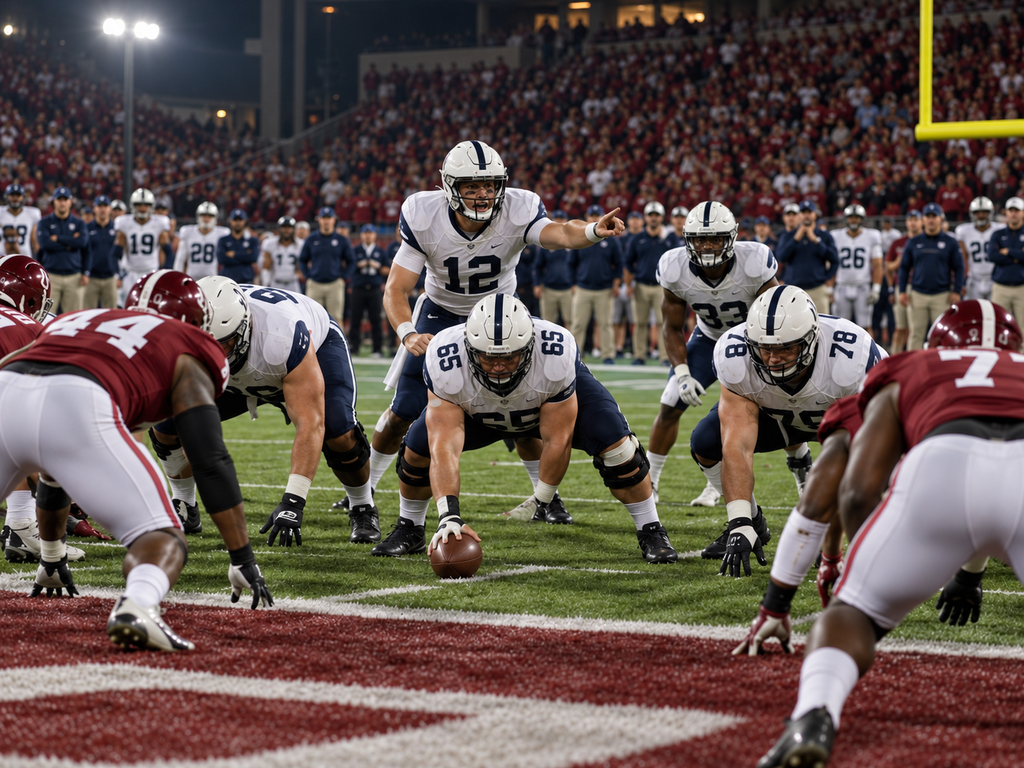
The offense faces fourth-and-two at the opponent’s 38-yard line. The score is tied, and just over six minutes remain in the fourth quarter.
The head coach has three choices.
The team can attempt to gain the first down and continue the drive. It can try a long field goal or punt to make the opponent begin its next possession farther from the end zone.
None of these options is automatically correct.
A field-goal attempt may produce three points, but its likelihood of success depends on the kicker, conditions and distance. A punt may improve field position, but it also gives possession to the opponent. Going for the first down may create another scoring opportunity, but failing gives the defense the football.
The decision depends on more than the distance needed.
This is the essence of situational football strategy: evaluating what matters most in a particular game moment and selecting an approach that offers the best opportunity to achieve the team’s objective.
Advanced football players and coaches must understand how score, field position, remaining time, down, distance, personnel and opponent tendencies influence decisions.
A strategy that makes sense early in the game may be less valuable late in the fourth quarter. A play that is effective near midfield may require a different approach near the goal line.
This guide explores how to evaluate critical game situations, compare strategic alternatives and prepare for decisions that can significantly influence the result.
What Is Situational Football Strategy?
Situational football strategy involves adapting team decisions to the circumstances surrounding a particular play or possession.
Instead of relying on one preferred approach, coaches consider what the team needs to accomplish and which options are available.
For example, an offense facing second-and-three near midfield may have considerable flexibility.
The same offense facing fourth-and-three near its own goal line must evaluate a very different set of consequences.
Several factors shape these decisions:
- Score: Whether the team is leading, trailing or tied.
- Field position: Where the football is located.
- Down and distance: How many opportunities remain to gain the required yardage.
- Remaining time: How much of the game remains.
- Possession: Which team currently controls the football.
- Personnel: Which players and position groups are available.
- Opponent tendencies: How the opposing team has responded in similar situations.
These factors interact.
A successful strategy considers their combined effect rather than treating each one independently.
Understand the Difference Between Risk and Reward
Football strategy involves uncertainty.
A coach cannot know the result of a play before it happens.
Instead, the team must compare possible outcomes and their consequences.
Immediate Reward
The immediate reward is what the team gains if the decision succeeds.
On fourth-and-two, a successful conversion provides another set of downs.
A completed field goal adds three points.
A successful punt may force the opponent to begin its possession deep in its own territory.
Potential Cost
Each option also has a downside.
A failed fourth-down conversion generally gives the opponent possession at the dead-ball spot.
A missed field goal gives the opponent possession under the applicable rules.
A punt sacrifices the offense’s current possession and may produce less field-position benefit than expected.
Evaluate the Entire Outcome
The decision should not be based only on which option appears safest.
A choice that minimizes immediate embarrassment may still reduce the team’s chance of winning.
Likewise, an aggressive decision is not automatically better because it offers a larger potential reward.
The objective is to compare realistic outcomes and select the option that best supports the game situation.
Understand Expected Points and Win Probability
Advanced football analysis often uses two related concepts: expected points and win probability.
Expected Points
Expected points estimate the average scoring value of a particular game state, accounting for factors such as field position, down and distance.
For example, first-and-ten near the opponent’s goal line generally has a different expected scoring value from first-and-ten near a team’s own goal line.
Expected points help teams compare the value of different outcomes.
However, maximizing expected points is not always identical to maximizing the chance of winning a particular game.
Win Probability
Win probability estimates a team’s chance of winning based on the current game situation.
It accounts for factors such as score, possession, field position and remaining time.
Imagine a team trailing by four points late in the fourth quarter.
A field goal would add three points but still leave the team behind.
A touchdown could take the lead.
In that situation, the option with the best expected point value may not necessarily provide the highest win probability.
Why the Distinction Matters
Early in a close game, expected points can provide useful guidance.
Late in a game, the exact score and remaining possessions become increasingly important.
Coaches should consider which outcome actually helps the team achieve its objective.
Analytics can support the decision, but estimates still depend on the quality of the underlying data and assumptions.
Make Better Fourth-Down Decisions
Fourth down creates one of football’s clearest strategic choices.
The offense can attempt to convert, punt or attempt a field goal when appropriate.
The correct decision depends on more than the yardage required.
Consider the Distance to Gain
Fourth-and-one is generally more favorable for a conversion attempt than fourth-and-ten.
However, the probability of success depends on the offense, defense, field position and available play concepts.
A team with an effective short-yardage offense may evaluate fourth-and-one differently from a team that has struggled in similar situations.
The coach should consider realistic team capabilities rather than relying exclusively on league-wide averages.
Consider Field Position
A failed fourth-down attempt near the opponent’s goal line has different consequences from failure near a team’s own goal line.
For example, failing on fourth down at the opponent’s 5-yard line gives the opponent the ball deep in its own territory.
Failing at a team’s own 20-yard line provides the opponent a much more favorable starting position.
This difference influences the potential cost of attempting a conversion.
Compare the Alternatives
Imagine fourth-and-two at the opponent’s 40-yard line.
A punt might improve the opponent’s starting position, but there is limited field remaining for a long punt.
A field-goal attempt would be long and may have a relatively low success probability for the available kicker.
A conversion attempt could extend the possession.
The coach should compare all three options based on the circumstances.
Don’t Judge Only by the Result
A fourth-down attempt can be strategically reasonable even when it fails.
A punt can produce a favorable outcome despite being a poor choice based on the information available beforehand.
The quality of the decision should be evaluated separately from the result.
Understand Red-Zone Strategy
The red zone is the area between the opponent’s 20-yard line and goal line.
Offensive and defensive strategies often change because the available field becomes shorter.
Why Space Changes Near the Goal Line
Near midfield, receivers can threaten defenders with considerable space behind them.
Inside the red zone, the end line limits how far downfield routes can develop.
Defenders can use that reduced space when organizing coverage.
Offenses must therefore be especially precise with route spacing, timing and movement.
Red-Zone Passing Concepts
An offense may use route combinations designed to create a short passing window or challenge a defender’s positioning.
The quarterback must account for defenders operating in a compressed area.
A receiver appearing open for a moment may become covered quickly.
The offense benefits from disciplined execution rather than assuming a familiar midfield concept will work identically near the goal line.
Red-Zone Running Concepts
Running plays can provide effective scoring opportunities when the offensive line creates movement or the running back identifies an appropriate lane.
However, defenses may concentrate players near the line of scrimmage.
The offense needs to evaluate the defensive front and the available space.
Touchdown Versus Field Goal
Scoring a touchdown is generally more valuable than settling for a field goal.
However, the strategic choice depends on the game situation.
A team may face a decision about attempting a fourth-down conversion near the goal line or taking three points.
The score, time remaining and likely consequences of failure influence the appropriate approach.
Understand Goal-Line Football Decisions
Goal-line situations create a different challenge because the offense may need only a small amount of yardage to score.
The defense has limited field space to protect, while the offense needs precise execution.
Short-Yardage Running Plays
An offense near the goal line may use a run designed to gain a small amount of yardage.
The offensive line’s blocking and the running back’s timing become especially important.
However, the defense may concentrate defenders near the expected running gaps.
A short distance does not guarantee an easy conversion.
Goal-Line Passing Plays
Passing can provide an alternative when the defense commits heavily to stopping the run.
For example, a short play-action concept may influence defenders who are expecting a rushing attempt.
But compressed space makes passing windows smaller.
The quarterback must avoid assuming that a defender’s initial reaction creates a guaranteed opening.
Choosing Between Run and Pass
Coaches should consider their personnel, defensive alignment and recent execution.
A powerful running game may provide a favorable short-yardage option.
A particular receiving matchup may support a passing call.
The decision should be based on the team’s actual strengths rather than a rigid rule that goal-line plays must always be runs.
Make Better Two-Point Conversion Decisions
After a touchdown, a team may attempt a one-point kick or a two-point conversion under NFL rules.
A successful two-point attempt requires reaching the opponent’s end zone on the conversion play.
The decision can influence the number of future possessions and scoring outcomes needed.
Consider the Score Differential
Imagine a team scores a touchdown and now trails by two points.
A successful two-point conversion would tie the game, while a successful one-point kick would leave the team trailing by one.
Depending on remaining time and game circumstances, the two-point attempt may be strongly favored.
In other situations, choosing between one and two points is less obvious.
Consider Remaining Possessions
A decision made early in a game allows more time for future scoring.
A decision late in the fourth quarter may directly determine whether the team ties, leads or remains behind.
This is why two-point choices should be evaluated according to win probability rather than relying only on the average scoring value of each conversion type.
Don’t Assume Conversion Success
Two-point attempts are not guaranteed.
The offense must consider the defense, available personnel and the specific play it can execute effectively.
A well-supported decision can still fail.
Understand Third-Down Strategy
Third down is important because it determines whether the offense extends its possession or reaches fourth down.
However, third-down planning should also account for what the team intends to do next.
Third-and-Short
On third-and-one, the offense may have several available running and passing options.
If the team is willing to attempt a fourth-down conversion, it can sometimes plan third and fourth down together.
For example, a coach may select a third-down play that has a reasonable chance of gaining the first down while preserving a manageable fourth-down situation if it falls short.
Third-and-Medium
Third-and-five creates different demands.
The offense needs sufficient yardage but may still have several effective route or running concepts available.
The defense may position players to challenge the area near the line to gain.
The offense should recognize those defensive responsibilities while selecting a concept that fits its personnel.
Third-and-Long
Third-and-twelve often requires a larger gain.
Defenses may prioritize preventing a conversion while remaining alert to the possibility of a shorter completion followed by yards after the catch.
A team may choose a conservative or aggressive approach depending on field position, score and whether a fourth-down attempt is realistic.
There is no single strategy that applies to every third-and-long.
Recognize When Field Position Matters Most
Field position influences both scoring opportunities and defensive pressure.
A team pinned near its own goal line faces different consequences from a team operating near midfield.
Backed-Up Offense
An offense beginning near its own end zone must protect possession and avoid negative plays.
A sack, penalty or turnover can create a dangerous situation.
However, playing too conservatively may allow the defense to anticipate the limited offensive approach.
The offense must balance risk with the need to gain enough yardage to improve field position.
Midfield Decisions
Near midfield, the offense may have more flexibility.
A successful conversion can move the team toward scoring position.
A failed fourth-down attempt can give the opponent favorable territory.
Punting may have less value than it would from deeper in the offense’s own territory.
The decision should reflect these trade-offs.
Opponent Territory
As the offense moves closer to the opponent’s goal line, the potential reward of maintaining possession generally increases.
A fourth-down conversion might create an immediate scoring opportunity.
However, a failed play can still be costly, particularly when the opponent has enough time to respond.
Understand Defensive Strategy in Critical Situations
Situational football is not limited to offensive play-calling.
Defenses also adjust their priorities based on the game.
Protecting Against a Short Conversion
On fourth-and-one, the defense must account for the offense’s ability to gain a small amount of yardage.
The defensive call may emphasize gap control and short-yardage responsibilities.
However, committing too heavily to the run may create passing opportunities.
The defense must prepare for the range of plays the offense can realistically use.
Defending the Red Zone
Red-zone defense requires awareness of reduced field space.
Defenders may need to maintain tight spacing and recognize routes that develop quickly.
The defense should also understand how its coverage responsibilities change near the goal line.
Preventing a Critical Touchdown
Late in a game, a defense may prioritize preventing a touchdown over limiting every short gain.
That can influence coverage depth and the acceptable risk of certain defensive calls.
However, allowing repeated short gains can still help the offense advance.
The correct approach depends on the score, remaining time and field position.
Manage Sudden-Change Situations
A sudden-change situation occurs when possession changes unexpectedly, such as after an interception or fumble recovery.
These moments can create immediate strategic challenges.
After a Turnover
An offense receiving possession after a turnover may begin in favorable field position.
The team should recognize whether it has an opportunity to score quickly.
However, rushing into an unfamiliar play or ignoring the defensive alignment can waste that advantage.
Defending After a Turnover
A defense may be required to enter the field unexpectedly.
Players need to understand the new field position and immediate objective.
For example, a defense taking over after a turnover deep in its own territory may prioritize preventing a touchdown and forcing a field-goal attempt.
Maintain Communication
Sudden possession changes can disrupt normal sideline routines.
Teams benefit from having clear substitution and communication procedures.
Players should know who provides the next call and how quickly they must organize.
Four Critical Game Scenarios
The following examples illustrate how strategic priorities change according to the situation.
Scenario 1: Fourth-and-One Near Midfield
Situation: The score is tied in the third quarter. The offense faces fourth-and-one at the opponent’s 48-yard line.
Options: Attempt the conversion or punt.
Strategic considerations: A successful conversion extends the drive in opponent territory. Failure gives the opponent favorable field position. A punt may move the opponent deeper but sacrifices possession.
Key lesson: Compare the likelihood and value of each outcome rather than automatically choosing the traditional option.
Scenario 2: Fourth-and-Goal From the Two-Yard Line
Situation: The offense trails by four points late in the fourth quarter.
Options: Attempt a touchdown or kick a field goal.
Strategic considerations: A field goal would still leave the team trailing. A touchdown would take the lead, assuming no unusual subsequent scoring changes.
Key lesson: The exact score can make a touchdown attempt substantially more valuable than taking three points.
Scenario 3: Third-and-Two While Protecting a Lead
Situation: The offense leads by three points with several minutes remaining.
Options: Select a short-yardage running or passing concept.
Strategic considerations: Gaining the first down extends possession and may reduce the opponent’s opportunities. A conservative play that fails may force the offense to surrender the football.
Key lesson: Protecting a lead can require continuing to gain first downs rather than simply avoiding risk.
Scenario 4: Two-Point Decision After a Touchdown
Situation: The offense scores and now trails by two points late in the game.
Options: Kick for one or attempt a two-point conversion.
Strategic considerations: One point leaves the team behind, while two points would tie the score.
Key lesson: Conversion decisions must account for the actual score and the likely number of remaining possessions.
Use a Consistent Decision-Making Framework
Advanced players and coaches benefit from a repeatable method for evaluating critical situations.
One useful approach includes five questions.
1. What Does the Team Need?
Determine the immediate objective.
Does the team need a first down, touchdown, field goal, defensive stop or improved field position?
The answer changes the value of available choices.
2. What Are the Realistic Options?
Identify the choices that can actually be executed.
For example, a long field-goal attempt may not be realistic in strong wind or beyond the kicker’s dependable range.
A particular short-yardage concept may be less attractive if key offensive players are unavailable.
3. What Happens if Each Option Succeeds?
Evaluate the benefit of success.
A fourth-down conversion can extend possession.
A field goal can change the score.
A successful punt can improve defensive field position.
4. What Happens if Each Option Fails?
Consider the consequences of an unsuccessful play.
How favorable would the opponent’s next position be?
Could a turnover eliminate a scoring opportunity?
Would the team still have enough time or possessions to recover?
5. Which Option Best Supports Winning?
Compare the available outcomes with the actual game situation.
The objective is not to select the most dramatic or conventional decision.
It is to choose the approach that provides the strongest overall opportunity to win.
Practice Situational Football Decisions
Teams can improve strategic awareness without requiring full-contact repetitions.
Exercise 1: Fourth-Down Decision Review
Purpose: Compare conversion attempts, punts and field goals.
A coach presents different fourth-down situations.
Players identify the possible options and discuss the consequences of each.
Where appropriate, compare the discussion with a reliable win-probability model.
Exercise 2: Red-Zone Scenario Practice
Purpose: Understand how field compression changes offensive options.
The offense lines up inside the opponent’s 20-yard line.
Coaches present different defensive structures.
Players explain the purpose of the assigned play and the responsibilities most affected by the shorter field.
Exercise 3: Goal-Line Decision Walkthrough
Purpose: Prepare for high-pressure short-yardage situations.
A coach presents a goal-line situation with a specific score and down.
The offense practices the selected play at a controlled pace.
Players confirm assignments and communication.
Contact intensity should follow the team’s safety standards.
Exercise 4: Sudden-Change Simulation
Purpose: Improve response after an unexpected change of possession.
A coach announces a simulated turnover.
The appropriate unit enters the field and organizes according to the new situation.
Players identify field position, score and immediate responsibilities.
Exercise 5: Decision Versus Outcome Review
Purpose: Improve strategic evaluation.
Choose several real game situations.
Record the decision made and the information available beforehand.
Evaluate whether the choice was reasonable before watching the outcome.
Then examine the actual result.
This exercise helps prevent hindsight from dominating strategic analysis.
Common Situational Football Strategy Mistakes
Following Traditional Rules Without Context
A coach automatically punts whenever the offense faces fourth down in its own territory.
Improvement: Evaluate down, distance, field position, score and expected outcomes.
Treating Aggression as a Strategy
A team attempts every fourth-down conversion regardless of circumstances.
Improvement: Recognize that aggression is valuable only when the expected benefit justifies the risk.
Ignoring the Score
A team kicks a field goal late in the game even though three points cannot meaningfully improve its opportunity to win.
Improvement: Evaluate what the team actually needs, not simply whether points are available.
Focusing Only on Immediate Yardage
A coach selects a play without considering how its result affects the next down or possession.
Improvement: Think beyond the current play and evaluate the sequence of possible outcomes.
Overreacting to One Previous Failure
A team avoids a strategically favorable decision because a similar attempt failed earlier.
Improvement: Evaluate the current situation independently while incorporating relevant evidence about personnel and execution.
How to Evaluate Situational Decision Quality
Successful strategy should be measured by the quality of the decision process, not only the final result.
A reasonable fourth-down conversion attempt can fail.
A questionable punt can be followed by an opponent’s turnover.
Neither outcome automatically proves that the original decision was right or wrong.
| Evaluation area | Key question |
|---|---|
| Game awareness | Did the team understand the score, field position and remaining time? |
| Available options | Were all realistic choices considered? |
| Risk assessment | Were the consequences of failure understood? |
| Personnel | Did the decision reflect available players and team strengths? |
| Opponent | Were relevant defensive or offensive tendencies considered? |
| Decision quality | Was the selected option reasonable with the information available? |
| Execution | Did the players carry out the selected plan correctly? |
This framework helps teams distinguish strategic errors from execution mistakes.
It also supports better preparation for future games.
Final Thoughts: Prepare for the Moments That Matter Most
Strong situational football strategy begins with understanding what the team needs and how each available decision affects its opportunity to succeed.
Fourth-down choices require comparing conversion attempts, punts and field goals. Red-zone and goal-line situations demand awareness of limited space, personnel matchups and scoring objectives.
Third-down planning should account for the next possible decision, while sudden possession changes require immediate communication and organization.
No single aggressive or conservative approach works in every situation.
The best decisions reflect the score, field position, remaining opportunities and realistic strengths of both teams.
Practice critical situations before they occur, review strategic decisions separately from their outcomes and use reliable information to guide preparation.
As players and coaches become more comfortable evaluating these factors, they can respond to important game moments with clearer priorities and more disciplined execution.
Continue exploring our Advanced American Football Guides, or visit the American Football Learning Path to develop your understanding through structured courses.