
Why You Keep Shanking the Golf Ball
Few things in golf are more confusing than suddenly shanking a shot. One moment you’re hitting the ball reasonably well, and the next the ball shoots almost sideways off the club and barely goes toward your target.
A shank happens when the golf ball strikes the hosel of the club instead of the center of the clubface. Instead of traveling toward the target, the ball often shoots sharply to the right (for right-handed golfers).
Shanks can feel alarming because they often appear suddenly and seem difficult to control. The good news is that shanks usually happen for a few specific reasons, and once you understand those causes, they’re often easier to fix than you might expect.
In this guide, we’ll break down why golfers shank their iron shots, what’s happening during impact, and a few simple adjustments and drills that can help you start striking the center of the clubface again
Jump To What You Need
If you’re new to golf and want a basic guide on how to play golf check out our Beginner Guide to Golf
Or if you’re just looking for consistency in parts of your golf game see our How to Be Consistent in Golf section
If you want to see our full golf articles browse our full Golf Article Library Our Featured Articles include How to Swing a Golf Club, How to Hit Irons Consistently, and How to Stop Chunking the Golf Ball
What Is a Shank in Golf?
A shank occurs when the ball strikes the hosel of the club instead of the clubface.
The hosel is the narrow section where the shaft connects to the clubhead. Because the hosel sits closer to the golfer than the clubface, contact there sends the ball sharply off line.
When you shank a shot you will usually notice:
- The ball shoots sharply to the right (for right-handed golfers)
- The contact feels very different from a normal strike
- The shot travels an unpredictable distance
Unlike topping or chunking the ball, a shank is not usually caused by striking the ground incorrectly. Instead, it happens when the club moves too close to the ball at impact, allowing the hosel to reach the ball before the clubface.
This problem most commonly occurs with iron shots, where the clubhead must strike the ball with precision.
Why Golfers Shank Their Iron Shots
Shanks usually occur because something during the swing moves the club closer to the ball than it was at address.
Several common mistakes can cause this movement.
Standing Too Close to the Ball
One of the simplest causes of shanks is standing too close to the golf ball.
When the golfer sets up too close, the swing has very little room to move naturally. Even a small movement toward the ball during the downswing can cause the hosel to strike the ball.
A proper setup should allow your arms to hang naturally from your shoulders. The club should rest comfortably behind the ball without feeling cramped or crowded.
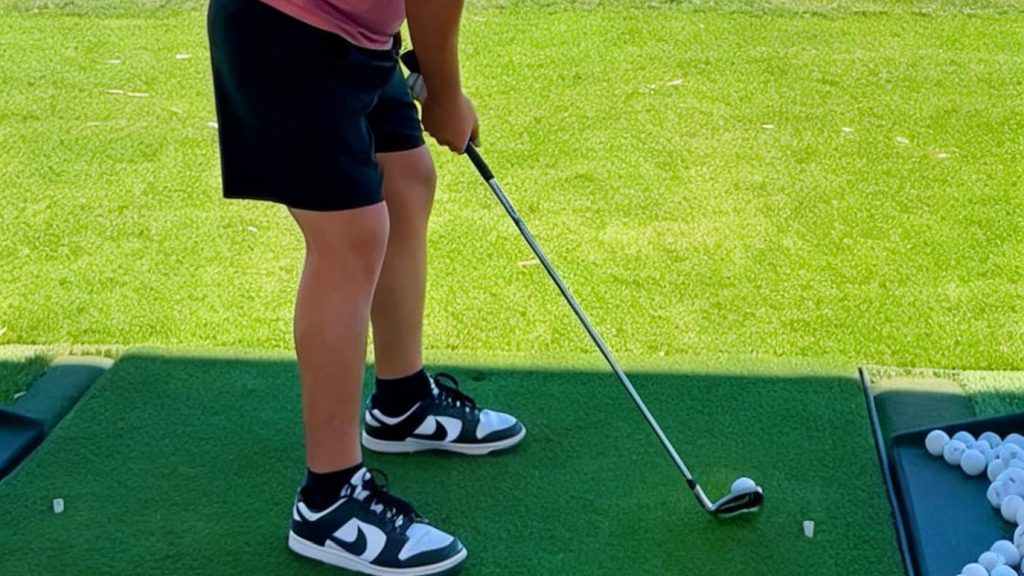
(This is an example of standing too close and not giving yourself room)
Giving yourself slightly more space from the ball often reduces the chance of shanking immediately.
Moving Toward the Ball During the Swing
Another very common cause of shanks is moving toward the ball during the downswing.
This can happen when golfers:
- Shift their weight toward their toes
- Slide their hips toward the ball
- Lose posture during the swing
When this happens, the entire swing moves closer to the ball than it was at address. As a result, the hosel becomes the closest part of the club to the ball and makes contact first.
Maintaining your posture and rotating your body through the shot helps keep the club moving on the correct path.
Swing Path Moving Too Far Outside
A swing path that moves too far outside the target line can also contribute to shanks.
When the club approaches the ball from outside the target line, the hosel can reach the ball before the center of the clubface.
This often happens when golfers start the downswing with their shoulders instead of allowing the lower body to lead the motion.
A smoother downswing that allows the club to approach from a more neutral path can help restore center contact.
Simple Fixes That Help To Stop Shanking Iron Shots
Although shanks feel dramatic, the fixes are often simple adjustments.
Small changes to setup, posture, and contact awareness can make a big difference.
Check Your Distance From the Ball
Start by checking your setup position.
Stand tall and let your arms hang naturally from your shoulders before placing the club behind the ball. If the club feels crowded or your arms feel pulled in toward your body, you may be standing too close.
Creating a little more space between yourself and the ball gives the club more room to return to the ball correctly.
Maintain Your Posture Through the Swing
Maintaining your posture throughout the swing helps keep the club moving on the correct path.
Try to keep your spine angle and chest position relatively consistent from address through impact. Instead of moving toward the ball, allow your body to rotate around your spine.
This rotation helps keep the club on plane and reduces the likelihood of the hosel reaching the ball first.
Focus on Center Contact Instead of Power
Many golfers try to fix shanks by swinging harder or making dramatic swing changes. In reality, the best solution is often simpler.
Slow your swing slightly and focus on striking the center of the clubface. When golfers focus on clean contact rather than power, their swings often become more balanced and controlled.
Solid contact will naturally produce better distance and direction.
Two Drills That Help Stop Shanking the Golf Ball
Practicing with drills that encourage center contact can help eliminate shanks more quickly.
Headcover Outside the Ball Drill
This drill helps train your swing to avoid moving too close to the ball.
Place a headcover or small object just outside the golf ball on the target line.
Your goal is to swing without hitting the headcover. If your swing moves too close to the ball, you will strike the object before reaching the ball.
This drill encourages the club to approach the ball from the correct path and promotes center contact.
Toe Strike Drill
Another useful drill is intentionally setting the ball closer to the toe of the clubface at address.
This encourages the golfer to swing slightly farther away from the hosel and helps re-center contact on the clubface.
Many golfers who struggle with shanks find that practicing toe contact for a few swings helps them regain awareness of the clubface.
Once the center strike returns, normal ball position can be restored.
Why Shanks Sometimes Happen With Wedges
Shanks can also appear during wedge shots, particularly on shorter approach shots around the green.
On these shots golfers often become cautious and attempt to guide the ball toward the target. This can cause subtle movements toward the ball or changes in posture during the swing.
Maintaining a smooth and confident swing with wedges helps prevent these issues and encourages cleaner contact.
Why Driver Shanks Are Rare
Shanks almost always occur with irons rather than drivers.
With a driver, the ball is teed up and the clubhead is much larger. This makes hosel contact far less likely.
When driver shots travel sharply to the right, the issue is usually a slice rather than a true shank.
Clean Contact Comes From Controlling the Clubface
Shanks can feel discouraging, but they rarely mean your entire swing has broken down.
In most cases, shanks happen because the club moved slightly closer to the ball during the swing. By maintaining good posture, setting up the correct distance from the ball, and focusing on center contact, you can quickly return to solid iron shots.
Once the center of the clubface starts striking the ball again, confidence and consistency usually return quickly.
Frequently Asked Questions
Why do I keep shanking my irons?
Shanks usually happen when the club moves closer to the ball during the swing and the hosel strikes the ball instead of the clubface. This can occur when standing too close to the ball, losing posture, or shifting weight toward the toes.
Are shanks caused by swinging too hard?
Swinging too aggressively can contribute to shanks because it often causes golfers to lose balance or move toward the ball during the downswing. Maintaining balance and focusing on center contact is usually more effective than swinging harder.
Can standing too close to the ball cause shanks?
Yes. Standing too close leaves less room for the club to swing naturally and increases the likelihood of the hosel striking the ball. Creating a little more space at address can help prevent this problem.
Do professional golfers ever shank the ball?
Even experienced golfers occasionally shank a shot. The difference is that experienced players typically recognize the cause quickly and make small adjustments to restore center contact.