
If you’ve been playing golf for a little while and feel like nothing is improving
You’re not alone.
Most golfers go through the exact same frustrating phase:
- You chunk one shot
- Slice the next
- Then top it and wonder what just happened
It feels like every swing is a different problem.
The truth is… most common golf swing mistakes come from a small number of root issues.
Once you understand those, everything starts to make more sense.
In this guide, we’re going to break down:
- The most common golf swing mistakes
- Why they happen
- How to fix them step by step
So you can finally start making clean, consistent contact and actually enjoy playing.
Table of Contents
New to Golf? Start Here First
If you’re completely new to golf, some of these mistakes might feel overwhelming and that’s normal.
Before trying to fix things like slicing or chunking, you need a basic understanding of how the swing works. Otherwise, you’re just guessing.
If you’re just getting started, check out our full guide on How to Swing a Golf Club
How to Swing a Golf Club
If you want a full step-by-step path from complete beginner to actually playing on the course, go through the Beginner Golf Guide.
Once you understand the basics, come back here
This page will help you fix the mistakes that show up as you improve.
Why Most Golf Swing Mistakes Keep Happening
One of the biggest reasons golfers stay stuck is because they try to fix what they see instead of what’s actually causing it.
For example:
- You slice → So you aim left
- You chunk → So you try to lift the ball
- You top it → So you swing harder
These are reactions, not solutions.
Most golf swing problems come from a few core areas:
- Setup (grip, stance, posture)
- Clubface control
- Swing path
- Weight shift
And here’s the most important thing to understand:
One mistake can create multiple bad results
That’s why your shots feel inconsistent even though the root problem is the same.
Instead of chasing every bad shot, we’re going to break down the actual causes.
Common Golf Swing Mistakes and How to Fix Them
Chunking the Golf Ball
What it looks like
You hit the ground before the ball, take a big divot, and the ball barely moves.
It feels heavy, slow, and honestly… terrible.
Why it happens
Chunking usually comes from:
- Your weight staying on your back foot
- Trying to “help” the ball into the air
- Your swing bottoming out too early
A lot of players think they need to lift the ball, but irons are designed to hit down on the ball.
How to fix it
- Shift your weight slightly forward before and during the downswing
- Focus on hitting the ball first, then the ground
- Keep your chest moving toward the target instead of falling back
A simple thought that helps:
“Hit the ball, then the turf”
If chunking is your main issue, go deeper into the problem here:
Why You Keep Hitting Chunk/Fat Golf Shots
Slicing the Golf Ball
What it looks like
The ball starts straight (or left) and curves hard to the right. (For right-handed golfers)
This is one of the most common golf swing mistakes
Why it happens
A slice is caused by:
- An open clubface at impact
- A swing path that comes “over the top” (outside to inside)
Most golfers actually combine both without realizing it.
How to fix it
- Strengthen your grip slightly (so the face closes easier)
- Feel like you’re swinging more from inside to out
- Stop trying to swing harder, focus on control
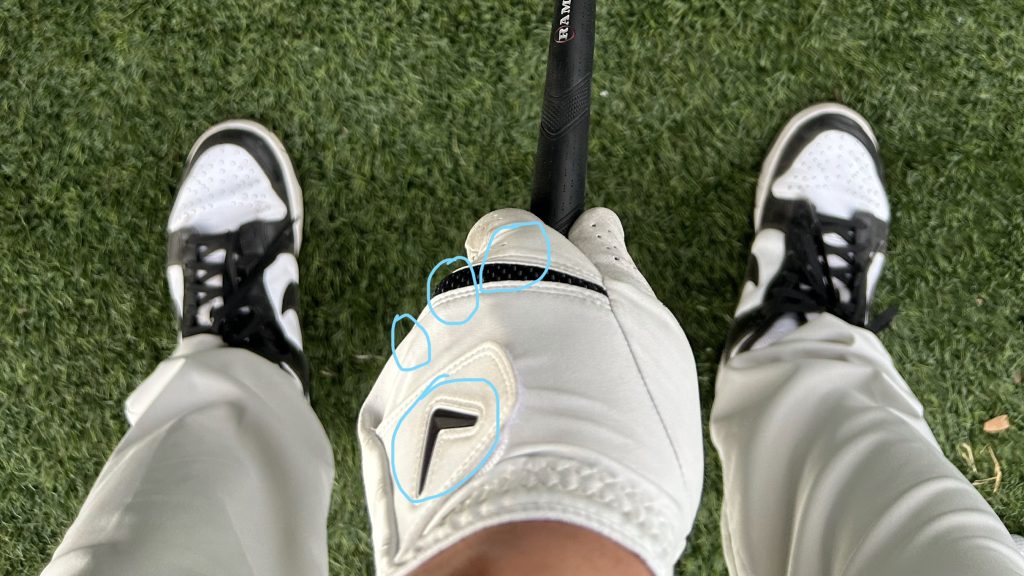
This is a “stronger grip” to help square the club face at impact.
- You’ll see more of your knuckles at address
- Glove mark clearly visible
One simple feel:
“Swing out toward right field” (for right-handed golfers)
If you keep asking “why do I keep slicing the golf ball,” read this:
How To Stop Slicing Your Golf Shots
Topping the Golf Ball
What it looks like
You hit the top half of the ball and it rolls or skips forward.
It’s one of the most frustrating beginner golf swing mistakes.
Why it happens
- Standing up during the swing
- Losing your posture
- Trying to scoop the ball into the air
When your body rises, the club rises too and you catch the top of the ball.
How to fix it
- Maintain your posture throughout the swing
- Keep your chest down through impact
- Trust the loft of the club to lift the ball
Instead of helping the ball up, focus on solid contact.
For drills and a deeper breakdown:
How To Stop Toppping the Golf Ball
Shanking the Golf Ball
What it looks like
The ball shoots almost sideways off the hosel.
If you’ve done this… you know how shocking it feels.
Why it happens
- Standing too close to the ball
- Your hands move away from your body during the swing
- Poor path bringing the hosel into the ball
How to fix it
- Stand slightly farther from the ball
- Keep your arms more connected to your body
- Focus on striking the center of the clubface
Even moving an inch farther from the ball can make a huge difference.
If this is happening to you, read this next:
How To Stop Shanking the Golf Ball
Thin Shots (Hitting It Too Clean)
What it looks like
You hit the ball low and fast with little to no divot.
Sometimes it feels good… but it’s not controlled.
Why it happens
- Ball position too far forward
- Lifting up through impact
- Not hitting down on the ball
How to fix it
- Move the ball slightly back in your stance (for irons)
- Keep your chest down through the shot
- Focus on compressing the ball
Thin shots and topping are closely related, they usually come from similar issues.
Over-the-Top Swing
What it looks like
Your swing comes outside-in, often leading to slices or pulls.
Why it happens
- Starting the downswing with your shoulders
- Poor sequencing (upper body dominates)
How to fix it
- Start your downswing with your lower body
- Feel like the club drops behind you
- Slow your swing down and focus on path
Have your body and hips be the start of your downswing not the other way around
This is one of the main causes of slicing, revisit that section if needed.
Inconsistent Contact
What it looks like
Every shot feels different
No consistency at all.
This is where most golfers get stuck.
Why it happens
- Constantly changing your swing
- Trying too many tips at once
- No consistent setup
How to fix it
- Stick to one swing thought at a time
- Focus on contact over distance
- Build a repeatable setup routine
This is where fundamentals matter most:
How To Swing A Golf Club
The Patterns You Should Notice
At this point, you might notice something:
Most golf swing mistakes are connected.
- Over-the-top swing → Causes slices
- Poor weight shift → Causes chunking and topping
- Bad setup → Affects everything
This is why random fixes don’t work.
Instead, focus on:
- Setup
- Contact
- Clubface control
Fix those, and most of your problems start improving at the same time.
A Simple Plan to Fix Your Golf Swing
If you’re feeling overwhelmed, keep it simple.
Step 1: Fix your setup
Grip, stance, and posture should feel the same every time.
Step 2: Focus on contact
Don’t worry about distance yet
Solid contact comes first.
Step 3: Work on ONE mistake at a time
Jumping between fixes slows everything down.
Step 4: Stay patient and consistent
Golf improvement isn’t instant but it does happen when you stay focused.
If you need a refresher or are new our golf swing article goes in depth on the basic fundamentals:
Final Thoughts
Every golfer goes through this stage.
The difference between staying stuck and improving is understanding what’s actually going wrong.
Now you have a clear path:
- Identify your mistake
- Understand why it’s happening
- Apply the right fix
Stick with it, and you’ll start to see real progress.
Frequently Asked Questions
Why do I keep chunking the golf ball?
Chunking usually happens when your weight stays back and your swing bottoms out before the ball.
What is the most common golf swing mistake?
Slicing is one of the most common mistakes, especially for beginners.
How do I fix golf swing mistakes?
Focus on setup, contact, and fixing one issue at a time instead of everything at once.
Why am I topping the golf ball?
Topping usually happens when you lift up during your swing or try to scoop the ball.