
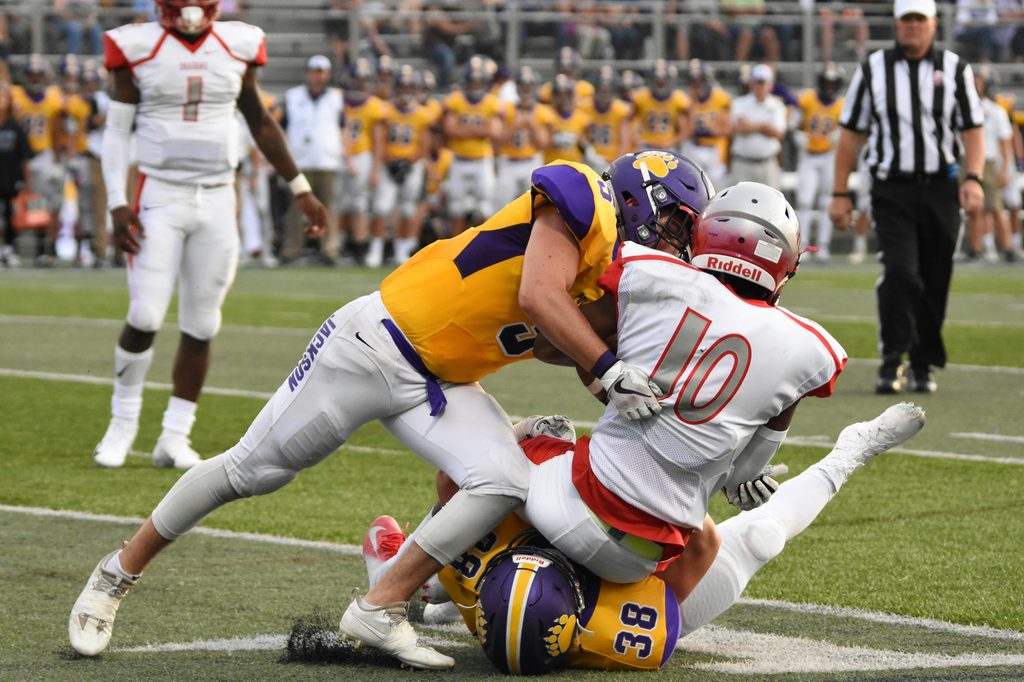
American football can look complicated when you first watch it. Players constantly enter and leave the field, officials stop the action, numbers such as “2nd and 7” appear on the screen, and teams sometimes deliberately kick the ball to their opponent.
The good news is that you do not need to understand every rule to follow a game. Once you understand possession, offense and defense, downs, scoring, and the main reasons a play ends, the action becomes much easier to follow.
This guide to american football rules for beginners explains those essential ideas without turning the game into a rulebook.
What Is the Basic Objective of American Football?
The basic objective is simple: score more points than the opposing team.
Each team tries to move the football toward the opponent’s end zone and score. The other team tries to stop that from happening.
A team can score in several ways, but the most important are touchdowns and field goals. At the end of the game, the team with more points wins.
Most of the game consists of one team controlling the ball while trying to advance it and the other team trying to stop that advance.
Two Teams and Possession
American football is played between two teams. In standard NFL and college football, each team has 11 players on the field during a play, although teams regularly substitute different groups of players depending on the situation.
Only one team has possession of the ball at a time.
Possession simply means that a team controls the football and has the opportunity to run offensive plays.
The team with possession uses its offense. The opposing team uses its defense.
When possession changes, the roles reverse. The team that was playing defense sends its offense onto the field, while the previous offense becomes the defending team.
Understanding which team has possession is one of the easiest ways to make sense of what you are watching.
Offense vs. Defense
The offense’s main job is to move the football down the field and score points.
It can normally advance the ball in two basic ways:
- Running: A player carries the football forward.
- Passing: A player, usually the quarterback, throws a forward pass to an eligible teammate.
The defense is trying to stop the offense from advancing. Defenders can tackle the ball carrier, prevent receivers from catching passes, stop the offense from earning a first down, or take possession of the football themselves.
Every play therefore involves two opposing objectives. The offense wants to gain ground. The defense wants to prevent it.
How the Offense Moves Down the Field
The football field is divided into yards, allowing officials to measure how far the offense advances.
A play begins when the ball is put into play with a snap. The snap usually sends the ball from the center to the quarterback.
The offense then attempts a running or passing play.
Suppose an offense begins at its own 25-yard line. A running back carries the ball for six yards. The next play begins six yards farther down the field.
The offense continues trying to move toward the opponent’s end zone.
However, it does not have an unlimited number of attempts. This is where the down system becomes important.
How the Four Downs Work
The offense normally receives four downs to gain at least 10 yards.
A down is essentially one attempt or play.
When a team begins a new series, you will often hear the situation described as 1st and 10.
That means:
- It is first down.
- The offense needs 10 yards to earn another first down.
Imagine this sequence:
On first down, the offense gains four yards. It is now 2nd and 6 because six more yards are needed.
On second down, it gains three yards. It becomes 3rd and 3.
On third down, the offense gains five yards.
Because the team gained enough total yardage to reach the required 10 yards, it earns a first down and receives a new set of four downs.
This system allows an offense to keep possession for a long drive as long as it continues earning first downs.
If the offense reaches fourth down without gaining the necessary yardage, it must make an important decision.
It can attempt another offensive play, but if it fails to reach the required distance, the opposing team gains possession.
Instead, teams often punt, which means deliberately kicking the ball downfield to give the opponent worse field position. If the team is close enough to the opponent’s goalposts, it may attempt a field goal instead.
The four-down system is one of the most important parts of american football rules for beginners because it explains why teams cannot simply keep running plays until they reach the end zone.
How Scoring Works
There are several ways to score points in American football.
Touchdown: 6 Points
A touchdown is worth six points.
The offense usually scores a touchdown by carrying the ball into the opponent’s end zone or completing a legal pass to a teammate in the end zone.
After scoring a touchdown, the team receives an opportunity to score additional points.
Extra Point or Two-Point Conversion
After a touchdown, a team can attempt a kick for one additional point or run an offensive play for a possible two-point conversion.
The exact placement and procedures can differ between leagues, but the basic idea is the same: a touchdown gives the scoring team an immediate opportunity to add more points.
Field Goal: 3 Points
A field goal is worth three points.
The kicker attempts to send the football between the uprights and above the crossbar of the opponent’s goalposts.
Teams often attempt field goals when they are close enough to have a reasonable chance of making the kick but have not reached the end zone.
Safety: 2 Points
A safety is normally worth two points.
One common way a safety occurs is when the team in possession is responsible for the ball becoming dead in its own end zone under circumstances defined by the rules.
For a beginner, touchdowns, extra points, two-point conversions, field goals, and safeties are the main scoring methods to recognize. The NFL’s current rules list touchdowns as six points, field goals as three, safeties as two, and post-touchdown tries as one or two points depending on the result.
When Possession Changes
Possession can change for several reasons.
One of the most common is a punt. The offense voluntarily kicks the ball to the opposing team, usually on fourth down.
Possession can also change after a score. Following the appropriate restart procedure, the other team gets an opportunity to possess the ball.
Another possibility is a turnover.
An interception happens when a defensive player catches a pass thrown by the offense. The defensive team immediately gains possession and can usually attempt to advance the ball until the play ends.
A fumble happens when a player who has possession loses control of the football before the play is over. If the opposing team legally recovers the loose ball, possession changes.
Finally, possession can change through a turnover on downs. If an offense uses its fourth down and fails to reach the line needed for a new first down, the opposing team receives the ball.
When a Player Goes Out of Bounds
The sidelines mark the boundaries of the playing field.
If a ball carrier goes out of bounds, the play ends. The next play generally begins based on where the ball became out of bounds, subject to the rules governing the particular situation.
You will often see players deliberately run toward the sideline. Sometimes this is simply the safest available route. In other situations, especially late in a game, clock rules can make going out of bounds strategically important.
The important beginner rule is straightforward: once the ball carrier is legally out of bounds, that play is over.
What Is an Incomplete Pass?
Not every forward pass results in a catch.
If a legal forward pass hits the ground before a player completes a legal catch, the pass is incomplete.
An incomplete forward pass ends the play. The offense does not gain yardage from the pass, and the down still counts.
For example, imagine the offense faces 2nd and 8. The quarterback throws a pass that falls untouched to the ground.
The next play will normally be 3rd and 8.
NFL and college rules differ in some details involving completed catches. One familiar example is the boundary requirement: NFL receivers generally must get both feet or another qualifying body part down in bounds while completing the catch process, while NCAA rules generally require only one foot to come down in bounds. This is why a catch that counts in a college game might not count under NFL rules. The broader concept—control of a legal forward pass while satisfying the league’s catch requirements—is the same.
Why Does a Football Play Stop?
A football play does not continue indefinitely. Officials declare the ball dead when something happens that ends the play.
Common examples include:
- The ball carrier is tackled and the play is ruled dead.
- The ball carrier goes out of bounds.
- A forward pass is incomplete.
- A touchdown or certain other scoring plays occur.
- A player with the ball is ruled down under the applicable rules.
- Officials stop play because of a foul, timeout, injury, or another rule-related situation.
After the play ends, officials determine the proper location of the ball and the teams prepare for the next down.
This repeated pattern—line up, run a play, stop, reset—is the basic rhythm of American football.
What Are Penalties?
Players must follow rules governing how they line up, move, block, tackle, pass, and interact with opponents.
When a team breaks one of those rules, officials may call a penalty.
Officials commonly throw a colored flag onto the field to indicate that they have observed a foul.
Penalties can have different consequences. A team might lose yardage, the opposing team might receive yardage, a down might be replayed, or the offense may be awarded a first down in certain situations.
Common penalties beginners will hear include:
- False start: An offensive player illegally moves in a way that simulates the start of the play before the snap.
- Offside: A player is illegally positioned across the relevant line or neutral zone when the ball is snapped, depending on the specific rule.
- Holding: A player illegally restricts an opponent.
- Pass interference: A player illegally interferes with an eligible opponent’s opportunity to catch a forward pass.
- Delay of game: A team fails to put the ball into play within the required time.
- Personal foul: A category covering certain serious illegal actions, often involving player safety.
You do not need to memorize every penalty to understand a game. For beginners, it is enough to recognize that the officials identify the foul, announce the ruling, and enforce the appropriate consequence.
Exact penalty definitions and enforcement can differ between the NFL, college football, high school football, and other competitions.
How a Football Game Is Won
The team with more points at the end of the game wins.
That means everything the offense and defense do ultimately contributes to one objective: producing a higher score than the opponent.
An offense may put together a long drive and score a touchdown. A defense may force a punt or create a turnover. A kicker may convert a field goal. Field position may affect how difficult the next scoring opportunity becomes.
If the score is tied at the end of regulation, the competition’s overtime rules determine what happens next.
This is an important example of why not every football rule is universal. NFL, NCAA, high school, and other organizations can use different overtime formats and procedures. NCAA football, for example, maintains its own playing-rule framework separate from the NFL rulebook.
General Rules vs. League-Specific Rules
Most basic football concepts are shared across major versions of the sport.
The offense tries to advance the ball. The defense tries to stop it. Teams use downs to gain yardage. Touchdowns are worth six points. Possession changes throughout the game.
However, details can vary by league.
The NFL, NCAA college football, high school football, and other competitions maintain separate rulebooks. Differences can involve catches, timing, overtime, kickoffs, penalties, replay procedures, and other situations.
For that reason, a rule explained during an NFL broadcast should not automatically be assumed to work exactly the same way in a college or high school game.
The core concepts in this guide explain how American football works at a beginner level. The more technical details depend on the competition you are watching. The project brief specifically calls for distinguishing general concepts from league-specific rules rather than treating NFL rules as universal.
Frequently Asked Questions
Why Does the Offense Get Four Downs?
The four-down system gives the offense a limited number of opportunities to make progress. The offense normally needs to gain at least 10 yards within those four downs to earn another first down and continue its possession.
What Does 1st and 10 Mean?
“1st and 10” means it is first down and the offense normally needs 10 yards to earn another first down.
If the offense gains seven yards, the next situation would usually be 2nd and 3.
Can the Defense Score?
Yes. A defensive player can score after gaining possession, such as by intercepting a pass and returning it for a touchdown. Defenses can also score a safety.
Why Would a Team Punt the Ball Away?
Teams commonly punt when they reach fourth down and do not want to risk failing to gain the required yardage. A good punt can force the opponent to begin its possession much farther from the scoring end zone.
Is American Football the Same at Every Level?
No. The basic structure is similar, but NFL, college, high school, and other organizations have their own rules. Details involving catches, timing, overtime, penalties, kickoffs, and other situations can differ.
Key Takeaways
The essential american football rules for beginners become much easier to understand once you focus on a few basic ideas.
One team has possession and uses its offense to move the ball toward the opponent’s end zone. The other team uses its defense to stop the advance and try to regain possession.
The offense normally has four downs to gain at least 10 yards. Gaining the required distance earns another first down and a new set of downs.
Touchdowns are worth six points, field goals are worth three, and safeties are worth two. Additional points can be scored after a touchdown.
Possession can change through punts, interceptions, fumble recoveries, failed fourth-down attempts, and normal restarts after scoring.
Plays end for common reasons such as tackles, incomplete passes, a player going out of bounds, scoring, or an official ruling. Penalties can change field position, downs, or other parts of the situation.
Once you can identify who has the ball, what down it is, how many yards are needed, and where each team is trying to score, an American football game becomes much easier to follow.