
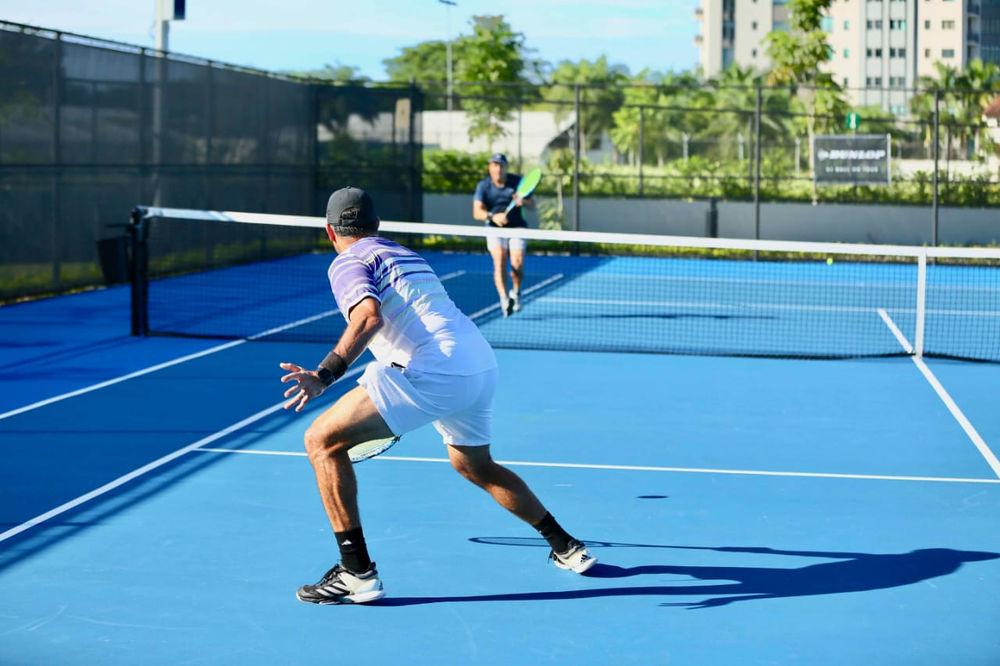
Improving your tennis technique during practice is one thing. Applying those skills consistently during a competitive match is another. Many intermediate players can maintain controlled rallies, hit accurate serves, and execute effective groundstrokes during drills but struggle when points become unpredictable or the score creates pressure.
Practicing intermediate tennis drills that reflect real match situations can help bridge that gap. Rather than concentrating on isolated strokes, match-oriented training combines movement, shot selection, consistency, and decision-making. The goal is to develop skills that remain dependable when your opponent changes direction, increases pace, or forces you into an uncomfortable position.
The following drills are designed for players who already understand tennis fundamentals and want to make their practice sessions more relevant to match performance.
Why Intermediate Players Need Match-Oriented Tennis Drills
Traditional tennis drills often focus on developing one skill at a time.
A player might practice twenty forehands, repeat a serving motion, or rally crosscourt with a partner. These exercises are useful because they allow players to concentrate on specific technical elements.
However, real matches require players to combine multiple skills.
During a point, you must recognize the incoming ball, move into position, select an appropriate response, execute the shot, and recover before your opponent strikes again.
You must repeat this process while adapting to unpredictable ball speed, spin, depth, and direction.
Match-oriented drills help develop these connections.
They can improve your ability to:
- Maintain reliable strokes when rallies become unpredictable.
- Select appropriate shots from different court positions.
- Recover effectively after attacking or defending.
- Execute serves and returns under scoring pressure.
- Recognize opportunities to move forward.
- Make better decisions during longer points.
- Maintain concentration when the outcome matters.
The objective is not to abandon technical practice. Instead, combine focused technical work with exercises that require realistic decisions.
How to Structure Effective Intermediate Tennis Practice
Before starting match-oriented drills, establish a clear objective for each exercise.
Attempting to improve every part of your game simultaneously can make it difficult to evaluate progress.
A useful practice structure includes three stages.
Begin With Controlled Repetition
Start with predictable feeds or cooperative rallies that allow you to perform the intended skill reliably.
For example, before practicing directional changes during a point, establish a comfortable crosscourt rally.
This gives you an opportunity to prepare physically and reinforce your normal stroke mechanics.
Introduce Variation
Once the basic exercise becomes manageable, make the incoming ball less predictable.
Your partner might vary direction, depth, or pace.
This requires you to recognize the ball and adjust your response rather than repeat the same movement automatically.
Add Competitive Scoring
Finally, introduce points, targets, or limited attempts.
Scoring encourages players to make decisions under pressure and maintain concentration.
However, the objective should remain clear.
A drill designed to improve rally patience should not encourage players to attempt unnecessary winners simply because points are being counted.
Drill 1: Controlled Rally to Competitive Point
Objective: Improve the transition from cooperative rallying to competitive play.
Skills developed: Rally consistency, shot selection, and point construction.
Equipment: Tennis court, balls, and a practice partner.
Setup
Both players begin near the baseline.
Choose a manageable rally pace that allows both players to maintain several controlled exchanges.
Instructions
- Begin with a cooperative baseline rally.
- Exchange at least six successful shots between the two players.
- After the sixth shot, either player may begin playing competitively.
- Continue until the point ends.
- Restart the next rally with the same format.
- Play ten to fifteen points.
What to Focus On
During the cooperative phase, concentrate on maintaining useful depth and controlled placement.
When competitive play begins, recognize whether the incoming ball provides an attacking opportunity or requires a neutral response.
Avoid increasing power immediately after the sixth shot unless the situation supports it.
Progression
Increase the minimum rally length or allow players to transition into competitive play after a randomly selected number of shots.
This reduces predictability and encourages greater tactical awareness.
Drill 2: Crosscourt Rally With Directional Change
Objective: Improve the ability to recognize opportunities to change shot direction.
Skills developed: Shot placement, preparation, and tactical decision-making.
Setup
Two players begin a crosscourt rally from opposite baseline positions.
Instructions
- Exchange at least four controlled crosscourt shots.
- After the minimum exchange, either player may redirect a suitable ball down the line.
- Continue the rally competitively after the directional change.
- Return to the crosscourt starting pattern for the next point.
- Complete ten repetitions on each groundstroke side.
What to Focus On
A directional change should result from an appropriate opportunity.
If the incoming ball is deep, fast, or difficult to control, maintaining the crosscourt rally may be the better decision.
The objective is not to change direction as frequently as possible.
It is to recognize when doing so creates an advantage without introducing excessive risk.
Progression
Allow either player to change direction after the initial crosscourt exchanges, making the decision less predictable.
Drill 3: Deep Ball and Short Ball Recognition
Objective: Improve responses to changing shot depth.
Skills developed: Court movement, attacking decisions, and recovery.
Setup
A partner or coach feeds balls from the opposite side of the court.
Alternate between deeper groundstrokes and shorter balls.
Instructions
- Begin near the baseline in a balanced ready position.
- Respond to a deep feed with a controlled groundstroke.
- Recover according to the shot you played.
- Move forward when a shorter ball arrives.
- Decide whether the short ball provides a suitable attacking opportunity.
- Play an appropriate shot and continue the rally.
- Repeat for two sets of eight to ten feeds.
What to Focus On
Recognize the incoming ball before deciding how aggressively to respond.
A short ball is not automatically an easy attacking opportunity.
Consider its height, spin, pace, and your balance.
When the ball is difficult, prioritize a controlled response rather than attempting a low-percentage winner.
Progression
Ask the feeder to vary depth randomly rather than following a predictable alternating sequence.
Drill 4: Serve Plus First Groundstroke
Objective: Improve the transition between serving and playing the next ball.
Skills developed: Serve placement, recovery, and first-groundstroke preparation.
Setup
One player serves while the other returns from a normal receiving position.
Instructions
- Select a broad serve target inside the appropriate service box.
- Deliver the serve using your normal serving motion.
- Recover promptly after serving.
- Allow the returner to direct the return toward a manageable area.
- Execute the first groundstroke after the serve.
- Continue the point for several additional shots.
- Repeat from both the deuce and ad sides.
What to Focus On
Pay attention to how quickly you prepare after serving.
Avoid remaining in your serving follow-through while the return travels toward you.
The first groundstroke should reflect the quality of the return.
A comfortable ball may allow a more purposeful placement, while a difficult return may require a neutral or defensive response.
Progression
Allow the returner to vary placement within realistic limits.
This drill introduces the basic serve-to-rally transition. Advanced serve-plus-one patterns and planned combinations belong in a separate advanced guide.
Drill 5: Return of Serve and Rally Transition
Objective: Improve the ability to start points effectively as the returner.
Skills developed: Return preparation, shot control, and recovery.
Setup
One player serves from the baseline while the other practices returning.
Instructions
- Begin in an appropriate return position.
- React to the serve and attempt a controlled return.
- Aim toward a broad target area.
- Recover after the return.
- Continue the rally for at least three additional shots when possible.
- Repeat for ten serves from each side.
- Switch serving and returning roles.
What to Focus On
Prioritize making a useful return rather than attempting an immediate winner.
An effective return should help you enter the rally from a manageable position.
Observe whether your return leaves you balanced and prepared for the server’s next shot.
Progression
Vary serve placement and pace gradually.
Track both successful returns and your ability to remain competitive during the following exchange.
Drill 6: Defensive Recovery Challenge
Objective: Improve the ability to recover from difficult court positions.
Skills developed: Defensive shot selection, balance, and recovery.
Setup
A feeder directs balls toward wide or deep areas of the court.
Instructions
- Begin in a neutral baseline position.
- React to a difficult feed.
- Move into the best available hitting position.
- Return the ball toward a generous target area.
- Recover toward an appropriate location.
- Prepare for a second feed.
- Continue for six to eight repetitions.
What to Focus On
Do not attempt difficult winners from poor positions.
When stretched wide or pushed backward, select a return that gives you time to recover.
A higher, deeper defensive ball may be appropriate, depending on the incoming shot.
The objective is to regain a manageable position in the rally.
Progression
Introduce a live opponent who plays the next shot instead of using only predictable feeds.
This makes recovery decisions more realistic.
Drill 7: Approach Shot and Net Finish
Objective: Improve the transition from baseline play to net play.
Skills developed: Attacking decisions, approach shots, volleys, and court positioning.
Setup
One player begins near the baseline while a partner feeds shorter balls and controlled passing-shot attempts.
Instructions
- Begin with a neutral groundstroke exchange.
- Recognize a manageable short ball.
- Move forward and hit a controlled approach shot.
- Continue toward a suitable volleying position.
- Perform a split step as the opponent prepares to return.
- Respond with a volley, overhead, or appropriate defensive shot.
- Play the point to completion.
What to Focus On
The approach decision should be based on the quality of the incoming ball.
Do not assume that every short ball requires a net approach.
Maintain balance as you move forward and avoid attempting maximum power on every volley.
Progression
Allow the opponent to choose between a passing shot and lob.
This requires you to recognize different responses rather than anticipate one fixed return.
Drill 8: Two-Point Pressure Challenge
Objective: Develop concentration and shot selection during important points.
Skills developed: Competitive decision-making, serving, returning, and mental composure.
Setup
Play short games in which the score begins at 30–30.
Instructions
- Start each game at 30–30.
- Serve and play points using normal tennis rules.
- Complete the game, including deuce and advantage points when necessary.
- Alternate servers after each game.
- Play six to eight short games.
- Record recurring decisions and errors.
What to Focus On
Maintain your normal preparation routine.
Do not change your technique unnecessarily because the score is close.
Choose shots that match your strengths and the current rally situation.
The goal is to practice making sound decisions when individual points carry greater importance.
Progression
Start games at deuce or use a tiebreak format.
Keep the scoring structure consistent when comparing results over multiple sessions.
Drill 9: Target-Based Practice Match
Objective: Apply purposeful shot placement during competitive points.
Skills developed: Directional control, depth, and tactical awareness.
Setup
Mark two or three broad target zones in the opponent’s court using flat markers.
Choose areas appropriate to your skill level.
Instructions
- Play normal singles points.
- Before each point, identify one placement objective.
- Attempt to reach the chosen zone when a suitable opportunity develops.
- Continue playing the point normally.
- Award one separate practice bonus point for a successful intentional placement.
- Record both the regular score and placement results.
What to Focus On
Avoid forcing a target when the incoming ball makes it unrealistic.
A successful tactical decision may involve choosing a safer area rather than attempting the original target.
The objective is purposeful shot selection, not blind adherence to a predetermined location.
Progression
Remove the visible markers and attempt the same placement objectives during a full practice set.
Drill 10: Match-Play Decision Review
Objective: Improve tactical awareness by evaluating real points.
Skills developed: Point construction, decision-making, and self-assessment.
Setup
Play a practice tiebreak or short set against a partner.
Record the session on video if practical.
Instructions
- Play points using normal scoring.
- Avoid interrupting each rally for technical corrections.
- After a short sequence of points, review two or three important exchanges.
- Identify whether you were attacking, neutral, or defending.
- Evaluate the shot choices made during those exchanges.
- Choose one decision-making issue to address in the next sequence.
- Continue playing and compare the results.
What to Focus On
Evaluate decisions separately from outcomes.
A well-chosen shot can still miss, while a poor decision can occasionally produce a winner.
Look for recurring patterns rather than judging your strategy by individual points.
Progression
Record simple match statistics, including unforced errors, first-serve percentage, and points won after approaching the net.
Use those measurements to identify areas for future practice.
How to Combine These Drills Into a Training Session
Attempting all ten drills in one session is unnecessary.
A more productive approach is to choose several exercises that address your current priorities.
Here is an example 60-minute intermediate tennis session.
| Activity | Duration |
|---|---|
| Dynamic warm-up and controlled rallying | 10 minutes |
| Controlled rally to competitive point | 10 minutes |
| Directional change drill | 10 minutes |
| Serve plus first groundstroke | 10 minutes |
| Return and rally transition | 10 minutes |
| Pressure-point practice | 7 minutes |
| Review and cool-down | 3 minutes |
| Total | 60 minutes |
These durations include brief recovery periods, but the session should be adjusted according to your fitness and playing conditions.
For another session, substitute defensive recovery, net approach, or target-based drills.
This allows you to develop different match skills without making every practice unnecessarily long or complicated.
How to Make Tennis Drills More Match-Realistic
Controlled practice is useful, but players need gradual exposure to unpredictable situations.
Several adjustments can make training more transferable to matches.
Reduce Predictability
Instead of feeding every ball to the same location, introduce variation in direction, depth, and pace.
Begin with manageable changes and increase difficulty gradually.
Include Realistic Recovery
Avoid drills in which players hit one shot and immediately stop.
Whenever possible, include recovery and preparation for the next ball.
Use Normal Scoring
Adding points or short games introduces decision-making pressure.
However, scoring should support the objective rather than encourage unnecessary risk.
Practice From Both Court Sides
Serve, return, and rally from both deuce and ad positions.
This helps develop more balanced skills and prevents overreliance on familiar patterns.
Evaluate Decisions, Not Just Results
A missed shot may result from poor execution rather than incorrect strategy.
Similarly, a successful shot does not always indicate a good tactical decision.
Review both the decision and the execution to identify what needs improvement.
Common Intermediate Tennis Practice Mistakes
Practicing Only Comfortable Shots
Repeating familiar strokes may improve confidence but leave important weaknesses unaddressed.
Correction: Include controlled practice of situations that challenge your current abilities.
Making Every Drill Competitive
Excessive competition can discourage technical adjustments and careful repetition.
Correction: Balance cooperative exercises with scored drills.
Increasing Difficulty Too Quickly
Introducing random feeds, high pace, and scoring pressure simultaneously can overwhelm the intended skill.
Correction: Increase one challenge at a time.
Ignoring Recovery Between Shots
Players may develop good contact during feeds but remain poorly prepared for the next ball.
Correction: Include realistic recovery whenever the drill objective permits.
Measuring Only Winners
The number of winning shots does not provide a complete picture of match performance.
Correction: Track consistency, positioning, errors, and decision-making alongside attacking success.
Repeating Drills Without a Clear Objective
Completing many repetitions does not guarantee meaningful progress.
Correction: Identify what each drill should improve and measure whether performance changes.
How to Track Your Match Performance Improvement
A small set of consistent measurements can help determine whether practice is transferring into competitive play.
Rally Reliability
Track how often you maintain controlled exchanges during practice matches.
Compare similar situations over multiple sessions rather than relying on one result.
Serve and Return Success
Record first-serve percentage, double faults, and successful returns.
These statistics can reveal whether you consistently begin points in a manageable position.
Unforced Errors
Look for repeated errors during neutral situations.
A high number of avoidable mistakes may indicate a need for greater shot control or more suitable tactical choices.
Attacking Opportunities
Track whether you recognize and use manageable short balls effectively.
Do not judge every attacking attempt solely by whether the point ends immediately.
Recovery and Court Coverage
Observe whether you are balanced and prepared when the opponent hits the next shot.
Short practice videos can help identify recurring positioning problems.
Performance Under Pressure
Compare your decisions during cooperative practice with those made during tiebreaks and competitive games.
The goal is to maintain reliable habits despite changes in scoring pressure.
Build a More Effective Intermediate Tennis Practice Routine
The most useful intermediate tennis drills are those that connect individual skills with realistic match situations.
Start with controlled repetition, introduce variations in ball placement and pace, and gradually add competitive scoring. Choose exercises that address specific weaknesses rather than attempting every drill in one session.
A player who struggles to maintain neutral rallies may benefit from controlled rally challenges. Someone who loses points after serving may prioritize the serve-plus-first-groundstroke exercise. A player who hesitates during attacking opportunities can focus on short-ball recognition and net approaches.
By making practice more purposeful and match-oriented, intermediate players can develop greater confidence in their decisions and apply their existing skills more effectively during competitive play.