
Third Shot Drop vs Third Shot Drive: When to Use Each
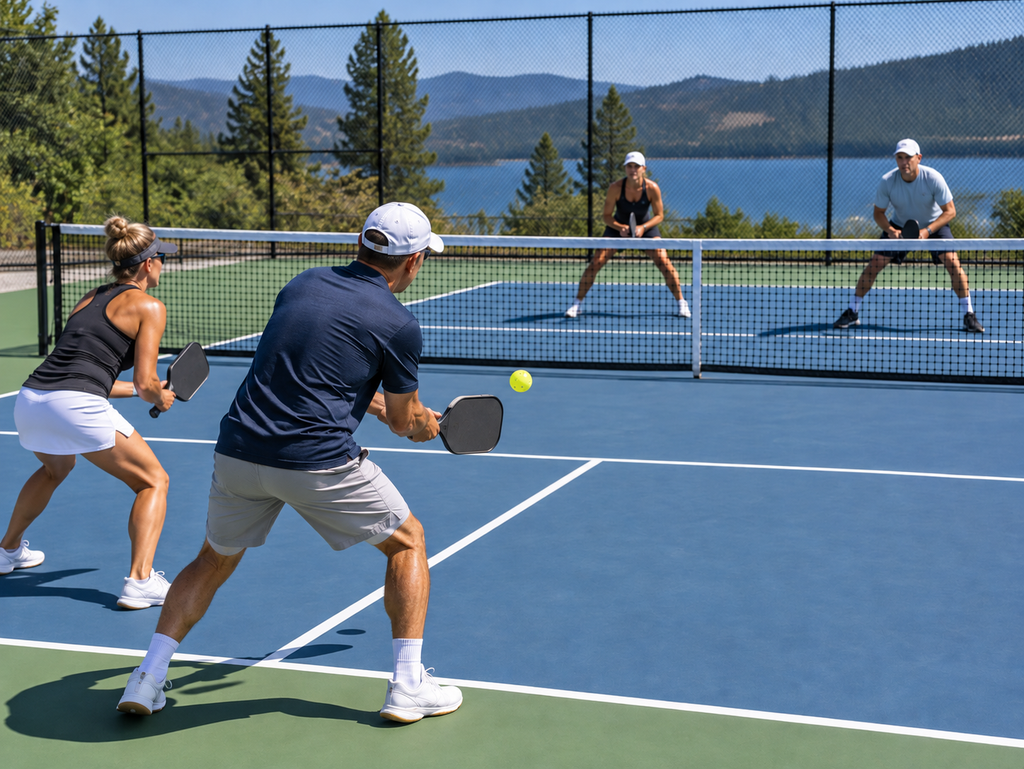
The third shot is one of the most important tactical decisions in competitive pickleball. After your team serves and the receiving team returns the ball, the next shot can determine whether you advance toward the kitchen, remain near the baseline, or find yourself defending against an attack.
The choice between a third shot drop vs third shot drive depends on more than personal preference. The quality of the return, your court position, your opponents’ positioning, and your ability to execute each shot should influence your decision.
Advanced players understand that neither option is automatically better. Both are tools for managing the transition from serving to establishing a competitive position in the rally.
Understand the Purpose of the Third Shot
In pickleball doubles, the serving team usually begins at or near the baseline, while the receiving team has an opportunity to move toward the non-volley zone after the return.
Because of the two-bounce rule, the serve must bounce before the receiving team hits it, and the return must bounce before the serving team hits the third shot.
This creates a positional challenge for the serving team.
The receiving team may already be established at the kitchen line, where it can intercept higher balls and apply pressure through volleys.
The serving team’s third shot therefore serves two important purposes:
- Reduce the receiving team’s positional advantage.
- Create a realistic opportunity to move forward and eventually establish position near the kitchen line.
A drop attempts to achieve these objectives through a soft, descending shot. A drive uses greater pace to challenge opponents’ reactions, positioning, or control.
Understanding these different purposes is the foundation of effective third-shot selection.
What Is a Third Shot Drop?
A third shot drop is a controlled shot played after the return of serve, usually intended to travel over the net and descend into or near the opponent’s non-volley zone.
The objective is to make the ball difficult to attack from above net height.
A successful drop can force opponents to contact the ball at a low position, reducing their ability to hit an aggressive downward volley.
When a Third Shot Drop Works Best
A drop is particularly useful when:
- Both opponents are established at the kitchen line.
- The receiving team’s return is difficult to attack with pace.
- You can contact the ball from a balanced position.
- Your team needs time to advance toward the non-volley zone.
- Your opponents are especially effective at countering hard drives.
A good drop does not need to be an immediate winning shot.
Its value comes from encouraging a less aggressive response and giving your team an opportunity to improve court position.
Understanding the Limitations
A drop that travels too high may give opponents an attackable volley.
A drop that falls short may hit the net.
Even a well-executed drop may be returned aggressively by opponents who can reach forward and contact it early.
For this reason, hitting a drop should not automatically trigger a full sprint toward the kitchen line.
Advance according to the quality of your shot and the response your opponents are likely to produce.
What Is a Third Shot Drive?
A third shot drive is a faster, more forceful shot played after the return of serve.
Instead of relying primarily on a soft landing near the kitchen, a drive attempts to challenge opponents through speed, placement, and sometimes spin.
A successful drive may cause an opponent to block defensively, mishit the ball, or produce a weaker return.
When a Third Shot Drive Works Best
A drive may be appropriate when:
- The return is short and provides a comfortable attacking position.
- The ball arrives at a favorable contact height.
- One or both opponents are still moving toward the kitchen.
- You identify an opponent who struggles to control faster shots.
- You can maintain balance and accuracy while generating pace.
Drives are especially useful when they create a manageable follow-up ball.
An advanced player may use the drive to pressure opponents and then execute a softer fifth shot to advance.
Understanding the Limitations
A drive becomes less effective when opponents are balanced, prepared, and capable of redirecting pace.
Driving from an uncomfortable contact position may also increase errors.
A powerful shot that travels too high can be intercepted and attacked.
The goal is not simply to hit the ball hard. It is to create a tactical advantage without giving opponents an easier opportunity.
Third Shot Drop vs Third Shot Drive: Key Differences
Both shots can contribute to successful third-shot strategy, but they create pressure in different ways.
| Factor | Third Shot Drop | Third Shot Drive |
|---|---|---|
| Primary objective | Reduce opponents’ attacking options | Apply pace and force a difficult response |
| Typical speed | Slow to moderate | Moderate to fast |
| Main target | Low, descending ball near the kitchen | Controlled target that challenges reaction or positioning |
| Advantage | Helps create opportunities to advance | May produce a weak block or pop-up |
| Main risk | Excessive height or insufficient distance | Attackable ball, counterattack, or error |
| Follow-up | Move forward when the response allows | Prepare for a block, counter, or fifth-shot drop |
The best decision depends on the complete situation rather than any single factor.
Evaluate the Depth of the Return
Return depth has a major influence on third-shot execution.
A deep return can keep the serving team behind the baseline, while a shorter return may allow the third-shot player to contact the ball farther forward.
Against Deep Returns
When the return lands near the baseline, consider your balance and contact height before choosing a shot.
A controlled drop may be useful when your opponents are already established at the kitchen and a drive would be easy to intercept.
However, dropping from deep behind the baseline requires precise distance control.
If you are retreating or reaching awkwardly, prioritize a reliable response instead of attempting an unusually difficult attack.
Against Short Returns
A short return often gives the serving team more opportunities.
Moving forward to contact the ball may create a favorable position for a drive, particularly if the ball sits high enough to attack.
A short return does not automatically require a drive, though.
If opponents are waiting comfortably at the kitchen line and your contact height is low, a drop may still be the more effective option.
Assess the Contact Height and Ball Position
One of the most important advanced third-shot decisions involves the ball’s height at contact.
A ball that bounces high enough for a comfortable forward swing may offer a stronger driving opportunity.
A lower ball often requires more lift to clear the net. Attempting to drive it aggressively can send the ball upward into an opponent’s attacking zone.
Look for a Favorable Contact Point
Before choosing a drive, evaluate whether you can:
- Reach the ball without excessive stretching.
- Maintain balance through contact.
- Direct the shot accurately.
- Keep the ball at a height that is difficult to attack.
- Recover quickly for the next exchange.
If these conditions are not present, a controlled drop may provide a higher-percentage option.
Contact height is a useful guide, but it is not an absolute rule. Spin, ball speed, player technique, and opponent positioning also affect the decision.
Read Your Opponents Before Selecting the Shot
Strong third-shot decisions require awareness of where the receiving team is positioned.
When Both Opponents Are at the Kitchen
Two balanced opponents positioned at the non-volley zone line can be difficult to beat with an ordinary drive.
They have less distance to cover when intercepting shots and may use the incoming pace for counterattacks.
A quality drop may force them to contact the ball from a lower position.
However, a well-placed drive toward a difficult defensive target can still be effective, especially when followed by a controlled fifth shot.
When an Opponent Is Still Moving Forward
An opponent who has not reached the kitchen line may be more vulnerable to a well-placed drive.
A controlled shot toward the feet or a difficult contact zone can force an awkward response.
Avoid assuming that a moving opponent is automatically vulnerable. Strong players can stop, establish balance, and counter effectively.
When Opponents Prefer Fast Exchanges
Some opponents are comfortable blocking and countering hard drives.
Against these players, repeated power-based attacks may be inefficient.
Soft drops, placement changes, and controlled transitions can force them to generate their own pace rather than simply redirect yours.
This is why the choice between a third shot drop vs third shot drive must remain adaptable throughout a match.
Use the Third Shot Drive to Set Up a Fifth Shot Drop
A third shot drive does not have to be an attempt to end the point.
One advanced pattern involves using the drive to create a weaker fourth shot and then following with a controlled fifth shot drop.
The sequence can develop as follows:
- Your team serves.
- The receiving team returns the ball.
- You deliver a controlled third shot drive toward a difficult target.
- An opponent blocks the ball back.
- You play a softer fifth shot into the kitchen if the incoming ball allows it.
This pattern can be effective when opponents struggle to produce an aggressive response to a well-directed drive.
However, the fourth shot may come back fast, deep, or angled.
In those situations, the fifth shot should match the actual ball received rather than follow a predetermined plan.
The third-shot drive creates a possible opening. It does not guarantee one.
Make Smarter Transition Decisions
Regardless of whether you choose a drop or drive, the shot should support your movement toward a stronger court position.
A common advanced-play mistake is treating the third shot and subsequent movement as separate decisions.
They are connected.
After a Third Shot Drop
If the drop is low and likely to limit an opponent’s attacking options, move forward while maintaining balance.
If the drop sits high, prepare to defend instead of rushing into a vulnerable position.
Use a split step or establish a balanced stance as your opponent is preparing to make contact.
After a Third Shot Drive
Remain prepared for a quick fourth-shot response.
Depending on its quality, you may receive a weak block, a fast counter, or a ball directed toward your feet.
Do not advance blindly.
Read the opponent’s response, control the next shot, and move forward when the rally provides a suitable opportunity.
In competitive pickleball, the transition to the kitchen may require several controlled shots rather than one immediate advance.
Common Third-Shot Selection Mistakes
Even experienced players can become predictable or overly aggressive with their third-shot choices.
Always Using the Same Shot
Players who always drop or always drive become easier to anticipate.
A reliable preferred shot is useful, but maintaining an alternative allows you to respond to different returns and opponents.
Driving Low Balls Too Aggressively
Trying to generate excessive speed from a low contact point can produce errors or attackable balls.
Use controlled pace or a drop when the ball does not provide an effective attacking opportunity.
Hitting Drops Without Considering Opponent Position
A technically accurate drop may still be ineffective when an opponent is positioned to intercept it comfortably.
Consider court geometry and opponent reach rather than focusing only on where the ball lands.
Moving Forward Before Evaluating the Shot
Rushing toward the kitchen after an elevated drop or an easily countered drive can leave you vulnerable.
Movement should reflect the quality of your shot and the opponent’s likely response.
Ignoring the Next Shot
Third-shot planning should include preparation for the fourth and fifth shots.
An impressive drive provides little value if you are unprepared for the return.
Advanced Third-Shot Practice Drills
Structured drills can help players develop confidence in choosing between drops and drives under realistic conditions.
Drill 1: Drop and Drive Decision Training
Setup: Position one player near the baseline and another on the opposite side of the court. The feeding player alternates between deep and shorter returns.
Execution:
- Receive a fed ball after allowing it to bounce.
- Evaluate the contact height and court position.
- Choose a drop or drive.
- Execute the shot toward a suitable target.
- Recover into position for the next ball.
Goal: Improve decision-making rather than simply practicing one shot repeatedly.
Drill 2: Drive and Fifth-Shot Drop
Setup: Two players or two doubles teams begin with the serving team near the baseline and the receiving team near the kitchen.
Execution:
- Feed a playable return toward the baseline.
- The third-shot player hits a controlled drive.
- The receiving player blocks the ball.
- The serving player attempts a fifth-shot drop when appropriate.
- Continue the rally toward a normal point.
Goal: Develop the transition from controlled offensive pressure to a softer advancing shot.
Drill 3: Deep Return Adjustment
Setup: The receiving player alternates deep returns directed toward different parts of the baseline.
Execution:
- The serving player tracks the incoming return.
- Establish balance before contact.
- Select the third shot according to the actual ball.
- Recover and prepare for the fourth shot.
Goal: Improve third-shot execution under difficult return conditions.
Drill 4: Competitive Third-Shot Scenarios
Setup: Play doubles points beginning with a serve and return.
Before each point, assign the serving team a tactical objective, such as creating an opportunity to advance without leaving an easy attacking ball.
After the point, evaluate:
- Was the third shot appropriate for the return?
- Did the chosen target challenge the opponents?
- Was the serving team prepared for the fourth shot?
- Did the third shot improve or weaken the team’s court position?
Goal: Build tactical awareness in realistic match conditions.
Develop a Reliable Third-Shot Decision Process
Rather than relying on a fixed rule, advanced players can use a brief decision sequence.
First, evaluate the incoming return. Is it deep, short, high, low, or difficult to reach?
Next, assess your own position. Can you contact the ball comfortably and recover for the next shot?
Then, observe your opponents. Are they established at the kitchen, still moving, or leaving a vulnerable target?
Finally, choose the shot that offers the strongest combination of accuracy, pressure, and court-position improvement.
Over time, repeated practice makes these evaluations faster and more intuitive.
The objective is not to develop a perfect answer for every third shot. It is to improve the quality of your decisions across many different situations.
Final Thoughts
The third shot drop vs third shot drive decision is an essential part of advanced pickleball strategy.
A drop can reduce your opponents’ attacking opportunities and create a path toward the kitchen. A drive can challenge their positioning, force a difficult response, and potentially set up a more favorable fifth shot.
Neither shot should be treated as the automatic choice.
Successful advanced players evaluate return depth, contact height, opponent positioning, and the likely next exchange before committing.
By practicing both options and learning when each provides a tactical advantage, you can develop a more adaptable and effective third-shot game.