
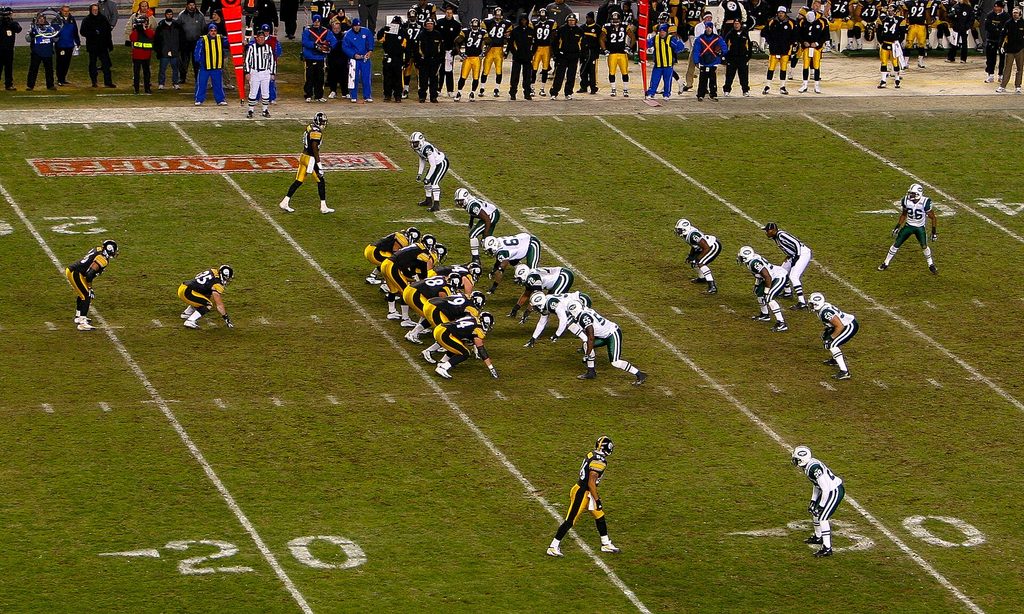
Before an American football play begins, the players do not simply stand wherever they want. Each team arranges its players in a particular pattern called a formation.
Understanding formations can make football much easier to follow. You can begin to recognize where the quarterback is standing, how many running backs or receivers are on the field, and whether the defense appears prepared for a run or a pass.
This guide to american football formations for beginners explains the most common offensive and defensive alignments without getting buried in advanced tactics.
What Is a Formation in American Football?
A formation is the way a team’s players are positioned before the ball is snapped.
The offense chooses where to place its quarterback, running backs, wide receivers, tight ends, and offensive linemen. The defense responds by positioning defensive linemen, linebackers, cornerbacks, and safeties.
A formation does not tell you exactly what will happen after the snap. The same formation can be used for several different plays.
For example, an offense may line up with three wide receivers and then:
- Throw a short pass.
- Throw a deep pass.
- Hand the ball to a running back.
- Have the quarterback run.
- Use a fake handoff before passing.
Formations therefore give clues about what a team may do, but they do not guarantee the play.
Why Football Formations Matter
Football teams change formations because every play presents a different problem.
An offense might want to create running space, protect the quarterback, spread defenders across the field, or place a particular receiver in a favorable position.
The defense is trying to respond. It may put more players near the line to stop a run, add defensive backs when expecting a pass, or disguise what its defenders intend to do.
That is why the two teams may look very different from one play to the next even though each side normally has 11 players on the field.
For beginners, the easiest way to understand formations is not to memorize dozens of names. Instead, start by noticing where different groups of players are standing.
Start With the Line of Scrimmage
Most formations are built around the line of scrimmage.
The line of scrimmage is the location where the ball is placed before a play. The offense and defense line up on opposite sides of it and cannot simply cross into the other team’s side before the snap.
On television, broadcasters often add a colored line to the screen to make the line of scrimmage easier to see. That graphic is not actually painted on the field.
Once you identify the line of scrimmage, formations become easier to understand because you can see which players are close to the ball, which are behind it, and which are spread toward the sidelines.
Understanding Offensive Alignment
Every offensive formation has the same basic purpose: arrange the players so the offense can run its chosen play legally and effectively.
The offensive line forms the center of most formations. Five offensive linemen are usually grouped together:
- Left tackle
- Left guard
- Center
- Right guard
- Right tackle
The center normally begins the play by snapping the ball to the quarterback.
Other players are arranged around this group. These can include running backs, wide receivers, and tight ends.
One of the simplest ways to identify an offensive formation is to look first at the quarterback.
Basic Under-Center Formation
When the quarterback lines up immediately behind the center and receives the ball directly from the center’s hands, the quarterback is under center.
This is one of football’s traditional offensive alignments.
A basic under-center formation might have:
- Five offensive linemen.
- A quarterback directly behind the center.
- One or more running backs behind the quarterback.
- Wide receivers positioned farther outside.
- One or more tight ends positioned near the offensive line.
Because the quarterback is close to the running backs, an under-center alignment works naturally with handoffs. However, teams can also pass from under center.
Seeing the quarterback under center does not automatically mean the offense will run the ball.
Shotgun Formation
The shotgun formation is one of the easiest football formations for beginners to recognize.
Instead of standing directly behind the center, the quarterback lines up several yards back. The center snaps the football backward through the air to the quarterback.
This gives the quarterback immediate separation from the line of scrimmage.
A running back may stand beside the quarterback, slightly behind the quarterback, or occasionally elsewhere in the formation. Receivers can be arranged in many different ways.
Shotgun formations are commonly associated with passing because the quarterback already starts farther behind the line. However, teams also run the football frequently from shotgun.
The important beginner distinction is simple:
Under center: The quarterback stands immediately behind the center.
Shotgun: The quarterback stands several yards behind the center.
NFL rules recognize quarterbacks lining up either under center or in shotgun formations.
Single-Back Formations
A single-back formation uses one running back in the offensive backfield rather than two.
The quarterback can be under center or in shotgun depending on the formation.
Using only one running back gives the offense more flexibility to place additional players elsewhere. For example, it might use another wide receiver or tight end instead of a second running back.
A basic single-back formation could include:
- One quarterback.
- One running back.
- Five offensive linemen.
- One tight end.
- Three wide receivers.
The exact arrangement can vary considerably.
Single-back formations can support both running and passing plays, which is another reminder that you cannot identify a play simply by looking at the formation.
Multiple-Receiver Formations
Sometimes an offense spreads several wide receivers across the field.
You might see three, four, or occasionally even five players positioned as receiving threats away from the main offensive line.
These are often called spread formations in a general sense because the offense spreads its players across more of the field.
A formation with several wide receivers can force the defense to cover more space. It may also create room underneath or between defenders.
Multiple-receiver formations are commonly seen in obvious passing situations, such as third-and-long. However, offenses can still run the football from spread-out alignments.
When watching, simply count how many offensive players are positioned away from the main line. That gives you an immediate clue about how spread out the formation is.
Where Tight Ends Fit Into Formations
A tight end creates additional variety because the position combines receiving and blocking responsibilities.
A tight end often lines up next to an offensive tackle, making the offensive line appear wider on that side.
But tight ends can also line up slightly behind the line or farther away from the formation.
An offense may use:
- One tight end.
- Two tight ends.
- No tight ends.
- Occasionally several tight ends in specialized situations.
Adding tight ends can give an offense larger bodies for blocking while still providing eligible receivers for passing plays.
For a beginner, simply noticing whether one or more tight ends are positioned near the tackles can reveal a lot about the shape of the formation.
Understanding Defensive Formations
Defensive formations work differently because the defense does not control the snap.
Instead, defenders arrange themselves based on the offensive personnel, the game situation, and what they believe the offense might do.
The three main groups to watch are:
- Defensive linemen, who normally line up closest to the line of scrimmage.
- Linebackers, who commonly position themselves behind the defensive line.
- Defensive backs, who include cornerbacks and safeties and are heavily involved in defending passes.
Defensive formations can become extremely complicated, but beginners do not need to identify every variation.
Start by looking at how many defenders are near the line and how many are farther back.
Basic Defensive Fronts
The group of defenders positioned closest to the offensive line is often called the defensive front.
Two traditional examples are the 4-3 defense and 3-4 defense.
4-3 Defense
The numbers describe the basic arrangement of defensive linemen and linebackers.
A traditional 4-3 uses:
- Four defensive linemen.
- Three linebackers.
Defensive backs make up much of the remaining personnel.
3-4 Defense
A traditional 3-4 uses:
- Three defensive linemen.
- Four linebackers.
The alignment looks different, but both systems can defend running and passing plays.
Modern defenses frequently adjust these structures, so do not expect every defensive formation to look like a perfect textbook 4-3 or 3-4.
For beginners, these names are useful mainly because they demonstrate how defensive formations are often described by counting groups of players.
Linebackers and Defensive Backs
Linebackers typically operate between the defensive line and the deeper defensive backs.
Their responsibilities can include stopping runners, covering receivers, and rushing the quarterback.
Defensive backs usually include cornerbacks and safeties. Cornerbacks commonly line up near wide receivers, while safeties frequently begin farther from the line of scrimmage.
When an offense places more receivers on the field, the defense often responds by using additional defensive backs.
One common example is the nickel defense, which uses five defensive backs rather than the traditional four found in many base defensive formations.
This gives the defense another player whose skill set is suited to covering receivers.
Personnel Changes Affect the Formation
A major reason formations keep changing is that teams can substitute players between plays when the rules and game situation allow it.
Suppose an offense replaces a running back with another wide receiver.
The defense may respond by removing a linebacker and adding a defensive back.
On the next play, the offense might bring in an additional tight end. The defense could respond with a bigger alignment designed to handle the possibility of a running play.
These changes are called personnel changes.
Personnel describes which types of players are on the field. Formation describes where those players line up.
The two ideas are closely related, but they are not exactly the same.
Why Formations Change From Play to Play
Teams rarely stay in one formation for an entire game because different situations require different approaches.
Formation choices can be influenced by:
- The down.
- The yards needed for a first down.
- Field position.
- The score.
- Time remaining.
- The offensive players available.
- The defensive players on the field.
- What the opponent has done on previous plays.
For example, on third-and-12, an offense may spread several receivers across the field because it needs a significant gain.
On third-and-1, the same team may place more large players near the line of scrimmage because only one yard is needed.
Neither alignment guarantees what the offense will do, but the formations reflect the different situations.
A Simple Way to Read a Formation
You do not need to memorize a playbook to start recognizing american football formations for beginners.
Before the snap, look at the offense and ask four questions:
- Where is the quarterback? Is the quarterback under center or in shotgun?
- How many running backs are behind the line? One, two, or none?
- How many players are spread wide? More wide receivers usually make the formation look more open.
- Where are the tight ends? They may be beside the offensive line or moved elsewhere.
Then look at the defense:
Notice how many defenders are crowded near the line of scrimmage and how many are positioned farther back.
With practice, you will start recognizing the basic shape of a play before the ball is even snapped.
Simple Formation Example
Imagine the offense lines up with the quarterback in shotgun.
A running back stands beside the quarterback. Three wide receivers are spread across the field, and a tight end is positioned next to an offensive tackle.
The defense sees those three receivers and places several defensive backs in coverage.
The formation suggests that a pass is possible, but the offense could still hand the ball to the running back.
On the following play, the quarterback moves under center and another tight end enters the game.
Now the formation looks heavier near the line of scrimmage.
The defense may move additional players closer to the ball in response.
That constant adjustment between offense and defense is one reason formations are such an important part of football.
Frequently Asked Questions
What Is the Most Common Formation in American Football?
There is no single formation used for every situation. Teams regularly move between under-center, shotgun, single-back, multiple-receiver, and many other variations depending on their personnel and the situation.
Does a Formation Tell You What Play Is Coming?
No. Formations can provide clues, but teams deliberately run different plays from similar formations so opponents cannot easily predict what will happen.
What Is the Difference Between Shotgun and Under Center?
In an under-center formation, the quarterback lines up directly behind the center. In shotgun, the quarterback stands several yards behind the center and receives a longer snap.
What Do 4-3 and 3-4 Mean on Defense?
A traditional 4-3 describes four defensive linemen and three linebackers. A traditional 3-4 describes three defensive linemen and four linebackers.
Why Does a Defense Add More Defensive Backs?
Defenses often add defensive backs when they expect the offense to emphasize passing or use several receivers. This gives the defense more players suited to covering receiving threats.
Key Takeaways
American football formations for beginners become much easier to understand once you stop trying to memorize every formation name and instead watch how the major position groups are arranged.
A formation is simply the way players line up before the snap. On offense, watch the quarterback’s position, the number of running backs, the placement of tight ends, and how many receivers are spread across the field.
On defense, notice the defensive front, the linebackers, and the number of defensive backs.
Under-center, shotgun, single-back, multiple-receiver, 4-3, and 3-4 formations are useful starting points. As you watch more football, these basic shapes will become easier to recognize, making it much clearer why players line up differently from one play to the next.