
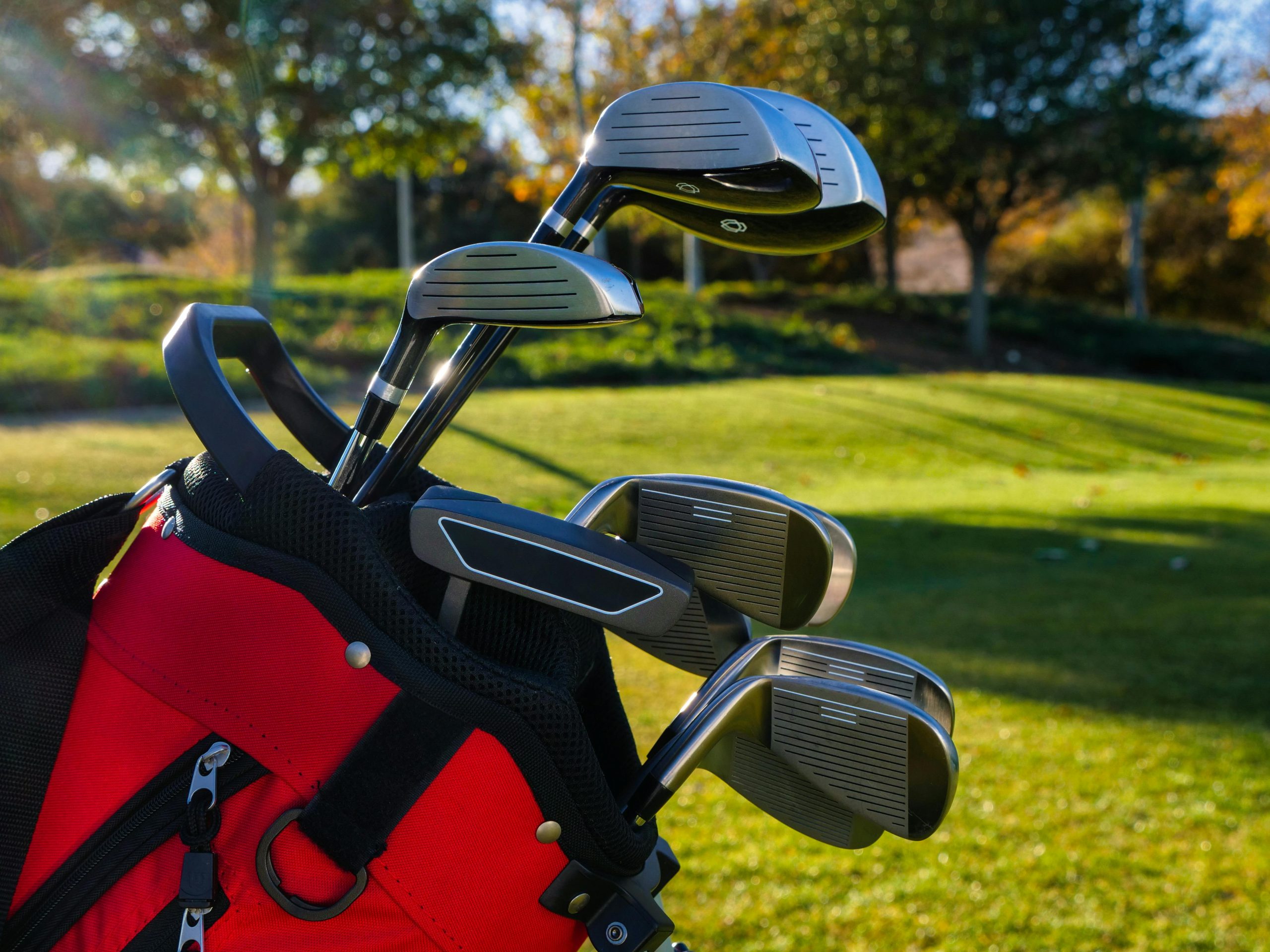
Golf Clubs Explained For Beginners
Golf Gear, Without the Guesswork
This guide breaks down golf clubs explained in simple terms so you understand what each club does and when to use it.
Jump to What You Need:
New To Golf and Want A Beginner Guide To Golf? See our Golf Beginner Guide
New Page
Want To See What Gear Is Right For YOU? Check out our in-depth explanations
New Page
Everything Makes Sense Now. Time To Build Your Bag
New Page
If you’re just looking for consistency in parts of your golf game see our How to Be Consistent in Golf section
If you want to see our full golf articles browse our full Golf Article Library Our Featured Articles include like How to Swing a Golf Club, How to Hit Irons Consistently, How to Stop Chunking a Golf Ball, and How to Stop Slicing the Golf Ball
Some links on this page are affiliate links. As an Amazon Associate, I earn from qualifying purchases. This comes at no additional cost to you and helps support the site.
Golf Clubs Explained
If you’re new to golf, this is the most important thing to know:
You do not need a full set of clubs to start playing.
In fact, starting with fewer clubs often helps you learn faster and feel more confident.
Here’s a simple, beginner-friendly setup that covers almost every situation you’ll face early on.
You can comfortably learn golf with 6 clubs.
That’s it.
Driver or Hybrid (Your Choice)
This is where beginners usually overthink things.
You have two solid options:
Driver
- Longest club
- Fun to hit
- Harder to control early on
- Hit up on the ball
Hybrid
- Swings more like an iron
- Easier to make contact with
- More forgiving than a driver
Many beginners prefer hybrids early because they feel simpler and more consistent. Either option is fine choose what feels comfortable.
8-Iron and 7-Iron
These are workhorse beginner clubs.
Why they’re great:
- Easier to hit than long irons (3-5 irons)
- Good balance of distance and control
- Useful both on the course and at the range
If you only practiced with one iron early on, an 8 or 7 would be a great choice.
Pitching Wedge
Your pitching wedge bridges the gap between short shots and full swings.
It’s ideal for:
- Approach shots into the green
- Controlled swings from the fairway
- Learning consistent contact
Many beginners hit their pitching wedge better than longer clubs and that’s normal.
When I first started my Pitch was my favorite club in the bag. If you can get comfortable with one club, start here.
Wedge (Around 56°)
This is one of the most useful clubs in the bag.
A wedge is great for:
- Short shots around the green
- Learning feel and control
- Getting the ball in the air without swinging hard
A 56° wedge is forgiving and versatile, which makes it a great first choice.
Putter
The putter is used on the green to roll the ball into the hole.
It’s the only club you’ll use on every single hole.
Unlike other clubs, the putter is not designed to lift the ball into the air. Its purpose is control helping you aim and roll the ball smoothly along the ground.
You don’t need anything complicated here. A basic putter that feels comfortable at address and helps you line up your putts is enough to start.
Most beginners are better off choosing a putter that:
- Feels stable
- Helps with alignment
- Inspires confidence when standing over the ball
You don’t need to worry about specialized balance types or advanced designs at the beginning. Comfort and consistency matter most.
If you can aim it and roll it consistently, it’s doing its job.
Why This Setup Works
This small group of clubs:
- Covers short, medium, and long shots
- Limits decision-making
- Encourages repeatable swings
- Keeps costs down
You’ll learn more using these clubs repeatedly than switching between 14 different options.
What You Don’t Need Yet
You can skip:
- Long irons
- Multiple wedges
- Specialty clubs
- Expensive “distance” drivers
None of those help until you’re making consistent contact.
Golf is hard enough without complicating your bag.
If you have:
- One club to advance the ball off the tee
- A couple clubs for mid-range swings
- One club for short shots
- One club putting the ball
You’re fully equipped to learn the game.
Everything else can come later.
Typical Distances (Just for Reference)
Every golfer hits the ball different distances especially beginners.
These numbers are not goals and not expectations.
They’re just here to give you a general sense of what each club is used for.
| Club | Typical Beginner Distance |
|---|---|
| Wedge (56°) | ~30–80 yards |
| Pitching Wedge | ~60–100 yards |
| 8-Iron | ~90–130 yards |
| 7-Iron | ~100–150 yards |
| Hybrid | ~130–180 yards |
| Driver | ~150–220 yards |
If your distances are shorter (or longer), that’s completely normal.
The Most Important Distance Is Yours
This is where the driving range comes in.
At the range:
- Hit the same club a few times
- Notice roughly how far it goes
- Don’t worry about exact numbers
Over time, you’ll naturally learn:
“This club goes about this far for me.”
That’s more valuable than any chart.
One Simple Rule That Helps Early On
When choosing a club:
- Don’t think “perfect distance”
- Think “comfortable swing”
A smooth swing with the “wrong” club beats a forced swing every time.
Basic Gear That Makes a Big Difference
You don’t need much to start but a few small items can make the experience way more comfortable (and less frustrating).
Golf Glove (Highly Recommended)
You can play without a glove… but most beginners regret it.
A glove helps:
- Prevent blisters
- Improve grip
- Reduce hand fatigue
Most golfers wear a glove on their lead hand
(left hand for right-handed golfers, right hand for lefties).
If you’re hitting a lot of balls, especially at the range, a glove can save your hands.
When I started I went to the range and hit two large buckets (90 balls each) in a day and had blisters for days.
Tees (Simple, But Useful)
Tees are cheap, easy, and they help hit better shots off the tee box.
You’ll usually want two types:
Short Tees
- For irons and hybrids
Long Tees
- Keep the ball just above the ground
- For drivers
- Let you tee the ball higher for easier contact
Wood or plastic both work fine. It’s just about finding the ones you like.
Golf Balls (Start Cheap)
There are generally two types of golf balls you’ll hear about:
Distance / durable golf balls
- Cheaper
- Firmer
- More forgiving
- Best for beginners
Feel / spin golf balls
Early on, expensive balls won’t help and losing them hurts way more than it should.
Two Beginner-Friendly Golf Balls to Start With
These are solid, forgiving options that don’t punish beginners for learning:
Wilson Duo
- Very soft feel
- Forgiving
- Affordable
- Great for slower swing speeds
Callaway Supersoft
- Easy to compress
- Consistent
- Widely available
- Beginner-friendly without feeling “cheap”
Both are perfect while you’re learning contact.
When to Upgrade Golf Balls Later
Once you:
- Stop losing multiple balls per round
- Start making consistent contact
- Care about control around the green
That’s when “feel” balls actually make sense.
Until then, cheap balls = smart golf.
Want More Information on Gloves, Tees, and Golf Balls ? We give forgiving, precision, and balances examples on our next page
Starter Accessories
If you’re just getting started, these are a few inexpensive items that make learning golf easier without overthinking it.
Short Golf Tees
For Irons, Hybrids, and Woods off the tee box players usually use small tees like these to get the ball slightly off the ground and have better contact
Tall Golf Tees
For drivers off the tee box players generall use taller tees for improved contact.
I personally like using PTS wooden tees. They’re affordable, durable, and one less thing I need to worry about when you’re learning
Golf Balls
You don’t need “special balls” you need forgiving, durable, and affordable balls and here are the ones we personally recommend and feel they help the most.
- Callaway Supersoft (Personal favorite)
- Titleist TruFeel
- Wilson Duo Soft
These are the balls we would recommend starting with before upgrading
Golf Gloves
As long as they protect your hands and improve your grip they have done their job, no need for fancy gloves. Here are the ones we can personally recommend.
IMPORTANT: Remember the gloves goes on your lead hand (left hand if your right handed and right hand if you’re a lefty)
- FootJoy WeatherSof (Personal Favorite)
- TaylorMade Stratus Tech
- Callaway Dawn Patrol
Here are these basic gloves so you can start playing without regret
We intentionally kept this list short. You don’t need 20 accessories to start playing just the basics that actually help.
The Big Picture
These items aren’t about performance they’re about comfort and confidence.
- A glove protects your hands
- Tees make setup easier
- Cheap balls remove stress
The less you worry about gear, the more you can focus on learning the game and having fun!
Once you’re comfortable with these basics, expanding your bag starts to make more sense. Below, we break down each club type in more detail so you can explore at your own pace.
What Is the Easiest Golf Club to Hit for Beginners?
The easiest golf club for most beginners to hit is typically a pitching wedge, 7 or 8 iron or a hybrid club. These clubs offer a balance of control, forgiveness, and launch height, making them much more beginner-friendly than long irons or drivers.
A 7 iron is often recommended because it has enough loft to get the ball into the air easily, while still being short enough to control. It helps new golfers develop consistent contact and build confidence without needing perfect swing speed.
Hybrids are also extremely beginner-friendly. They are designed to replace harder-to-hit long irons and feature a wider sole and lower center of gravity. This makes it easier to lift the ball off the ground, even on less-than-perfect swings.
While drivers can be exciting to use, they are usually harder for beginners to control at first. Starting with a 7 iron or hybrid allows new players to develop solid fundamentals before moving into longer clubs.
7 Iron vs Hybrid: Which Should You Start With?
If you are deciding between a 7 iron and a hybrid, the best choice depends on what you struggle with most as a beginner.
An iron is usually better for learning solid fundamentals. It helps you develop consistent ball contact, proper swing path, and control. Because it is shorter and more balanced, many beginners find it easier to build confidence with an iron first.
A hybrid, on the other hand, is often more forgiving. Its design makes it easier to lift the ball into the air, especially if you tend to hit behind the ball or struggle with long irons. Hybrids require slightly less precision to get decent results.
If your goal is to build technique and control, start with an iron. If your goal is to simply get the ball airborne more consistently and enjoy early success, a hybrid may feel easier at first.
Many beginners benefit from practicing with both. Learning to strike an iron well builds long-term skill, while using a hybrid can help make the game feel less frustrating in the early stages.
If you’re unsure how to properly swing either club, check out our guide on how to swing a golf club to build consistent contact from the start.
→ How to Swing a Golf Club (Step-by-Step Guide)
Then come back to learn the fundamentals of golf
Drivers
The driver is designed to do one thing extremely well:
produce maximum distance from a tee.
Everything about it – the length, loft, shaft, and head size – is optimized for that purpose.
That’s also why it can be the hardest club to control.
When a Driver Makes Sense
Drivers work best when:
- The ball is teed up
- There’s space to miss
- Distance actually matters
On tight holes or when accuracy is the priority, other clubs often perform better even for good players.
Why Drivers Behave Differently Than Irons
Three things make drivers unique:
- Length – Longer shaft = more speed, less control
- Low loft – Requires clean contact to launch properly
- Head design – Large face magnifies small swing flaws
This is why a swing that works fine with irons can struggle with a driver.
Shaft Flex (More Than a Label)
Driver shafts come in different flexes:
- Senior / A
- Regular
- Stiff
- Extra Stiff
Flex affects:
- Timing
- Face control
- Launch
- Consistency
A shaft that’s too stiff can:
- Feel harsh
- Launch the ball low
- Cause blocks or fades
A shaft that’s too soft can:
- Feel unstable
- Exaggerate hooks
- Reduce consistency
The right flex isn’t about strength it’s about matching how fast and how smoothly you swing.
Loft and Launch (The Hidden Factor)
Many players assume lower loft means more distance.
For most golfers, the opposite is true.
More loft can:
- Increase launch
- Reduce side spin
- Improve carry distance
A driver that launches too low or falls out of the air often isn’t “bad” it’s just not launching high enough.
Why the Driver Exposes Misses
Because of its size and speed, the driver:
- Amplifies face angle issues
- Exaggerates path mistakes
- Punishes off-center contact more visibly
That’s why slices and blocks show up first with a driver.
It’s not that the driver is unforgiving it’s that it tells the truth loudly.
Woods and Hybrids can be used in place of a driver off the tee box
Many players use them off the tee strategically not as a fallback.
In the Sections below we break down other clubs, including woods and hybrids
The Takeaway
If your driver isn’t working:
- It’s rarely just your swing
- Shaft, loft, and length matter more than brand
- “more distance” setups often cost consistency
Understanding why the driver behaves the way it does is often the first step to fixing it.
Wondering What Driver You Need? We give forgiving, precision, and balanced examples on our next page.
Fairway Woods
Fairway woods are the clubs that bridge the gap between your driver and your longer irons/hybrids, and they’re designed to launch the ball a long way from the fairway or short rough without needing a tee.
There are many fairway wood options out there from 3-woods all the way up through 7-woods and even higher-lofted fairway clubs but most golfers focus on a couple of them as their go-to choices.
3-Wood: The Traditional Standby
The 3-wood is the most common fairway wood in golf bags across players of all levels. It typically has a loft in the low-to-mid teens (around ~15°) and delivers long distances with a slightly penetrating ball flight.
Many players like the 3-wood because:
- It covers a significant distance gap after the driver
- It can be hit from the tee or fairway
- It still launches relatively low and rolls well
However, because its loft is lower and its shaft longer, it can be more challenging for some golfers especially if they don’t generate enough swing speed or struggle to get the ball in the air.
5-Wood – A Higher-Lofted, More Forgiving Alternate
The 5-wood usually has a loft in the high teens (around ~18–19°). That extra loft does two key things:
- Makes the club easier to launch high, which is helpful from a variety of lies
- Tends to be more forgiving than a 3-wood when you don’t hit it perfectly
For many golfers, the 5-wood fills a similar distance gap as the 3-wood but with a slightly higher and softer ball flight, which can boost confidence and consistency. You’ll often see golfers hit a 5-wood farther and more reliably than a 3-wood simply because it’s easier to make solid contact.
The “Loft vs Forgiveness” Trend
In recent years, many golfers, from beginners to better players, have gravitated toward higher-lofted fairway woods (like 5-woods or even 7-woods) because:
- Higher loft = easier launch
- Shorter shafts than low-loft fairway woods can feel more controllable
- More carry distance without extra swing effort
- Improved forgiveness when contact isn’t perfect
This doesn’t mean 3-woods are disappearing, far from it, but it does mean that a 5-wood is now often viewed as the “standard second wood” for many players because it simply makes life easier on mid-to-long shots.
Loft, Shaft Length, and Playability
Two key things affect how any fairway wood plays:
- Loft: More loft generally makes the club easier to launch and control, especially for mid- and high-handicap players.
- Shaft length: Shorter shafts (like in a 5-wood compared to a 3-wood) can make timing easier and improve strike consistency.
Those factors often matter more than the number on the club.
So What Should You Know About Fairway-Woods?
- 3-woods and 5-woods are the most common fairway woods because they cover useful distance windows and fit most skill levels.
- Higher-lofted woods are increasingly popular because they’re easier to launch and often more forgiving, especially for players without extremely high swing speeds.
- You don’t have to carry all of them many golfers carry just one fairway wood, and choose it based on what feels comfortable and fills gaps in distance.
Quick Summary
| Club | Typical Loft | Role |
|---|---|---|
| 3-Wood | ~13–16° | Long fairway shots or off-tee when driver isn’t ideal |
| 5-Wood | ~18–19° | Slightly easier to hit high, more forgiveness |
| Higher-Loft Woods (like 7-Wood) | ~21°+ | Even easier launch and forgiveness (optional or specialist) |
Wondering What Fairway Woods You Need? We give forgiving, precision, and balanced examples on our next page
Hybrids
Hybrids are one of the most important developments in modern club design especially for players who struggle with long irons but still need distance and versatility.
At their core, hybrids are a blend between a long iron and a fairway wood. They take the forgiveness and launch-ease of a wood and combine it with the more compact, control-oriented feel of an iron.
Instead of thinking of them as just another club, think of hybrids as a bridge between irons and fairway woods.
Why Hybrids Exist in the First Place
Traditional long irons (like 3-, 4-, or 5-irons) are historically hard for many golfers to hit well, especially as loft decreases and shaft length increases. Hybrids were invented to address that problem.
They offer:
- Easier launch: The higher center of gravity and loft help lift the ball
- More forgiveness: Perimeter weighting and larger heads stabilize mishits
- Versatility: They work from fairway, rough, and even light trouble
- Better turf interaction: Hybrid soles get the ball airborne more reliably than long irons from less-than-perfect lies
That’s why they’re now common in golfer bags from beginners to mid-handicappers.
What Do Hybrids Replace?
Hybrids are most often used instead of:
- Long irons: Because the smaller face and higher loft make long irons hard to launch consistently
- High loft fairway woods: Hybrids give more control from uneven lies and rough, even if they sometimes carry a little less distance
Many manufacturers label hybrids according to the iron they replace (like a 3-hybrid replacing a 3-iron), rather than by the wood system of 3/5/7, which helps align them to your iron set.
How Do Hybrids Perform Compared to Woods and Irons
Here are some general tendencies:
- Compared to long irons:
Hybrids are easier to launch, generally more forgiving, and get the ball airborne quicker, especially on off-center strikes. - Compared to fairway woods:
Hybrids have shorter shafts and smaller heads, which often gives more control, especially from the rough or uneven lies, but they typically carry slightly less distance than a fairway wood of similar loft. - Compared to irons of the same number:
Hybrids usually fly higher and softer, which can make holding greens easier and reduce roll-out on landing.
When Do Players Use Hybrids?
Hybrids are popular for these kinds of shots:
- Long approaches when you need height and stopping power
- From the rough or semi-rough where irons might scuff
- Off tight fairways where woods feel unwieldy
- Off the tee when fairway woods feel too big but irons feel too specific
They’re also often the go-to replacement for 3-, 4-, or 5-irons for most players, because of that mixture of forgiveness and usable distance.
Hybrid Explanation
- Design: Iron-like lie and feel with wood-like launch mechanics
- Head size: Smaller than woods, larger than irons
- Forgiveness: Higher than long irons
- Ease of launch: Excellent, even from tricky lies
- Versatility: One of the most all-around clubs in the bag
If you’ve ever struggled to get a lower-number iron in the air consistently, a hybrid could be your solution.
Wondering What Hybrids You Need? We give forgiving, precision, and balanced examples on our next page
Irons (Long, Mid, and Short)
Irons are the backbone of your bag. They cover the approach-shot distances between your woods/hybrids and the short game around the green.
Unlike woods and hybrids, irons are numbered and that number gives you a clue about how the club will behave:
- Lower numbers → lower loft → farther, flatter flight
- Higher numbers → higher loft → shorter, higher-launching shots
Irons typically range from 3-iron (long) down through 9-iron (short). Let’s break that down by section.
Long Irons (3-, 4-, 5-Irons)
What They Are
Long irons include the lowest-numbered irons (usually 3, 4, and sometimes 5). They have:
- Lower loft
- Longer shafts
- Flatter, punchier ball flights
Historically, they were used to cover distances that hybrids and fairway woods now often handle.
What They Do
Long irons are designed to:
- Carry the ball a long way into open greens
- Give a more controlled flight than woods
- Be used where distance matters more than height
Their flatter flight can be an advantage when you want:
- Roll after landing
- Lower trajectories in the wind
- Length without ballooning
Why Are Long Irons Harder?
Many golfers (beginners and intermediates) find long irons tough because:
- Their low loft makes launch harder
- The longer shaft demands precision
- Mishits get punished more than with hybrids/woods
This is exactly why hybrids became so popular — they mimic long irons’ distances but make launch and forgiveness easier.
That said, in the right hands, long irons are:
- Predictable
- Penetrating
- Smooth to shape once you control them
Mid Irons (6-, 7-Irons)
What They Are
Mid irons are the heart of the iron set, typically:
- 6-iron
- 7-iron
These are the clubs most golfers use most often.
What Do Mid Irons Do?
Mid irons strike a balance between:
- Distance
- Control
- Predictable trajectory
They’re typically used for:
- Approach shots from the fairway
- Longer par-3s
- Positional play (getting close rather than just far)
Mid irons launch easier than long irons thanks to:
- Higher loft
- Shorter shaft length
- More forgiveness around the sweet spot
For many golfers, these are the first clubs they truly trust because they:
- Consistently get in the air
- Land with more stopping power
- Feel easier to time than long irons
Short Irons (8-, 9-Irons)
What They Are
Short irons are the highest-numbered irons in a traditional set, usually:
- 8-iron
- 9-iron
These have:
- Higher loft
- Shorter shafts
- Higher flight paths
They’re designed for precision.
What Do Short Irons Do?
Short irons are the clubs you’ll use when:
- You’re close to the green
- You need to stop the ball quickly
- You’re hitting delicate approach shots
Their higher launch and steeper descent path help the ball land soft and hold greens more reliably.
Short irons are often the first irons beginners start to feel comfortable with because:
- They’re easier to get airborne
- Timing feels simpler
- Mishits feel less penalizing
Why This “Distance Progression” Matters
When you look at irons by distance rather than number, it becomes clearer:
- Long Irons: Big numbers, big distances
- Mid Irons: Balance of control and carry
- Short Irons: Precision and height
It also explains why modern golfers often replace long irons with hybrids: the performance profile of a 3- or 4-iron is closer to a hybrid than to a true mid-iron.
A Simple Comparison (Feel + Flight)
| Iron | Loft | Typical Traits |
|---|---|---|
| 3-Iron | Low | Low, penetrating flight; requires precision |
| 4-Iron | Low-Mid | Similar to 3-iron with slightly more loft |
| 5-Iron | Mid | A transitional iron — still distance-oriented |
| 6-Iron | Mid | Balanced club for most approach distances |
| 7-Iron | Mid-High | Easy to launch, predictable distance |
| 8-Iron | High | Higher launch, softer landings |
| 9-Iron | Very High | Highest flight in iron set, soft landing |
These aren’t strict numbers you must memorize, think of them as general behavior patterns.
What This Means for Your Bag
- Irons are your approach-shot workhorses
- Mid and short irons are generally easier to hit than long irons
- Many golfers transition away from traditional long irons because they can be challenging to launch consistently
- But when you get the ball in the air with a long iron, it can be a very satisfying, penetrating shot
What is Gapping in Golf?
In modern bag building, golfers think in terms of gaps, distances between clubs, rather than strict numbering.
The goal is:
- Consistent yardage differences
- Manageable launch angles
- Predictable results
That’s why hybrids and woods are chosen first to fill long gaps, and irons dominate the approach distances.
What are Blades in Golf?
Blades, also called muscle-back irons, are a classic type of iron known for their clean look and precise feedback. They’re often used by better players, and you’ll hear them referred to as “player’s irons.”
Unlike cavity-back irons (which have weight distributed around the club head for forgiveness), blades have most of their metal behind the sweet spot, giving them a thinner face and a tighter feel.
This design gives blades a reputation for precision and workability, but it also means they demand solid contact and consistent mechanics.
What Makes Blade Irons Different
Blades differ from other irons in a few key ways:
- Weight distribution: Blades are compact and concentrate weight behind the impact zone rather than around the perimeter.
- Feedback: Because there’s less forgiveness, blades tell you exactly what you did wrong on off-center hits.
- Workability: They respond well when skilled players intentionally shape shots (draws, fades), but this requires control.
This design appeals to players who want feel and feedback above all else, but that very strength is also what makes blades harder to hit consistently.
Why Are Blades Harder for Most Golfers?
Blades reward perfect contact, and they punish anything else. That’s a fine distinction, but it matters:
- Smaller sweet spot: There’s less forgiveness on mishits compared to cavity-back or game-improvement irons.
- Tougher to launch: Because loft is often lower and mass is centralized, blades can be less forgiving on launch angle.
- More feedback = more honesty: A blade doesn’t “hide” a slight mis-strike you’ll feel it, and the ball usually reacts sharply.
For these reasons, blades tend to be favored by players who:
- Consistently strike the ball near the sweet spot
- Have repeatable mechanics
- Want precise distance control
- Intentionally shape shots
Beginners and many intermediates typically prefer irons with more perimeter weighting, because they allow tiny mistakes without as severe consequences.
Whats the Difference Between Blades vs Cavity-Back Irons?
Blades:
- Tight feel
- Precision feedback
- Easier to shape intentionally
- Less forgiveness
Cavity-backs:
- More weight around the edges
- Softer feel on mishits
- Easier to launch
- More forgiveness
Neither is “better” universally — they just match different needs.
Should a Beginner Care About Blades?
It’s useful to understand blades, but for most beginners:
- Blades are not a recommended first choice
- They highlight flaws rather than help fix them
- They require precision that most players build later
That said, learning what blades are helps you understand why some irons feel easier and why some golfers love the feel and feedback of blades once they’re consistent.
The Bottom Line
Blades are not “magic” clubs you graduate to because you’re good.
They’re tools that reward tight contact and refined mechanics.
If you want to feel exactly what your swing did, good or bad, blades are perfect for that.
But if you want forgiveness and confidence as you’re learning, designs with weight distributed around the head tend to serve most golfers better
Wondering What Irons You Need? We give forgiving, precision, and balanced examples on our next page
Wedges
Wedges are designed for control, accuracy, and distance precision, not raw power. They cover the shots where placement matters more than distance, especially as you get closer to the green.
While wedges vary by loft and purpose, they all reward:
- Smooth swings
- Clean contact
- Good distance control
Let’s start with the most misunderstood wedge in the bag.
Pitching Wedge (The Bridge Club)
The pitching wedge (PW) is usually the highest-lofted club included in an iron set, which makes it a natural transition point between irons and specialty wedges.
What It’s Used For
- Full approach shots
- Controlled swings from the fairway
- Shorter distances where accuracy matters
Because it’s built more like an iron:
- It feels familiar at address
- It’s easier to swing fully
- Distance control is more predictable
For many players, especially beginners, the pitching wedge becomes one of the most trusted clubs in the bag.
Specialty Wedges (Gap, Sand, and Lob)
Once you move beyond the pitching wedge, you’re into specialty wedges. These clubs aren’t about hitting the ball far they’re about filling distance gaps and adding control.
Gap Wedge (GW)
The gap wedge fills the distance gap between your pitching wedge and sand wedge.
It typically sits around 50°–54° of loft, depending on the set.
What It’s Used For
- Distances where a pitching wedge goes too far
- Controlled full swings
- Shorter approach shots that need precision
Many golfers add a gap wedge once they realize there’s a noticeable yardage gap between their PW and SW.
Common examples of gap wedges:
- 50° or 52° wedges included in wedge sets
- Standalone wedges designed specifically to bridge iron and sand wedge distances
The gap wedge is about eliminating those awkward in-between shots.
Sand Wedge (SW)
The sand wedge is traditionally designed for bunker play, but it’s also extremely useful around the green and from the fairway.
It usually has around 54°–56° of loft and a wider sole to help prevent digging.
What It’s Used For
- Bunker shots
- Short shots around the green
- Controlled swings where stopping power matters
For many golfers, the sand wedge is the first specialty wedge they add because it’s forgiving and versatile.
Lob Wedge (LW)
The lob wedge has the highest loft of all wedges, typically 58°–60° or higher.
What It’s Used For
- High, soft shots
- Stopping the ball quickly
- Shots over bunkers or obstacles
Because of its loft, the lob wedge:
- Launches the ball very high
- Requires clean contact
- Is less forgiving on mishits
This makes it incredibly useful, but also more demanding.
Common examples of lob wedges:
- 58° wedges for controlled height
- 60° wedges for maximum loft and soft landings
Most golfers add a lob wedge later, once they’re comfortable controlling shorter swings.
How These Wedges Work Together
A typical progression looks like this:
- Pitching Wedge → Full swings, iron-like control
- Gap Wedge → Fills distance gaps
- Sand Wedge → Bunkers and short game
- Lob Wedge → Specialty high-trajectory shots
You don’t need all of them immediately. The goal is coverage, not quantity.
The Big Takeaway
Wedges aren’t about power, they’re about precision and confidence.
Understanding what each wedge is designed to do helps you:
- Avoid distance gaps
- Choose the right tool
- Simplify decisions near the green
Once wedges start making sense, scoring improves faster than with almost any other part of the bag.
Wondering What Wedges You Need? We give forgiving, precision, and balanced examples on our next page
Putters
No matter how far you hit the ball, every hole ends the same way
With a putter
Putters are designed for control, consistency, and alignment, not distance or power. Small differences in design can have a big impact on confidence and accuracy, which is why putting is often more about fit and feel than brand or price.
The Main Types of Putters
Most putters fall into one of three broad categories. Each is built to help different stroke tendencies.
Blade Putters
Blade putters are the traditional, narrow-headed putters most people picture when they think of golf.
What They’re Known For
- Clean, classic look
- Lots of feedback
- Compact head shape
Who They Tend to Suit
Blade putters often work well for players with:
- A slight arc in their putting stroke
- Good face control
- Comfort with visual simplicity
Because there’s less mass, blade putters:
- Give more feedback on mishits
- Can feel very precise
- Require consistent contact
Mallet Putters
Mallet putters have a larger, more rounded or angular head shape.
What They’re Known For
- Higher forgiveness
- Added stability
- Strong alignment features
Why They’re Popular
The extra mass and wider shape:
- Resist twisting on off-center hits
- Help the putter face stay square
- Make distance control feel smoother
Many beginners, and plenty of experienced players, gravitate toward mallets because they inspire confidence at address.
Mid-Mallet Putters
Mid-mallets sit between blades and full mallets.
They offer:
- Some forgiveness
- A more traditional look than full mallets
- A balance of feel and stability
For players who want forgiveness without a bulky head, mid-mallets are a common compromise.
Alignment (More Important Than Most People Think)
Alignment is one of the biggest reasons golfers switch putters.
Putters use different alignment aids, such as:
- Single lines
- Multiple lines
- Dots
- Shapes that frame the ball
These features help your eyes:
- Aim the face square
- Visualize the target line
- Start the ball on line more consistently
There’s no “best” alignment, the right one is the one that helps you aim naturally without forcing it.
Face-Balanced vs Toe-Hang (The Quick Version)
Putters are also categorized by how the head balances.
- Face-balanced putters
- Face points upward when balanced
- Tend to suit straighter putting strokes
- Toe-hang putters
- Toe points downward when balanced
- Tend to suit arcing strokes
You don’t need to analyze this deeply, it’s just helpful context for why some putters feel easier to control than others.
Length and Setup Matter
Putter length affects:
- Posture
- Eye position
- Consistency
A putter that’s too long or too short can:
- Make alignment harder
- Affect distance control
- Introduce unnecessary tension
Comfort and natural posture matter more than exact measurements.
What Actually Makes a Putter “Good”
A good putter is one that:
- Looks comfortable behind the ball
- Helps you aim confidently
- Feels predictable on contact
Expensive doesn’t mean better.
New doesn’t mean better.
Many golfers improve putting simply by switching to a style that matches their eyes and stroke.
The Big Takeaway
You’ll use your putter on every hole, so confidence matters more here than anywhere else.
- Choose a shape that feels stable
- Use alignment that helps you aim naturally
- Focus on comfort over technology
When a putter fits your eye and stroke, putting becomes simpler and scores usually follow.
Wondering What Putter You Need? We give forgiving, precision, and balanced examples on our next page