
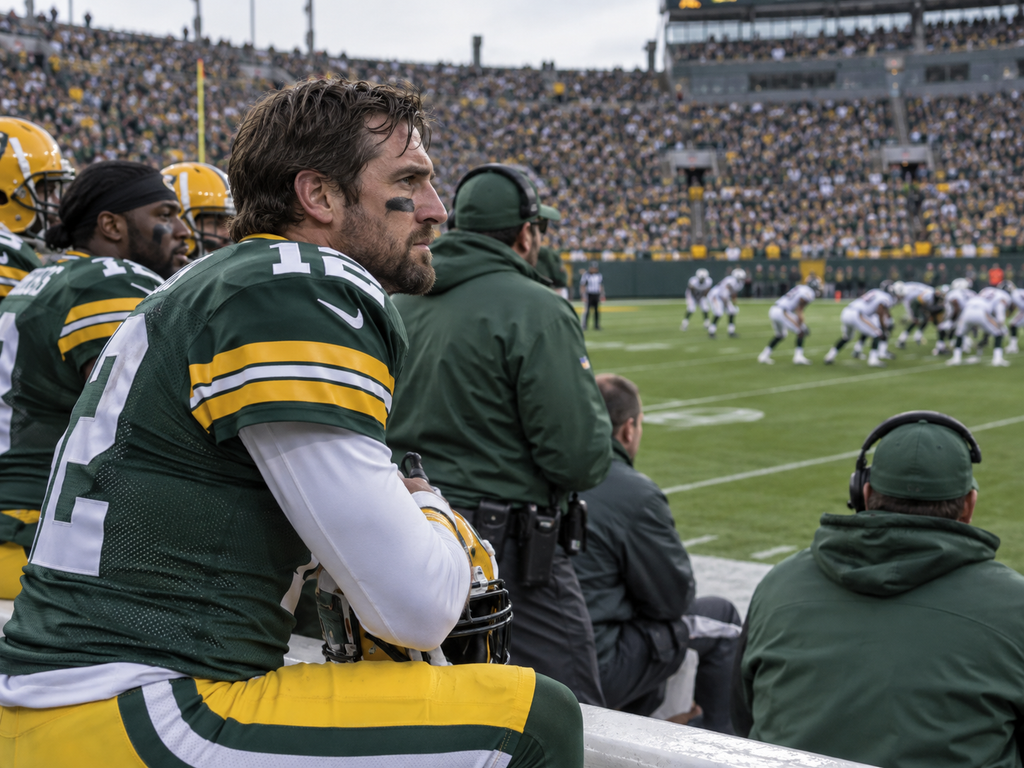
The offense lines up on third-and-five. A linebacker notices that the opposing team has used the same receiver motion several times during the game. Earlier, that motion preceded a short pass toward the sideline.
The linebacker recognizes the pattern but doesn’t abandon his assignment. Instead, he communicates the observation to a teammate, checks the formation and prepares for the possibilities allowed by the defensive call.
When the ball is snapped, the offense runs a similar concept. The linebacker reacts quickly because he has already considered what might happen.
That is an example of football intelligence in action.
Experienced players know that speed, strength and technical ability are only part of successful performance. Understanding situations, recognizing patterns and making decisions within a team’s system can be just as important.
Learning how to improve football IQ means developing the ability to process useful information before, during and after plays. It involves understanding how individual responsibilities connect, recognizing what an opponent may be attempting and responding without losing assignment discipline.
Football intelligence is not limited to quarterbacks or defensive leaders. Receivers, running backs, offensive linemen, defensive backs and linebackers all benefit from stronger awareness.
This guide explains how advanced players can develop their football knowledge, improve anticipation and turn observations into better on-field decisions.
What Is Football IQ?
Football IQ describes a player’s ability to understand game situations, recognize meaningful information and apply that knowledge while performing their responsibilities.
It combines several related abilities:
- Game knowledge: Understanding rules, formations, common concepts and team responsibilities.
- Pattern recognition: Identifying tendencies in an opponent’s formations, movements or play selection.
- Situational awareness: Recognizing how down, distance, score, field position and other circumstances affect the game.
- Anticipation: Preparing for likely developments without assuming the outcome.
- Decision-making: Selecting an appropriate response within the team’s system.
- Communication: Sharing useful information with teammates efficiently.
A player may know an entire playbook but still struggle to recognize how an opponent is attacking it.
Another player may understand the same playbook and quickly notice when a formation creates a familiar matchup or responsibility.
The difference often comes from experience, preparation and knowing which information deserves attention.
Football IQ is not simply the ability to predict the next play correctly. Good decisions can still produce unsuccessful results when opponents execute well.
A more meaningful measure is whether the player recognized the relevant information, fulfilled the correct responsibility and made a reasonable decision based on what was available.
Understand the Purpose Behind Every Play
Memorizing assignments is necessary, but understanding why those assignments exist helps players react when a situation changes.
Imagine an outside linebacker whose responsibility is to protect the edge against a running play.
A player who only memorizes where to stand may chase the ball carrier inside as soon as the play begins.
That decision might leave the outside running lane unprotected.
A player who understands the purpose of edge containment recognizes that maintaining position can be more valuable than immediately pursuing the ball.
Learn How Your Assignment Supports the Team
When studying a play, ask three questions:
- What is my primary responsibility?
- Which teammate’s responsibility connects to mine?
- What could happen if I leave my assigned position?
These questions reveal how individual execution contributes to the larger plan.
For offensive players, understanding the relationship between routes, blocking and timing can explain why spacing matters.
For defensive players, understanding gap responsibilities, coverage support and pursuit leverage shows why several defenders must work together.
The goal is to recognize how the play functions as a system.
Understand the Consequences of Mistakes
An assignment error does not always lead to an immediate loss of yards or points.
Sometimes another player compensates successfully.
For example, a defensive back may abandon a coverage responsibility, but an inaccurate throw prevents the offense from exploiting the opening.
The play’s result appears successful, yet the original decision was still incorrect.
Advanced players learn to evaluate their execution separately from the final outcome.
This distinction is important because poor decisions can remain hidden when the opposing team fails to take advantage.
Recognize Patterns Instead of Memorizing Isolated Plays
Pattern recognition is one of the most valuable elements of football intelligence.
Teams repeat formations, personnel groupings, movement patterns and play concepts for different reasons.
Over time, those repetitions can reveal tendencies.
Watch for Repeated Offensive Behavior
A defender might notice that an opponent frequently uses a particular formation on short-yardage downs.
Another observation might involve a running back’s alignment or a receiver’s motion.
These details can help narrow the range of possible plays.
However, a tendency is not a guarantee.
An offense may deliberately use a familiar formation before calling a different play.
Therefore, pattern recognition should inform preparation rather than cause players to abandon their responsibilities.
Separate Strong Tendencies From Coincidences
Seeing the same result twice does not automatically establish a meaningful pattern.
Suppose an offense runs to the right on two consecutive plays.
That may reflect a strategic preference, but it could also be a coincidence or a response to a temporary defensive look.
A stronger observation considers the context:
- Was the same personnel group on the field?
- Was the formation similar?
- Did the offense face a similar down-and-distance situation?
- Was the ball positioned near the same hash mark?
- Has the tendency appeared across several games?
The more consistently a pattern appears under similar circumstances, the more useful it may become.
Learn to Recognize Exceptions
Experienced opponents know that other teams study tendencies.
They may intentionally break familiar patterns to exploit overaggressive reactions.
For this reason, smart players recognize both the likely action and the possibility of an alternative.
Anticipation should create readiness, not certainty.
Develop Better Situational Awareness
Football decisions change according to the situation.
A play that makes sense on first-and-ten may be inappropriate on third-and-long.
A defensive approach that is reasonable early in a game may become more risky when protecting a narrow lead.
To develop situational awareness, players must recognize the circumstances surrounding each play.
Down and Distance
Down-and-distance provides important context about what the offense needs to accomplish.
On third-and-two, the offense may have several ways to gain the necessary yardage.
On third-and-twelve, the available options and likely priorities may differ.
Defensive players can use this information to prepare for different possibilities while continuing to execute the called defense.
Offensive players should understand how the required yardage affects route depth, blocking responsibilities and possession priorities.
The objective is not to predict one exact play but to understand the challenges facing both teams.
Field Position
The same formation may have different implications depending on where the ball is located.
Near midfield, an offense may have room to use a wide range of plays.
Near its own goal line, protecting possession and avoiding negative plays can become particularly important.
Near the opponent’s goal line, the reduced available field depth changes how players use space.
Advanced players recognize these differences before the snap.
Score and Remaining Time
The score and game clock also influence strategy.
A team protecting a lead may prioritize different outcomes from a team attempting a comeback.
Players should understand the team’s general objectives without trying to make independent coaching decisions.
Detailed clock management and situational play-calling deserve separate study, but all experienced players benefit from recognizing why the situation matters.
Anticipate Plays Without Guessing
Anticipation is often mistaken for guessing correctly.
In reality, useful anticipation comes from identifying clues and preparing for multiple possible outcomes.
Consider a defensive back who notices a receiver repeatedly using a similar release from a particular alignment.
The defender can prepare for that release while remaining responsible for the coverage assignment.
A less disciplined defender may jump toward an expected route before the receiver actually makes the movement.
If the receiver runs something different, the defender may be left out of position.
Use Information to Narrow Possibilities
A practical anticipation process involves three stages.
First, identify the situation. Consider the offensive formation, personnel and game circumstances.
Second, recognize relevant tendencies. Recall what the opponent has done from similar looks.
Third, remain assignment-sound. Prepare to react according to the actual movement and the team’s defensive call.
This method encourages informed readiness rather than reckless prediction.
Understand the Cost of Overanticipation
Overanticipation can create problems on both sides of the football.
A defensive player might abandon a gap to chase an expected run.
A receiver might alter a route without authorization because they expect a different defensive response.
An offensive lineman might react to anticipated movement and lose proper blocking leverage.
In each example, recognizing a possibility becomes harmful when the player ignores the assignment.
Better football intelligence improves discipline rather than replacing it.
Improve Your Awareness Away From the Football
One of the clearest signs of developing game intelligence is recognizing important actions away from the ball.
Many players naturally watch the quarterback, running back or receiver carrying the football.
However, the outcome of a play often depends on movements elsewhere.
For Offensive Players
Receivers should understand how their routes affect nearby receiving options.
A receiver who maintains the correct spacing may help another teammate find a passing window.
Offensive linemen need awareness of how defensive movement affects their assigned blocking responsibilities.
Running backs benefit from understanding how blocks develop and how defenders respond to the play.
These responsibilities require more than watching the football.
For Defensive Players
Defenders must recognize how teammates’ responsibilities affect their own positioning.
A cornerback may have help from a safety in one coverage but less assistance in another.
A linebacker may need to account for an assigned running gap while remaining alert to other responsibilities within the defensive call.
Understanding these relationships allows players to perform their assignments with greater confidence.
Practice Watching the Whole Play
During film review, watch the same play more than once.
On the first viewing, observe the overall result.
On the second, focus on a specific position group.
On the third, study the relationship between that group and nearby teammates.
This helps reveal details that are easy to miss when watching only the ball.
Improve Communication With Teammates
Football is a coordinated team sport. One player’s observation becomes more useful when teammates receive the necessary information in time.
Good communication should be clear, relevant and consistent with the team’s terminology.
Communicate What Matters
A defender might recognize a formation associated with a familiar offensive concept.
Instead of delivering a long explanation before the snap, the defender can use an approved team call or alert.
The purpose is to help teammates prepare without creating confusion.
Communication must fit the time available.
During a game, short and familiar language is generally more useful than introducing new terminology.
Avoid Unnecessary Communication
Not every observation needs to become a verbal instruction.
Too much communication can distract teammates or interfere with calls from designated leaders.
Players should understand who is responsible for making adjustments and which observations they are expected to report.
The team’s established system should determine how information is shared.
Review Communication After Practice
After a drill or scrimmage, discuss whether teammates received the information they needed.
Ask whether a call was clear, timely and understood.
Communication errors can sometimes be corrected more easily than physical technique problems.
A brief discussion may prevent repeated confusion during competition.
Use Film Study to Improve Football IQ
Film study provides opportunities to recognize patterns that may be difficult to identify during a fast-moving game.
However, simply watching an entire match does not guarantee improved understanding.
Effective film study begins with a question.
Give Each Viewing a Purpose
Choose a particular area to observe.
For example, you might study how an opponent uses formations on third down.
A defensive player could review how their unit responds to offensive motion.
An offensive player might examine how teammates maintain timing during a particular concept.
Narrowing the focus makes the viewing more productive.
Compare Similar Situations
Watching several unrelated plays may provide limited insight.
Comparing similar situations often reveals more meaningful patterns.
For example, review several third-and-short plays involving the same opponent.
Look for similarities in personnel, formation and play direction.
Then identify the exceptions.
This approach is more useful than assuming one play represents the opponent’s entire strategy.
Turn Observations Into Practice Goals
Film study should lead to action.
Suppose a linebacker discovers that they repeatedly react late when a particular formation shifts before the snap.
A productive response is to ask the coach for a practice scenario that reinforces the appropriate assignment.
The goal is to connect recognition with improved execution.
Detailed film-analysis methods can be studied separately, but this principle applies to every position.
Learn From Your Own Mistakes
Advanced players need to evaluate mistakes without treating every unsuccessful play as evidence of poor decision-making.
Consider a defensive back who maintains proper positioning but loses a contested catch against an excellent receiver.
The result is disappointing, but the coverage decision may have been reasonable.
Now consider a defender who abandons an assignment, leaving a receiver uncovered, but the quarterback throws an incomplete pass elsewhere.
The final result is favorable, yet the defender still made a poor decision.
Separate Decisions From Results
After a game, ask:
- Did I understand the situation?
- Did I recognize the correct assignment?
- What information was available before the play?
- Did I react to the actual movement or an unsupported assumption?
- Did I communicate when necessary?
- What should I recognize earlier next time?
These questions help identify problems that can be corrected.
Review Recurring Errors
One mistake may be unusual.
The same mistake occurring repeatedly suggests a pattern.
For example, an offensive player may consistently misunderstand a teammate’s responsibility during a particular formation.
Rather than practicing unrelated skills, the player can review that specific situation with the coach.
Targeted improvement is usually more productive than trying to address every weakness simultaneously.
Develop Football Intelligence Through Position-Specific Awareness
Football IQ applies across positions, but the information each player needs is different.
| Position | Important awareness |
|---|---|
| Quarterback | Offensive timing, protection, defensive positioning and play execution |
| Wide receiver | Route spacing, timing, coverage leverage and teammate movement |
| Running back | Blocking development, running lanes and assigned responsibilities |
| Offensive lineman | Defensive front movement, blocking assignments and coordinated protection |
| Linebacker | Run fits, formation tendencies and coverage responsibilities |
| Defensive back | Receiver positioning, coverage support and route development |
| Defensive lineman | Blocking schemes, gap assignments and offensive tendencies |
No player needs to process every detail on the field simultaneously.
A more realistic objective is learning to recognize the information most relevant to the position and the assigned responsibility.
Players can expand their awareness as experience develops.
Five Practical Drills to Improve Your Football IQ
Football intelligence can be developed through structured activities, not just game experience.
These drills emphasize observation, recognition and communication.
Drill 1: Pause-and-Predict Film Review
Purpose: Practice identifying likely developments without assuming certainty.
Choose a game clip and pause immediately before the snap.
Record the down, distance, formation and one relevant tendency.
Identify two possible developments rather than predicting only one play.
Resume the clip and observe what happened.
Review whether the clues were useful and whether you overlooked important information.
The objective is to improve reasoning, not achieve a perfect prediction rate.
Drill 2: Assignment Explanation
Purpose: Strengthen understanding of team responsibilities.
Select a familiar play from the team playbook.
Explain your assignment, the responsibilities of nearby teammates and the purpose of your positioning.
Ask a coach to correct misunderstandings.
This drill is particularly useful when learning a new formation or defensive call.
Drill 3: Situation Recognition
Purpose: Develop awareness of game context.
Have a coach present different scenarios involving down, distance, field position and score.
Explain the general priorities that might matter in each situation.
Discuss how those priorities affect your position without attempting to replace the team’s play-calling system.
Drill 4: Formation Recognition
Purpose: Identify repeated offensive or defensive patterns.
Review several clips from the same opponent.
Group the clips according to similar formations or personnel.
Record what happened in each example.
Look for repeated tendencies while noting exceptions.
Discuss whether the sample is large enough to support a useful observation.
Drill 5: Communication Practice
Purpose: Improve the speed and clarity of information sharing.
During a controlled walk-through, a coach presents a formation or movement that requires an approved team alert.
The responsible player communicates the appropriate call.
Teammates respond according to the team’s system.
Stop the drill when necessary to correct terminology or timing.
No player contact is required.
A Weekly Football IQ Development Routine
A structured routine helps turn occasional observations into consistent learning.
The following example can be adjusted around team practices and game preparation.
| Session | Focus | Activity |
|---|---|---|
| Monday | Review | Identify decisions and assignments from the previous game |
| Tuesday | Recognition | Study formations and repeated opponent tendencies |
| Wednesday | Team understanding | Review responsibilities and communication |
| Thursday | Situational awareness | Discuss game scenarios and likely priorities |
| Friday | Preparation | Review key observations and team expectations |
| Weekend | Application | Apply preparation during practice or competition |
This is an example, not a mandatory schedule.
Players should coordinate preparation with coaches and avoid introducing conflicting information immediately before competition.
Keep a Simple Learning Journal
After each review session, record three things:
What I noticed: A useful pattern, assignment or situation.
What I misunderstood: An observation or responsibility that needs correction.
What I’ll improve: One specific action for the next practice.
Over several weeks, this journal can help reveal whether your understanding is becoming more accurate and focused.
How to Measure Improvement in Football IQ
Football intelligence is difficult to capture with a single statistic.
Tackles, passing yards and touchdowns measure outcomes, but they do not fully explain the quality of individual decisions.
A more useful approach is to evaluate several observable behaviors.
| Area | Evidence of improvement |
|---|---|
| Assignment knowledge | Fewer repeated responsibility errors |
| Pattern recognition | More accurate identification of meaningful tendencies |
| Situational awareness | Better recognition of down, distance and team priorities |
| Communication | Timely, clear and correct calls |
| Anticipation | Fewer reactions based on unsupported guesses |
| Film preparation | Observations translated into relevant practice goals |
Review these areas with a knowledgeable coach whenever possible.
Self-assessment is useful, but players may misunderstand an assignment or overlook information that becomes clearer through outside feedback.
Avoid Judging One Game in Isolation
A player may perform well against an unfamiliar opponent and struggle against a more experienced team.
That does not automatically mean their football intelligence has declined.
Instead, look for trends across several practices and games.
The objective is gradual improvement in preparation, recognition and decision quality.
Common Habits That Limit Football IQ
Even experienced players can develop habits that interfere with better game understanding.
Memorizing Without Understanding
Knowing where to stand is not the same as knowing why the position matters.
Better approach: Learn the purpose of the assignment and how it supports nearby teammates.
Watching Only the Ball
Focusing entirely on the ball carrier can hide important movements elsewhere.
Better approach: During film study, deliberately observe relevant position groups and off-ball responsibilities.
Assuming Patterns Never Change
Repeated tendencies can create expectations, but opponents may deliberately use familiar looks to produce different plays.
Better approach: Prepare for likely possibilities while reacting to actual movement.
Ignoring Coaching Feedback
Players sometimes interpret criticism as a judgment of their overall ability.
Better approach: Identify the specific behavior the coach wants corrected and develop a targeted practice response.
Confusing Confidence With Certainty
A confident player does not need to pretend to know what will happen before every snap.
Better approach: Recognize uncertainty and execute the assigned responsibility with discipline.
Final Thoughts: Develop Your Ability to Think the Game
Learning how to improve football IQ requires more than memorizing formations, watching professional games or collecting experience.
It involves developing a clearer understanding of your responsibilities, recognizing useful patterns and applying information within the team’s strategy.
Start by understanding the purpose behind your assignments. Pay attention to the situation surrounding each play, recognize recurring opponent tendencies and communicate important observations with teammates.
Use film study to identify specific improvements and review mistakes based on the quality of your decisions rather than the final outcome alone.
Most importantly, remember that anticipation should support disciplined execution, not replace it.
As your awareness improves, the game may become easier to interpret because you recognize more of the relationships between players, formations and situations.
Continue exploring our Advanced American Football Guides for deeper tactical topics, or visit the American Football Learning Path to strengthen your understanding through structured courses.