
The offense has completed three consecutive passes to the same wide receiver. Each time, the receiver finds space near the sideline, catches the football and gains enough yards to move the chains.
The defensive coordinator notices the pattern.
On the next series, the cornerback aligns differently. A safety shifts toward the receiver’s side, and the defense changes how it responds to the passing concept.
The offense attempts a similar play, but the original throwing window is no longer available.
This is an example of an in-game defensive adjustment.
Successful football defenses do more than execute the same assignments throughout an entire game. They observe how an opponent attacks, identify recurring problems and modify their approach when necessary.
Understanding defensive adjustments in football requires recognizing why a defense changes its structure, how coaches communicate those changes and what players must do to execute them.
Adjustments may involve defensive personnel, coverage responsibilities, run fits, pass-rush approaches or reactions to offensive formations.
However, making frequent changes does not automatically improve a defense. An adjustment must address a specific problem without creating unnecessary confusion or exposing another area of the field.
This guide explains how advanced defensive players can understand, communicate and execute adjustments during a football game.
What Are Defensive Adjustments in American Football?
Defensive adjustments are changes made to a team’s defensive approach in response to offensive tendencies, personnel, formations or game situations.
An adjustment may be relatively small, such as changing a cornerback’s alignment.
It may also involve a larger structural change, such as switching personnel packages or using a different coverage family.
Some adjustments are planned before the game. Others are made during competition after coaches observe how an opponent is playing.
Preplanned Adjustments
Teams often prepare defensive responses to specific offensive formations or personnel groupings.
For example, a defense may have an established check for an offense that places three receivers on one side of the formation.
When that alignment appears, defenders communicate and execute the appropriate response.
This is an adjustment, but it does not necessarily require a new decision from the sideline.
The response is already built into the defensive system.
In-Game Corrections
Other adjustments arise from problems discovered during competition.
A defense might repeatedly allow successful runs through one gap.
The coaches review the plays, identify the cause and modify an alignment or assignment to address the problem.
The correction should target what is actually going wrong.
Changing the entire defensive call may be unnecessary if one player is repeatedly misaligning or misunderstanding a responsibility.
Strategic Adjustments
A coaching staff may also change its approach because the opponent has altered its strategy.
An offense that initially emphasizes running may begin using more passing formations.
The defense can respond through personnel, coverage or front adjustments.
Strategic changes account for what the opponent is trying to accomplish, not just the result of one play.
Recognize When the Defense Needs an Adjustment
One of the most difficult decisions for a defensive coaching staff is determining whether a problem requires a strategic change.
A single successful offensive play does not prove that the defensive scheme is ineffective.
Sometimes an opponent simply executes better.
Other times, repeated success reveals a structural weakness.
Look for Recurring Problems
Imagine a running back gains eight yards through the same interior area on several plays.
The defensive staff needs to determine whether the offense is consistently creating an advantage or whether individual mistakes are responsible.
Useful questions include:
- Is the same running lane appearing repeatedly?
- Are defenders losing their assigned gaps?
- Is the offense using the same blocking concept?
- Does the defensive alignment create an unfavorable matchup?
- Are players executing the correct assignments?
The answers help identify whether the defense needs a technical correction, a personnel change or a different call.
Separate Execution Errors From Scheme Problems
Suppose a defense calls an appropriate coverage, but a cornerback loses track of the assigned receiver.
The offense completes a long pass.
Changing the entire coverage system may not solve the underlying issue.
The problem could be an individual execution mistake.
Conversely, if an offensive concept repeatedly creates the same unfavorable matchup even when defenders execute correctly, a strategic adjustment may be justified.
Advanced defenses learn to distinguish these situations.
Consider the Sample Size
An offense may produce a successful play once because of an unusual reaction or missed tackle.
Coaches should avoid drawing strong conclusions from limited evidence.
However, waiting too long can allow an opponent to exploit a genuine weakness repeatedly.
Good in-game analysis balances the need for reliable information with the urgency of competition.
Adjust Defensive Personnel to Match the Offense
Personnel adjustments involve changing which types of defensive players are on the field.
Different offensive formations can create different physical and tactical demands.
Respond to Multiple-Receiver Formations
Imagine an offense consistently uses four wide receivers.
A defense relying on its base personnel may have linebackers responsible for covering particularly athletic receivers.
Depending on the defensive system, coaches may choose to introduce an additional defensive back.
Nickel personnel generally includes five defensive backs, while dime personnel typically includes six.
These packages provide different matchup possibilities.
However, replacing linebackers with defensive backs can also affect run-defense responsibilities.
The defense must consider the complete offensive threat.
Respond to Heavy Offensive Personnel
An offense using multiple tight ends or additional blocking personnel may emphasize physical running concepts.
The defense might answer with heavier personnel or a different front.
The objective is to maintain appropriate gap control and physical matchups.
But heavy formations do not guarantee a run.
An offense may use the same personnel for play-action passes or other concepts.
Personnel adjustments should preserve flexibility.
Avoid Predictable Substitution Patterns
If a defense uses a particular package only against obvious passing formations, the offense may recognize the tendency.
Advanced defenses can vary calls within the same personnel group to avoid becoming too predictable.
They also need to manage substitutions correctly.
If the offense operates quickly without substituting, the defense may have limited opportunities to change personnel.
This makes versatility and preparation particularly important.
Make Coverage Adjustments Against Repeated Passing Success
Coverage adjustments are among the most visible changes during a football game.
A defense may alter leverage, safety positioning, assignments or the coverage structure itself.
Adjust Cornerback Leverage
Suppose an outside receiver repeatedly gains separation on inside-breaking routes.
The defense may evaluate whether the cornerback’s alignment allows the receiver to access the middle too easily.
A coaching adjustment could involve changing leverage or modifying the coverage responsibility.
However, the correct response depends on the safety help, route concept and broader defensive system.
Simply moving the cornerback inside might open a different passing area.
Change the Safety Support
A particularly effective receiver may demand additional attention.
A defense could shift safety help toward that receiver or use a coverage call that provides more support.
This may reduce the offense’s opportunities in one area while changing the defense’s resources elsewhere.
The coordinator must account for those trade-offs.
Change Coverage Structure
Suppose an offense repeatedly attacks the same zone responsibility with coordinated routes.
The defense might change from one coverage family to another or adjust its pattern-matching rules.
A different structure may change how defenders distribute responsibilities and challenge the offense’s timing.
However, a change should fit the available personnel and the players’ understanding of the system.
An unfamiliar coverage executed poorly can be less effective than a familiar call executed correctly.
Example: Responding to a Successful Slot Receiver
An offense repeatedly completes short passes to a slot receiver.
The receiver attacks the space between an underneath defender and a safety.
The defense reviews the plays and discovers that the underneath defender is gaining too much depth, leaving the intended passing window open.
Instead of replacing the entire coverage, the coach may correct the defender’s landmark or responsibility.
If the offensive concept continues to create an advantage, the defense could consider a different coverage check.
The key is identifying whether the problem is execution or structure.
Correct Run Fits and Gap Responsibilities
Run defense depends on coordinated responsibilities.
A successful running play often develops because blockers create space, defenders lose leverage or a gap becomes unprotected.
A run fit describes how defenders account for the available running gaps and support responsibilities within a particular defensive call.
Identify the Actual Running Lane
Imagine a running back repeatedly gains yards between the guard and tackle.
The defense should determine whether the offense is consistently creating that opening or whether the responsible defender is being displaced.
Film or sideline observation may reveal that a linebacker is reacting too slowly or taking an incorrect path.
The first correction could involve technique or alignment.
Adjust the Defensive Front
If the offense consistently creates favorable blocking angles against a particular front, the coordinator may change the defensive alignment.
Moving a defensive lineman or changing a front structure can alter how offensive blockers approach their assignments.
However, shifting one defender can also change the responsibilities of nearby teammates.
All affected players must understand the new fit.
Correct Edge Containment
Suppose an offense repeatedly runs outside because the defense loses control of the edge.
The coaching staff may correct the contain player’s alignment, responsibility or support relationship with nearby defenders.
Simply instructing everyone to pursue the ball faster could make the problem worse.
If defenders abandon their assignments, the offense may find additional space.
Maintain Team Coordination
A run-fit adjustment works only when the defenders involved understand the change.
A defensive lineman, linebacker and safety may each have connected responsibilities.
Correcting one position while leaving the others uncertain can create a new opening.
This is why defensive adjustments must be communicated as coordinated responsibilities rather than isolated instructions.
Adjust to Offensive Motion and Formation Changes
Modern offenses frequently use motion, shifts and formation variations to influence defensive alignment.
A defense must respond without losing assignment discipline.
Recognize the Offensive Purpose
An offense may use motion to create a matchup, change the formation strength or influence defender positioning.
For example, a receiver moving across the formation might force the defense to communicate an exchange of coverage responsibilities.
The motion may also reveal how the defense intends to align.
Use Established Defensive Checks
Advanced defenses often prepare specific checks for common formation changes.
If the offense moves a receiver from one side to another, the defense may adjust coverage responsibilities while preserving the intended structure.
The exact response depends on the team’s scheme.
Some systems require a defender to follow the receiver. Others involve passing the responsibility to another player.
Both approaches require coordination.
Avoid Communication Breakdowns
Late motion can create confusion when defenders are uncertain whether the original assignment still applies.
A cornerback may expect safety support that has shifted elsewhere.
A linebacker may adjust toward the new formation strength while another player remains in the original position.
Effective defensive communication helps ensure that everyone understands the final alignment.
The objective is not merely to move players.
It is to maintain a complete defensive structure after the offense changes its presentation.
Change Defensive Pressure Without Losing Coverage Integrity
A defense may adjust its pass-rush approach when the offense consistently protects the quarterback.
These changes can include different rush paths, additional rushers or simulated pressure concepts.
Identify Why Pressure Is Failing
Suppose the opposing quarterback repeatedly has enough time to complete intermediate passes.
The defense should examine whether the pass rush is arriving too slowly, the protection is creating favorable matchups or the coverage is allowing quick throws.
The solution might involve improving rush execution rather than automatically sending more defenders.
Vary the Rush Presentation
A defense may use a similar starting alignment while changing which players actually rush.
This can create uncertainty for offensive protection.
For example, a linebacker may rush on one play and drop into coverage on another.
The goal is to prevent the offense from relying too heavily on a single expectation.
Understand the Coverage Trade-Off
Sending additional defenders generally changes the resources available behind the rush.
A pressure call may reduce the time available to the quarterback but also create different coverage responsibilities.
The defensive coordinator must consider whether the additional pressure justifies those changes.
Detailed blitz structures and pressure-identification techniques deserve separate study.
The essential adjustment principle is to change the offensive challenge without creating an unacceptable defensive weakness.
Recognize How Offenses Respond to Defensive Adjustments
Football strategy involves continuous interaction between both teams.
When a defense corrects one problem, the offense may try to exploit the new alignment.
Example: Increased Safety Help
A defense provides additional safety support against an effective outside receiver.
The offense notices that the safety is now spending more attention on that side of the field.
This may change the available space elsewhere.
The offense could attempt to attack the opposite side or another receiving threat.
The defense must recognize that solving one problem may influence the next offensive decision.
Example: Heavier Run Defense
A defense introduces heavier personnel after several successful rushing plays.
The offense may respond with a formation or concept designed to challenge those defenders in space.
The defense should prepare for this possibility rather than assuming the offense will continue running.
Avoid the Adjustment Trap
A coaching staff can become reactive, changing calls after every successful offensive play.
Frequent adjustments may create confusion and reduce execution quality.
Advanced defensive strategy requires knowing when to maintain the plan and when the opponent has revealed a meaningful reason to change.
Make Adjustments During Different Stages of the Game
The timing of an adjustment matters.
Coaches have different amounts of information and communication time throughout a game.
Early-Game Adjustments
During the opening possessions, coaches observe whether the opponent is behaving as expected.
They compare the offensive approach with tendencies identified during preparation.
A surprising formation or personnel package may require an immediate response.
However, the early sample is usually limited.
Coaches should avoid interpreting every unexpected play as evidence that the original game plan is wrong.
Between-Series Adjustments
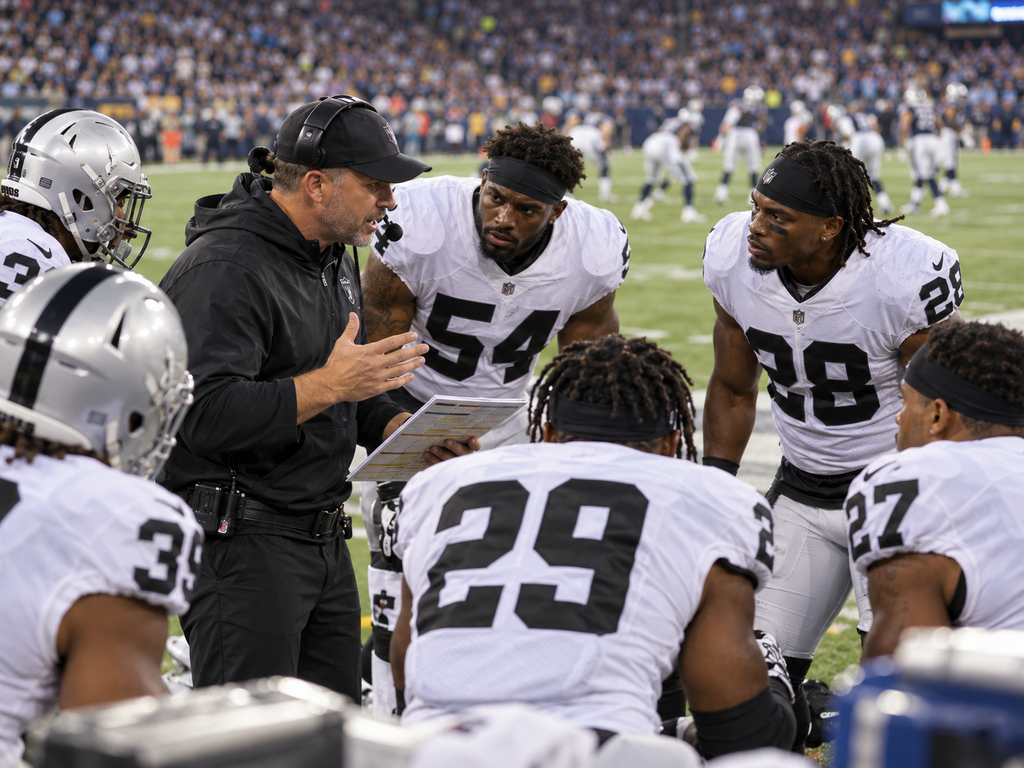
The sideline provides an opportunity to communicate more clearly.
Coaches can review recent plays, correct assignments and explain the next defensive approach.
Players may receive a specific instruction such as changing leverage, improving communication or recognizing a repeated blocking concept.
The most effective correction is usually clear enough to remember and execute immediately.
Halftime Adjustments
Halftime provides more time to examine recurring problems.
Coaches can compare the game plan with what the offense has actually done.
They may decide to change personnel usage, coverage emphasis or defensive-front choices.
But halftime adjustments are not automatically dramatic.
Sometimes the most valuable correction is improving execution of assignments already in the plan.
Late-Game Adjustments
Near the end of a game, score, remaining time and field position influence defensive priorities.
A team protecting a lead may be especially concerned about allowing a rapid scoring drive.
A team trailing may need to create an opportunity to regain possession.
These circumstances can affect coverage, pressure and substitution decisions.
The defense must understand the immediate objective without abandoning sound execution.
Communicate Defensive Adjustments Clearly
A good adjustment can fail when players misunderstand it.
Communication is therefore part of defensive strategy, not merely a supporting detail.
Use Familiar Terminology
Teams should use established calls and signals whenever possible.
Introducing complex terminology during a game can increase confusion.
A short, recognizable adjustment is easier to execute under time pressure.
Identify Who Makes the Call
Some adjustments originate from the defensive coordinator.
Others may be communicated by designated defensive leaders according to the team’s system.
Players must understand who has authority to change a call and how the adjustment reaches every affected position.
Confirm Connected Responsibilities
A coverage change may affect cornerbacks, safeties and linebackers simultaneously.
A front adjustment may affect defensive linemen and second-level run fits.
Communication should establish the complete responsibility structure.
One defender understanding the adjustment is not sufficient if nearby teammates continue executing the original call.
Four Practical Defensive Adjustment Scenarios
Scenario 1: Repeated Outside Runs
The problem: An offense repeatedly gains yardage toward the right sideline.
What the defense observes: The edge defender is losing outside leverage, allowing the ball carrier to turn the corner.
Possible adjustment: Correct the defender’s contain responsibility and ensure inside pursuit remains coordinated.
What to evaluate: Whether the offense continues gaining easy access to the edge without opening another running lane.
Scenario 2: Slot Receiver Finding Space
The problem: A slot receiver repeatedly catches passes between underneath and deep defenders.
What the defense observes: The current coverage responsibilities leave the intended window accessible.
Possible adjustment: Correct underneath positioning or select a coverage variation that changes how the area is defended.
What to evaluate: Whether the passing window becomes more difficult to access without creating a larger weakness elsewhere.
Scenario 3: Quarterback Has Too Much Time
The problem: The quarterback consistently has time to wait for intermediate routes.
What the defense observes: The four-man rush is not regularly disrupting the passing play.
Possible adjustment: Improve rush execution, modify defensive-line movement or introduce a different pressure presentation.
What to evaluate: Whether the defense creates more disruption while maintaining acceptable coverage behind the rush.
Scenario 4: Offense Switches to Heavy Personnel
The problem: The offense replaces multiple receivers with additional tight ends and begins using a more physical formation.
What the defense observes: The current personnel grouping may be poorly suited for the new blocking matchups.
Possible adjustment: Use a heavier defensive package or modify the front and run-fit responsibilities.
What to evaluate: Whether the defense maintains gap integrity and remains prepared for passes from the heavy formation.
These examples show that adjustments should address specific circumstances rather than rely on generic instructions to become more aggressive.
Practice Defensive Adjustments Before Competition
Effective in-game changes are easier when players have already practiced responding to different situations.
Drill 1: Formation Adjustment Walkthrough
Purpose: Improve defensive communication when the offense changes formations.
An offense begins in a familiar formation.
The coach then changes the receiver alignment or personnel presentation.
Defenders execute the team’s prescribed adjustment at walk-through speed.
Pause the drill to confirm each player’s responsibility.
Drill 2: Run-Fit Correction
Purpose: Improve coordinated responses to repeated running concepts.
A coach presents a common running formation and identifies a specific gap-control problem.
Defenders review the required alignment and movement.
Run the play at controlled speed without tackling.
Evaluate whether all players maintain the corrected responsibilities.
Drill 3: Coverage Change Recognition
Purpose: Practice switching between approved defensive calls.
The coach presents an offensive formation.
The defense aligns in its initial coverage.
The coach then signals a predefined coverage adjustment.
Defenders communicate and reposition according to their assignments.
Review whether the complete coverage structure remains coordinated.
Drill 4: Between-Series Communication
Purpose: Practice communicating corrections efficiently.
After a simulated offensive series, coaches provide one or two observations.
Defensive leaders explain the required changes using the team’s terminology.
Players repeat the relevant responsibilities before the next series begins.
This exercise develops clarity without requiring physical contact.
Drill 5: Offensive Counter-Adjustment
Purpose: Prepare defenders for how an offense may respond.
The defense practices an adjustment against a particular offensive concept.
The coach then presents a different play from a similar formation.
Defenders must execute the current call without assuming the offense will repeat the original play.
This helps prevent overreaction to previously observed tendencies.
Evaluate Whether Defensive Adjustments Worked
An adjustment should be judged by more than the result of one play.
A defense might change coverage and allow a completion because the offense executed a difficult throw.
That does not necessarily mean the adjustment failed.
Conversely, an adjustment might produce an incompletion despite a defender making an assignment error.
The staff needs to examine the underlying execution.
| Evaluation area | Question |
|---|---|
| Problem identification | Did the coaches correctly identify the original weakness? |
| Adjustment selection | Did the change directly address the problem? |
| Communication | Did every affected player understand the call? |
| Assignment execution | Did defenders perform the revised responsibilities? |
| Offensive response | Did the offense exploit a different area? |
| Overall result | Did the adjustment improve defensive performance across several opportunities? |
Reviewing these factors helps teams learn which changes are effective and which require further refinement.
Common Mistakes When Making Defensive Adjustments
Changing Too Much at Once
A coordinator changes personnel, coverage and front assignments simultaneously.
Players become uncertain about the new responsibilities.
Better approach: Make targeted adjustments whenever possible and prioritize clear communication.
Reacting to One Successful Play
The defense changes its structure after an isolated completion.
Better approach: Determine whether the result reflects a recurring weakness or a single execution outcome.
Ignoring the Offensive Counter
The defense solves one problem but overlooks the opportunity created elsewhere.
Better approach: Consider how the opponent may respond to the revised alignment.
Using Unfamiliar Calls
Coaches introduce an adjustment that players have rarely practiced.
Better approach: Build a manageable menu of approved responses during preparation.
Correcting the Wrong Problem
The defense changes schemes when the real issue is one defender’s missed assignment.
Better approach: Separate technical errors from structural weaknesses before deciding on the response.
Final Thoughts: Effective Adjustments Require Understanding and Discipline
Successful defensive adjustments in football begin with identifying why the offense is gaining an advantage.
A repeated passing completion may require a coverage correction. Consistent running success may reveal a gap-control problem. A quarterback operating comfortably may lead the defense to reconsider its pass-rush approach.
But every adjustment carries consequences.
Changing coverage can affect other receiving areas. Altering the defensive front can shift run responsibilities. Introducing new personnel may improve one matchup while creating another challenge.
The best defensive teams understand these relationships and avoid changing their approach simply for the sake of making a change.
Coaches should identify specific problems, choose appropriate responses and communicate the revised assignments clearly. Players must understand how their individual responsibilities support the complete defensive structure.
Through film review, situational walkthroughs and regular communication practice, defenders can become more prepared to respond when opponents change their strategy.
Continue developing your tactical knowledge through our Advanced American Football Guides, or explore the American Football Learning Path for structured courses covering defensive concepts and team strategy.