
Pickleball Volley for Beginners: How to Hit It with Control and Confidence
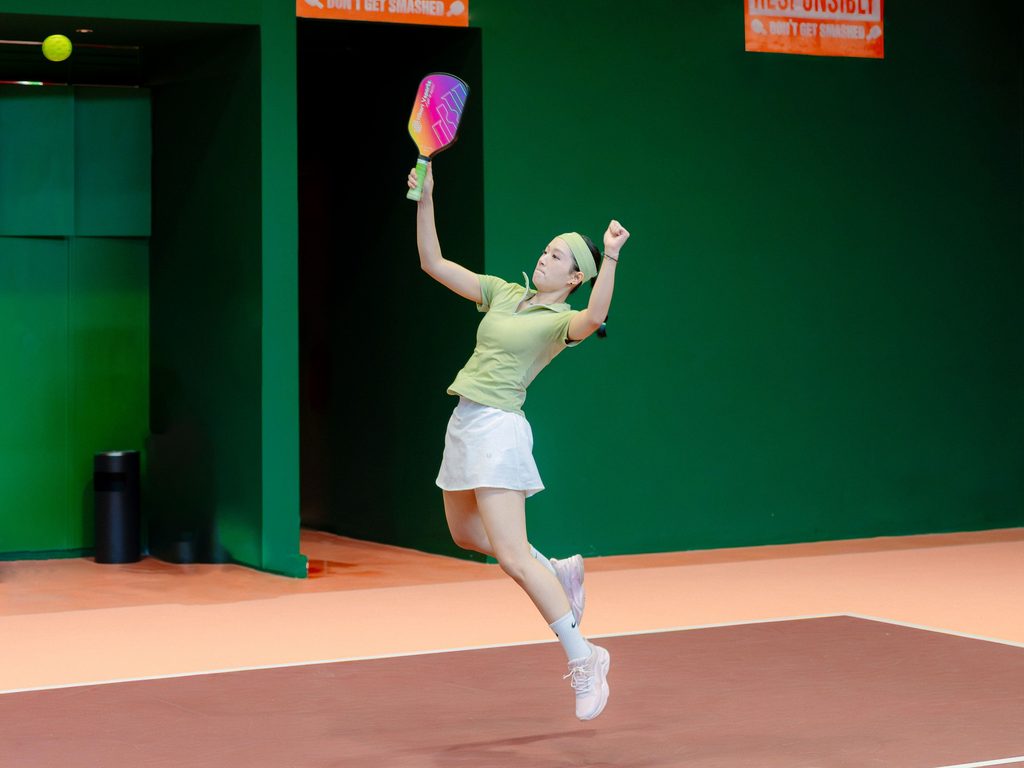
The volley is one of the most important shots to learn as you become more comfortable playing pickleball near the net.
Unlike a groundstroke, a volley is hit before the ball bounces. Because volleys are often played from close to the net, you usually have less time to react than you do when hitting forehands or backhands from the baseline.
That does not mean you need a big or powerful swing.
In fact, one of the biggest keys to a reliable pickleball volley is keeping the movement compact.
A good beginner volley is controlled, balanced and efficient. You keep the paddle ready in front of your body, recognize the incoming ball early and use a short movement to redirect it over the net.
This guide explains how to hit a pickleball volley step by step, including grip, ready position, paddle control, contact point, footwork, forehand and backhand volleys and common mistakes to avoid.
What Is a Volley in Pickleball?
A volley is any shot struck out of the air before the ball bounces on your side of the court.
For example, imagine you are standing near the non-volley zone line and your opponent sends the ball toward you at chest height.
Instead of letting it bounce, you can contact the ball in the air and send it back across the net.
That is a volley.
Volleys can be:
- Forehand volleys.
- Backhand volleys.
- Defensive blocks.
- Controlled placement volleys.
- Faster attacking volleys.
For beginners, the priority should be learning a simple forehand and backhand volley that you can control consistently.
Why Volleys Are Important in Pickleball
As rallies develop, players commonly move forward from the baseline toward the non-volley zone line.
Once you reach this position, many balls will arrive before they have time to bounce comfortably.
Being able to volley allows you to handle those shots without retreating unnecessarily.
A reliable volley can help you:
- Keep opponents under pressure.
- Return faster shots.
- Maintain your position near the net.
- Direct the ball into open areas.
- Prevent opponents from gaining time to recover.
- Defend against balls hit directly toward you.
- Finish attackable balls when the opportunity appears.
However, good volleying is not simply about hitting hard.
Control and preparation are much more important.
Understand the Non-Volley Zone Before You Volley
One rule is especially important whenever you learn volleys.
The area extending seven feet from the net on each side is the non-volley zone, commonly called the kitchen.
You cannot legally initiate a volley while touching the non-volley zone or its boundary line. Your momentum after hitting a volley also cannot carry you into the zone. Under the current 2026 USA Pickleball rules, volleying must be performed from outside the non-volley zone.
You are allowed to enter the kitchen at other times, such as to play a ball that has already bounced.
The important distinction is simple:
You cannot stand in the kitchen and hit the ball out of the air.
Beginners should become comfortable recognizing the non-volley zone line and maintaining balance behind it before practicing faster volleys.
The Two-Bounce Rule Comes First
You also cannot volley immediately after every serve.
At the beginning of each rally:
- The receiving team must allow the serve to bounce.
- The serving team must allow the return to bounce.
- After those two required bounces, either team may begin volleying.
This is commonly called the two-bounce rule.
That means you cannot serve and immediately charge forward to volley the return before it bounces.
Once the required bounces have occurred, volleys become part of normal rally play.
Use a Comfortable Grip
A continental-style grip is a useful starting point for many beginner volleys.
Imagine shaking hands with the paddle handle.
This grip makes it easier to move between forehand and backhand volleys without making a major grip change.
Your grip should feel secure but relaxed.
Avoid squeezing the handle as tightly as possible.
A very tight grip can make the paddle difficult to control and may cause the ball to rebound farther than you intend.
For softer volleys, especially blocks, slightly relaxed hands can help absorb some of the incoming pace.
Start With the Paddle in Front
Your ready position is especially important when volleying because the ball can reach you quickly.
Keep the paddle:
- In front of your body.
- Around chest height.
- Relatively centered.
- Ready to move toward either side.
Avoid holding the paddle beside your hip.
If the paddle starts too far behind you, you may not have enough time to bring it forward when your opponent hits a fast shot.
Think of the paddle as protecting the area in front of your body.
Use an Athletic Ready Position
Your lower body should also remain prepared.
Stand with:
- Feet approximately shoulder-width apart.
- Knees slightly bent.
- Weight toward the balls of your feet.
- Upper body relaxed.
- Paddle in front.
Avoid locking your knees or standing completely upright.
A slightly athletic position helps you react in either direction and maintain balance during quick exchanges.
Keep Your Backswing Short
One of the biggest differences between a volley and a groundstroke is the length of the swing.
A normal forehand or backhand after the bounce may involve a larger preparation.
A volley generally should not.
Because you are closer to the net, the ball reaches you quickly.
Bringing the paddle far behind your body wastes time and makes the shot more difficult to control.
Instead, use a compact movement.
For many volleys, the paddle only needs to move a short distance.
Think:
Prepare in front, contact in front, finish in front.
Make Contact in Front of Your Body
Try to contact the ball in front of you whenever possible.
When the ball reaches too far beside or behind your body, controlling the paddle face becomes harder.
Contact in front gives you more ability to determine:
- Direction.
- Height.
- Pace.
- Paddle angle.
Your ideal contact point will vary depending on whether the ball arrives high, low, forehand or backhand.
The basic principle remains the same: avoid letting the ball crowd you.
Keep the Paddle Face Stable
The direction of your paddle face has a major effect on where the ball travels.
If the paddle face is excessively open, the volley may pop upward.
If it is too closed, the ball may go into the net.
Try to maintain a stable paddle face through contact.
Beginners often lose control because they flick their wrists immediately before hitting the ball.
Keep the wrist relatively quiet and allow the paddle to move as a stable unit with your hand and forearm.
Do Not Swing at Every Volley
Many beginners see a ball in the air and immediately try to hit it as hard as possible.
That is usually unnecessary.
If your opponent has already supplied plenty of pace, you may need very little additional swing.
Sometimes simply placing the paddle behind the ball and redirecting it is enough.
Think of a volley as using the opponent’s pace rather than always creating your own.
The faster the incoming ball, the shorter your swing often needs to be.
How to Hit a Pickleball Volley Step by Step
Use this basic sequence when learning.
Step 1: Get Into Position
Move near the non-volley zone line while remaining legally outside the kitchen when preparing to volley.
Step 2: Establish Your Ready Position
Keep your knees slightly bent and the paddle in front of your chest.
Step 3: Watch Your Opponent
Pay attention to the paddle and ball so you can recognize the direction of the incoming shot.
Step 4: Move the Paddle Toward the Ball
Use a short movement rather than a large backswing.
Step 5: Contact the Ball in Front
Meet the ball before it gets beside or behind you.
Step 6: Keep the Paddle Stable
Avoid excessive wrist movement through contact.
Step 7: Direct the Ball
Guide the paddle toward your intended target.
Step 8: Use a Compact Follow-Through
Do not allow the swing to become unnecessarily large.
Step 9: Recover
Immediately return the paddle to the ready position.
This last step is especially important because another volley may arrive almost immediately.
How to Hit a Forehand Volley
A forehand volley is played on your paddle-hand side.
For a right-handed player, this is generally the right side.
For a left-handed player, it is generally the left side.
When the ball approaches your forehand:
- Keep the paddle in front.
- Turn slightly toward the ball if necessary.
- Move the paddle a short distance toward the contact point.
- Meet the ball in front of your body.
- Guide the paddle forward.
- Recover immediately.
Avoid turning the forehand volley into a full forehand groundstroke.
There usually is not enough time or need for a large backswing.
How to Hit a Backhand Volley
The backhand volley is extremely important because many balls arriving near the center of your body are easier to handle with a backhand.
For a right-handed player, a backhand volley generally covers the left side and much of the area directly in front of the body.
For a left-handed player, the opposite is true.
To hit the shot:
- Keep the paddle in front.
- Move it slightly across your body.
- Maintain a stable wrist.
- Contact the ball in front.
- Push or guide the paddle toward the target.
- Return quickly to ready position.
The backhand volley often requires very little backswing.
A compact motion is usually more effective.
Why the Backhand Volley Is So Useful
Beginners sometimes try to hit forehand volleys on every ball.
This can become difficult when the ball comes directly toward the center of the body.
The backhand volley often provides a more natural way to defend this area.
Learning to comfortably use both sides of the paddle allows you to respond more quickly without moving unnecessarily.
Instead of running around balls to create a forehand, learn to trust your backhand volley.
Use a Punch Volley for Firmer Balls
A punch volley is a compact volley used when you want to send the ball back with controlled firmness.
The movement resembles a short forward punch rather than a full swing.
Keep the paddle stable and move it forward through the ball.
The motion should be short.
Avoid bringing the paddle behind your body.
A punch volley can be useful when the ball arrives around waist or chest height and you have an opportunity to direct it aggressively.
Use a Block Volley Against Fast Shots
Sometimes your opponent will hit the ball with more pace than you want to return.
Instead of swinging back aggressively, use a block.
Place the paddle in front of the incoming ball and let the ball rebound from the paddle.
You may soften your grip slightly to reduce how far the ball travels.
The goal is not to create additional power.
It is to absorb and redirect the pace already coming toward you.
This is particularly useful during fast exchanges near the kitchen.
How High Should Your Paddle Be?
A good general starting position is around chest height.
However, the exact paddle height will depend on the situation.
If you expect a low ball, you may lower the paddle.
If opponents are attacking aggressively, keeping the paddle slightly higher may help you defend your upper body.
The key is avoiding an unnecessarily low resting position.
If your paddle hangs near your knees, you must move it much farther to defend a ball arriving at chest height.
Keep Your Paddle in Front During Fast Exchanges
After every volley, return the paddle toward your ready position.
Do not let the follow-through carry it far behind you.
This is particularly important during quick exchanges sometimes called volley battles or firefights.
The player who recovers the paddle faster is often better prepared for the next ball.
A useful beginner cue is:
Hit, reset, hit, reset.
How Hard Should Beginners Volley?
Not very hard.
At least not initially.
Your first objective should be directing the ball safely into the court.
Start with moderate pace.
Once you can control direction and consistently find the center of your paddle, gradually increase speed.
Trying to hit maximum-power volleys too early often causes:
- Overswinging.
- Balls hit long.
- Pop-ups.
- Poor balance.
- Slow recovery.
- Excessive wrist movement.
Control first.
Power can come later.
Where Should Beginners Aim Their Volleys?
Do not immediately aim for lines.
Give yourself margin.
Useful beginner targets include:
- The middle of the court.
- Open space between opponents.
- An opponent’s feet.
- Several feet inside the sidelines.
- Areas that force opponents to move.
A well-placed moderate volley is often more effective than a hard ball hit directly toward an opponent’s paddle.
Volleying Toward an Opponent’s Feet
One useful target is low near your opponent’s feet.
Low balls are difficult to attack because your opponent must usually lift the ball upward.
When you receive a comfortable volley above net height, directing it downward toward the feet can put your opponent under pressure.
However, beginners should not force this shot from every position.
If the ball is below net level, trying to hit sharply downward may send it into the net.
Choose the shot based on the height of the incoming ball.
High Volleys vs. Low Volleys
Not every volley should be played the same way.
High Volley
When the ball is comfortably above net height, you may be able to direct it forward or slightly downward with more pace.
Keep the movement controlled.
Low Volley
When the ball is below net height, you usually need to lift it enough to clear the net.
Avoid trying to smash a low ball.
Open the paddle face slightly and use controlled touch.
The lower the contact point, the less aggressively you should usually try to hit the ball.
Keep Your Feet Active
Volleying is not only about your hands.
Small foot movements help you maintain the correct spacing.
Stay light enough to move:
- Sideways.
- Forward.
- Slightly backward when necessary.
Avoid planting your feet and reaching for every ball.
Whenever you have time, move your body so the ball stays in front of you.
Good positioning makes the volley easier.
Stay Balanced Near the Kitchen Line
The non-volley zone rule makes balance especially important.
If you are standing just behind the kitchen line and aggressively lean forward to volley, your momentum may carry you into the zone and cause a fault.
Maintain enough space and balance that you can control your body after contact.
Do not automatically stand with your toes directly against the line when you are first learning.
A small margin can help you develop better awareness and control.
Do Not Back Away Without a Reason
Beginners sometimes become nervous during faster exchanges and start drifting backward.
This can create more problems.
Moving farther from the net:
- Gives opponents more space to aim at your feet.
- Makes your own volleys more difficult.
- Gives opponents more time to attack.
- Can surrender a strong court position.
If the ball is volleyable and you are balanced, try to maintain your position near the non-volley zone line.
Move backward when the situation genuinely requires it, not simply because the rally becomes fast.
Common Pickleball Volley Mistakes
Several errors appear repeatedly among beginners.
Taking a Large Backswing
A large backswing slows you down.
Fix: Keep the paddle in front and use a compact motion.
Swinging Too Hard
Excessive power reduces control.
Fix: Use the pace of the incoming ball and prioritize placement.
Dropping the Paddle
A low paddle position increases reaction time.
Fix: Keep the paddle around chest height when ready.
Flicking the Wrist
Too much wrist movement changes the paddle angle.
Fix: Maintain a stable wrist through contact.
Contacting the Ball Too Late
Late contact reduces directional control.
Fix: Meet the ball in front of your body.
Standing Upright
Straight legs make reacting difficult.
Fix: Keep the knees slightly bent.
Reaching Instead of Moving
Stretching too far can cause mishits.
Fix: Use small adjustment steps whenever possible.
Forgetting to Recover
A long follow-through leaves the paddle out of position.
Fix: Return to ready immediately.
Stepping Into the Kitchen
Momentum after the volley can cause a fault.
Fix: Stay balanced behind the non-volley zone line.
Trying to Attack Low Balls
Hitting hard from below net height often sends the ball into the net or creates an easy attack for your opponent.
Fix: Use controlled placement on lower balls.
Why Your Volleys Keep Going Into the Net
Several things can cause repeated net errors.
You may be:
- Closing the paddle face too much.
- Contacting the ball below net height and trying to hit downward.
- Swinging too hard.
- Contacting the ball late.
- Dropping your paddle.
Slow the shot down.
Keep your paddle in front and give lower balls enough upward trajectory to clear the net.
Why Your Volleys Keep Going Long
If your volleys repeatedly travel beyond the baseline, you may be using too much swing.
The incoming ball often already contains enough pace.
Try shortening your movement.
Also check your paddle face.
If it is too open, the ball may launch upward and travel long.
Reduce your grip tension slightly and focus on redirecting rather than hitting.
Why Your Volleys Keep Popping Up
A pop-up is a ball that travels higher than intended and gives your opponent an opportunity to attack.
Common causes include:
- An overly open paddle face.
- Excessive upward movement.
- Contacting the ball late.
- Tight or jerky hands.
- Trying to lift a ball that does not need much lift.
Focus on keeping the paddle face stable and directing the ball forward.
With low volleys, some upward movement may be necessary, but it should remain controlled.
Why You Keep Mishitting Volleys
Fast balls can be difficult to contact in the center of the paddle.
If you frequently hit the frame or edge, your movement may be too large.
Reduce your swing.
Keep your paddle in front and watch the ball carefully.
The shorter the paddle travels, the easier it becomes to control the contact point.
Simple Pickleball Volley Drills for Beginners
Regular repetition helps develop faster reactions and better paddle control.
Self-Volley Drill
Stand in a safe area and gently tap the ball upward using your paddle.
Alternate between the forehand and backhand sides.
This helps develop paddle-face awareness and touch.
Partner Volley Drill
Stand on opposite sides of the net with a partner.
Volley gently back and forth.
Do not try to win the rally.
Focus on maintaining control and keeping your movements compact.
Count how many consecutive volleys you can complete.
Forehand and Backhand Alternation Drill
Have a partner send one ball toward your forehand side and the next toward your backhand.
Practice switching between the two without changing to a large backswing.
Return the paddle to the center after every shot.
Block Volley Drill
Ask a partner to gradually increase the pace of their shots.
Instead of swinging, simply block the ball back.
Focus on maintaining a stable paddle and relaxed hands.
Target Volley Drill
Choose a large target area on the opposite side of the court.
Try to direct several volleys into it.
Once you become consistent, gradually reduce the target size.
Volley-to-Feet Drill
Have your partner stand safely back from the kitchen line.
Practice directing controlled volleys toward the area near their feet.
This helps develop placement rather than relying entirely on speed.
Practice Control Before Speed
When practicing volleys, start slowly.
A useful progression is:
- Practice paddle control.
- Hit easy forehand volleys.
- Hit easy backhand volleys.
- Alternate between both sides.
- Practice blocks.
- Add directional targets.
- Gradually increase rally speed.
- Use the shots during recreational games.
Do not rush directly into fast exchanges.
Better technique at slow speed usually transfers more effectively when the rally becomes faster.
Volley Placement Is More Important Than Maximum Power
Beginners often associate net play with smashing the ball.
But many effective volleys rely more on placement.
Instead of swinging harder, look for areas where your opponent will have difficulty returning the ball.
You might direct a volley:
- Between two doubles opponents.
- Toward an opponent’s feet.
- Into open court.
- Away from a moving opponent.
- Toward an opponent’s weaker side.
The more accurately you can control the paddle, the less you need to rely on raw speed.
Forehand or Backhand Volley?
You should eventually become comfortable with both.
Use your forehand when the ball naturally arrives on your forehand side.
Use your backhand when it arrives on your backhand side or directly toward an area that the backhand can cover more efficiently.
Avoid running around straightforward backhand volleys simply because you prefer your forehand.
The goal is to respond efficiently rather than forcing one shot.
When Should You Let the Ball Bounce Instead?
Just because you can volley a ball does not always mean you should.
Sometimes letting the ball bounce gives you more time and allows you to play a controlled shot.
This is particularly important when:
- The ball is dropping into the kitchen.
- You would have to reach awkwardly.
- The ball is traveling out of bounds.
- You are off balance.
- Contacting it in the air would force a difficult low volley.
Good players do not automatically hit every available volley.
They choose whether playing the ball in the air gives them an advantage.
Let Out Balls Go
One of the easiest ways to lose a point during fast exchanges is hitting a ball that would have traveled out.
When your opponent hits hard, resist the urge to automatically swing.
Watch the trajectory.
If the ball is rising rapidly and appears likely to travel beyond the baseline or sideline, letting it go may be the better choice.
Developing this judgment takes experience, but awareness should begin from your first volley practice sessions.
Protect Yourself During Fast Exchanges
Pickleball can involve rapid shots from relatively short distances.
Keep the paddle in front and be prepared to protect your torso.
Avoid turning completely away from an incoming ball.
If a ball is clearly headed toward your face and you cannot comfortably play it, prioritize protecting yourself.
Eye protection is also worth considering, particularly for frequent play or fast doubles games.
A Simple Beginner Volley Checklist
Use these cues during practice:
Ready: Paddle in front and knees slightly bent.
Watch: Read the opponent and track the ball.
Compact: Avoid a large backswing.
Front: Make contact in front of your body.
Stable: Keep the paddle face and wrist controlled.
Guide: Redirect the ball instead of swinging wildly.
Balance: Stay outside the kitchen when volleying and control your momentum.
Recover: Bring the paddle back to ready immediately.
If you remember only one idea, remember this:
Keep the volley simple.
Build Quick Hands Through Simple Technique
A good pickleball volley does not require a dramatic swing.
It comes from preparation.
Keep your paddle in front, stay balanced and meet the ball before it gets too close to your body.
Use a compact movement and allow the incoming ball to provide much of the pace.
As your control improves, begin experimenting with better placement, firmer punch volleys and softer blocks.
Most importantly, develop the habit of recovering immediately after every shot.
When your paddle stays ready and your movements remain short, you give yourself more time to react during the quick exchanges that make net play such an important part of pickleball.
The objective for a beginner is not to win every volley with one powerful shot.
It is to become comfortable enough at the net that when the ball reaches you in the air, you can stay balanced, make clean contact and send it back with control.