
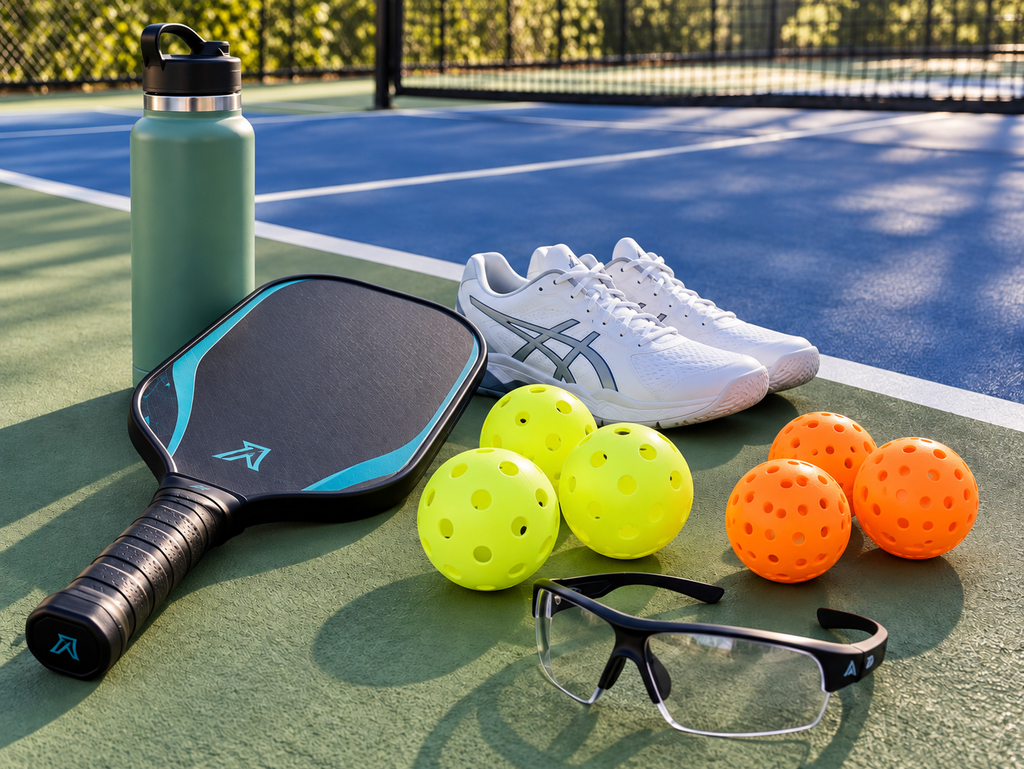
Getting started with pickleball does not require a large collection of expensive gear. A paddle, a few pickleballs, suitable court shoes, and comfortable athletic clothing are enough for most beginners. Other items can improve comfort, safety, or convenience, but they are not necessary for learning the game.
Understanding the basic pickleball equipment you need helps you spend your money wisely and avoid buying gear that is too advanced, uncomfortable, or unnecessary.
The Essential Equipment You Need to Play
The basic equipment for pickleball is simple. You need a pickleball paddle, the correct type of ball for where you are playing, appropriate footwear, and clothing that allows you to move comfortably.
If you are playing at a recreation center, club, or beginner clinic, paddles and balls may sometimes be available to borrow. This can be useful when you are trying the sport for the first time.
Once you decide to play regularly, owning your own paddle and a few balls makes practice and recreational play much easier.
Choosing a Pickleball Paddle
The paddle is the main piece of pickleball equipment you will use. It has a handle similar to other racket-sport equipment, but instead of strings, it has a solid hitting surface.
A paddle does not need to be expensive to work well for a beginner. Your first paddle should feel comfortable, manageable, and easy to control.
Main Parts of a Paddle
A pickleball paddle has several basic parts.
The handle is the section you hold. It is wrapped with a grip material that helps keep the paddle comfortable and secure in your hand.
The grip refers to the wrapped portion of the handle. Grip thickness can affect how comfortably you hold the paddle.
The paddle face is the broad surface that contacts the ball.
The edge guard, found on many paddles, runs around the outside of the paddle face and helps protect the paddle when it contacts the court or another hard surface.
Inside the paddle is a core that contributes to how the paddle feels when it strikes the ball.
You do not need to analyze every technical detail when buying your first paddle. Comfort and control are more useful priorities for a beginner.
Common Paddle Materials
Pickleball paddles are made from several materials, and manufacturers use different combinations for the face and internal core.
You may see paddle faces described as fiberglass, graphite, carbon fiber, or composite. Each material can create a slightly different feel.
Fiberglass paddles are common and often provide a lively response when striking the ball. Graphite and carbon-fiber paddles are also widely used and can provide a solid combination of control and performance.
Beginners do not need to choose a paddle based solely on the material name. Two paddles made with similar materials can still feel quite different.
Instead, pay attention to whether the paddle feels comfortable in your hand, easy to move, and controllable when you make contact with the ball.
Paddle Size Basics
Pickleball paddles come in different shapes and dimensions. Some are wider, while others are longer and narrower.
A wider paddle face can provide a generous hitting area, which may be useful for beginners who are still developing consistent contact.
Longer paddles may offer additional reach, but they can also feel different when swinging and positioning the paddle.
For your first paddle, a conventional shape with a comfortable hitting area is usually easier to manage than a highly specialized design.
The goal is to choose something that helps you make solid contact consistently rather than selecting equipment designed for a particular advanced playing style.
Paddle Weight Basics
Paddle weight affects how the paddle feels when you swing and hold it in front of your body.
A very light paddle may feel quick and easy to move. A heavier paddle may feel more solid during contact but can require more effort to control repeatedly.
Beginners generally benefit from a paddle that feels comfortable over an entire playing session. If your wrist, forearm, or shoulder feels strained simply from holding or swinging the paddle, the paddle may not be a good fit for you.
When possible, hold several paddles before buying. Move each one slowly through a few practice swings. The paddle should feel balanced and manageable rather than difficult to control.
Finding a Comfortable Grip Size
Grip size refers to the thickness of the paddle handle.
A grip that feels too large can make the paddle difficult to control comfortably. A grip that feels too small may encourage you to squeeze harder than necessary.
When holding the paddle, you should be able to maintain a secure grip without excessive tension in your hand or forearm.
Beginners sometimes focus heavily on technical grip-size measurements before they have enough experience to notice small differences. Comfort is a practical starting point.
If two paddles otherwise feel similar, choose the one that allows your hand and fingers to wrap around the handle naturally.
What Makes a Paddle Beginner-Friendly?
A beginner-friendly paddle should help you develop control and consistency.
Look for a paddle that feels comfortable when held in the ready position, easy to maneuver, and stable when contacting the ball.
Avoid assuming that the most expensive paddle will automatically help you play better. High-priced paddles often include materials or design features aimed at experienced players with specific preferences.
Your first paddle is primarily a learning tool.
As you play more often, you may develop preferences for paddle weight, shape, grip size, surface characteristics, or other features. Those preferences become easier to understand after you have gained actual playing experience.
Indoor And Outdoor Pickleballs
Pickleballs are lightweight plastic balls with holes in their surface. Although they may look similar, indoor and outdoor balls are designed differently.
Using the correct type of ball makes play more predictable.
Indoor Pickleballs
Indoor pickleballs are designed for indoor court conditions.
They commonly have fewer, larger holes than outdoor balls. Because indoor environments are protected from wind, these balls do not need the same aerodynamic characteristics as balls designed for outdoor play.
Indoor balls can feel slightly softer and may respond differently during rallies.
If you regularly play inside a gym or indoor pickleball facility, keeping several indoor balls in your bag is useful.
Outdoor Pickleballs
Outdoor pickleballs are designed to handle outdoor conditions such as wind and harder court surfaces.
They typically have more holes that are smaller than those found on many indoor balls. They may also feel firmer.
Outdoor balls can become worn, scratched, or cracked after repeated use, particularly on rough court surfaces.
Before starting a game, check the ball for visible cracks or major changes in shape. A damaged ball may bounce or travel unpredictably.
Why Indoor And Outdoor Balls Feel Different
The differences in hole pattern, material, and construction affect how each type of ball moves through the air and reacts after bouncing.
For beginners, the main rule is simple: use indoor balls indoors and outdoor balls outdoors whenever possible.
You do not need to memorize technical specifications. If you are joining other players, you can also check which type of ball they are using.
Having a few of each type is practical if you expect to play in both environments.
Wear Proper Court Shoes
Footwear is one of the most important pieces of pickleball equipment for both movement and safety.
Pickleball involves frequent side-to-side movement, short forward steps, quick stops, and changes of direction. Shoes designed for court sports are built to support these movements.
Tennis shoes and other court shoes are common choices because they generally provide lateral support and soles designed for court surfaces.
Your shoes should fit securely without painfully squeezing your feet. They should also provide enough traction to prevent unnecessary slipping.
Why Running Shoes May Not Be Ideal
Running shoes are designed primarily for forward movement.
Pickleball requires significant lateral movement. When you shuffle sideways, change direction, or stop quickly, your foot may place forces on the shoe differently from normal running.
Some running shoes have thick, soft soles designed for cushioning while moving forward. That construction may feel less stable during repeated sideways movements.
This does not mean every running shoe automatically causes a problem, but court-specific shoes are generally better suited to the movement patterns used in pickleball.
If you plan to play regularly, appropriate court shoes are a worthwhile investment.
Choose Comfortable Athletic Clothing
Pickleball does not require specialized clothing.
Wear athletic clothing that allows your shoulders, arms, hips, and legs to move freely. Your clothing should also be appropriate for the temperature and playing environment.
Shorts, athletic pants, skirts, shirts, and other sports clothing can all work well as long as they do not restrict movement.
Outdoor conditions may require lightweight, breathable clothing, while indoor facilities can vary in temperature.
Avoid clothing that constantly needs adjustment during play. The goal is to move comfortably and keep your attention on the game.
Consider Protective Eyewear
Protective eyewear is not always required for recreational pickleball, but it is worth considering.
Players often stand relatively close to one another, particularly around the non-volley zone near the net. Balls can travel quickly during short-distance exchanges.
Sports eyewear designed for court activities can provide additional eye protection without interfering significantly with visibility.
If you already wear prescription glasses, you may want to explore sports-compatible options that fit securely while you move.
Prepare For Outdoor Conditions
Outdoor pickleball can expose you to direct sunlight and heat.
A hat or visor can help reduce glare and provide some shade for your face. Sunglasses designed for athletic use may also help in bright conditions.
Sun protection is another practical consideration. Appropriate sunscreen can help protect exposed skin during longer outdoor sessions.
These items may not affect how you strike the ball, but they can make outdoor play more comfortable and help you stay focused.
Bring Water And Stay Hydrated
A water bottle should be part of your regular pickleball gear, particularly when playing outdoors or in warm conditions.
Pickleball involves repeated movement, and it is easy to become focused on rallies and continue playing without taking enough breaks.
Keep water somewhere accessible near the court and drink regularly based on your needs and playing conditions.
Do not wait until you feel exhausted before paying attention to hydration.
Pickleball Bags And Useful Accessories
You do not need a special pickleball bag when you begin. Any practical sports bag that holds your paddle, balls, water, and personal items can work.
As you accumulate more gear, a dedicated pickleball bag may become convenient.
Useful items might include an extra grip or overgrip, a towel, spare balls, sun protection, and small personal items you normally bring for exercise.
The key is to carry equipment that serves a practical purpose rather than filling your bag with accessories you rarely use.
Equipment You Do Not Need Immediately
Beginners are often exposed to a large range of specialized pickleball products. Many are useful for particular players, but that does not mean you need them on your first day.
You do not need several premium paddles, advanced training devices, large collections of accessories, or specialized equipment for every possible playing condition.
Start with the basics.
A comfortable paddle, suitable balls, proper court shoes, athletic clothing, water, and any appropriate safety or weather-related items are enough for most beginners.
After gaining experience, you can decide whether additional equipment would solve an actual problem or improve your playing experience.
Caring For Your Paddle And Balls
Basic equipment care can help your gear last longer.
Avoid throwing or striking your paddle against the court, fence, net post, or other hard objects. Repeated impacts can damage the edge, surface, or internal structure.
If your paddle becomes dirty, follow the manufacturer’s recommended cleaning method. Aggressive cleaners or abrasive materials may damage some paddle surfaces.
Inspect the grip occasionally. If it becomes excessively worn, slippery, or uncomfortable, it may need replacement or an overgrip.
Check your pickleballs for cracks, severe wear, or changes in shape. Damaged balls should be replaced because they may no longer bounce or fly normally.
Store Your Equipment Properly
Do not leave your paddle and balls in unnecessarily harsh conditions.
Extreme heat can affect some sports equipment, so storing your gear for long periods in a very hot vehicle may not be ideal.
Keep your equipment somewhere reasonably clean and dry.
If your shoes or clothing become damp after playing, allow them to dry rather than sealing everything inside a closed bag for an extended period.
A simple habit of checking and organizing your equipment after playing makes it easier to arrive prepared for your next session.
Practical Tips For Buying Your First Pickleball Gear
When buying your first set of equipment, focus on function rather than collecting features.
First, establish a realistic budget. You do not need premium gear to learn basic pickleball skills.
Second, prioritize the paddle and shoes. These are the pieces of equipment that directly affect how you handle the ball and move around the court.
Third, try equipment before purchasing whenever possible. Holding a paddle can tell you more about comfort than reading a long list of specifications.
Fourth, consider where you will normally play. If you play outdoors, buy outdoor balls and prepare for sun and heat. If you play indoors, keep appropriate indoor balls available.
Finally, avoid buying equipment solely because an experienced or professional player uses it. Equipment preferences depend on playing style, experience, comfort, and personal preference.
The best beginner gear is equipment that allows you to learn comfortably and consistently.
Key Takeaways
- The essential pickleball equipment for a beginner includes a paddle, suitable pickleballs, court shoes, comfortable athletic clothing, and water.
- Choose a beginner-friendly paddle based primarily on comfort, manageable weight, grip feel, and control rather than price or advanced features.
- Indoor and outdoor pickleballs are designed differently, so use the ball that matches your playing environment whenever possible.
- Court shoes are better suited to pickleball’s side-to-side movement, stops, and direction changes than footwear designed mainly for forward running.
- Protective eyewear, hats, visors, sun protection, bags, and other accessories can improve safety and convenience but are not all required to start playing.
- Buy only what you need at first. As you gain experience, you will be better able to decide which equipment features actually suit your game.
- Take basic care of your paddle, balls, shoes, and other gear by checking for wear, keeping them clean, and storing them properly.