
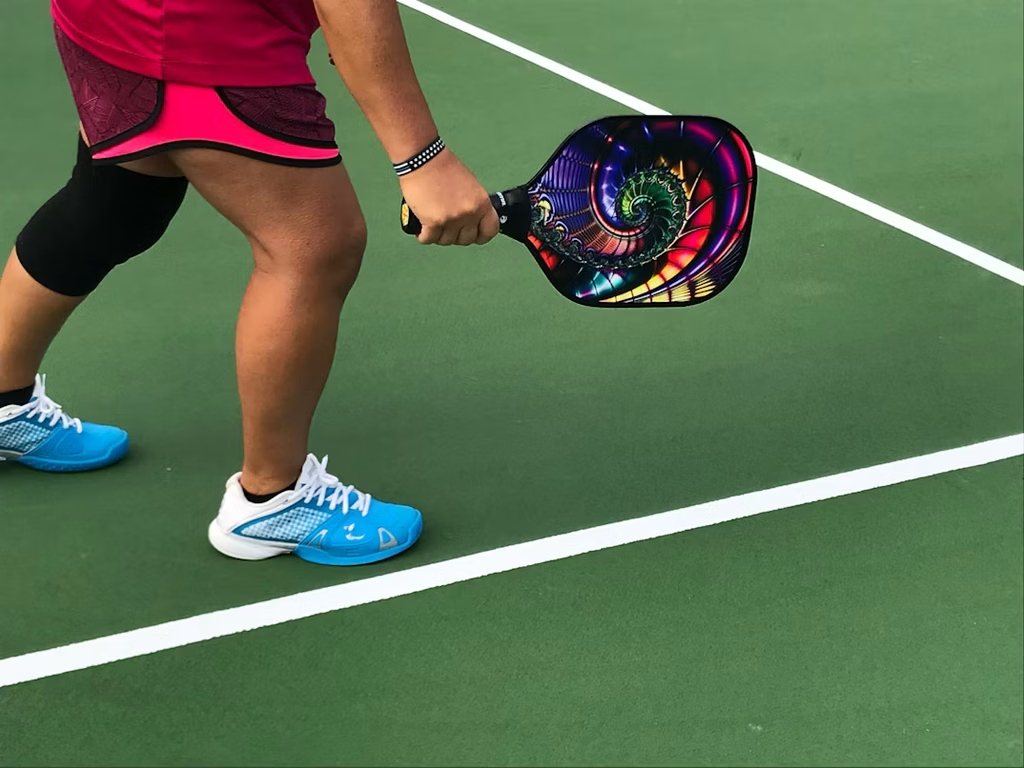
Holding the paddle correctly is one of the first physical skills to learn in pickleball. Your grip affects how easily you control the paddle face, make clean contact with the ball, and move between forehands, backhands, volleys, serves, and softer shots.
For a beginner, the goal is not to develop several specialized grips. A simple, comfortable pickleball paddle grip gives you a neutral starting position that works well for many basic shots. The paddle should feel secure in your hand without creating unnecessary tension in your fingers, wrist, or forearm.
Why Your Paddle Grip Matters
Your hand is the connection between your body and the paddle. Small changes in how you hold the handle can change the direction of the paddle face and, as a result, the direction and height of the ball.
If your grip is comfortable and neutral, controlling the paddle becomes easier. You can move naturally, keep the paddle stable through contact, and make small adjustments when necessary.
A poor grip can create problems before you even swing. Holding the paddle too tightly can make your wrist and forearm tense. An awkward hand position can make the paddle face difficult to control. Constantly changing your grip can also make basic shots more complicated than they need to be.
A good beginner grip should therefore accomplish three things: keep the paddle secure, allow the wrist and arm to remain relaxed, and provide a useful paddle-face position for different shots.
Know the Paddle Handle and Face
Before adjusting your grip, identify the two parts of the paddle that matter most for this lesson.
The handle is the section you hold. It is wrapped with a grip material that gives your hand traction and cushioning.
The paddle face is the broad, flat surface that contacts the ball. A paddle has two faces, and either side can be used to strike the ball.
Your hand position on the handle influences the angle of the paddle face. That connection is important. When you rotate your hand around the handle, you also change how naturally the paddle face sits when you bring it in front of your body.
For a beginner, a relatively neutral paddle face is easier to manage than one that naturally points sharply upward, downward, left, or right.
Start With a Continental Grip
A practical starting point for beginners is the continental grip. It provides a neutral hand position and can be used for many basic pickleball shots without requiring large grip changes.
One easy way to understand the continental grip is to imagine shaking hands with the paddle.
Hold the paddle vertically in front of you with the edge of the paddle facing forward. Reach toward the handle with your dominant hand as though you were going to shake hands with it. Wrap your fingers naturally around the handle.
Your hand should feel as though it is sitting comfortably around the handle rather than being twisted strongly to one side.
Check the paddle face after you establish the grip. When you hold the paddle comfortably in front of your body, the face should be relatively neutral rather than dramatically open or closed.
Do not become overly concerned about making your hand match an exact picture or angle. Hands differ in size and shape. The important beginner goal is a comfortable, neutral position that allows you to control the paddle without tension.
Place Your Hand Comfortably on the Handle
Your hand should wrap naturally around the handle.
Allow the fingers to curl around it rather than forcing them into an unusual position. Your index finger may sit slightly apart from the other fingers, depending on what feels natural, but it should not be stretched dramatically up the handle.
Your thumb should rest comfortably around the opposite side. Avoid pressing it rigidly against the handle or trying to use the thumb alone to control the paddle.
The fingers and thumb work together to keep the paddle secure.
You also want enough of your hand on the handle to maintain control. Holding only the very end can make the paddle feel unstable for a beginner. Moving excessively high on the handle can also feel cramped.
Find a position where the handle sits securely in your hand and you can move the paddle without feeling that it will slip.
Use the Right Grip Pressure
One of the most common beginner mistakes is squeezing the paddle harder than necessary.
A secure grip does not mean a tight grip.
Your pickleball paddle grip should be firm enough that the paddle does not move around uncontrollably in your hand, but relaxed enough that your fingers, wrist, and forearm are not constantly tense.
Try holding the paddle and deliberately squeezing it as hard as you can. Notice the tension that travels from your fingers into your hand and forearm. Your wrist may also become less mobile.
Now gradually release that pressure while keeping the paddle secure. The point where the unnecessary tension disappears but the paddle remains under control is much closer to what you want.
Grip pressure does not have to remain perfectly identical during every moment of play. Your hand naturally makes small adjustments. What you want to avoid is maintaining a strong squeeze when it is not needed.
Excessive grip pressure can make paddle movement stiff and make delicate control more difficult. It can also contribute to unnecessary fatigue in your hand and forearm.
Keep Your Wrist Relaxed
A relaxed grip supports a relaxed wrist.
That does not mean your wrist should flop around during a shot. It means you should avoid deliberately locking the wrist through unnecessary muscular tension.
Hold the paddle in front of you and slowly move it from side to side. The movement should feel controlled but comfortable. If your hand, wrist, and forearm feel rigid, check whether you are squeezing the handle.
Beginners sometimes try to control the paddle by tightening everything from the fingers through the forearm. That often has the opposite effect. Instead of creating better control, it can make the paddle harder to move smoothly.
Think of the paddle as something you are guiding rather than something you have to crush in your hand.
Develop Paddle Face Awareness
Learning how to hold the paddle also means learning to feel where the paddle face is pointing.
Hold the paddle in front of you and look at the face. Slowly rotate your hand slightly around the handle. Notice how even a small change in hand position changes the angle of the paddle.
This is paddle face awareness.
If the face tilts upward, it is more open. If it tilts downward, it is more closed. You do not need to memorize exact angles. Simply begin noticing the relationship between your hand and the paddle face.
Return to your neutral grip and move the paddle slowly in front of your body. Turn it from the forehand side to the backhand side while paying attention to the face.
The goal is to become comfortable knowing where the paddle is pointing without having to stare at it every time you move it.
Use a Neutral Paddle Position
Once your hand is comfortable, bring the paddle in front of your body.
Avoid letting it hang loosely at your side between actions. A neutral position in front of you makes it easier to move the paddle toward either side.
Keep your shoulders and arms relaxed. The paddle should feel available rather than heavy or awkward.
This position also gives you a useful way to check your grip. If you naturally bring the paddle in front of you and the face is severely angled because of your hand position, reset your hand and find the neutral continental grip again.
Your grip and paddle position should work together. The grip controls the paddle, while the neutral position keeps it conveniently available.
Use One Basic Grip for Multiple Shots
Beginners sometimes assume that every type of shot requires a completely different way of holding the paddle. Constantly searching for a new grip can create unnecessary confusion.
A neutral continental grip provides a practical foundation for multiple beginner shots. It allows you to move between the forehand and backhand sides without making major changes every time the ball changes direction.
That does not mean your hand can never move.
As you gain experience, small grip adjustments may occur naturally. The important distinction is between a minor adjustment and completely rebuilding your grip during every rally.
For now, develop one reliable starting position. You should be able to find it quickly and comfortably.
Grip Technique Is Different From Grip Size
Grip technique and grip size are related to holding the paddle, but they are not the same thing.
Grip technique refers to how you position your hand and fingers on the handle.
Grip size refers to the physical thickness or circumference of the handle.
A paddle handle that feels unusually large or small can affect comfort, but changing your hand technique does not change the actual size of the handle.
When checking your grip, focus first on whether your hand is positioned comfortably, your fingers can wrap naturally around the handle, and you can keep the paddle secure without squeezing excessively.
Signs Your Grip Is Too Tight
A tight grip is often easy to recognize once you know what to look for.
First, notice your forearm. If the muscles remain visibly or noticeably tense while you are simply holding the paddle, you may be using more pressure than necessary.
Second, pay attention to your fingers. If you feel as though you are digging them forcefully into the handle, reduce the pressure.
Third, notice whether your wrist feels locked. Excessive squeezing often creates tension beyond the hand itself.
Finally, consider how quickly your hand becomes tired. Some fatigue during extended activity is normal, but gripping much harder than necessary can make the hand and forearm work continuously.
When you notice these signs, do not let the paddle become loose. Simply reduce the pressure until the tension decreases while the paddle remains secure.
Signs Your Hand Position Needs Adjustment
Grip pressure can be comfortable while the hand itself is still in an awkward position.
Check whether the paddle face naturally sits at an extreme angle when you hold it in front of you. If it does, your hand may have rotated too far around the handle.
Also notice whether you have difficulty moving comfortably between the forehand and backhand sides. A neutral beginner grip should allow you to move the paddle to either side without a major hand change.
Your fingers should also feel naturally wrapped around the handle. If your thumb or fingers are stretched, cramped, or placed in a position that feels forced, reset your hand.
Return to the handshake method whenever necessary. It provides a simple reference point when your grip begins to feel unfamiliar.
Common Beginner Grip Mistakes
The first common mistake is squeezing too hard. Beginners often do this because they are afraid of losing control of the paddle. In reality, excessive tension can make controlled movement more difficult.
Another mistake is rotating the hand too far around the handle. This can leave the paddle face naturally angled and make it harder to use the same grip comfortably on both sides.
Some beginners place the index finger too far up the paddle or use the thumb as though it must control the paddle by itself. Your entire hand should work together.
Another problem is changing grips constantly. Small adjustments are normal, but repeatedly searching for a completely different hand position makes it harder to develop a dependable reference point.
Finally, beginners sometimes focus so much on the exact appearance of the grip that they ignore comfort. Your hand should not feel forced into position.
A Simple Pickleball Paddle Grip Check
Before playing, use a short routine to check your pickleball paddle grip.
- Hold the paddle vertically with the edge facing forward.
- Reach for the handle as though you are shaking hands with the paddle.
- Wrap your fingers and thumb naturally around the handle.
- Bring the paddle in front of your body and check that the face is relatively neutral.
- Squeeze the handle briefly, then relax your hand until the paddle feels secure without unnecessary tension.
- Move the paddle slowly from the forehand side to the backhand side. Make sure both directions feel comfortable.
- Check your wrist and forearm. They should feel controlled but not rigid.
This routine takes only a few seconds once you become familiar with it.
Build Comfort Through Paddle Handling
You can become more comfortable with your grip even without hitting a ball.
Hold the paddle in your normal grip and slowly move it from the center of your body toward the forehand side. Return it to the center, then move toward the backhand side.
Keep the movements small and controlled. Notice whether you tighten your grip as the paddle changes direction. If you do, relax the hand while maintaining control.
Next, gently turn the paddle face and return it to neutral. This helps you connect what your hand feels with what the paddle face is doing.
You can also set the paddle down, pick it up again, and find your continental grip without spending a long time arranging your fingers. Repeating this simple action helps make your starting hand position easier to recognize.
The purpose of paddle-handling practice is not speed. It is familiarity. You want the paddle to feel comfortable and predictable in your hand.
Key Takeaways
- Use a comfortable, neutral continental grip as a simple foundation for beginner pickleball.
- Wrap your fingers and thumb naturally around the handle rather than forcing them into a rigid position.
- Hold the paddle securely without squeezing. Excessive grip pressure creates unnecessary tension in the hand, wrist, and forearm.
- Keep your wrist relaxed and controlled instead of deliberately locking it.
- Pay attention to the paddle face. Your hand position directly affects the direction the face points.
- Use one reliable basic grip for multiple beginner shots rather than making large grip changes constantly.
- Remember that grip technique describes how you hold the paddle, while grip size describes the physical size of the handle.
- Use a simple grip check before playing: find the neutral hand position, relax your pressure, check the paddle face, and make sure you can move comfortably to both sides.