
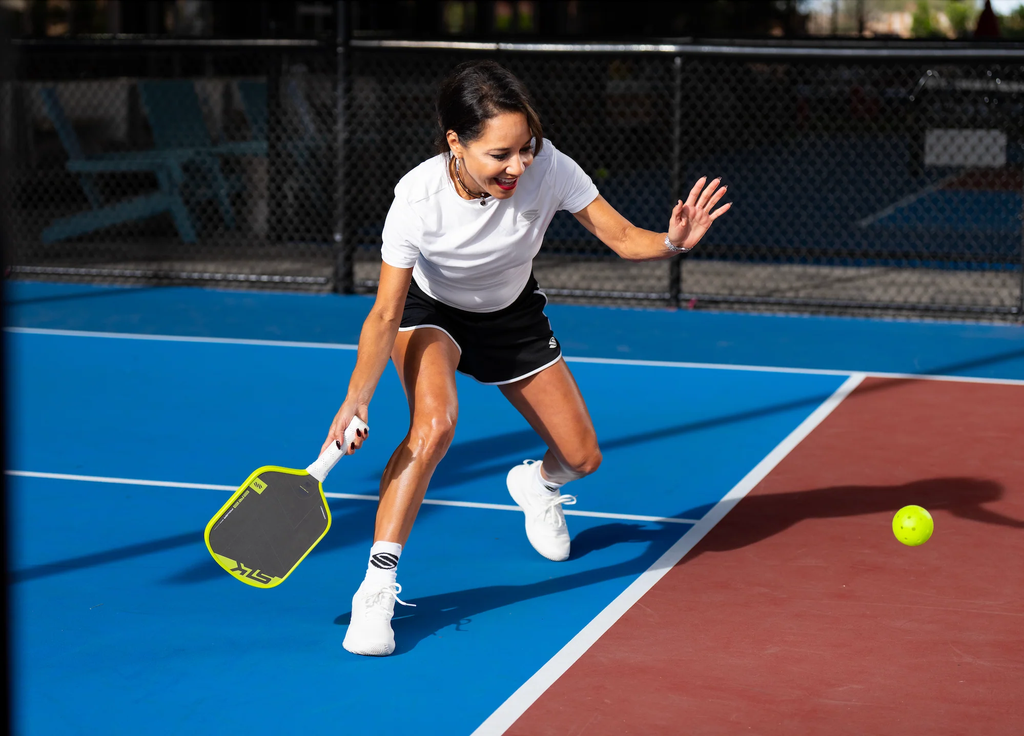
Pickleball is easy to start, but understanding the basics before you step onto the court can make your first games much more enjoyable.
This beginner-friendly guide teaches you how pickleball works from the ground up. You’ll learn the court layout, essential equipment, serving and scoring, basic rules, common terms and the foundational skills used during recreational play.
You’ll also build practical confidence with the shots and movement beginners use most, including serves, returns, groundstrokes, volleys and dinks.
Whether you have never held a pickleball paddle or have played a few casual games and still feel unsure about the rules, this course gives you a clear path from complete beginner to someone who can step onto the court, understand what is happening and confidently join a recreational game.
What You’ll Learn
By the end of this beginner pickleball course, you’ll be able to:
- Understand the pickleball court, equipment and basic terminology.
- Know how serving, scoring and game flow work.
- Follow the essential rules, including the two-bounce rule and non-volley zone rules.
- Use a comfortable beginner grip, stance and ready position.
- Perform the basic serve and return with better control.
- Hit introductory groundstrokes, volleys and dinks.
- Move around the court more safely and efficiently.
- Understand basic doubles positioning and partner responsibilities.
- Recognize common beginner mistakes and how to avoid them.
- Join a recreational pickleball game with a clearer understanding of what to do and when to do it.
Module 1: Introduction to Pickleball
Lessons
What Is Pickleball? Pickleball History and Growth Understanding the Pickleball Court Essential Pickleball Equipment Basic Pickleball TerminologyModule 2: Rules and Scoring
Lessons
Basic Rules of Pickleball How Pickleball Scoring Works Serving Rules The Two-Bounce Rule Common Rule ViolationsModule 3: Getting Started on the Court
Lessons
How to Hold the Paddle Pickleball Ready Position and Athletic Stance Basic Pickleball Footwork Basic Pickleball Court Positioning Safe and Efficient Pickleball MovementModule 4: Mastering the Serve
Lessons
Pickleball Serve Technique for Beginners Pickleball Underhand Serve for Beginners Pickleball Serve Accuracy Tips for Beginner Pickleball Serve Depth for Better Beginner Serves Pickleball Serving Mistakes Beginners Should AvoidModule 5: Returns and Groundstrokes
Lessons
Pickleball Return of Serve for Beginners Pickleball Forehand Fundamentals for Beginners Pickleball Backhand Fundamentals for Beginners Pickleball Shot Placement for Beginners Pickleball Groundstrokes for Better ConsistencyModule 6: The Non-Volley Zone
Lessons
Pickleball Kitchen Explained for Beginners Pickleball Kitchen Rules Every Beginner Should Know Moving to the Kitchen Line in Pickleball Pickleball Kitchen Line Positioning for Beginners Pickleball Kitchen Faults Beginners Should AvoidModule 7: Dinking and Soft Shots
Lessons
Pickleball Dinking Basics for Beginners Pickleball Forehand Dink Technique for Beginners Pickleball Backhand Dink Technique for Beginners Cross-Court Dink Technique for Pickleball Beginners Pickleball Dink Consistency for BeginnersModule 8: Volleys and Net Play
Lessons
Pickleball Volley Fundamentals for Beginners Pickleball Forehand Volley Technique for Beginners Pickleball Backhand Volley Technique for Beginners Pickleball Blocking Techniques for Fast Shots Pickleball Net Play Tips for BeginnersModule 9: Beginner Strategy
Lessons
Pickleball Shot Selection for Beginners High-Percentage Pickleball Strategy for Beginners Pickleball Doubles Positioning for Beginners Pickleball Doubles Communication for Beginners Pickleball Strategy Mistakes Beginners Should AvoidModule 10: Building Your Pickleball Game
Lessons
Pickleball Practice Routine for Beginners Pickleball Consistency Tips for Beginners First Pickleball Match Guide for Beginners Pickleball Etiquette and Sportsmanship for Beginners How to Improve Pickleball Skills After the Beginner LevelFrom Beginner to Pickleball Player
Learning pickleball is not about mastering every part of the game immediately. It is about building a strong foundation, developing reliable skills and gradually learning how to use those skills during real points and games.
By working through the Beginner’s Guide to Pickleball, you will progress from understanding the basic structure and rules of the game to developing your serve, return, groundstrokes, volleys and dinks, improving your positioning and learning how to make better decisions on the court.
The goal is not simply to know more about pickleball. It is to help you become more capable and confident when you actually play.
Pickleball improvement continues long after the fundamentals are learned. Your shots will become more consistent, your movement more efficient, your positioning more natural and your decisions more confident as you gain experience and practice with purpose.
Use this course as your foundation. Revisit individual lessons whenever you need to refresh a skill or concept, keep track of what is improving and continue building your game one step at a time.
Most importantly, take what you have learned onto the practice court and into real games. That is where knowledge becomes experience—and where you begin developing your own style of play.
Explore More Beginner Pickleball Guides
Want to keep building your pickleball skills beyond the course? These beginner-friendly guides let you explore individual parts of the game in more detail, from shot selection and court movement to practice ideas, equipment choices and common playing situations. Use them as a practical reference whenever you want to work on a specific area, solve a problem or better understand what happens on the court.
No Posts Found