Skip to content

Start Playing Sports

John Lim

Serve Plus One Tennis Strategy: Building Points After Your Serve

A strong serve can create an advantage, but what happens immediately afterward often determines whether that advantage continues. Advanced players understand that an effective service game involves more than delivering a fast or accurate first shot. It also requires anticipating the return, recovering into position,
Tennis Shot Selection: Making Better Decisions Under Pressure

Making the right shot decision can be just as important as executing the shot itself. During competitive matches, advanced tennis players must constantly evaluate ball speed, spin, court position, opponent movement, and the available targets. A technically excellent groundstroke can still be the wrong choice

How to Exploit Your Opponent’s Weaknesses in Tennis

Competitive tennis is not simply a contest of who can hit harder, serve faster, or produce more winners. At advanced levels, players often have comparable technical abilities, making tactical awareness an important factor in match results. Recognizing which shots, movements, or situations make an opponent

Tennis Spin Variations: Using Topspin, Slice, and Changes of Pace

Advanced tennis players need more than reliable groundstrokes and the ability to generate power. Against experienced opponents, repeatedly hitting the same type of ball can make rallies predictable. Even a strong forehand becomes easier to anticipate when its speed, height, spin, and bounce remain consistent.

Advanced Tennis Return Strategies Against Different Serves

Returning serve becomes increasingly challenging as opponents develop greater speed, spin, accuracy, and variety. A return technique that works against a predictable flat serve may be less effective against a wide slice or a high-bouncing kick serve. Experienced players must recognize these differences quickly and

Tennis Serve Variations: Flat, Slice, and Kick Serves Explained

A strong tennis serve becomes more difficult to return when opponents cannot predict its speed, spin, trajectory, or bounce. While serving power and placement remain important, experienced players gain an additional advantage by developing multiple serve types that create different challenges for the receiver. Understanding

Advanced Tennis Strategy: How to Control Points and Matches

At higher levels of tennis, the difference between winning and losing often comes down to how effectively players use their existing skills. Two competitors may have similar serving ability, groundstroke pace, and court coverage, yet one consistently controls rallies by choosing better patterns, changing the

Intermediate Tennis Drills to Improve Your Match Performance

Improving your tennis technique during practice is one thing. Applying those skills consistently during a competitive match is another. Many intermediate players can maintain controlled rallies, hit accurate serves, and execute effective groundstrokes during drills but struggle when points become unpredictable or the score creates

How to Approach the Net and Finish Points in Tennis

Knowing how to approach the net in tennis can help intermediate players turn favorable baseline situations into attacking opportunities. Instead of remaining behind the baseline throughout every rally, moving forward at the right moment allows you to intercept the opponent’s next shot earlier and potentially

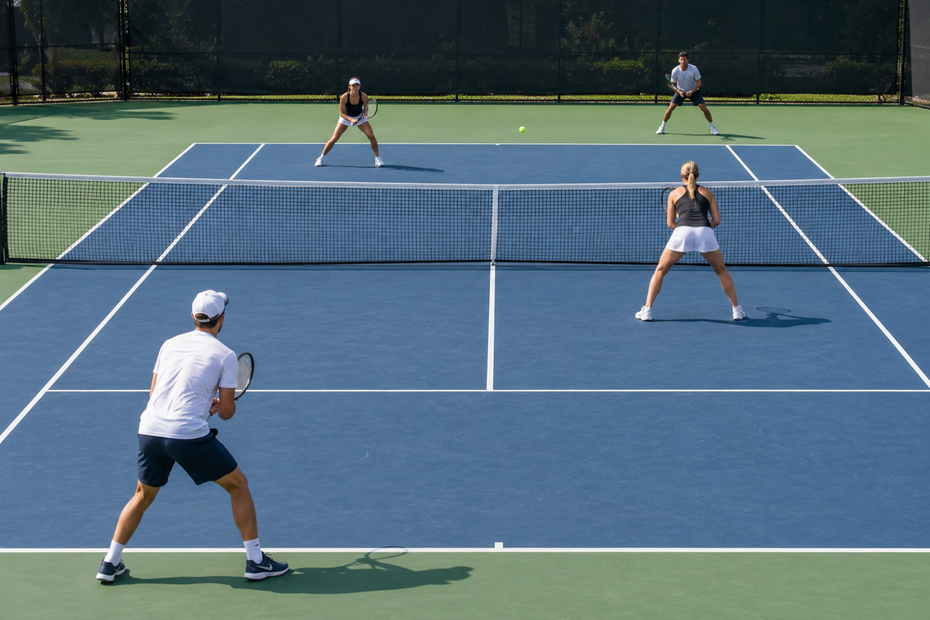
Doubles Tennis Strategy: Positioning, Communication, and Teamwork

Playing doubles tennis requires more than combining the skills of two singles players. With four players sharing the court, successful teams must coordinate their positioning, communicate clearly, and understand how each partner’s decisions affect the next shot. Even players with reliable groundstrokes and volleys can