
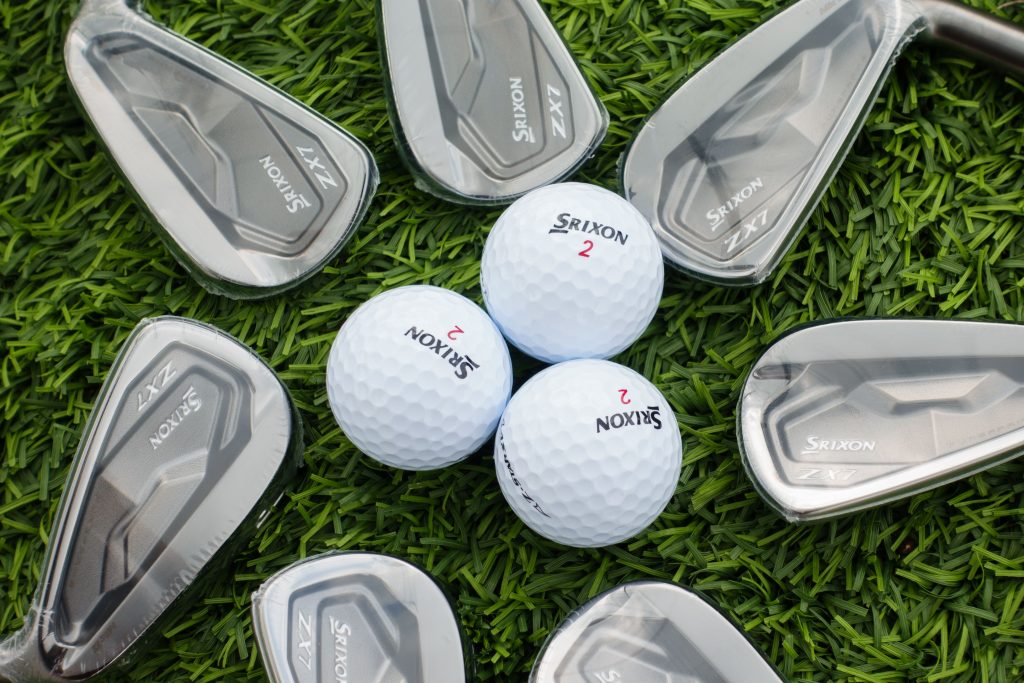
Starting golf does not require a garage full of equipment or an expensive set of clubs. A beginner needs a relatively small group of essentials: usable golf clubs, golf balls, tees, a way to carry the clubs, and comfortable clothing and footwear. A few inexpensive accessories can make playing easier, but many products marketed to golfers are optional rather than necessary.
Understanding golf equipment for beginners is mainly about knowing what serves a real purpose and what can wait. That distinction can save money while giving you everything you need to learn and enjoy the game.
Do Beginners Need a Full Golf Setup?
No. You do not need a complete, expensive golf setup before you can start.
If you are trying golf for the first time, borrowing or renting clubs can make more sense than immediately buying your own set. It gives you an opportunity to find out whether you enjoy the game before making a larger investment.
A beginner who wants personal equipment has two other practical options: buy a starter set or gradually build a set over time.
Starter sets typically package several clubs with a golf bag, making them a convenient way to get the basic equipment together without selecting every item individually. Building a set gradually gives you more flexibility, but it requires more purchasing decisions.
The important point is that having functional golf equipment matters more than having a complete or expensive collection. Your first equipment should allow you to practice and play comfortably. It does not need to resemble the setup of an experienced golfer.
The Golf Bag
A golf bag stores and organizes your clubs and provides space for balls, tees, clothing, drinks, and other small accessories.
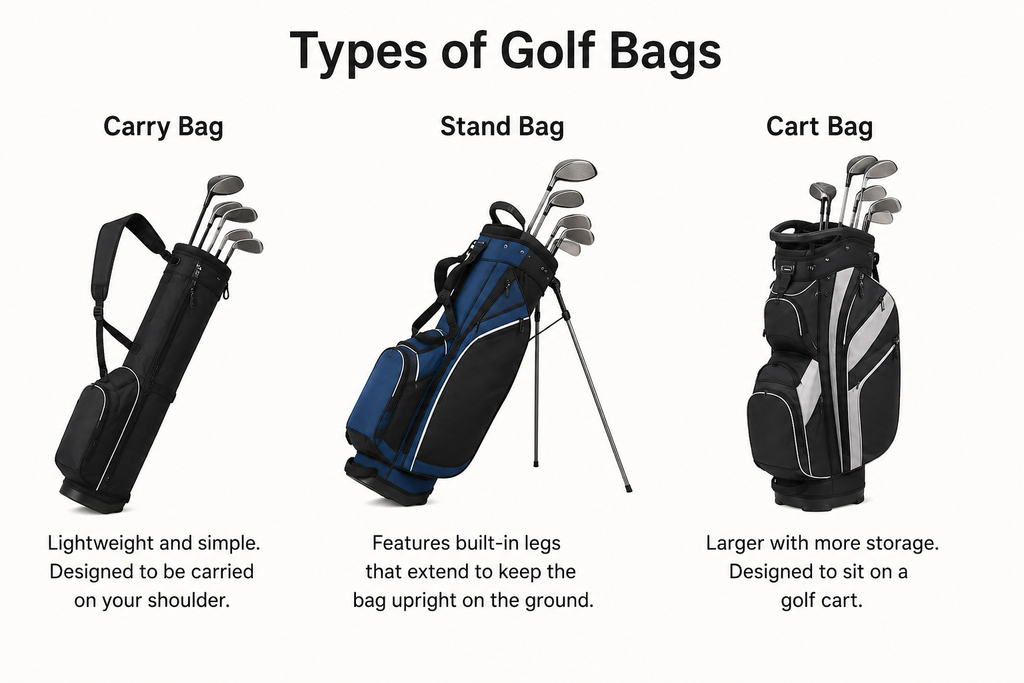
The three common types a beginner is likely to encounter are carry bags, stand bags, and cart bags.
Carry Bags
Carry bags are designed to be relatively light and portable. They are useful for golfers who expect to walk and want to minimize the amount of equipment they carry.
Some very lightweight versions have simple designs with less storage than larger bags.
Stand Bags
A stand bag has retractable legs that extend when the bag is placed on the ground. This keeps the bag raised at an angle, making clubs easier to reach and helping keep the bag itself off wet or dirty ground.
Many stand bags also have shoulder straps and are designed to be carried while walking.
For a beginner who expects to walk regularly, a stand bag can provide a useful balance between portability, storage, and convenience.
Cart Bags
Cart bags are generally designed to sit on a riding golf cart or push cart rather than be carried around the course for an entire round. They often provide more storage and may be larger and heavier than bags intended primarily for carrying.
A beginner does not need the largest bag available. Extra storage can quickly become extra weight, especially if it encourages you to carry equipment you rarely use.
Choose a bag based primarily on how you expect to transport your clubs, not on how many pockets it has.
Golf Clubs
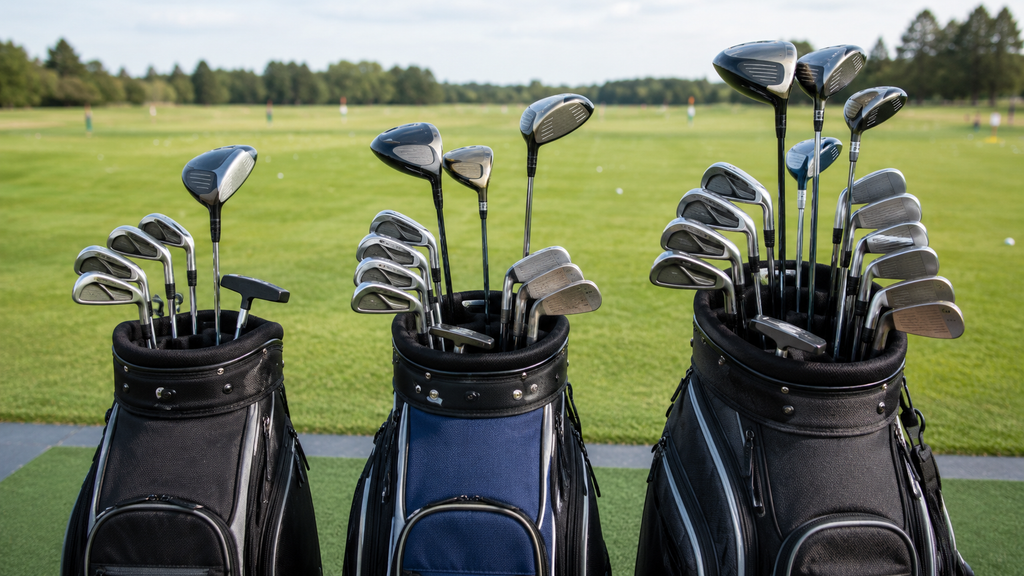
Golf clubs are the main pieces of equipment used to strike the golf ball. Different clubs are designed for different types of shots and playing situations.
You do not need to understand all of those differences yet. The next lesson, Understanding Golf Clubs and What Each Club Does, explains the major club categories and their purposes.
Under the Rules of Golf, a player is normally limited to 14 clubs during a round. That is a maximum, not a target for beginners. You are allowed to play with fewer, and a new golfer does not need to assemble 14 clubs simply because the rules permit that many.
A smaller collection can actually make learning less complicated because there are fewer equipment choices to manage.
What matters initially is that the clubs are usable and reasonably appropriate for you. A beginner can learn with borrowed clubs, rental clubs, or a basic starter set rather than waiting until they own a complete setup.
Golf Balls
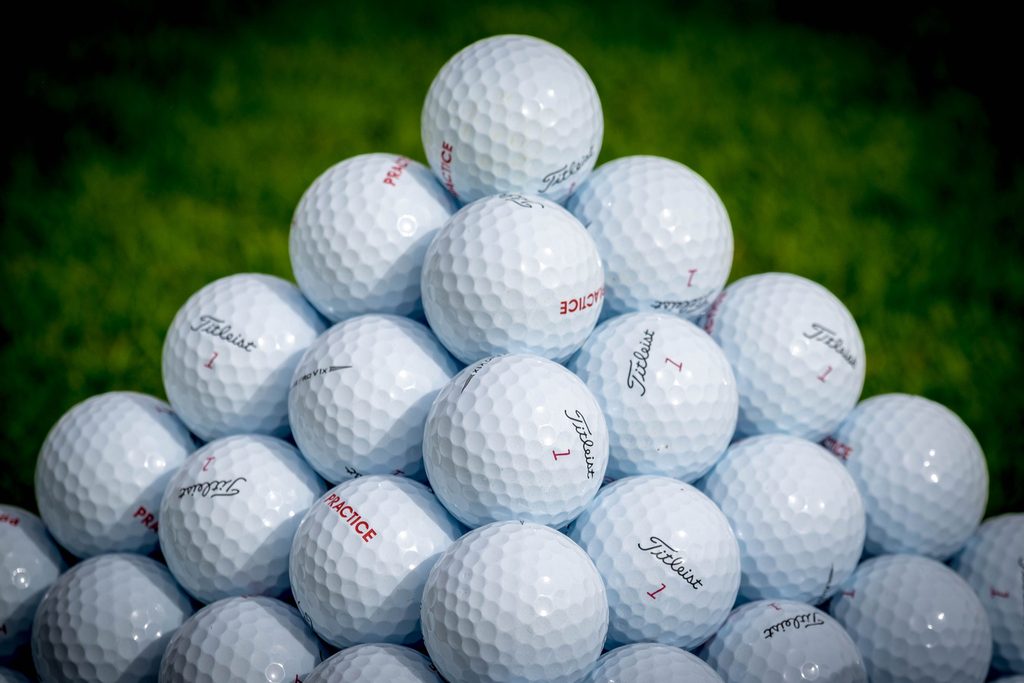
Golf balls may look simple, but they are engineered products made from multiple materials and layers. Different designs can influence characteristics such as feel, spin, and performance.
Those differences become more meaningful as a golfer develops consistent contact and a better understanding of their game. A complete beginner generally does not need to pay premium prices to benefit from practice and play.
New vs. Used Golf Balls
New balls offer predictable condition because they have not been played.
Used balls can be a practical alternative for beginners, particularly when losing balls is still common. A ball that is clean and in reasonable playing condition can be perfectly suitable for beginner practice and casual golf.
Avoid balls with obvious cracks, cuts, or severe cover damage. Physical damage can affect how a ball flies and rolls.
There is also little advantage in constantly changing between dramatically different balls because it adds another variable to the game. You do not need to become loyal to a particular model immediately, but using reasonably similar balls can make your equipment more consistent.
Carry extras when you play. Beginners commonly lose balls in rough, trees, penalty areas, or beyond the course boundary. Having spares prevents one lost ball from becoming an unnecessary problem.
Golf Tees
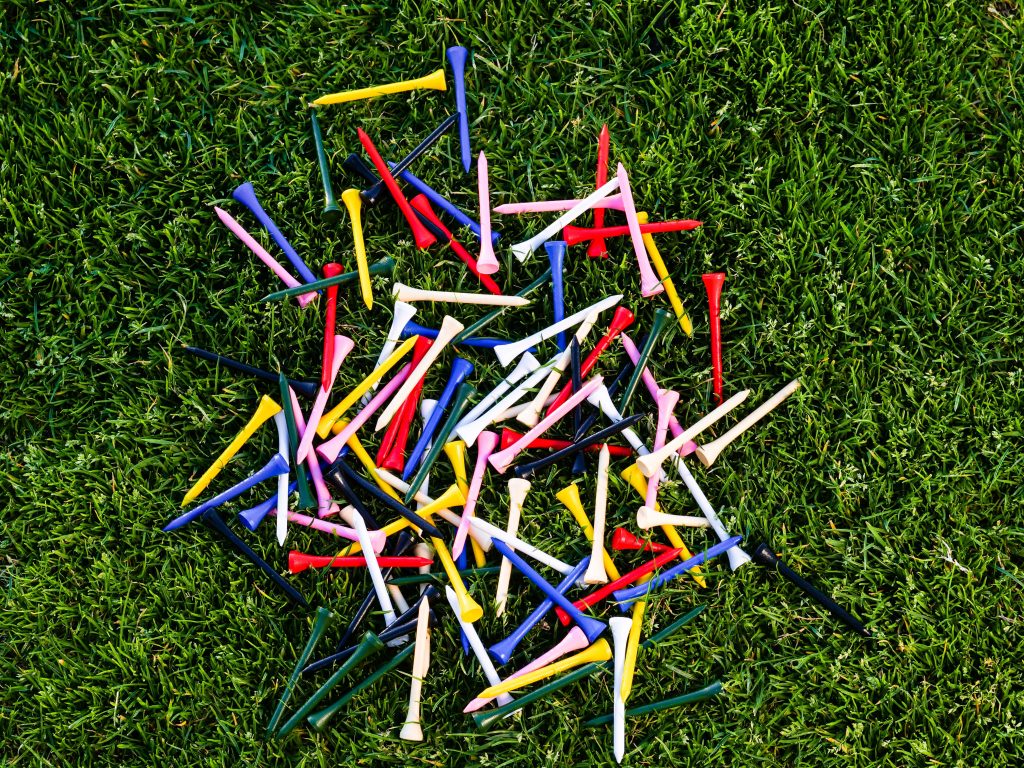
A golf tee is a small piece of equipment used to raise the ball above the ground when playing from the teeing area.
Tees are commonly made from wood or plastic and come in different lengths. The different lengths allow the ball to be raised to different heights.
The appropriate height depends partly on the club and shot being played, but those setup details belong with later club-specific instruction. At the equipment level, a beginner simply needs to know that having several tees of a practical length—or a small assortment—is sufficient.
Tees are inexpensive, easy to lose, and sometimes break, so carry more than one.
Golf Glove
A golf glove helps provide a secure connection between your hand and the club’s grip. It can be particularly useful when your hands become sweaty or conditions are humid.
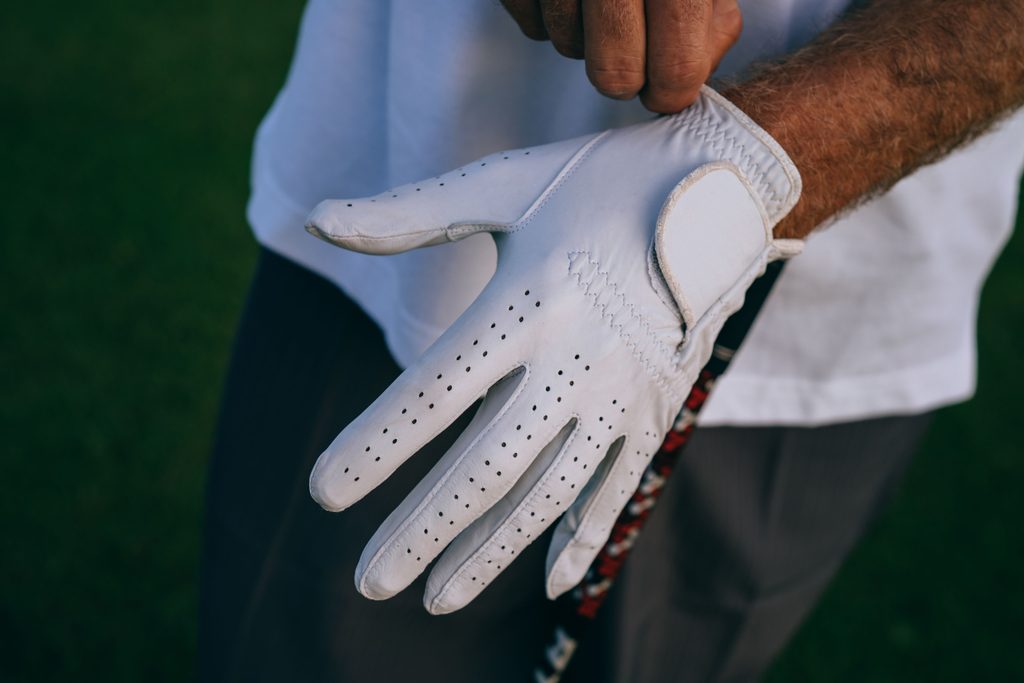
Most golfers wear one glove.
A right-handed golfer normally wears the glove on the left hand, while a left-handed golfer normally wears it on the right hand. In golf terminology, this is the lead hand.
A glove is common, but it is not essential equipment for every golfer. Some people prefer playing without one.
Fit matters more than appearance. A golf glove should feel comfortably snug without restricting your fingers or creating loose folds of material around the hand. An oversized glove can bunch or move against the grip, reducing the secure connection it is intended to provide.
Golf Shoes
Golf shoes are designed to provide traction while still allowing the golfer to walk comfortably around the course.
Golf involves repeated movement on grass, and the ground may be wet, sloped, or uneven. Secure footing therefore matters for both comfort and stability.
The two broad categories are spiked and spikeless golf shoes.
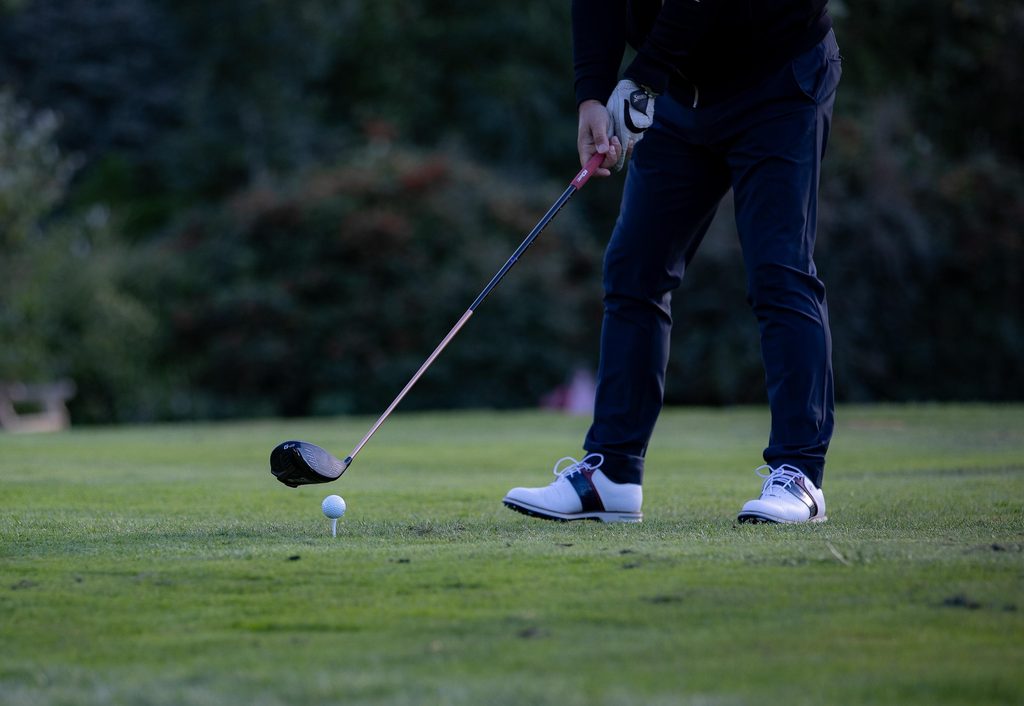
Spiked Golf Shoes
Modern spiked golf shoes generally use replaceable or integrated soft spikes or cleats on the sole. These provide additional traction, which can be particularly useful in wet or slippery conditions.
Spikeless Golf Shoes
Spikeless shoes use molded tread patterns or small traction elements rather than traditional removable spikes. They often feel more similar to ordinary athletic footwear and can be convenient for walking.
Neither category is automatically the correct choice for every beginner. Comfort, traction, course conditions, and how much walking you expect to do all matter.
If you are simply visiting a driving range or trying golf for the first time, comfortable athletic shoes with reasonable grip may be sufficient. Some golf courses have footwear requirements, however, so check the facility’s policies before playing.
Whatever you wear, avoid footwear that provides poor traction or could damage the course.
Golf Clothing
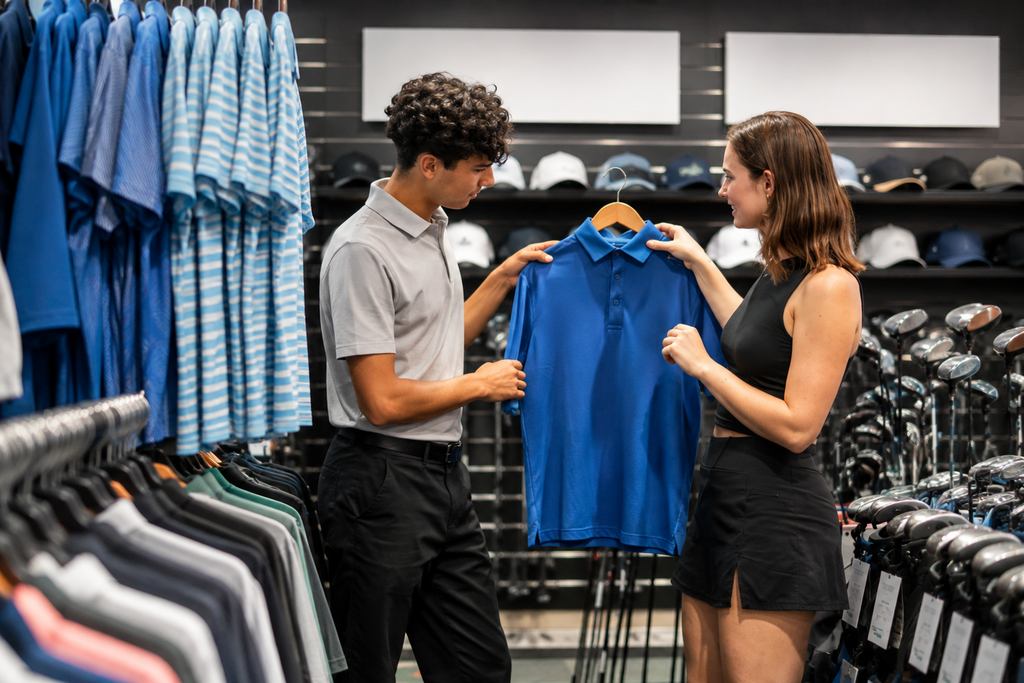
Golf clothing needs to let you move comfortably while providing appropriate protection from the weather.
Your shirt and trousers or shorts should allow unrestricted movement rather than pulling tightly when you bend or rotate. Breathable clothing is useful in warm weather, while cooler conditions may require layers that provide warmth without becoming excessively bulky.
A hat or cap can provide shade, and appropriate sun protection becomes important during several hours outdoors.
You do not necessarily need clothing carrying a golf brand. However, golf courses can have different dress requirements. Some are relaxed, while others specify acceptable shirts, shorts, trousers, or footwear.
Check the course’s dress code before arriving rather than assuming that every facility follows the same standard.
Useful Golf Accessories
Once the main equipment is covered, several small accessories can make practice and play more convenient.
Towel: Useful for cleaning dirt, grass, and moisture from clubs and balls.
Ball marker: A small, flat object used when a ball needs to be marked on the putting green. Dedicated markers are inexpensive, although other suitable small objects are commonly used.
Divot repair tool: A small tool designed to help repair ball marks on putting greens. Using one correctly helps maintain the playing surface.
Pencil: Useful for recording scores when using a paper scorecard. Courses frequently provide pencils, but carrying one is easy.
Umbrella: Useful for rain and, depending on the design and conditions, protection from strong sun.
Water bottle: Golf can involve hours outdoors and substantial walking, so convenient access to water is practical.
Rangefinder: A device that measures distance to a target. Rangefinders can be useful, but they are optional equipment rather than something a beginner needs before learning to play.
These accessories should solve practical problems. There is little reason to fill a golf bag with gadgets simply because they are marketed to golfers.
What Beginners Do Not Need Yet
Golf equipment can become highly specialized, which makes it easy for a new golfer to assume that better equipment must produce better golf.
That is not necessarily the case.
A beginner does not need an expensive launch monitor to begin learning. Launch monitors can provide detailed information about the ball and club, but that data is far more valuable when the golfer understands what the measurements mean and has a specific reason for using them.
Similarly, you do not need several specialty wedges, a premium rangefinder, a collection of advanced training aids, or tour-level equipment just to get started.
More equipment can also create more decisions. If two pieces of equipment serve essentially the same purpose but you do not yet understand when one should be chosen over the other, owning both may add complexity without improving your learning.
Start with equipment that solves an immediate need. Add specialized equipment when your golf develops enough to give that equipment a clear purpose.
Did you know?
Golf has a long tradition of shared and borrowed equipment. If you’re just trying the game, using someone else’s clubs can be a perfectly practical way to start—you don’t need to own a full set before hitting your first golf balls.
Renting, Borrowing or Buying
There is no requirement that your first experience with golf involve purchasing your own clubs.
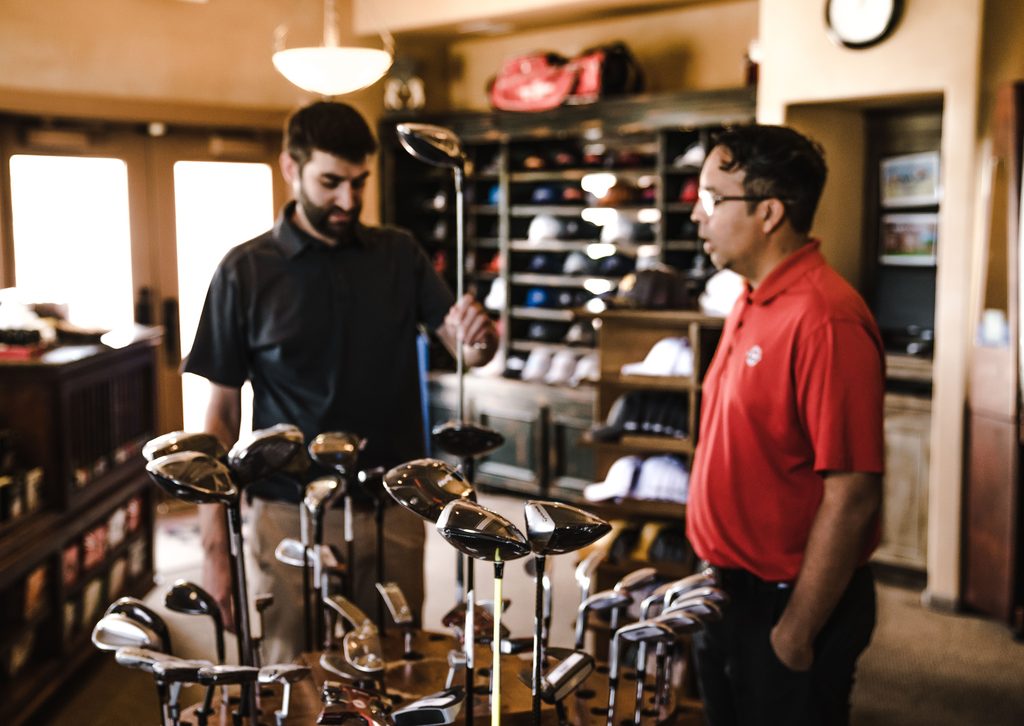
Borrowing
Borrowing can be the least expensive option if you have access to suitable equipment. It works particularly well for someone who wants to visit a driving range or try the game before committing financially.
The limitation is that borrowed equipment was selected for somebody else and may not be especially comfortable or convenient for you.
Renting
Many golf facilities provide rental clubs. Renting eliminates the need to transport or purchase a set and can be a practical choice for a first experience.
Rental availability, quality, and cost vary by facility, so check in advance rather than assuming clubs will be available when you arrive.
Buying
Buying makes more sense once you expect to play or practice regularly. Having your own equipment gives you consistency: you become familiar with the same clubs, bag, and other essentials each time you play.
A beginner starter set can simplify the purchase because several essentials are packaged together. Alternatively, you can build your equipment gradually rather than trying to create a complete setup in one purchase.
For someone who has never played golf and is unsure whether they will continue, borrowing or renting is usually the lowest-commitment starting point. Once regular practice or play becomes likely, owning a basic set becomes more practical.
Beginner Equipment Priorities
If you are starting from nothing, prioritize equipment according to what actually allows you to participate.
- Usable golf clubs: You need access to clubs, but they can initially be borrowed, rented, or owned.
- Golf balls: Use serviceable balls and carry extras rather than spending heavily on premium models.
- Golf tees: Keep several available because they are inexpensive and easily lost or broken.
- Comfortable shoes and clothing: Prioritize traction, freedom of movement, weather conditions, and any course requirements.
- Small accessories: Add practical items such as a towel, ball marker, divot repair tool, pencil, and water bottle as needed.
This order helps separate equipment required to participate from equipment that merely makes golf more convenient.
Shop Golf Gear for Beginners
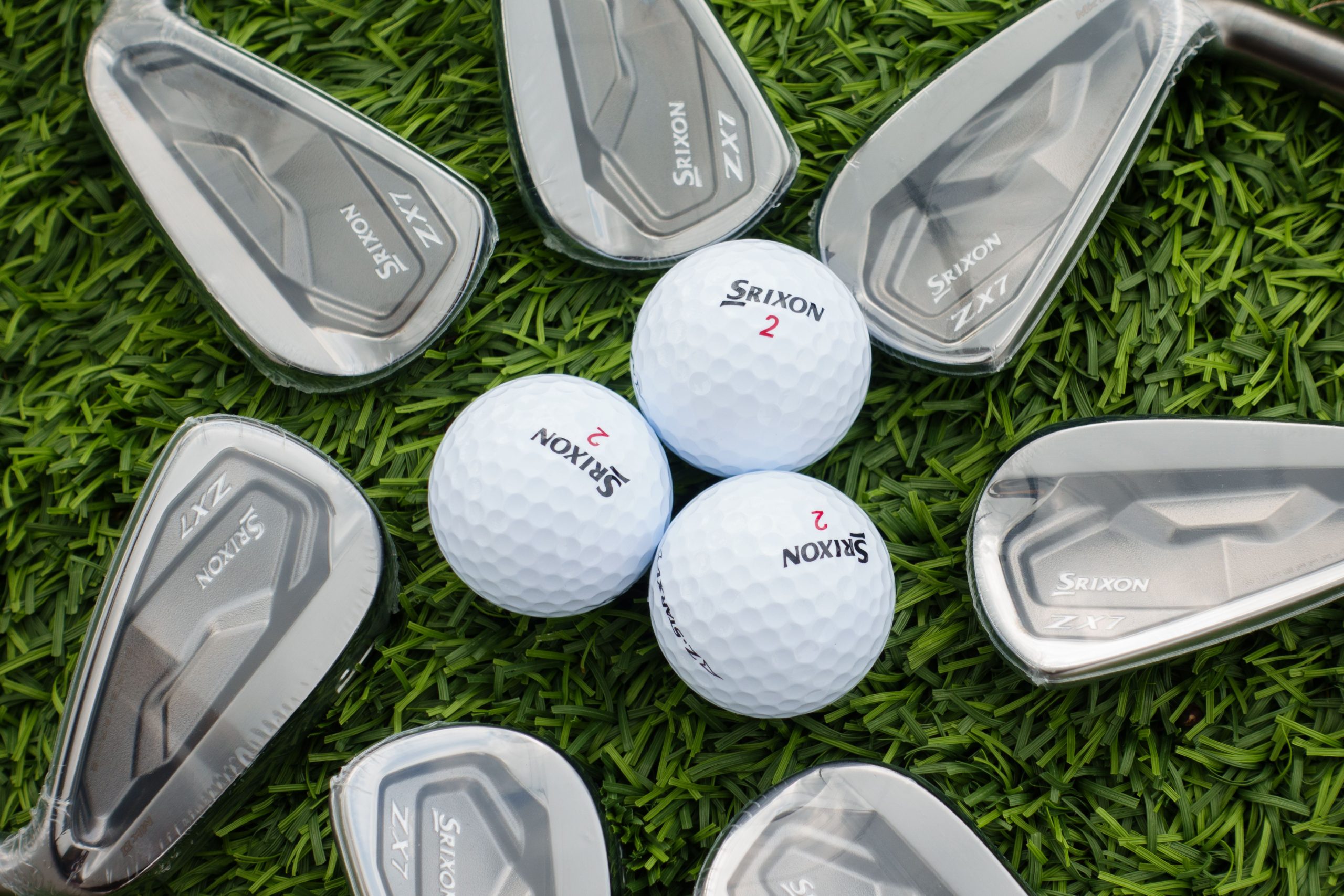
Shop Golf Gear
Home Golf Gear for Every Type of Player Find golf clubs, sets, and accessories based on how you play. Explore forgiving equipment for an easier game, balanced options as your skills improve,…
Key Takeaways
- • Beginners do not need a full or expensive golf setup to start; borrowing, renting, or using a starter set are all practical options.
- • Prioritize functional clubs, serviceable golf balls, tees, comfortable footwear and clothing before optional equipment.
- • Choose a golf bag and shoes according to how and where you expect to play, rather than simply choosing the largest or most expensive option.
- • Gloves and accessories can improve grip, comfort, organization, and convenience, but many are optional.
- • Specialized or premium equipment becomes more useful when you have enough experience to understand what problem it is intended to solve.
Knowing what equipment you need is only the first step. In the next lesson, Understanding Golf Clubs and What Each Club Does, you will learn why golfers carry different types of clubs and the general purpose each category serves.
Previous: Golf Etiquette Every Beginner Should Know >>>
Next: Understanding Golf Clubs and What Each Club Does >>>